
Dogs with long floppy ears can end a meal with damp ear tips or food stuck in their feathering. A specially shaped bowl may help by narrowing the opening where the ears hang while leaving enough room for the muzzle to reach the meal. However, the narrowest opening is not automatically the safest choice. Spaniels, setters, and hounds vary in muzzle width, ear length, and eating posture. This guide shows how to compare inner rim width, vessel depth, base stability, water access, and cleaning. It also draws a clear line between keeping hair cleaner and preventing ear disease: bowl geometry is not a medical treatment.
Start with the dog’s muzzle rather than a breed label
A Cocker Spaniel and a Basset Hound both have hanging ears, yet their muzzles differ significantly. Observe your dog taking normal bites from a familiar bowl. Note how far the nose and lower jaw extend into the dish and whether the whisker area is pressed against the sides. A purpose-built long-ear bowl often has an inward-sloping top and a deeper central cup. Its interior must still accommodate the entire comfortable eating movement. If the dog must turn its head sideways or scrape against the rim, the advertised ear-saving shape is too restrictive for that individual dog.
Watch where the ears fall as the head lowers
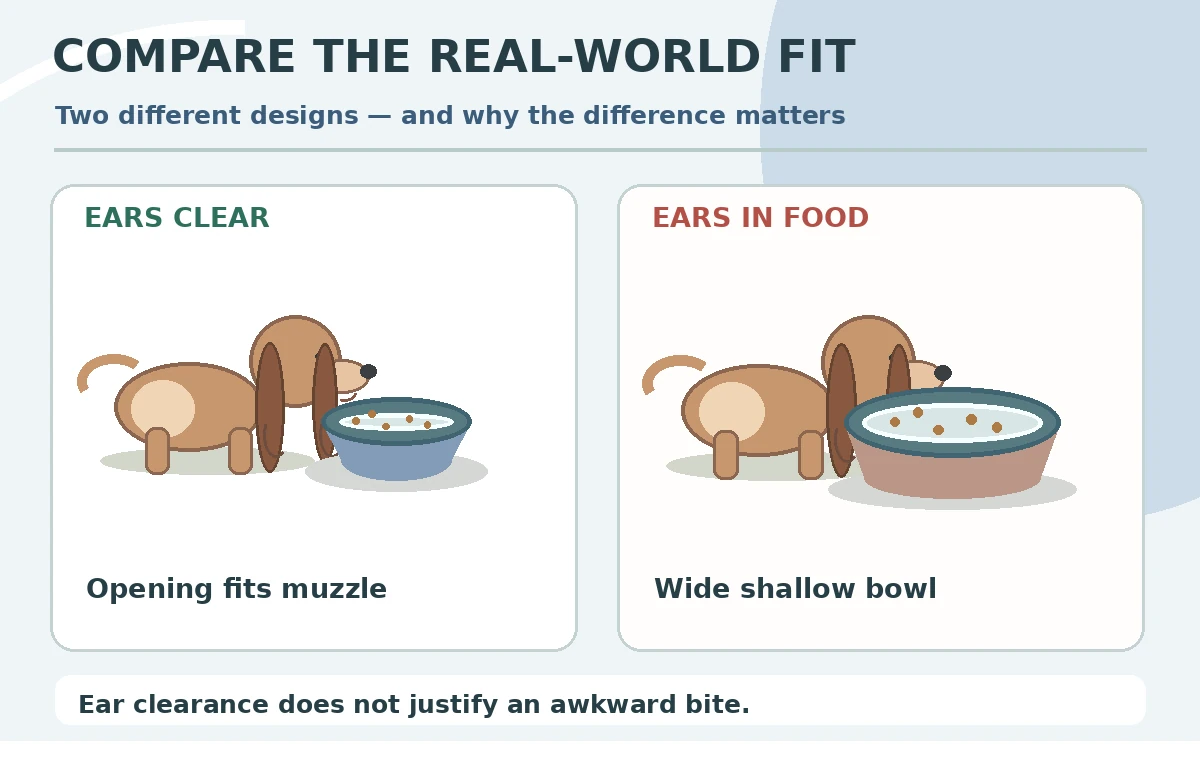
Set a sample bowl on the intended floor and allow the dog to approach it calmly. From the side, watch whether each ear tip falls outside the rim or dips into food. An opening that is slightly narrower than the full ear span may keep feathering alongside the outside wall. However, ears can swing forward while drinking, and bowl shape cannot control every movement. For wet food, look for hair grazing sauces or broth; for water, look for dripping ears that remain damp. Do not tie or tape ears without veterinary guidance as a substitute for a comfortable feeding setup.

Compare narrow mouth, deeper cup, and a plain dish
Narrow-mouth bowls have a smaller top opening over a wider lower body; this can exclude hanging ears while preserving some volume. Deep straight-sided vessels can keep ear tips high, but it may make the bottom difficult for a short muzzle to reach. Broad shallow dishes provide easy access but may let ears drag through food. There is no universal winner. Choose a shape based on the dog’s actual posture and the type of meal. If all shaped bowls make eating awkward, a regular stable dish plus gentle grooming around the ears may be preferable.
Keep water as easy to reach as food
Some owners focus entirely on dry ear tips and accidentally select a tall narrow water cup that is difficult for a dog to drink from. A dog must always have comfortable access to fresh water, even if the ears occasionally become damp. Check the useful water depth when the bowl is partly empty, not only when full. Avoid stands that let the bowl tilt or tip. Watch for repeated nose bumps against the rim, reluctance to drink, or spilling due to an awkward posture. If a specialized water bowl reduces drinking, return immediately to an accessible regular bowl.
Do not treat ear dryness as infection prevention
Cleaner, drier hair can reduce mess, but a bowl cannot rule out or prevent every cause of outer ear problems. Ear infection signs can include odor, pain, swelling, discharge, redness, or frequent head shaking. If these appear, consult a veterinarian; do not attempt to solve them by changing dishes alone. AKC notes that a narrower bowl opening may help long-eared dogs keep their ears out of food. That is a practical grooming benefit, not a promise of preventing infection. Check the ears gently after messy meals and follow individual veterinary advice for any ongoing ear care.
Choose materials and a base that clean well
Long-ear bowls may have tapered inner walls that collect oils where a flat sponge cannot reach. Look for smooth, food-safe materials, rounded seams, and a removable non-slip base. Stainless steel is often convenient if it has no sharp lip; glazed ceramic needs regular chip inspection; textured plastic can scratch. Follow product washing instructions and wash food dishes with soap and hot water after use, as FDA recommends. Rinse thoroughly and dry before refilling. Under a rubber base ring, check for trapped moisture. Replace damaged bowls rather than trying to sand or repair surfaces that touch food.
Try a short practical trial before committing
Put a normal measured meal in the candidate dish and observe at least one relaxed supervised feeding. The dog should approach normally, reach food all the way to the bottom, and finish without repeatedly pushing the bowl across the floor. Check the ears afterward, but do not make ear cleanliness the only success metric. A dog that seems uncomfortable or leaves food behind needs a better fit. If possible, choose a returnable model and repeat the test with water. Ear positioning may vary from one meal to the next, especially if the dog shakes or turns while eating.

Use a balanced ear-clearance checklist
The purchase earns a pass when the muzzle can enter freely, the ears usually rest outside the food opening, the base stays flat, the bottom is reachable, and the vessel is easy to scrub. The same bowl may fail another dog with a different face shape. Keep a cloth handy after broth-rich meals, and use a normal wide bowl whenever hydration would otherwise be restricted. If ear tips repeatedly become damp or painful, review grooming and veterinary needs separately. The best bowl is the one the dog uses naturally, not the one that keeps every strand perfectly clean in a product photograph.
How We Research
We compared primary veterinary, government food-safety, and established animal-welfare guidance with real-world bowl geometry and maintenance trade-offs. We separated general feeding principles from product-specific fit questions and did not treat a manufacturer’s claim as independent evidence. The illustrations explain practical checks rather than certifying any product. We reviewed sources October 27, 2026. Read more about our editorial approach on About HubPet.
Sources
American Kennel Club: Choosing the Right Dog Bowl: Read primary guidance. Accessed October 27, 2026.
US Food and Drug Administration: Tips for Safe Handling of Pet Food and Treats: Read primary guidance. Accessed October 27, 2026.
US Centers for Disease Control and Prevention: Cleaning and Disinfecting Pet Supplies: Read primary guidance. Accessed October 27, 2026.
Safety note: These product-selection tips are educational, not an individualized feeding or medical plan. A sudden change in appetite, swallowing, breathing, or behavior warrants veterinary advice. Our veterinary disclaimer has more context.
Many designs have a narrower upper opening and deeper interior so ears fall outside the rim while the muzzle reaches food.
No bowl can guarantee that. It may reduce mess, but odor, pain, discharge, or repeated head shaking need veterinary assessment.
Yes. If a dog pushes its muzzle against the sides, struggles to reach the bottom, or stops eating, the shape is not a good fit.
Only if your dog can drink normally at all fill levels; comfortable access to fresh water matters more than preventing wet ear tips.
Observe a calm meal: muzzle movement should be free, ears should usually remain outside, and the base must not slide or tip.