
Squeaky dog toys can be fun because the sound makes a tug, carry, or retrieval game more engaging. The sound does not tell you whether the toy is well constructed. Many plush or rubber squeakers contain a small internal device that may become exposed if stitching fails or a dog chews through the shell. AKC cautions against letting a dog remove and chew a squeaker because a dog might swallow it. Focus on where the design houses parts, how the material withstands this dog’s play, and whether you can observe the entire session.
Locate the squeaker before handing over the toy
Gently feel for the sound-making insert through the fabric or rubber and identify the likely seam or opening near it. Some toys have several squeakers; check each location. A strongly defined hard edge beneath thin plush may be easy for a persistent chewer to target. Avoid a toy with visible punctures, poorly secured openings, or loosely attached decorative eyes and ears. Do not cut the toy open to inspect it, then stitch it back and assume the repaired seam matches its original strength. Pick a different design when parts are already easy to reach.
Consider how the dog actually uses the toy
A dog who carries a squeaky plush gently may be well suited to a supervised soft toy. A dog who immediately pins it down and tears at the squeak-source needs a different option, not endless replacements. Look for the pattern of damage: concentrated bites over the squeaker, pulled stitching, shredded fabric edges, or deliberate swallowing attempts. For a dog who mouths and crushes hard objects, a non-squeaky, appropriately sized enrichment toy may be a better fit. There is no sound level or label that makes an insert immune to chewing damage.

Read the seam construction like a map
Look for secure stitching across the main body, the neck of a plush animal, and points where legs or ears join the torso. Pull lightly on attachments to see whether they loosen, but do not apply enough force to damage a sound toy. A dog can grab and pull exposed thread loops, opening a pathway to stuffing or the squeaker. Fleece-like edges may hide early gaps: spread the fabric gently to inspect. Small glued-on noses, pom-poms, and plastic eyes add avoidable detachable parts for dogs inclined to chew them.
Choose size by mouth and chewing behavior
The entire toy should not fit inside the dog’s mouth, and treat any detached piece as a potential swallowing hazard. Sizing labels can help narrow options, but the meaningful test is whether this dog can compress, tear, and extract the interior. A large plush may still be unsafe for a powerful shredder because the squeaker itself is small. Avoid offering a toy intended for a much smaller animal just because it squeaks more readily. If a dog habitually tries to swallow fabric, consult a veterinarian or qualified behavior professional about safer enrichment approaches.
Separate squeak play from prolonged chewing
Use squeaky toys as short interactive games when you can watch for damage. Toss one across a clear room, invite a gentle retrieve, or briefly exchange it for a treat. If the dog settles down to dismantle it, calmly offer a more appropriate activity and put the toy away. Avoid using a squeaker to repeatedly startle or provoke a dog who appears distressed. A relaxed, voluntary play pattern is the goal, not maximum excitement. Children should not wrestle a squeaky toy from a dog’s mouth, especially when excitement rises.

Recognize the first retirement signs
Retire the toy for any split shell, visible filling, exposed sound device, detached decoration, hard fragments, or frayed loops. Do not wait until the squeaker stops making noise: a dog may damage it before the sound goes silent. If a portion is missing and the dog might have swallowed, keep the remains, note what is absent, and contact a veterinarian promptly. Do not induce vomiting or attempt to reach deep into a resisting dog’s mouth. Check even a visibly intact toy again after particularly vigorous play.
Wash only as the construction allows
Read the manufacturer instructions before putting a squeaky toy in the washer. Machine washing may damage certain sound mechanisms or loosen adhesive and seams; a toy that survives washing still needs an inspection afterward. Remove toys with lingering damp filling or signs of mildew and follow the care label for drying. If a squeaker contains electronics rather than a simple mechanical insert, keep water away unless the maker specifically describes a safe cleaning method. Replace a toy with water-damaged or loose electronic parts rather than attempting an improvised repair.
Consider noise tolerance around the household
Some dogs and people find high-pitched, repeated squeaks overwhelming. If the dog flinches, retreats, pins ears, or avoids the toy, offer a quieter item. Do not use squeaks near sleeping animals or as a substitute for teaching a recall cue. In a multi-pet home, separate toys when one animal guards squeakers or play becomes competitive. A softer sound may be preferable for shared indoor spaces, but noise level alone is not a guarantee of safe construction. Always match interaction intensity to individual comfort.
Choose between plush, rubber, and no squeaker
Plush squeakers are easy to carry and may suit gentle mouthers, but seams and stuffing introduce failure points. Rubber squeakers can be easier to clean, although punctures and detached valves still matter. Squeak-free toys remove the sound insert entirely and may be a simpler choice for dogs who destroy squeakers. Choose based on the safest intact construction that your dog can enjoy, not the volume of the squeak or a claim of toughness. Retire any toy that breaks into swallowable parts, regardless of material.
Adopt a consistent before-and-after routine
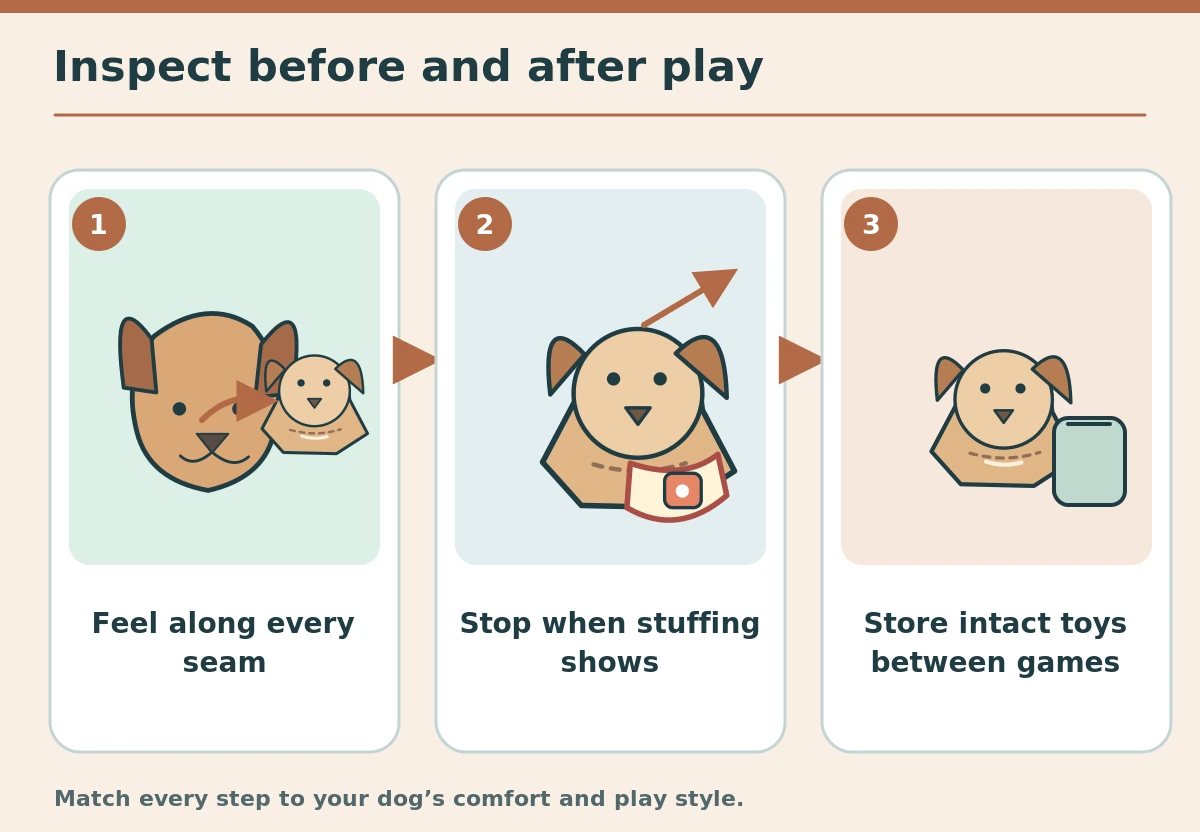
Before play, feel for exposed hard edges, check all seams, test attachments, and confirm a manageable size. Supervise a brief interactive round and watch where the dog directs its biting. After play, inspect again, dry according to instructions, and store the toy beyond the dog’s reach between games. If the dog seems fixated on extracting inner parts, switch to a different category. If ingestion may have happened, contact a veterinarian even if the dog still seems normal. An inspection habit is more useful than hoping a toy’s label will prevent every accident.
How We Research
We reviewed AKC and American Humane toy-selection warnings, then applied ASPCA ingestion-risk principles to the small components hidden inside squeaky designs. We did not evaluate a squeaker, manufacturer, or independent lab durability test. For our site-wide standards, see About HubPet.
Sources
American Kennel Club — A Guide to Toy Shopping for Your Pup: Read source. Reviewed October 27, 2026.
American Humane — Choosing Safe Toys for Pets: Read source. Reviewed October 27, 2026.
ASPCA — Position Statement on Dog Chews and Treats: Read source. Reviewed October 27, 2026.
VCA Animal Hospitals — Behavior Management: Enrichment and Activity Toys: Read source. Reviewed October 27, 2026.
Safety note: General product information is not veterinary advice. If your dog may have swallowed a toy fragment, or shows pain, choking, or sudden distress, promptly contact a veterinarian or emergency service. See our veterinary disclaimer.
Yes. A damaged toy can expose a small squeaker that may cause choking or intestinal blockage if swallowed. Remove broken toys promptly and contact your veterinarian if any part is missing.
Often they are not a good fit when a dog immediately tears toward the squeaker. Supervise and choose a safer enrichment option that does not contain easily released internal parts.
A home alteration can leave weak seams or loose material and does not restore verified construction. A purpose-made non-squeaky toy is usually a more reliable alternative.
Only if the manufacturer allows it. Washing and drying can weaken seams or components; inspect the entire toy again before allowing another supervised play session.
Visible stuffing, split seams, detached ears or eyes, cracked rubber, and any reachable squeaker are reasons to retire it immediately rather than let the dog finish it.