
This guide offers general home-care information, not veterinary advice. If a pet has sudden toileting changes, pain, or signs of illness, consult a veterinarian. Read the veterinary disclaimer.
Laminate planks can look water resistant until liquid reaches a joint. After a pet accident, the most important step is prompt removal without forcing moisture between boards. The finish, core construction, and manufacturer instructions all matter. Some modern products carry specific water-resistance claims, but those do not justify leaving urine pooled on the floor. This guide addresses routine spills on household laminate. Persistent accidents deserve a veterinary or behavior assessment alongside proper cleaning.
Confirm that the surface is laminate
Laminate, luxury vinyl, and finished hardwood can look similar in photographs but need different care. Find the floor brand and product care sheet if possible. Shaw explains that many laminate products have a wood-based component and should not receive wet mopping or steam cleaning. Mohawk also advises prompt spill cleanup and avoiding water left on the surface. Do not rely on a generic product called floor-safe without checking your exact floor. If you rent, ask the property owner about installed materials before applying a specialty cleaner.
Blot first, especially across plank joints
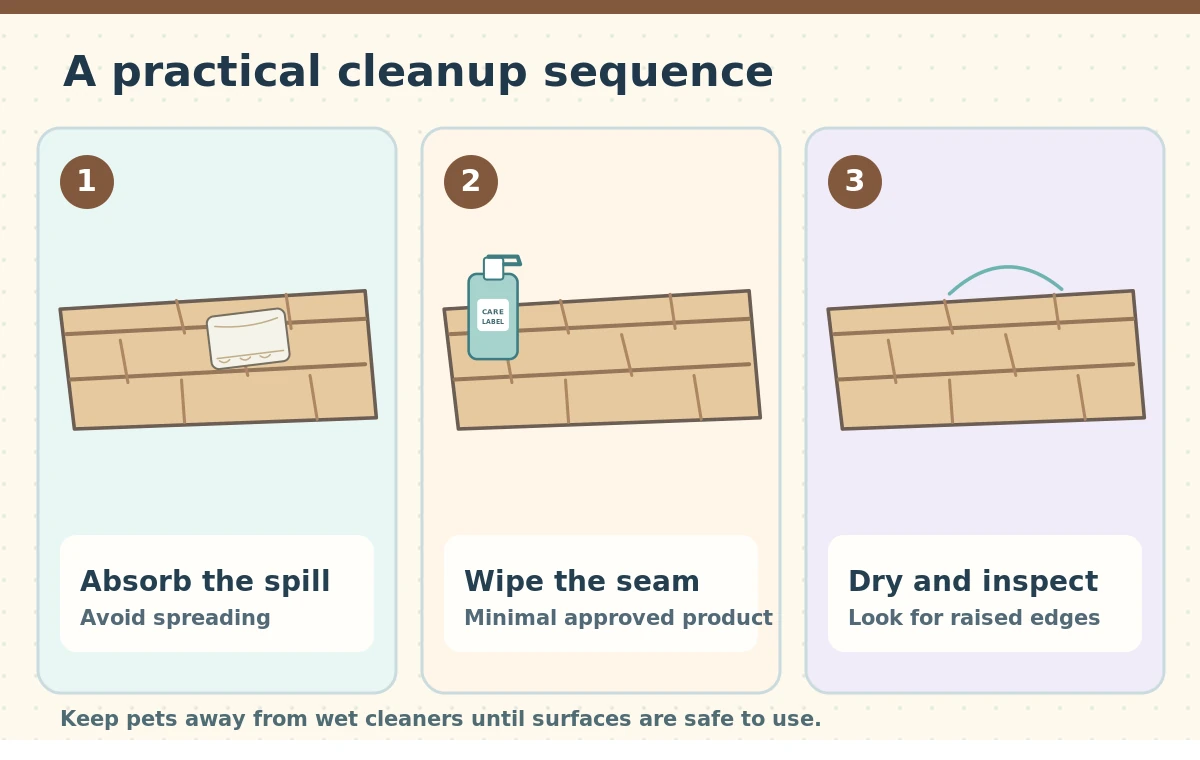
Keep the pet away from the wet patch and place an absorbent cloth directly over the urine. Replace it when saturated. Follow each visible seam with the folded edge of a fresh cloth rather than wiping liquid along the groove. Lift the cloth; do not spread the pool toward a wall, threshold, or floor vent. If the spill reached under a rug, remove it and dry the floor beneath. A quick, controlled response protects the seams better than flooding the room with a mop bucket.
Use only the approved cleaner in a controlled amount
Follow the laminate manufacturer’s cleaning instructions and the chosen product label. Some brands advise applying cleaner to a cloth, not spraying the floor directly. Never assume a concentrated enzyme formula is compatible with laminate joints or finishes. If an odor remover does not list laminate, seek manufacturer guidance before use. Avoid bleach, abrasive powder, harsh ammonia, steam, and improvised cleaner mixtures. The CDC advises using products appropriate to a surface and following label directions. A cleaner should remove residue without leaving a new wet pool.
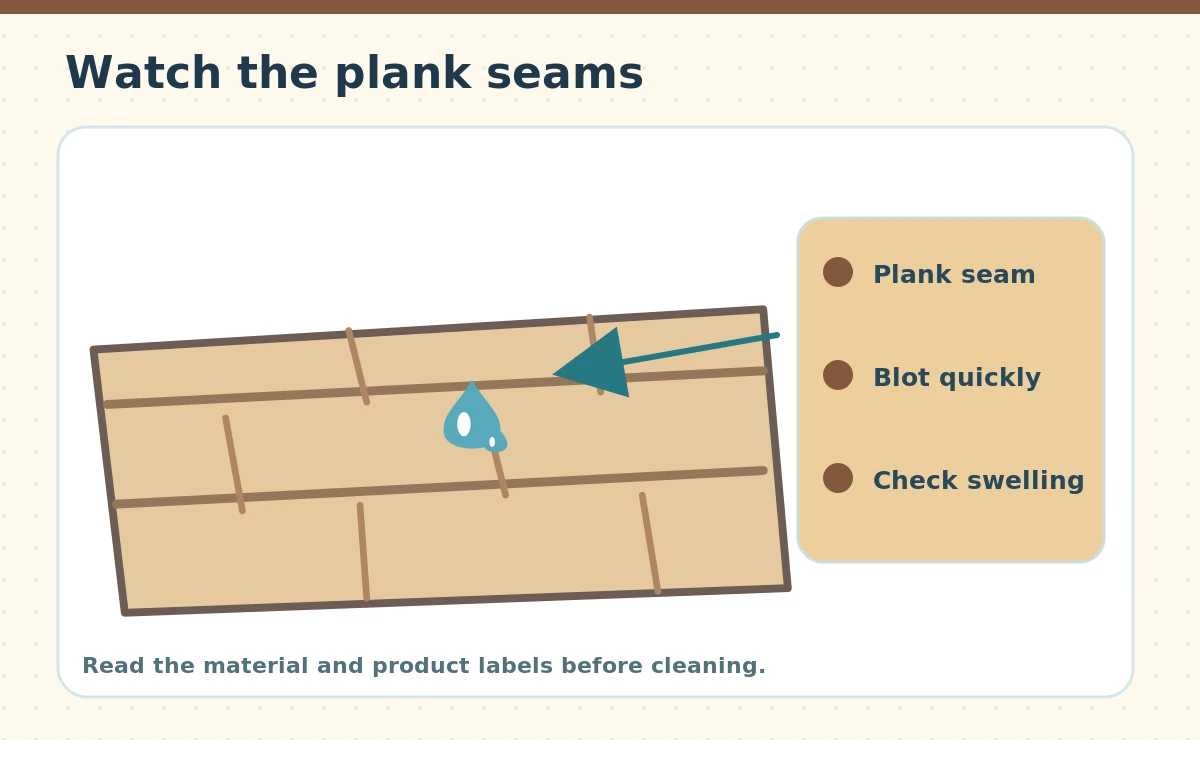
Protect seams, edges, and floor transitions
Focus on the narrow spaces where liquid can migrate: plank ends, long joints, door thresholds, cabinet edges, and baseboards. Fold a dry cloth into a slim pad and press gently along the seam. Do not force a brush or metal tool into a joint. Inspect nearby trim for dampness. If liquid reached a gap under the baseboard, document the location instead of pouring more cleaner into it. Hidden moisture may require flooring expertise, especially when the accident was large or unnoticed for several hours.
Dry the whole area before replacing a rug
Use fresh towels to remove residual moisture and ordinary room airflow to help the surface dry. Do not aim intense heat at the planks. Leave any rug or protective mat off until the floor and backing are completely dry. Shaw cautions against steam cleaners and wet mops because moisture can damage laminate. Even if a surface looks dry, check the seam edges for swelling, roughness, or dark lines. A rug should prevent future tracking, not conceal moisture beneath an impermeable backing.

Recognize signs of possible floor damage
A slightly raised edge, bubbling surface, soft joint, or separating plank can suggest moisture-related damage. Different laminate products vary, so avoid declaring a floor sound solely because it no longer smells. If the affected area stays uneven or damp, stop repeated cleaning and contact the floor manufacturer, installer, or qualified flooring professional. Document when the accident occurred and what products you used. The response may range from monitoring to replacing damaged planks. Surface cleaners cannot repair a swollen fiber-based core.
Do not confuse cleaning with disinfection
Routine removal of visible urine and soil is a cleaning task. Disinfection is a separate intervention that requires an appropriate labeled disinfectant and compatible surface. Many laminate makers restrict harsh chemicals and excessive water, so do not put a disinfectant on the floor merely because it has a pet accident. The CDC recommends cleaning first and using disinfectants when needed. Keep animals away from active products, and never mix household chemicals. Protect pets from residues by rinsing only as directed and drying fully.
Keep the pet and household safe during cleanup
Lead your pet to another accessible area with water and a safe resting space. Put paper towels and used wipes in a closed bin. Store cleaner bottles away from curious mouths and paws. ASPCA guidance notes that products can cause problems when pets contact or ingest them before drying. If your pet contacts a product, follow the label and obtain veterinary or poison-control help when exposure is suspected. Avoid scolding over the accident. Fear does not improve floor care or resolve a toileting problem.
Prevent repeated soaking at the same location
Use a washable, stable rug only where it will not trap wetness or become a chewing hazard. Check its backing regularly. Make outdoor toilet breaks or litter box access reliable. Clean previous marks with a compatible method rather than strong scent cover-ups. If urination changes suddenly, contact your veterinarian. Frequent accidents can be linked to many medical or environmental factors, and no cleaner can diagnose them. For an older pet, check that routes to the proper toilet area remain comfortable and free of slippery obstacles.
Keep a simple repair-ready record
Photograph the floor in consistent daylight before and after it dries. Note the plank location, seam appearance, product used, and whether the odor returns. Check under nearby mats after the next cleaning. If a seam lifts, call the manufacturer or flooring professional and keep the product care sheet available. Do not pry up planks or apply new sealant without knowing the system. The reliable routine is straightforward: absorb fresh liquid, protect the joints, use minimal approved cleaner, dry fully, and escalate visible damage.
How We Research
HubPet compared published guidance from animal-care organizations, public-health authorities, and material manufacturers. We checked that each cleaning method suits the actual surface rather than recommending one chemical for every household. Product labels and flooring or fabric care instructions take priority over generic techniques. We did not run a laboratory stain test or independently certify any cleaner. The illustrations are original educational drawings showing common construction details, not a substitute for a manufacturer diagram. Read our research approach.
Sources
Shaw Floors — How to clean laminate floors — guidance on safe cleaning methods, compatible materials, or pet exposure precautions.
Mohawk Flooring — Laminate care — guidance on safe cleaning methods, compatible materials, or pet exposure precautions.
CDC — Cleaning and disinfecting pet supplies — guidance on safe cleaning methods, compatible materials, or pet exposure precautions.
ASPCA — Poisonous household products — guidance on safe cleaning methods, compatible materials, or pet exposure precautions.
CDC — When and how to clean your home — guidance on safe cleaning methods, compatible materials, or pet exposure precautions.
Many manufacturers advise against wet mops. Blot the spill and follow your specific floor care instructions for controlled cleaning.
Compatibility depends on the exact cleaner and floor. Use it only when both sets of instructions allow that surface and application method.
Look for moisture at the joint, raised edges, dark lines, softness, or persistent odor. Ask a flooring professional about suspected hidden damage.
No as a default. Shaw and Mohawk warn against steam cleaning many laminate products because moisture and heat can harm the floor.
Seek veterinary advice when urination changes suddenly or repeats. Pain, straining, blood, or difficulty passing urine requires prompt attention.