
Curtains collect floating pet fur along folds, lower hems, and window ledges. A cat may also rub against the fabric, leaving hair that looks woven into the threads. Aggressive scraping can pull fibers, snag decorative loops, or stretch a lightweight panel. The safer approach starts with the care tag and the curtain’s weight. This guide explains when to use low suction, a soft brush, washable panels, or a professional cleaner. It also covers the window and rod setup, because a pet can tug a loose panel down during cleaning or play. Review our veterinary disclaimer before handling an exposure or health concern.
Check the panel before cleaning
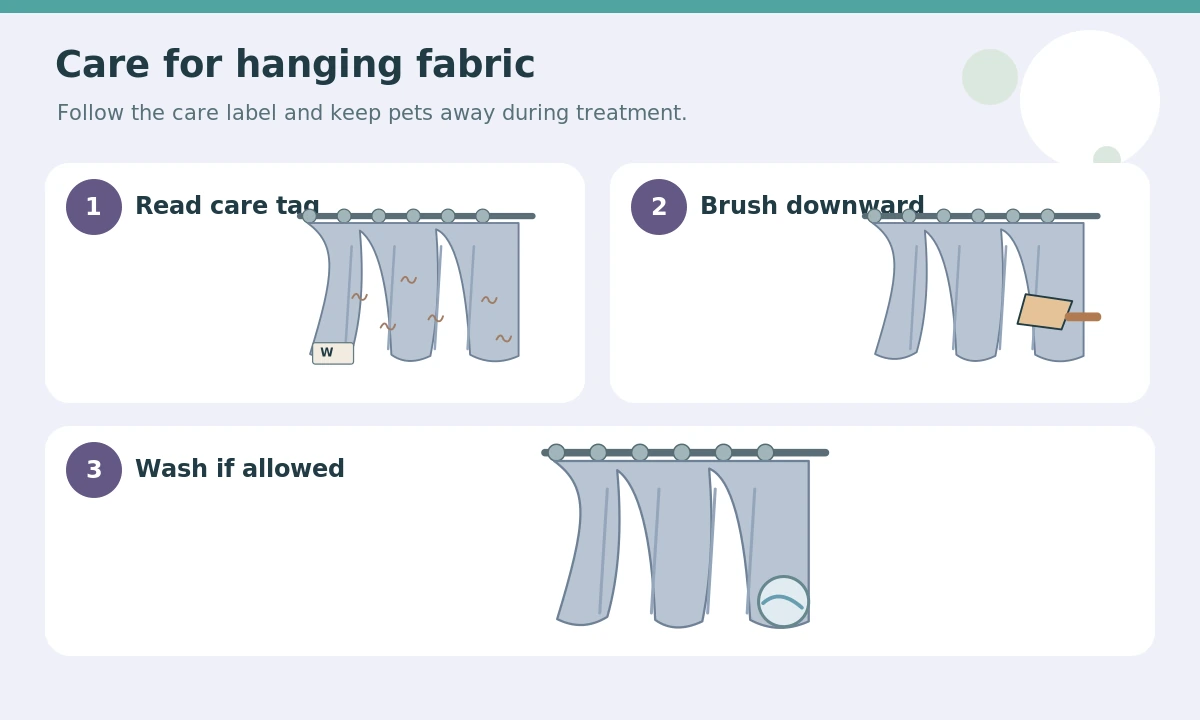
Find the fabric label at the top seam or side hem. A washable cotton blend, a lined blackout curtain, and delicate silk do not tolerate the same routine. Examine the lining, grommets, pleats, and decorative trim for loose threads. Test the cleaning tool near a hidden bottom edge. If the panel has sun damage or brittle backing, take a gentle route or ask a cleaner for advice. Never pull on a hanging curtain to see whether fur will shake free; that can loosen the rod or send debris into the room.
Start with dry, controlled removal
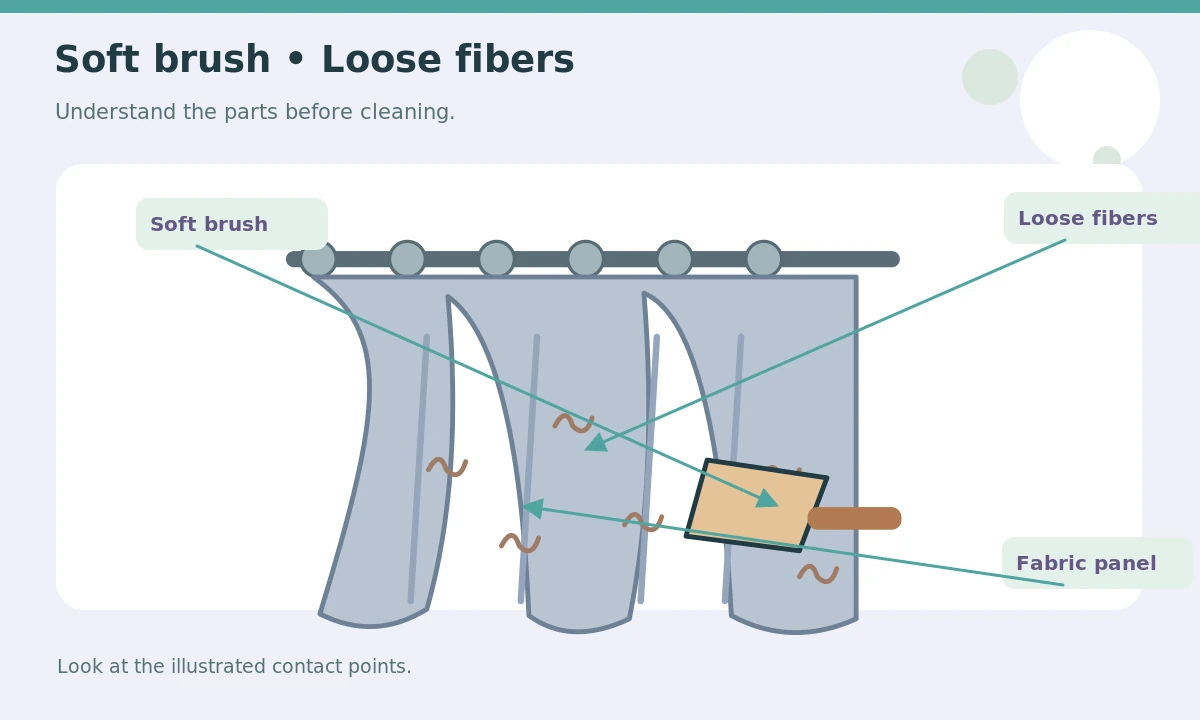
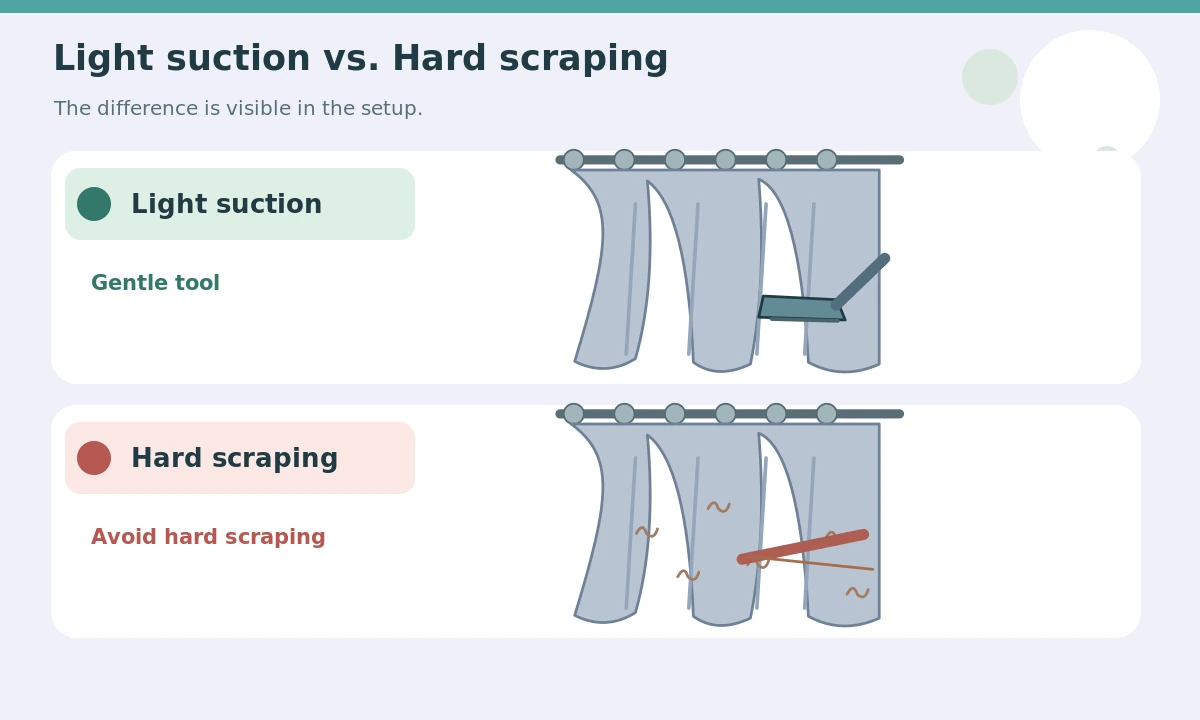
Close the window and stop nearby fans so fur does not drift into another room. Use a clean, soft upholstery brush or a vacuum attachment with gentle suction. Work down the hanging fabric in short strokes while supporting it lightly with the other hand. Keep the nozzle from sealing over thin cloth. A mesh screen or low-suction setting may help protect delicate weave if the vacuum maker permits it. Vacuum the sill and floor after cleaning, because hair falls down as you work. Keep your cat away from cords and tools.
Select tools according to the weave
Smooth, tightly woven fabric may release hair with a soft microfiber cloth. Looped, embroidered, or loosely woven panels can snag on stiff rubber edges, metal teeth, or adhesive rollers. Try a small area before brushing an entire panel. If the fabric puckers or pulls, stop immediately rather than increasing pressure. Do not use a pet grooming blade on furnishings. Avoid sticky tape that can leave adhesive or pull finishes from decorative trim. A few remaining hairs are preferable to permanently damaged curtain threads.
Manage long and heavy curtains
Thick drapes collect fur near the bottom and can become surprisingly heavy when damp. Check the mounting hardware before cleaning. If the rod wobbles or a bracket pulls away from the wall, repair the mounting before you handle the panel. Use a stable step stool for a high header; never stand on a chair or pull the fabric downward to reach it. On very long curtains, clean lower sections while they hang and remove the whole panel only when you can do so safely. Keep cords secured away from pets.
Wash only when the label permits
Take washable panels down carefully and inspect their care instructions for temperature, spin, and drying requirements. Remove excess hair before loading the washer so it does not collect in the drain. Wash curtains separately from pet beds that contain heavy fur and grit. Confirm whether the lining can shrink at a different rate from the outer fabric. Air dry or use the specified drying setting; excessive heat can distort pleats and coatings. Rehang the panel only when dry, using properly secured hooks and rods.
Treat blinds and window shades differently
Fabric Roman shades, roller shades, and slatted blinds have hardware that cannot simply enter a washer. Follow the shade maker’s cleaning directions and avoid wetting lift mechanisms. Dust with a soft cloth and take care around chains, cords, and loose string loops. Pets may chew these pieces, so secure or replace hazardous window coverings as appropriate. If a curtain shares a window with blinds, separate the cleaning steps instead of dragging a vacuum head over both. A broken blind cord is a safety issue, not a grooming chore.
Reduce static and repeat buildup without perfume
Static can make fur cling, especially in dry rooms. Use gentle mechanical removal instead of immediately spraying a scented softener on the panel. Fabric sprays may leave marks or irritate a pet that rubs against the curtain. The American Lung Association advises minimizing needless fragrance when indoor-air sensitivity is a concern. Clean the window sill and pet’s favorite resting surface at the same time so less loose hair settles back onto the fabric. Brush the pet according to coat type, and clean the brush afterward.
Set a sustainable routine
Make curtain maintenance a small part of the weekly cleaning schedule rather than an occasional forceful deep clean. On a sunlit window, check the lower third of the panel, rod brackets, and any shelf where a cat rests. Remove loose fur before it becomes packed into folds. If a cat persistently attacks the hem, improve appropriate play and scratching options while protecting hanging cords. Contact a veterinarian if shedding suddenly changes or the animal develops skin irritation. Cleaning removes loose hair; it cannot explain a sudden medical change in coat health.
How We Research
HubPet reviewed published animal-welfare and household-surface guidance, then organized practical decisions around access, compatible materials, cleanup order, residue, and drying. We distinguish general pet-care advice from instructions that vary by product and surface. We did not test cleaner brands or verify compatibility for individual materials. See our About HubPet page for editorial context.
Sources
ASPCA — Pet Poisons: Household Products and Cleaning Agents — Read source.
American Lung Association — Fragrances — Read source.
Humane World — How to Remove Pet Stains and Odors — Read source.
Safety note: This guide offers general household and pet-care information, not veterinary diagnosis or a warranty for any cleaning method. Follow surface and product labels. Keep animals away from wet products and contact a veterinarian when illness, poisoning, or irritation is possible.
Only after testing a hidden patch. Adhesive rollers can tug delicate fabrics or leave residue on finishes, so soft brushing may be gentler.
You can when the fabric and vacuum instructions allow it. Use low suction, support the panel, and avoid pulling or stretching seams.
Washing may help only if the label permits it. Remove loose fur first, account for the lining, and dry using the specified method.
Pets rub against panels and hair circulates from nearby bedding and window ledges. Clean the nearby resting area along with the curtains.
No. A soft brush or microfiber cloth can remove loose hair without adding fragrance. Always follow the fabric maker’s care instructions.