
This article provides general pet-care information, not individual veterinary advice. For painful mats, skin changes or sudden grooming intolerance, consult your veterinarian. See our veterinary information disclaimer. A dog who turns away from a brush is communicating something useful. The tool may pull, the handling may feel unfamiliar, or the room may be too busy. Some dogs have pain or a skin problem that makes even a gentle stroke unpleasant. The response should not be stronger restraint or a faster grooming session. Instead, work on predictable interactions where the dog has room to step away and the brush appears before a pleasant reward. Start by ruling out obvious discomfort and choosing a tool suited to the coat. Small voluntary steps give you information about readiness.

Look for physical reasons to pause
Before planning training, inspect the coat visually for tight mats, redness, sores or heavy debris. Do not force a comb through a spot that makes the dog flinch. A sudden change in tolerance can reflect skin irritation, pain or another medical issue. Contact your veterinarian when brushing becomes newly painful or the dog guards a specific body area. A professional groomer can help with coat-specific tools, but severe matting or injured skin may need veterinary attention. Teaching acceptance is not a substitute for addressing discomfort.
Choose a quiet station with an exit
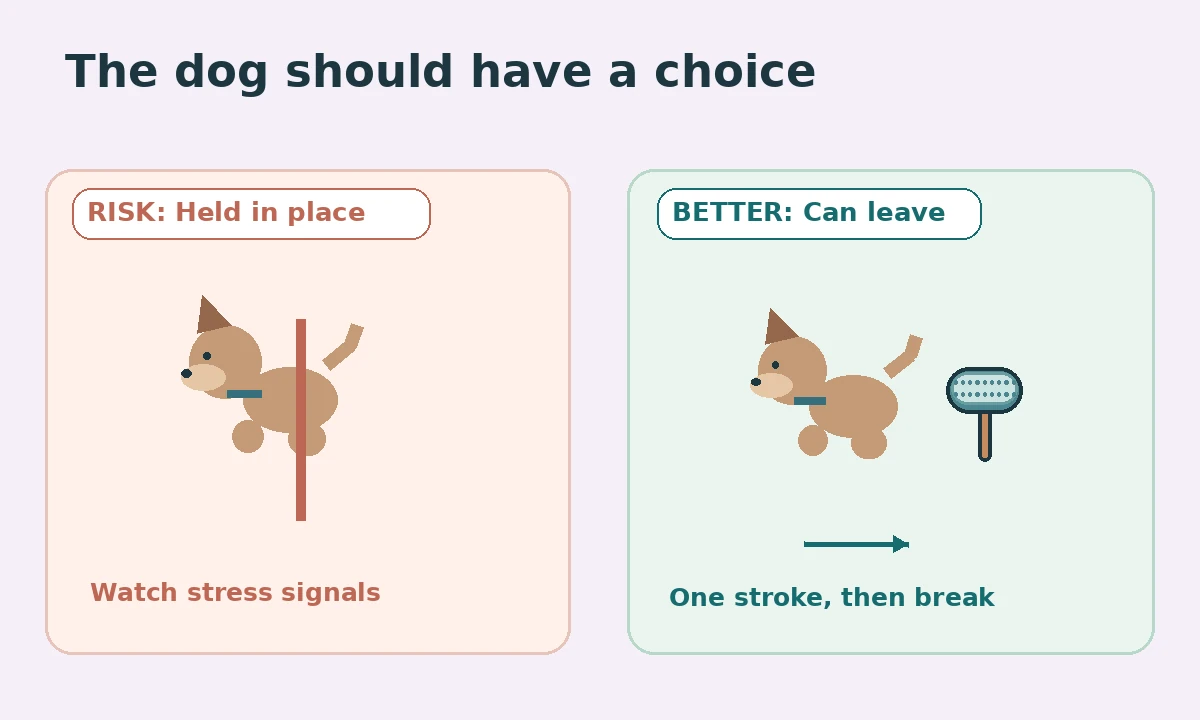
Prepare a low, stable non-slip surface such as a rug on the floor. Keep the doorway open and let the dog leave; never follow with the brush. Put treats within reach before introducing the brush. Avoid starting beside a running vacuum, noisy guests or an excited second pet. A dog does not need to stay in a fixed pose for several minutes to make progress. If the animal settles on its own bed nearby, begin with a calm reward there. Removing competition and unstable footing reduces unnecessary pressure.
Show the brush before it touches fur
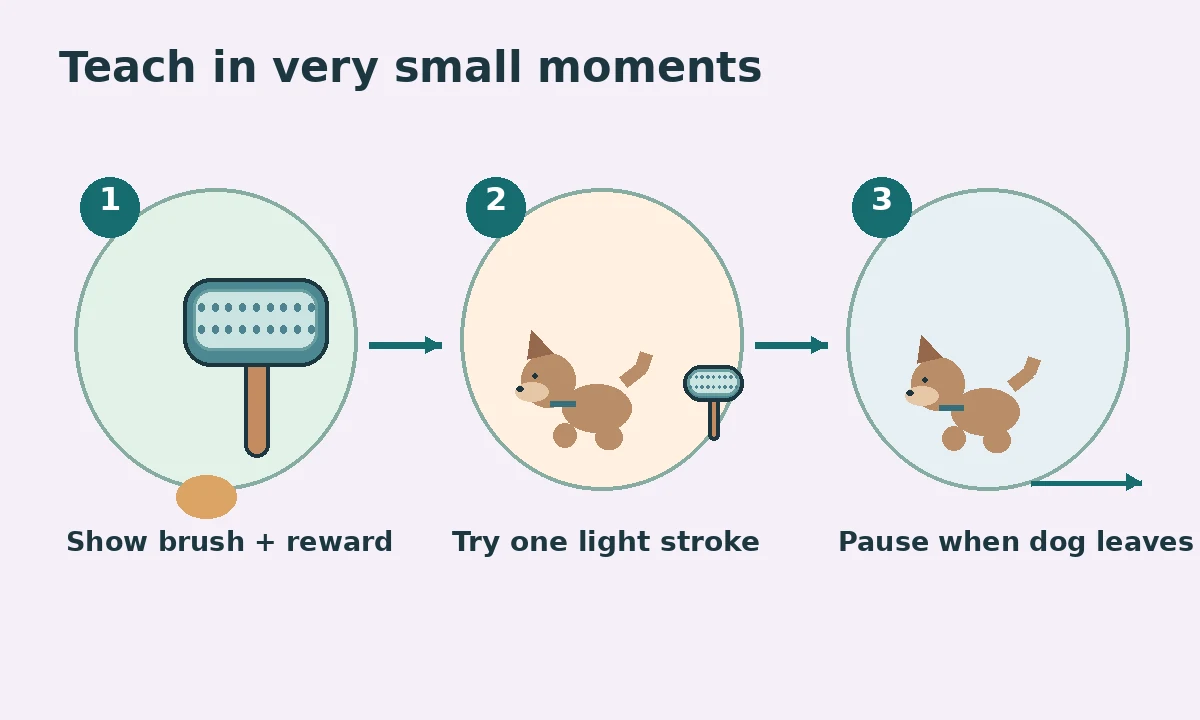
Hold the brush still at a comfortable distance, then reward the dog for noticing it without stress. Move it away before the dog needs to retreat. Repeat a few times, allowing the dog to approach rather than following with the tool. If the dog stiffens, freezes or avoids food, increase distance and simplify the session. Next, reward a brief voluntary touch to the brush handle, not the sharp pins. This step builds a predictable association and helps you observe the dog’s choice. Do not lure the nose across bristles or trap the dog beside a wall.
Begin with one easy stroke
When the dog remains loose and comfortable, offer a single gentle stroke on a low-sensitivity area such as the shoulder. Stop, remove the brush and reward. Keep pressure light and follow the direction of hair growth. Do not begin by pulling knots at an armpit, behind an ear or around the tail. These places may require separate grooming help. End after a successful small action rather than adding strokes until the dog resists. A few calm seconds can be a complete training session for an animal that previously fled the brush.
Learn the dog’s stop signals
Turning the head away, stepping back, sudden stillness, tension around the mouth or repeated attempts to leave may mean the task has become too difficult. These signals depend on context and do not establish a diagnosis. Make it easy for the dog to pause. If the dog moves away, stop brushing and allow recovery. Do not punish growling or suppress warning signals. When the dog chooses to return, lower the challenge rather than repeating the same uncomfortable stroke. Measure progress through ease and voluntary participation.
Adjust tools without disguising pain
A soft mitt or gentle brush may feel different from a metal slicker, but softness alone does not remove mats. Match the tool to the coat and ask a groomer if you are uncertain. Test the brush head on your own forearm for obvious sharp points without assuming human skin is a perfect comparison. Inspect for broken pins. If the dog remains reluctant in one region, do not switch rapidly among several tools while continuing to pull. Pause and assess that area with a professional. Never use sedatives or human calming products without veterinary direction.
Build duration only after comfortable starts
Keep early sessions short and spaced out. Once one stroke reliably feels easy, try a second stroke followed by another clear break. Work on a small patch rather than an entire coat in one attempt. Maintain opportunities to sniff, stand or change posture. A dog may tolerate the back well but need separate steps for feet and chest. Track what the dog chooses to accept, not the number of brush passes achieved. Gradual progress may take multiple days or longer depending on past experience.
Handle necessary mats professionally
If you find a tight mat, do not use the training plan as a reason to prolong painful combing. Mats close to the skin can hide irritation. Household scissors are especially risky because skin may be drawn into the knot. Consult a qualified groomer or veterinarian for a safer removal plan. After the coat is comfortable again, continue gentle cooperative practice with easier areas. A break from grooming does not mean ignoring an animal in pain; it means choosing the right help without repeated pulling. Preventive small sessions matter after the professional addresses the urgent problem.
Keep success visible and practical
Note the location, duration and body language of each session. If the dog calmly approaches the brush and accepts one light stroke, record that as progress. Try using the same calm cue and predictable start each time, then end with an easy reward. If tension increases across several sessions, seek a credentialed reward-based trainer or veterinary behavior professional. Do not force a deadline for a full coat brush-out. A successful routine is one the dog can comfortably repeat and one that allows the owner to notice when further care might help.
How We Research
We compare veterinary grooming and animal welfare guidance with manufacturer instructions where equipment compatibility matters. We distinguish routine coat maintenance from painful matting and medical problems. Our practical checks focus on the actual tool, coat contact, the dog’s comfort signals and safe stopping points. Learn about our editorial process. These illustrations explain general principles rather than certify any specific product or replace a professional examination.
Sources
RSPCA — Why and How Should I Groom My Dog? — Guidance on coat care, comfort, tool use and safe limits.
VCA — Grooming and Coat Care for Your Dog — Guidance on coat care, comfort, tool use and safe limits.
ASPCA — At-Home Pet Grooming — Guidance on coat care, comfort, tool use and safe limits.
Pulling, past discomfort, noise, handling or skin pain may contribute. Observe the context and have new pain or skin changes assessed.
Avoid forcing restraint. Give the dog room to leave, reward brief voluntary participation and seek professional help for necessary difficult grooming.
Small rewards can support a gradual positive association when the dog is comfortable enough to eat and can choose to disengage.
That area may be sensitive or matted. Do not pull through it; ask a groomer or veterinarian to assess the coat and skin.
A few comfortable seconds may be enough. End before distress and extend the number of easy strokes gradually across future sessions.