
A puppy playpen gives a young dog more space than a sleeping crate, but extra space adds decisions. Where will the puppy rest, where will toys go, and how will you prevent a panel from tipping when small paws push against it? A useful pen should make supervision and regular care easier, not replace either one.
Puppies have changing bathroom needs, teething habits, and limited experience with barriers. AKC recommends a safe confinement area alongside a predictable routine and frequent toilet breaks. If your puppy shows extreme distress or harms itself against barriers, consult a veterinarian. Our veterinary information disclaimer explains why a home guide cannot assess medical or behavioral causes.
Choose the pen’s role in your daily schedule
Decide whether you need a supervised play area during work calls, a quiet rest space after activity, or a larger puppy-safe zone for short household tasks. A playpen is not a substitute for walks, social interaction, toileting trips, or direct supervision around new objects. These responsibilities continue regardless of the pen size.
Write down when the puppy will use it and who can check in. If the planned confinement period exceeds what the puppy can manage between bathroom trips, arrange help or discuss an appropriate separate toilet area. Avoid treating any published age-based limit as permission to ignore your individual puppy.
Measure a footprint that supports separate activities
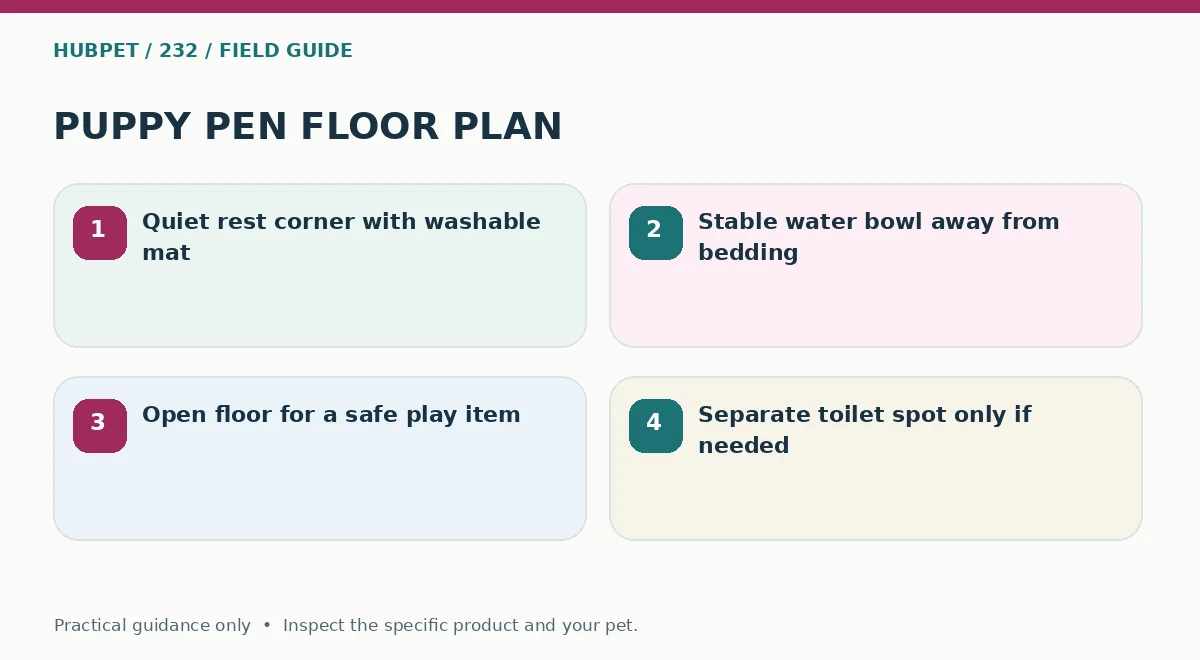
A pen needs space for natural turning, a quiet bed or mat, a water bowl when appropriate, and a safe play item. The puppy should not have to step through spilled water to reach rest. Measure the usable floor after you arrange the equipment, rather than relying on the outer dimensions shown on the box.
If you plan a designated indoor toilet area for times when outdoor breaks are impossible, keep it clearly away from the resting and feeding zone. That is a management decision, not a guarantee of house-training progress. Prioritize a consistent outside schedule whenever possible.
Pick panels for the puppy you have now and will soon have
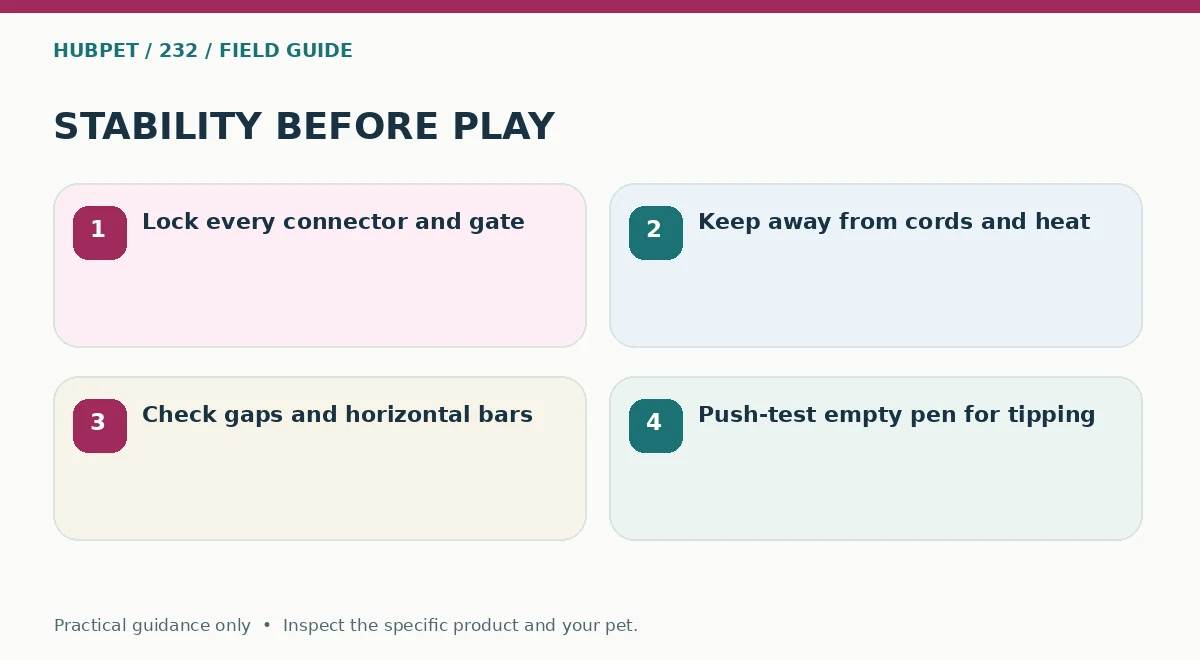
Look at panel height, rigidity, latch access, and the shape of every opening. Young puppies can climb horizontal bars or squeeze through surprisingly large gaps. Test the empty pen for flex and check whether the gate can swing open when pushed against a wall or cabinet.
Plastic panels may be easier to wipe but can become chew targets for a teething puppy. AKC cautions about plastic pens during that stage. Metal pens also need inspection for sharp joins and exposed coating. A material name alone cannot certify that the pen suits a particular puppy.
Build on level ground and stop tipping before use
Choose a level, non-slip indoor surface away from stair edges, heaters, cords, and household traffic. Assemble every connection according to its instructions. Do not improvise with string or thin wire that could become a chewing or entanglement hazard. Push gently on each panel without the puppy inside to check stability.
Some products have floor anchors or connectors intended for specific surfaces. Use only the components and placements the manufacturer approves. A free-standing pen should remain stable when a puppy bumps it in ordinary play. If it tips or folds unexpectedly, change the setup before introducing your puppy.
Create sleep, drink, play, and toilet zones
Place a low, washable rest mat in the quietest corner if the puppy leaves bedding intact. Keep water accessible as appropriate for the puppy’s age and routine, with a stable bowl that cannot easily tip. Offer only toys whose size and durability you have already checked while supervising.
Keep the space simple at first. Dangling strings, loose fabric strips, exposed cables, and small detachable parts do not belong inside. If you add a toilet station for unavoidable longer gaps between outdoor breaks, place it away from food and rest so the puppy can use each area separately.
Introduce the open gate before closing anything
Allow the puppy to walk through the open gate while you stay nearby. Place treats or part of a normal meal just inside and reward calm voluntary entry. Leave promptly if the puppy looks uneasy; then retry later with a smaller step. The pen should predict something comfortable, not sudden isolation.
Once the puppy chooses to enter, briefly close the gate while you remain present. Reopen it before restlessness escalates. Gradually practice the household movement your puppy will actually see, such as sitting at a nearby desk or stepping a short distance away. AKC recommends building alone-time skills in small steps.
Pair pen time with an actual potty plan
Take the puppy for a toilet opportunity after waking, playing, eating, and before a longer rest. Watch sniffing, circling, restlessness, and other individual signals. A puppy who has an accident is giving you information about timing or management, not misbehaving out of spite.
Record bathroom breaks and clean accidents without scolding. If the puppy repeatedly soils the sleeping area or has sudden changes in urination, seek veterinary advice. Our first-week dog checklist helps organize new household routines alongside confinement.
Keep collars, toys, and other animals in mind
A collar tag or harness strap can catch on a pen joint while the puppy twists during play. Ask a qualified professional about safe accessory management for your setup. Do not leave chew items that break into small pieces. Inspect toys after each session and remove damaged objects immediately.
Children should not climb into the pen or reach through panels to disturb a resting puppy. Other pets should not be able to corner the puppy through the mesh. The pen can create a useful boundary, but a calm introduction and close supervision remain necessary in a multi-pet household.
Recheck the design after each growth spurt
What contained a small puppy last week may not contain an agile jumper today. Watch whether paws reach the upper rail or the puppy begins climbing horizontal bars. Raising the walls may not solve every escape pattern; some puppies need a different safe area and supervised behavior support.
Inspect wear on latches and floor protectors after teething episodes. Reassess the sleeping area as body size changes. A pen that was roomy enough for naps may become crowded after you add larger bedding and bowls. Let your puppy’s actual movements guide adjustments.

Use a launch checklist, not a pen as a babysitter
Before each use, verify a stable structure, locked gate, clean floor, safe water placement, and no reachable cables. Confirm that the puppy has had a suitable toilet break and that someone can respond if distress appears. A brief calm session tells you more than a long unattended trial.
When the puppy can relax in the pen, continue rewarding those choices while increasing freedom elsewhere under supervision. If the puppy becomes frantic or the setup fails a stability check, stop and reconsider the enclosure. Our reward-based dog-training basics explain the approach.
How We Research
We reviewed current animal-welfare, behavior, and veterinary guidance alongside the decision criteria in this article. Sources were checked on October 26, 2026. Product dimensions, travel policies, and available models can change, so verify them directly before purchasing or traveling. We have not purchased, crash-tested, ranked, or endorsed individual models. Learn about HubPet at About HubPet.
Sources
American Kennel Club: Choosing the Right Playpen for Your Dog. Accessed October 26, 2026.
American Kennel Club: When Can Puppies Be Left Home Alone?. Accessed October 26, 2026.
American Kennel Club: Puppy Schedule: Daily Routine for New Puppies. Accessed October 26, 2026.
AVSAB: Position Statements and Handouts. Accessed October 26, 2026.
No pen replaces regular toileting, exercise, social contact, and monitoring. Match each session to your puppy’s age, comfort, and individual bathroom needs; arrange human help for longer absences.
An indoor toilet zone may help in specific circumstances, especially when outdoor breaks cannot happen in time. Keep it apart from bedding and continue a consistent outdoor routine where practical.
Neither material is always safer. Check panel gaps, rigidity, exposed edges, chew behavior, and stability. Teething puppies may damage plastic, while poorly finished metal can present other hazards.
Collars and tags can snag on bars or connectors. Review the specific setup with a veterinarian or qualified trainer and remove entanglement hazards before confinement.
Return to shorter voluntary-entry exercises with the gate open, then practice calm brief closures. If the puppy panics or hurts itself, stop the exercise and seek individualized help.