
A heavy-duty dog crate can look reassuring in a product photo. Thick bars, a large lock, and a dramatic strength claim do not tell you whether your dog can rest there safely. The important questions concern reachable gaps, usable space, mechanical reliability, and your dog’s response to confinement. This guide helps you inspect those details before buying.
Strength is not a treatment for fear. ASPCA warns that dogs with separation distress can panic or injure themselves while trying to escape a crate. If your dog claws, drools heavily, or throws their body against barriers, discuss safer management with a veterinarian or qualified reward-based professional. See the HubPet veterinary disclaimer for the limits of general advice.
Define the job before considering thicker steel
Start with the situation you need to manage. Is your dog comfortable sleeping in an ordinary crate but hard on door hardware? Does a household doorway need a secure resting boundary? Or does the dog panic when left alone? Those problems look similar on a shopping page, yet they call for different responses.
For a calm dog, reliable construction and suitable dimensions may be useful. For a frightened dog, increased containment can increase the chance of injury. Watch your dog during short supervised trials and keep a written description of the behavior. The crate should support a humane routine, not replace one.
Read the door as a complete system
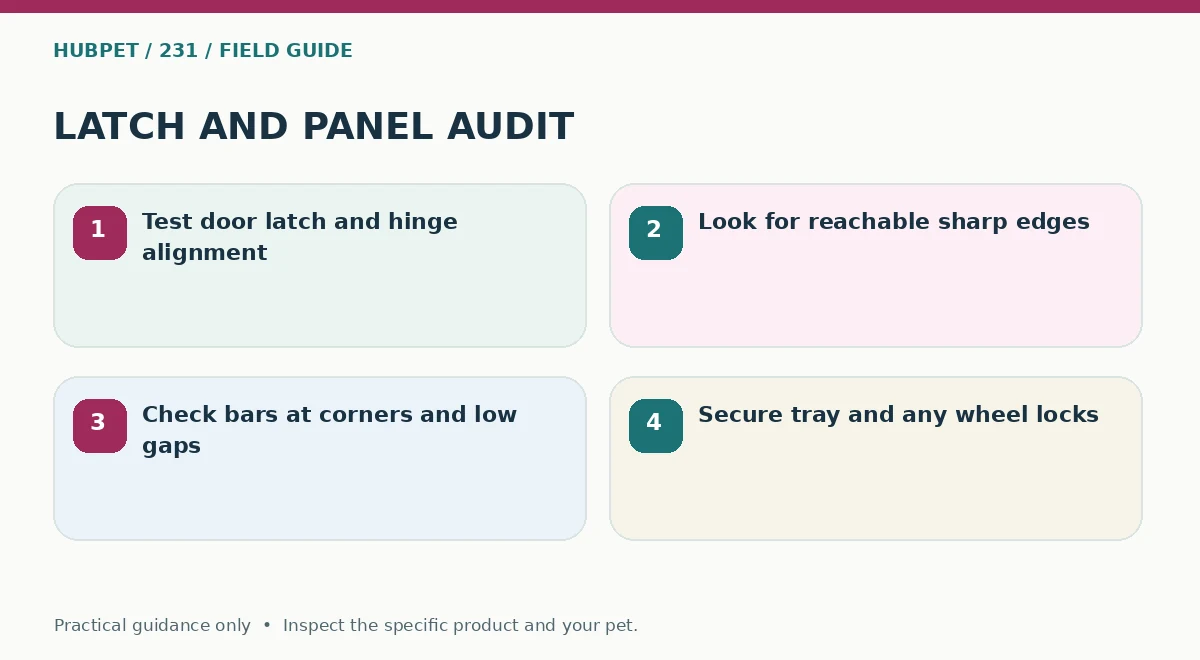
Inspect the latch, hinges, strike plate, door frame, and any secondary catch. The latch should operate smoothly from outside while resisting accidental release from inside. Ask how it secures when the crate shifts on an uneven floor. A thick padlock is not helpful if the hinge pins or frame can move.
Look for sharp metal ends, exposed screw threads, large pinch gaps, and areas where a paw could reach a moving latch. Test empty doors several times before the dog enters. Doors must not slam shut during voluntary entry. Avoid modifications that add hooks or protruding hardware inside the resting area.
Check bar spacing against paws, jaws, and collars
Wide gaps may let a dog wedge part of the muzzle through the enclosure. Narrow gaps can still catch nails, tags, or teeth if the animal bites the bars. Examine corners and the lower door edge, where panel spacing can differ from the middle. Smooth welds matter as much as thick material.
A collar or harness may snag on crate hardware, particularly when a dog turns or scratches. Discuss safe accessory removal and supervision with a pet-care professional. No bar pattern eliminates risk for a dog determined to escape, and biting metal can cause dental or mouth injuries.
Measure usable interior room, not the marketing size
Measure your dog standing naturally and lying in a favorite position. Check that the assembled crate permits full standing posture, an easy turn, and comfortable lying down. Seller measurements may describe the outer frame rather than the interior floor. A deep door threshold or raised tray can reduce accessible space.
Try the fit while the door remains open and offer rewards for voluntary exploration. Thick bedding changes usable height, so inspect the crate with your intended mat in place. A larger model still requires a stable floor and suitable home placement. Never force a frightened animal inside to finish a size test.
Compare fixed panels with folding mechanisms
Welded structures may have fewer folding joints, but inspect every weld and coating. Collapsible designs can offer easier storage, yet their hinges and retention pins create additional points to test. Check that panels remain locked without relying on the dog’s weight or friction against the wall.
Look beneath the removable floor and around wheel mounts. If a crate has casters, use the maker’s approved locking system and confirm it cannot roll when bumped. A removable tray should slide cleanly without leaving reachable grooves that trap nails. Easy cleaning matters every day.
Do not mistake heavy-duty for crash-tested
An ordinary home crate is not automatically an appropriate vehicle restraint. A label such as reinforced or travel ready does not establish how the enclosure performs during sudden braking or a collision. Confirm the exact product’s testing evidence, suitable restraints, and the vehicle maker’s recommendations separately.
For air travel, follow the airline’s current carrier specification instead of assuming a heavy metal cage qualifies. AVMA notes that transport demands adequate ventilation, secure closures, and suitable dimensions. A home durability claim cannot replace a transport requirement or a verified safety test.

Place the enclosure where rest is possible
A crate needs steady flooring, airflow, and enough clearance for every opening. Avoid direct heat, strong drafts, or locations where people and pets constantly brush the bars. Your dog should have breaks for toileting, movement, play, and social contact. Humane World cautions against prolonged confinement as a daily default.
Give the dog a choice to enter during the introduction stage. Reward brief, relaxed exploration and open the door before fear grows. Our calm crate introduction guide shows a humane starting routine without locking a reluctant dog inside.
Recognize confinement distress rather than escalating hardware
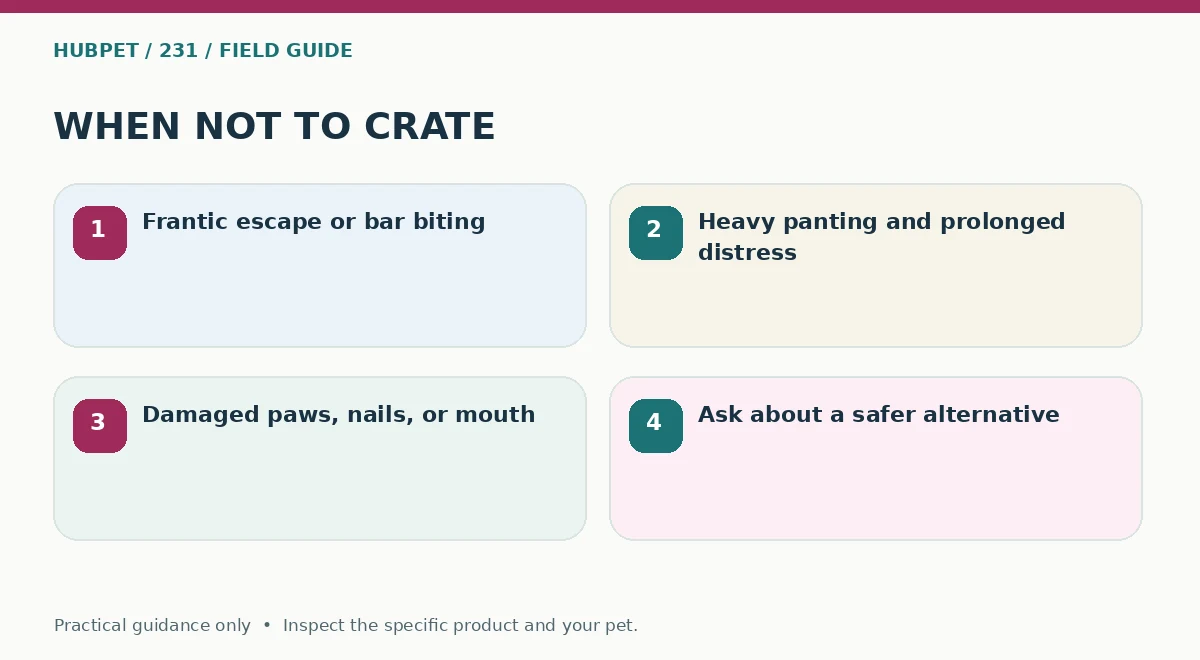
Repeated escape attempts, frantic chewing at the door, heavy panting, or persistent vocalizing signal that the current plan needs review. A stronger crate may restrain movement while leaving panic untouched. ASPCA recommends examining separation-related symptoms and considering alternatives such as a safely managed room.
Do not punish barking, scratch marks, or accidents after confinement. Record when the problem occurs and what the dog does before the barrier closes. For behavior that appears mainly during departures, use our separation distress overview as a starting point for professional discussion.
Inspect condition after assembly and during routine use
After assembly, run your hand carefully over reachable joints and test each lock without an animal inside. Check that fasteners sit flush and panels cannot flex enough to expose a gap. Save the instruction sheet, spare-parts details, and the maker’s procedure for replacing damaged pieces.
Before each longer rest period, check the door alignment, tray retention, floor grip, and signs of new chewing. Remove the crate from service if a weld breaks or a latch stops working. A repair that looks secure from outside may still create a sharp edge inside.
Use a simple pass-or-stop buying decision
Pass only if the dog tolerates confinement calmly, the interior supports normal posture, and every reachable edge and closure looks safe. Confirm that ventilation and cleaning access fit your room. Then compare return options and parts availability. These functional checks offer more information than product weight alone.
Stop shopping for heavier containment if your dog shows panic or compulsive escape behavior. A vet or qualified behavior professional can help select a less restrictive safe area. Likewise, a crate that damages teeth or paws has failed the practical test, regardless of how impressive its metal specifications appear.
How We Research
We reviewed current animal-welfare, behavior, and veterinary guidance alongside the decision criteria in this article. Sources were checked on October 26, 2026. Product dimensions, travel policies, and available models can change, so verify them directly before purchasing or traveling. We have not purchased, crash-tested, ranked, or endorsed individual models. Learn about HubPet at About HubPet.
Sources
Humane World for Animals: How to Crate Train Your Dog or Puppy. Accessed October 26, 2026.
ASPCA: Separation Anxiety. Accessed October 26, 2026.
AVMA: Traveling With Your Dog or Cat. Accessed October 26, 2026.
No crate is escape-proof for every dog. Inspect doors and joints, but treat persistent escape attempts as a possible welfare concern rather than a reason to keep increasing the barrier strength.
Not automatically. Welds, hinges, gaps, coatings, interior edges, and your dog’s behavior all affect safety. Compare the actual construction and the fit, not only material weight.
Only when the specific unit and restraint arrangement meet applicable vehicle safety needs. A heavy-duty home label does not show crash-test performance or compliance with travel rules.
No. Begin with voluntary entry and short reward-based practice. If fear persists or your dog attempts frantic escape, stop forced confinement and seek individualized guidance.
Reject exposed pinch points, unreliable latches, inadequate inside room, damaged welds, unsafe wheels, or a setup your dog cannot tolerate calmly. Cost is not a substitute for these checks.