
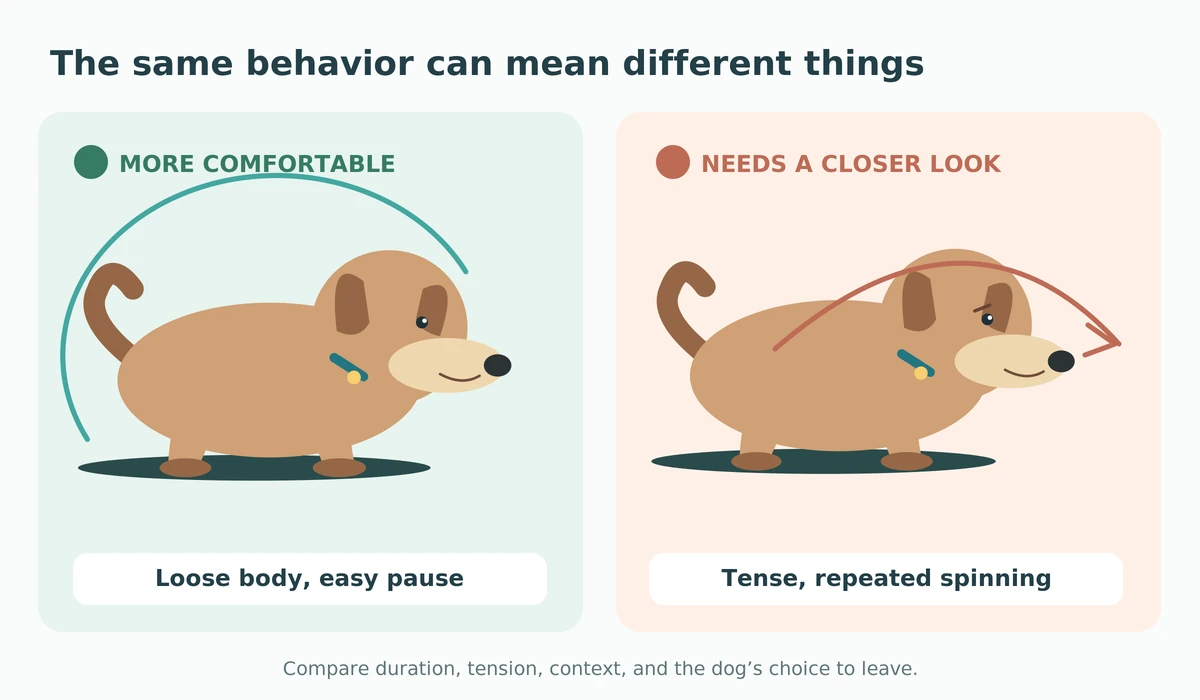
A quick turn toward the tail can be an ordinary moment of curiosity. A dog that spins repeatedly, cannot disengage, or bites the tail hard tells a different story. The useful question is not whether tail chasing looks funny on video; it is what happened before, how long it lasted, and how the dog felt afterward. AAHA explains that tail chasing can range from play to a pattern needing veterinary assessment. Use an observation plan that protects your dog without turning spinning into a game you accidentally encourage.

Separate a brief game from a repetitive pattern
Watch the whole sequence rather than the spin alone. A playful dog may turn once, notice another activity, and walk away with a loose posture. More concerning patterns include rapid repeated circles, intense staring at the rear, collision with furniture, and immediate restarting after an interruption. Write down whether the dog can choose a different activity without becoming distressed. Do not try to diagnose a compulsive disorder from one short clip. If the behavior is new, escalating, or difficult to interrupt, describe those observations to your veterinarian.
Track the setting and the moments before the spin
A simple log is more informative than a general impression that spinning happens all day. Note the room, time, exercise, visitors, loud sounds, and whether your dog was resting, excited, or left without an outlet. Record duration in ordinary language and what helped the dog move on. Photograph the surrounding space if obstacles matter, but do not tease the tail to provoke another episode for a recording. Patterns around departures, overstimulation, or predictable household events may suggest environmental changes worth discussing with a qualified behavior professional.
Check the tail and skin without forcing handling
Pain or irritation can change a dog’s response to its own tail. From a comfortable distance, look for chewing, bald patches, redness, wounds, unusual posture, or signs of discomfort when the dog sits. Do not pin a frightened dog down or pull the tail to inspect it. A sudden intense change, self-injury, or repeated chewing deserves prompt veterinary advice. AAHA specifically highlights injuries, sudden onset, and behavior a dog cannot stop as reasons to seek help. Behavioral advice cannot replace a physical examination.
Avoid turning the tail into a tempting moving target
People sometimes laugh, point, clap, or offer attention whenever a dog spins. That response may make a harmless episode more frequent because it becomes a reliable way to get interaction. Instead, stay neutral and invite an ordinary alternative before excitement peaks. A short sniffing task, gentle toy game, or previously taught cue gives the dog another way to participate. Reward the dog for taking the alternative, not for an escalating spin. Never grab the tail, shout, or use startling sprays to stop the movement.
Give the dog an easy exit from excitement
If spinning appears during busy greetings, create a calmer approach. Ask guests to pause, offer a safe quiet area, and reward the dog for walking toward a familiar resting spot. Keep floors clear so a turning dog cannot collide with sharp corners. A predictable routine is more useful than constant commands delivered when the dog is already frantic. If the dog refuses food, cannot disengage, or shows rigid body language, stop adding stimulation. That is a sign to make the situation quieter and arrange help rather than push more training.
Use enrichment as an option, not a treatment promise
Daily sniffing, suitable chew items, and short reward-based games can improve the routine for many dogs, but enrichment is not a substitute for veterinary care when spinning looks compulsive. Offer an activity when the dog is calm enough to choose it. Rotate simple experiences so each one remains manageable and supervise items that could break apart. Avoid exhausting the dog with forced exercise in hopes of stopping repetitive behavior. The right amount of activity depends on age, health, and temperament; a behavior professional can help adapt the plan.
Record video without staging risky repetitions
A brief naturally occurring video can help a veterinarian see posture, pace, and whether the dog pauses. Film only if doing so will not delay assistance or place the dog near hazards. Keep the camera steady and include the dog’s whole body rather than zooming tightly on the tail. Add a note about what occurred immediately before and after. Do not intentionally startle, chase, or encourage spinning to capture better footage. If the dog is injuring itself, prioritize preventing access to hazards and contacting your veterinarian.
Know when to seek a veterinary assessment
Call your veterinarian if tail chasing begins suddenly, becomes frequent or intense, cannot be redirected, or involves biting, scratching, or visible injury. Changes in sleep, appetite, walking, elimination, or comfort also matter even if the spin seems playful. AAHA recommends early assessment because identifying an underlying cause can prevent a long-standing problem. If a behavior diagnosis is considered after medical issues are addressed, ask about a qualified reward-based behavior specialist. Do not start supplements or medications based on an online checklist.
Make a calm household response plan
Agree on one response among everyone at home: do not cheer the spin, clear nearby obstacles, note what triggered it, and gently offer a known calm activity only if the dog can respond. Give children a rule to leave the dog alone during intense spinning. Keep your observation notes in one place so different family members do not give conflicting descriptions. If a certain room or event repeatedly precedes episodes, make that setup easier while you arrange veterinary advice. Consistency is about safety, not controlling every dog movement.

Review progress by comfort, not just counts
A lower number of turns is not the only goal. Also notice whether the dog can rest, settle after play, move freely without injury, and engage in normal activities. Revisit notes after environmental changes and share any worsening with the care team. If a professional has suggested a behavior plan, follow its review schedule rather than frequently changing activities on your own. The most useful measure is a dog who is comfortable and able to choose alternatives, with medical needs assessed rather than overlooked.
How We Research
HubPet reviewed current veterinary and animal-welfare guidance for this specific behavior, compared the practical recommendations, and separated normal context from signs needing an examination. We do not diagnose an animal from a posture or brief video. We accessed the sources below on November 1, 2026; individual dogs can communicate differently. Learn more about our editorial process at About HubPet.
Sources
AAHA: Why do dogs chase their tails?. Consult the complete source for context and limitations.
ASPCApro: Canine Body Language Tips. Consult the complete source for context and limitations.
This article provides general education, not an individual diagnosis. For pain, injuries, sudden behavior changes, or safety concerns, speak with your veterinarian. Read the HubPet veterinary disclaimer.
No. A brief playful turn can be ordinary, but context, frequency, body posture, and the ability to stop all affect what the behavior means.
It is better not to reward repeated spinning with excited attention. Offer interaction for calm alternative behavior instead.
Yes. Discomfort is one possibility, especially when your dog licks, chews, scratches, or damages the tail area. Ask a veterinarian to check.
Write down timing, location, likely trigger, episode length, whether your dog disengaged, and any visible discomfort or injury.
Contact your veterinarian for sudden onset, self-injury, repeated intense episodes, or spinning that your dog cannot readily stop.