
This guide explains why dogs play bow using observable behavior rather than a one-size-fits-all meaning. Read the surrounding situation, watch the dog’s whole body, and respond with safe, low-pressure choices. If a new symptom or sudden behavior change raises a health concern, review our veterinary information disclaimer and contact your veterinarian. The goal is practical interpretation, not a diagnosis.
What a play bow looks like
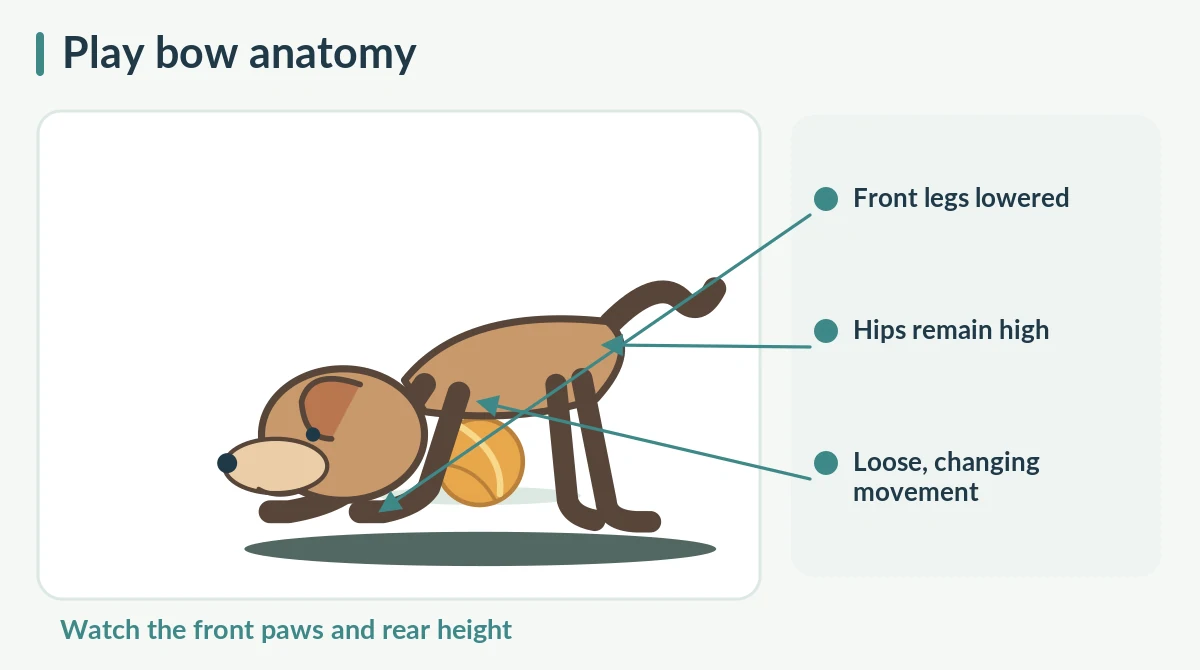
A classic play bow lowers the front half of a dog while the hips stay higher. Front paws may stretch forward, and the tail often moves freely. A dog might hold the pose for only a moment before bouncing sideways. Watch the whole sequence rather than searching for one perfectly frozen shape. Some dogs make a shallow bow; others almost touch the ground with their chest. In a relaxed exchange, the movement usually looks springy instead of rigid. The posture often announces an intention to play, but context still matters.
Read the face and tail with the posture
A loose body tells you more than the height of the rear end. Look for soft eyes, an easy mouth, natural ears, and quick changes in direction. A dog may dart away and return after the bow. In contrast, a stiff tail or a fixed stare should make you slow the interaction. Also notice whether the other dog has room to leave. One enthusiastic animal does not speak for both participants. That distinction helps owners avoid treating every bow as permission for close contact.
Why a bow can start a game
Dogs use movement to negotiate social encounters. The bow often precedes chasing, gentle wrestling, or a brief game of keep-away. It can help frame bouncy or exaggerated movements as play rather than confrontation. However, the meaning is not a promise that all later behavior will remain friendly. Dogs can change their minds. Therefore, treat the bow as one clue in an ongoing conversation, not a permanent green light. Respond to the next few seconds as carefully as you respond to the initial invitation.
Check the other dog’s answer
The second dog may bow back, approach with a loose body, or initiate a relaxed chase. Those are useful signs of interest. Another dog might look away, move behind a person, freeze, or walk toward an exit. These responses call for space, even if the first dog keeps bowing. Do not push a hesitant dog into a game to make the interaction seem balanced. Instead, allow both animals to choose their distance. A play session works best when participation remains voluntary.
Notice turn-taking during chase
A comfortable game often includes role changes. One dog chases, then turns and becomes the one being followed. Pauses and voluntary returns also matter. If one dog continually pins the other, blocks escape, or ignores attempts to leave, interrupt gently. Call your dog away and reward a calm response. Then see whether both dogs choose to restart. This brief check reveals more about comfort than a single wagging tail. Play quality depends on repeated choices, not only energetic motion.
Use a short consent pause
Try a friendly pause before excitement rises too far. Call the more forward dog away without grabbing or scolding. Reward attention and give both dogs a moment to settle. If the quieter dog walks toward the other again with a loose body, play may continue. If the quieter dog stays away, respect the decision. The pause is not a test of obedience for the second dog. It is a chance to remove social pressure and observe what each participant actually wants.

Recognize a bow directed at a person
Some dogs bow at a familiar person holding a ball or standing near the play area. They may wiggle, scoot backward, and look expectantly toward a toy. You can respond with a short toss or a quiet invitation if the area is safe. Avoid looming over the dog or turning the game into rough handling. For a dog who dislikes contact, a toy may feel more comfortable than wrestling with hands. Stop if your dog disengages, stiffens, or seeks a resting place.
Distinguish a stretch from an invitation
Dogs sometimes stretch after waking by lowering the front legs. The posture can resemble a play bow, but the surrounding scene differs. A waking dog may extend once, yawn, and settle into walking away. A playful dog often repeats the movement and immediately invites interaction. Observe the sequence without assuming either meaning from one frame. Sudden difficulty moving, obvious discomfort, or repeated unproductive attempts to settle warrant a veterinary conversation rather than a behavior label.
Set up safe spaces for play
Choose an open area with firm footing and few objects that could trap a leash or paw. Remove food bowls and prized chews before introducing unfamiliar dogs. Keep gates and exits clear. In a multi-dog home, allow a quieter dog to rest separately without being followed. Moreover, match play partners by their individual style, not only size or age. A large gentle dog can still overwhelm a smaller one by accident. Supervision should focus on movement, access, and comfort.

Avoid common interpretation mistakes
A wagging tail does not cancel stiff muscles, and repeated bowing does not force another animal to join. Likewise, growling during play can occur in some dogs, but only broader relaxed movement makes the context clearer. Never punish a dog simply for taking a break. Do not grab collars in the middle of a fast-moving scuffle. If a session escalates, create distance safely and seek qualified support for repeated conflict. Your job is to manage the setting, not to assign a single emotion to one pose.
Keep a useful observation record
For a week, notice when the bow happens and what follows. Write down the place, other participant, preceding event, and whether each dog returned to the game freely. Short notes can reveal that one companion enjoys backyard chasing but avoids indoor wrestling. They also make changes easier to explain to a reward-based trainer. The goal is not to count bows as a measure of happiness. It is to learn the individual dog’s style and protect voluntary, comfortable play.
How We Research
We reviewed veterinary and established animal welfare guidance on body language, normal behavior, and low-stress responses. We compared the observable details in each situation and separated common explanations from signs that warrant individual care. This is general education, not proof of an animal’s inner motivation. Our About HubPet page explains the site and its editorial scope. Sources below were consulted in October 2026.
Sources
ASPCApro — Canine Body Language Tips — ASPCApro — Canine Body Language Tips (consulted October 2026).
RSPCA — Dog Care and Welfare — RSPCA — Dog Care and Welfare (consulted October 2026).
Safety note: Never punish normal communication or force a fearful dog to interact. Contact your veterinarian about sudden changes, obvious discomfort, or persistent unusual movement. For repeated conflict, work with a qualified, reward-based behavior professional.
No. A bow commonly invites play, but a dog can become overwhelmed or uncomfortable later. Keep reading body movement and the other dog’s response.
Yes. Some dogs lower their front legs and bounce toward people to request a game. Respond with a safe, low-pressure activity.
Allow the second dog to walk away. A bow is an invitation, not an obligation, so avoid pushing the dogs together.
Not always. A single waking stretch can look similar. A play bow more often leads to bouncy movement, return approaches, and an active invitation.
Pause when one dog freezes, hides, repeatedly tries to leave, or cannot regain space. Seek professional advice for recurring tense interactions.