
A practical guide to sizing a puppy collar, checking growth, and reducing snag risks at home. This guide concerns equipment choices, not medical diagnosis. For individual pain, injury or persistent skin problems, consult a veterinarian and read our veterinary information disclaimer.
Start with the job: ID, not restraint
A first puppy collar should primarily provide an appropriate place for identification and help a pup become comfortable with gentle handling. It is not a substitute for a well-fitted walking harness when a puppy pulls or lunges. Choose a plain, lightweight flat collar with a straightforward closure, accessible adjustment, and smooth edges. Check that the buckle and tag hardware do not dominate the neck of a tiny animal. Decorative chains, heavy charms and dangling fabric add catch points without helping fit. RSPCA guidance favors comfortable, correctly adjusted equipment and warns against aversive collars that tighten painfully.
Measure the neck at its actual resting position
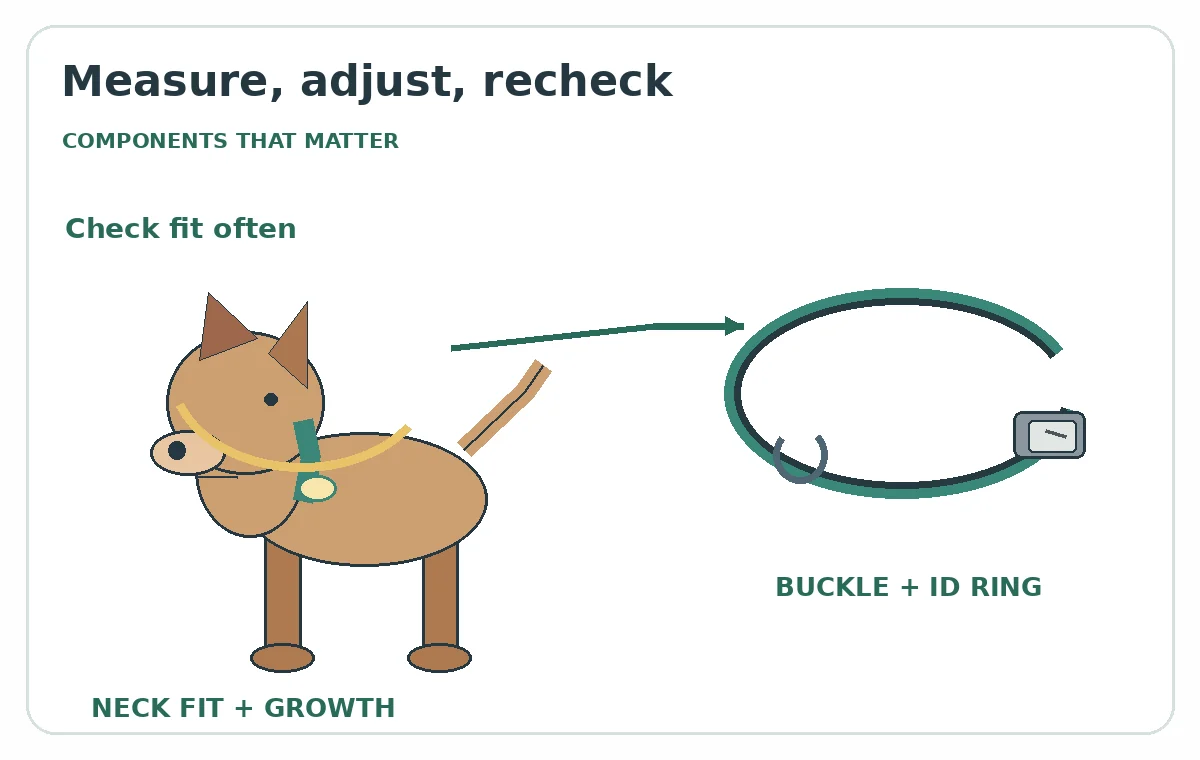
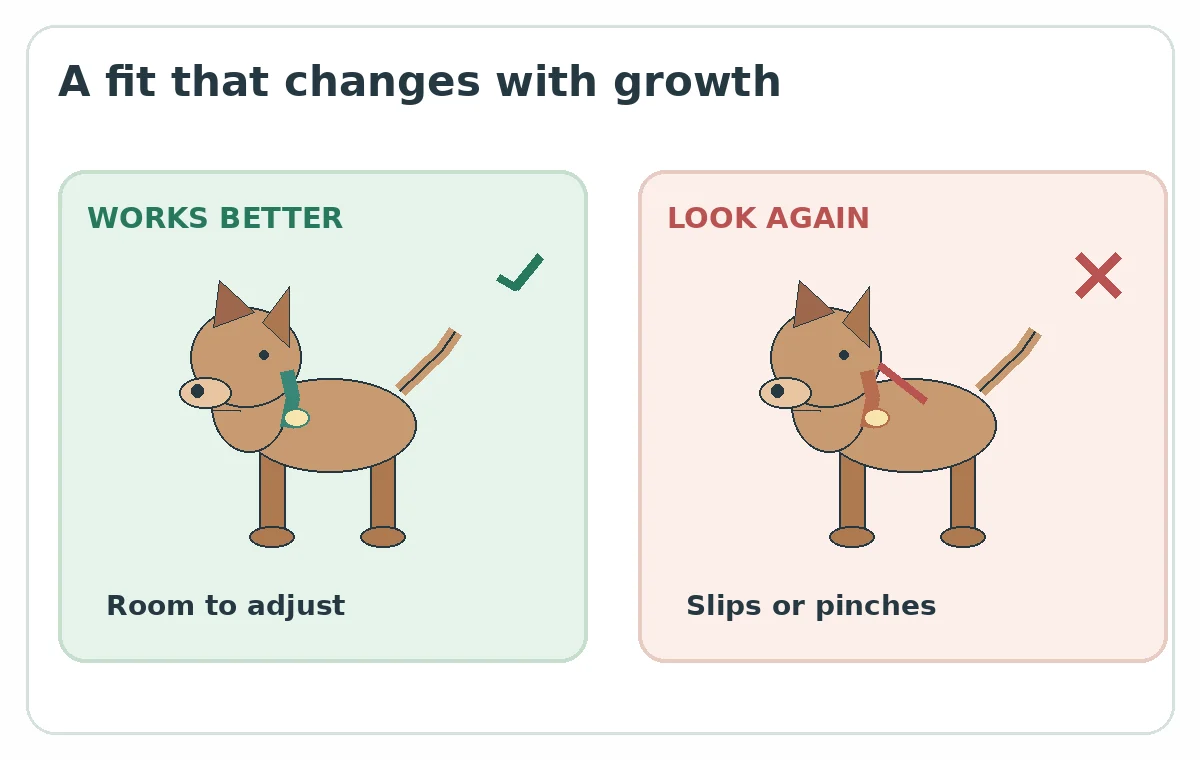
Use a flexible cloth tape while the puppy stands or sits naturally. Measure where the collar will rest, not directly behind the ears or down across the chest. Compare that measurement with the manufacturer’s adjustment span rather than the size label alone. Slide two fingers comfortably under the adjusted flat collar as a starting check; finger sizes vary, so also look for pressure marks and the possibility of slipping over the head. If the nearest buckle hole forces a compromise between loose and tight, try a different design. Never buy an oversized collar just to save money as the puppy grows.
Plan for rapid growth and frequent rechecks
Puppies change neck circumference quickly, especially during growth spurts. An adjustable section is useful only while the remaining strap lies flat and the keeper holds the tail securely. Recheck fit several times each week, and inspect after grooming or a noticeable change in coat thickness. Record the current measurement on a phone note; compare it against the actual adjustment left in the product. Replace the collar before the final few millimeters of adjustment disappear. RSPCA specifically advises checking growing puppies’ collar fit multiple times weekly, rather than treating the first fit as permanent.
Understand breakaway versus walk-ready hardware
Some collars release when caught; others hold firmly during leash tension. These designs solve different problems. A breakaway closure may help during certain snag events, but a leash attached only to a releasing closure can allow escape. VCA describes breakaway arrangements that use paired rings for walking, yet users must follow the exact design instructions. If you need secure outdoor restraint, a properly fitted harness with a separate leash attachment is usually easier to understand. Never assume that a quick-release side buckle is a breakaway mechanism: it normally needs deliberate pressure on the tabs.
Check tags, stitching and skin contact
An ID tag must be legible while not dangling low enough to strike objects or become a chewing target. A compact engraved plate can reduce movement, but it also needs sound attachment. Feel along the underside for sharp rivets, rough stitching, tag edges and raised fasteners. Part the coat and look for redness or flattened fur that persists after removal. Check whether wet webbing traps dirt against the skin, especially below the buckle. If the puppy scratches persistently at the collar, remove it for inspection and work on a gentler introduction rather than tightening the strap.
Introduce the collar in tiny voluntary steps
Set the collar on the floor, let the puppy approach, and reward curiosity. Touch the neck lightly, then drape the unfastened strap for a moment before asking for a clasp sound. Pair a brief, comfortably fastened wear period with food, play or another pleasant activity. Remove it before the pup becomes frantic, and try again later. Battersea emphasizes patient, reward-based equipment introductions and stopping when a dog appears distressed. Do not chase a puppy around the room to force the collar on, and do not leave it attached during a first unsupervised experiment.
Make crates and play equipment snag-aware
A dangling tag or collar loop can catch a crate bar, playpen hinge, floor vent or another dog’s jaw during energetic play. Check the specific enclosure manufacturer’s safety instructions and remove snag-prone gear before confined or unsupervised time whenever appropriate. Watch for door latches and loose wire ends at puppy head height. A collar worn outdoors for ID need not remain on during every indoor nap. If a collar must remain for a particular reason, discuss a safer identification and containment strategy with the veterinary team or a qualified professional familiar with the home.
Choose a walking setup separately
A collar’s fit test does not show that it will withstand repeated pulling without neck pressure. On walks, many puppies do better with a correctly fitted body harness and a standard fixed-length leash, as outlined in RSPCA guidance. Check harness shoulder motion and the location of the chest strap instead of fastening the leash to the collar and correcting with jerks. Allow safe sniffing and reward moments of a slack leash. If a puppy backs out of the gear or spins when a clip engages, pause the outing and revise the fit or training instead of pulling harder.
Use a weekly replacement decision
Make one practical inspection routine: measure the neck, check the two-finger starting fit, test whether the collar can pass over the head, inspect the buckle and keepers, read the tag and look beneath the fur. Run a fingertip across stitching and both edges. If webbing frays, the clasp sticks, hardware bends or fit changes dramatically during movement, retire the collar. Treat a replacement as normal growth maintenance, not as an indication that the original size was a mistake. Keep a clear photo of the tag information while arranging a replacement, and avoid improvised knots or tape.

Know the limits of a collar guide
No universal rule can predict whether an individual puppy will escape, snag a tag or develop skin irritation. Breed shape, coat, head proportions, activity and household fixtures all influence risk. This guide does not certify a particular closure or promise protection against entanglement. For a dog with painful neck movement, a healing skin lesion or unusually persistent distress around equipment, ask a veterinarian for an individual plan. The safest purchase is a simple device that you can measure, inspect, fit without force and replace promptly as the animal changes.
How We Research
We evaluated puppy collars against veterinary, humane-equipment and published manufacturer-material guidance, focusing on fit, hardware, observable wear, cleaning and the distinction between component and product claims. These are research-based editorial criteria, not first-hand laboratory testing or an endorsement of a retail brand. We excluded punitive training tools and avoided presenting generalized sizing as individual medical advice. See our editorial approach. Sources reviewed October 28, 2026.
Sources
RSPCA Australia, What equipment should I use when teaching my dog or puppy to walk on a leash?. Read original guidance. Accessed October 28, 2026.
Battersea Dogs & Cats Home, Train your dog to wear a collar, lead or harness. Read original guidance. Accessed October 28, 2026.
VCA Animal Hospitals, Collar and Harness Options for Dogs. Read original guidance. Accessed October 28, 2026.
American Kennel Club, Finding and Choosing the Right Dog Collar for Your Dog. Read original guidance. Accessed October 28, 2026.
Safety note: Keep damaged equipment away from pets. For sudden neck pain, choking, skin injury or a suspected swallowed battery, seek veterinary assistance promptly. Never rely on a collar or leash alone to eliminate traffic, snag or escape risks.
Several times each week during rapid growth, plus after grooming or any obvious change in body size.
No. Quick-release usually refers to a manually operated buckle; a breakaway closure is designed to release under certain tension.
A comfortable body harness is often preferable when learning to walk without pulling, especially for a young dog.
The shape is unsuitable. Try a different size or design rather than over-tightening the strap.
Snagging is a concern. Follow enclosure safety guidance and consider removing collars and dangling tags during confinement.