
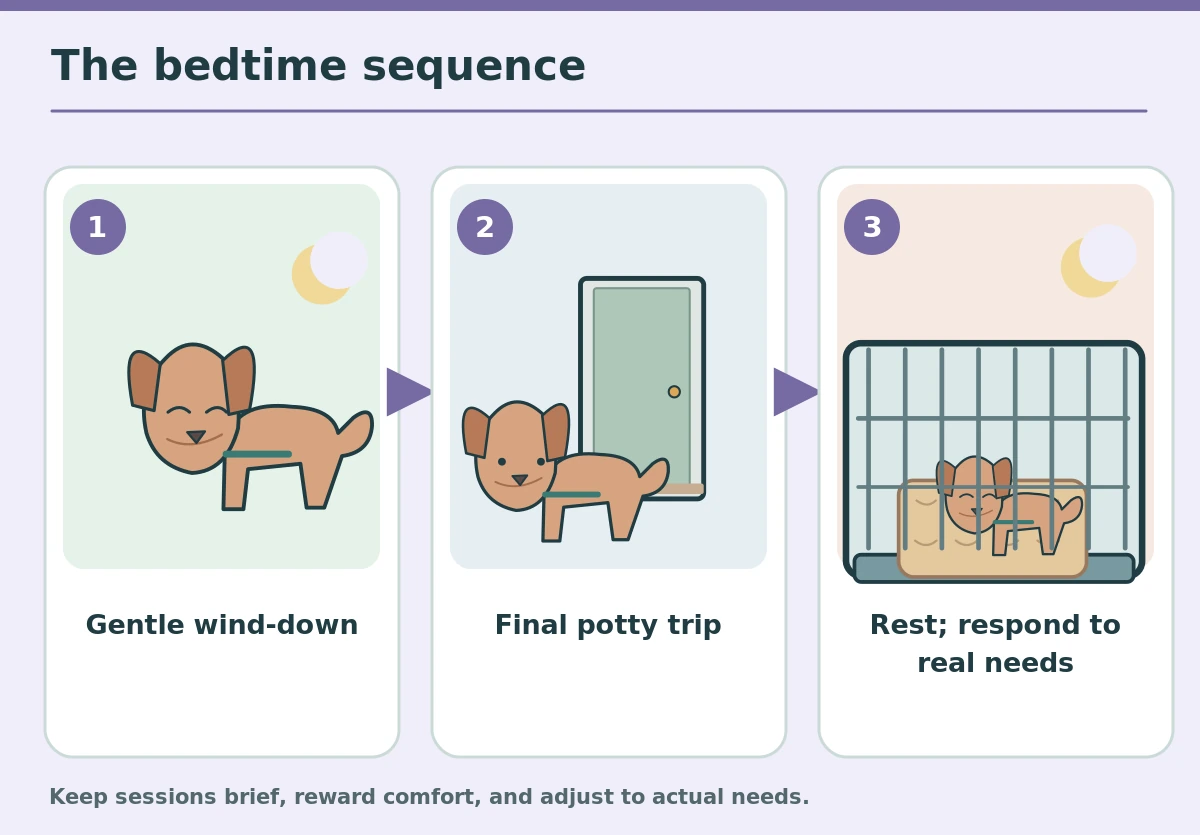
A puppy bedtime routine is a repeated sequence that tells a young dog the household is becoming quiet. It does not guarantee uninterrupted sleep or eliminate overnight bathroom needs. Puppies experience big changes when separated from familiar people and littermates, and the first evenings can feel confusing. Begin with a simple order: calm activity, a bathroom opportunity, a safe familiar resting area, and low stimulation. Notice what helps your individual puppy relax rather than insisting every dog should fall asleep at one precise hour. Consistency is useful; inflexibility is not.
Choose a sleeping place you can monitor
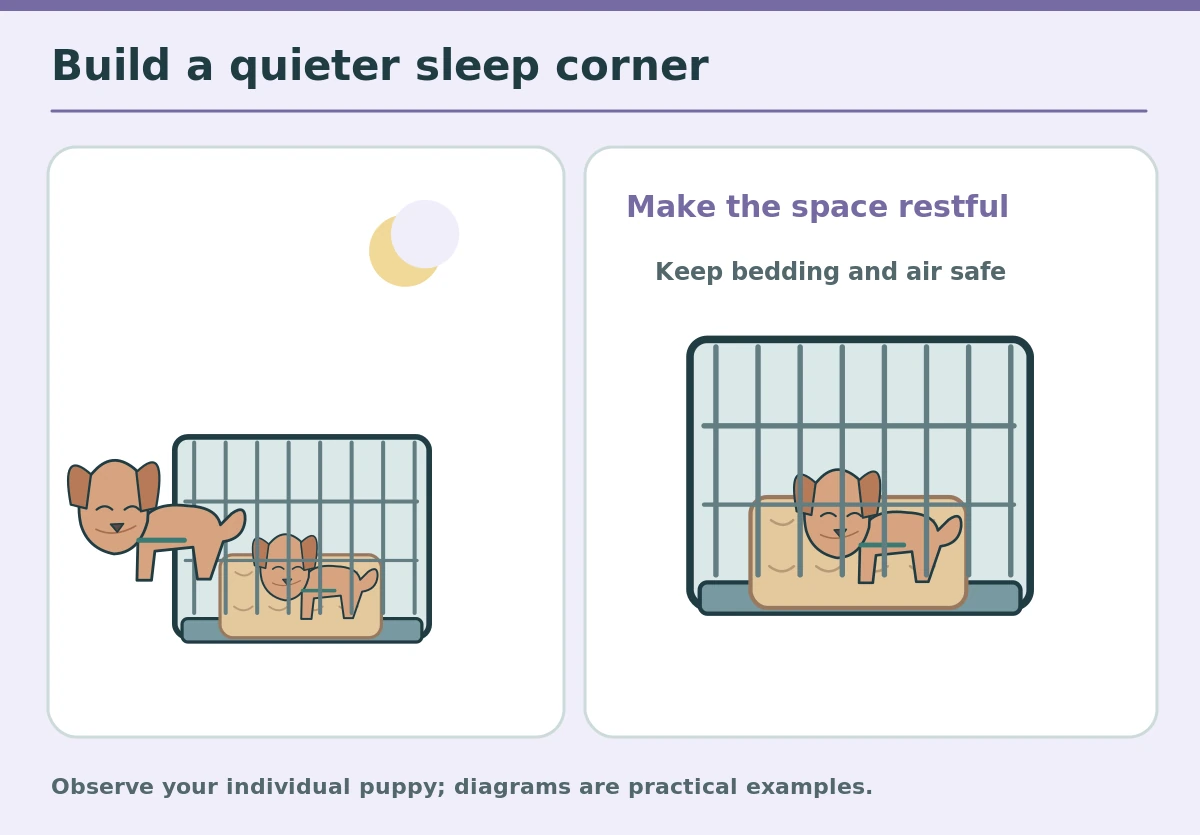
Position a properly sized crate, pen, or secure puppy resting area where you can hear legitimate distress and respond to toileting needs. Many households start with the sleep space near the bedroom. Keep the area well ventilated, without cables, loose strings, dangling collars, or chewable fixtures. Consider floor traction when the puppy gets up to go out. A bare safe surface may suit a puppy that shreds bedding, while a quiet non-chewing puppy may enjoy an easily cleaned blanket. A sleeping arrangement is only helpful when it keeps the puppy comfortable and protected.
Use early-evening activity in the right dose
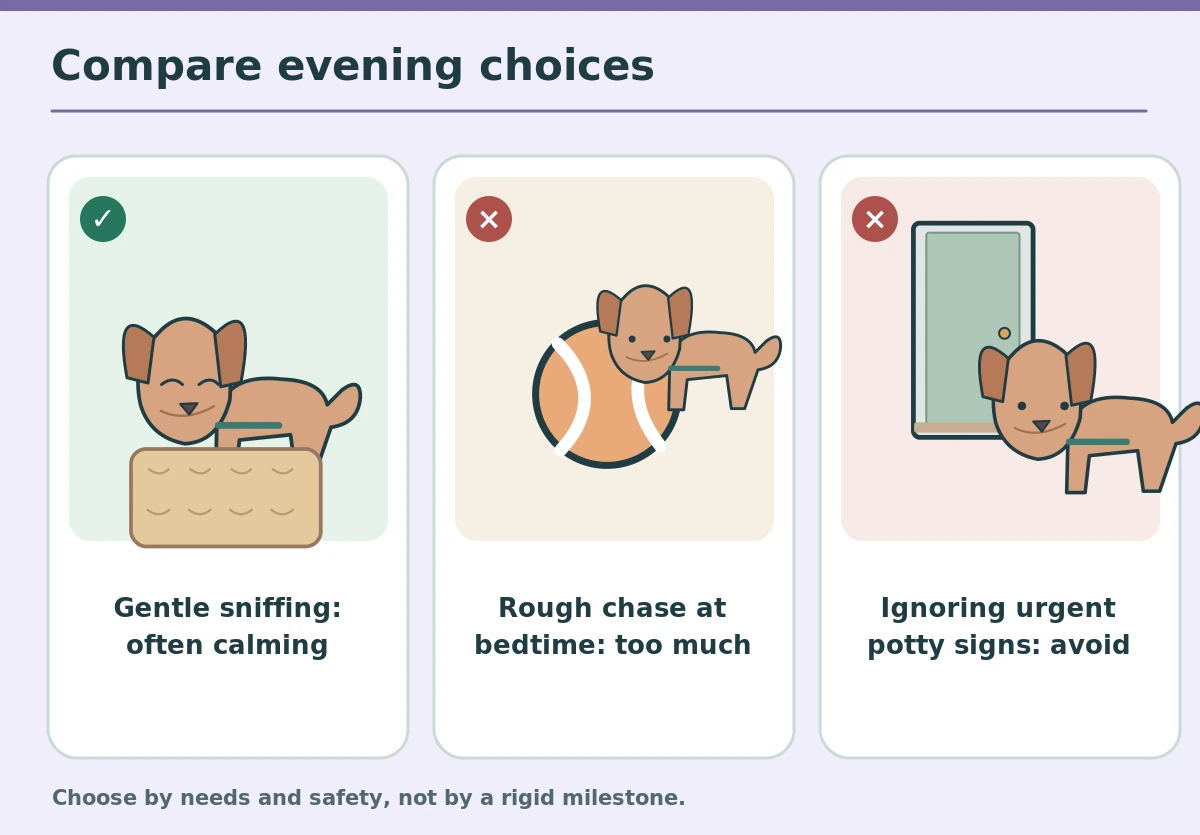
Provide age-appropriate play, gentle training, and sniffing well before the final settling period. Avoid rough chase, repeated jumping, or games that cause frantic arousal just before sleep. A puppy can become nippy when overtired, and adding more exercise is not always the answer. Offer a brief choice-based sniffing game, a calm chew under supervision, or quiet companionship. Stop if the puppy looks overwhelmed or frustrated. Some young dogs settle best after a little more awake time; others need an earlier nap. The routine should follow the puppy’s energy rather than force exhaustion.
Set an ordinary evening feeding rhythm
Keep meals on a suitable veterinarian-recommended schedule and note how feeding relates to bathroom needs. After dinner, give a toilet opportunity and record typical patterns. Do not withhold ordinary access to fresh water simply to make nighttime more convenient; seek veterinary advice about any restriction for individual medical circumstances. Remove unfinished food according to the feeding plan so the puppy knows when mealtimes occur. When household dinner ends, transition to quieter lighting and fewer exciting greetings. Everyone should use similar signals so the puppy is not alternately invited into wild play and expected to be asleep.
Offer a final low-pressure potty break
Shortly before bedtime, take the puppy to the appropriate toilet area with minimal fuss. Give enough time to sniff and eliminate, praise quietly, and reward success near the spot. If the puppy does not go, return to careful supervision and be ready to try again rather than assuming the night will be dry. Keep the leash, shoes, and waste supplies ready for overnight outings. Use your veterinary team’s guidance to choose safe outdoor surfaces before vaccination is complete. A peaceful potty break should not turn into a late-night training marathon.
Help the puppy choose to settle
Offer the resting place when the puppy is already winding down, and reward a voluntary approach or brief calm position. Stay close enough to provide reassurance without making entering the crate a dramatic event. If the puppy is new to confinement, work on pleasant daytime introductions too; bedtime is a difficult moment to make an unfamiliar crate suddenly mandatory. Do not use the sleep space as punishment. Avoid leaving an anxious dog to escalate into panic, frantic biting at bars, or prolonged distress. Adjust the setup and seek qualified help if those reactions persist.
Expect overnight bathroom needs
Young puppies may not manage a full night without elimination. Plan for a quiet outing whenever the puppy genuinely needs one; return directly to rest afterward rather than offering games or bright lights. Some caretakers find a gentle proactive outing useful during the earliest days, but there is no universal age-based promise. If the puppy repeatedly wakes, consider how evening activity, comfort, temperature, and daytime sleep might contribute. If urination becomes unusually frequent, painful, or accompanied by illness signs, involve a veterinarian instead of extending confinement.
Distinguish ordinary adjustment from a problem
A brief whimper in an unfamiliar room can be an adjustment signal, but repeated distress, intense scratching, frantic panting, vomiting, diarrhea, or inability to settle deserves attention. Check urgently for a bathroom need, unsuitable temperature, and possible illness before treating the behavior as a training challenge. Do not punish vocalizing or use a spray device to suppress it. If a puppy struggles with confinement, return to smaller reward-based steps while meeting sleep and safety needs. A veterinarian can help rule out physical causes of persistent difficulty.
Make the room comfortable without making it hot
Lower lights and household noise, ensure air can circulate, and check that blankets or covers are not restricting ventilation. Dogs differ in temperature preference, and puppies with dense coats may overheat under heavy bedding. Avoid heating pads, hot-water bottles, electrical cords, and other warming products unless specifically recommended and safely managed by a veterinarian. Keep food, string toys, and objects with detachable parts out of a rest area where they cannot be supervised. Calm surroundings are useful only when safety and comfort come first.
Manage early morning before everyone is exhausted
Prepare for a direct bathroom trip when the puppy wakes, then start the regular breakfast and play routine. If the puppy rises earlier than you prefer, inspect whether they need the toilet rather than assuming attention seeking. Daytime naps and a predictable feeding schedule support nighttime rhythms. Resist the temptation to keep a puppy awake for hours so they will sleep later; overtired dogs may settle worse. Track a few evenings and look for manageable changes, such as avoiding a loud late game or keeping the sleep area closer to people.
Keep the routine steady when plans change
Visitors, travel, daylight saving time changes, and caregiver shifts can alter a puppy’s evening. Preserve the order of essential cues even if the clock moves: quieter activity, bathroom visit, familiar resting environment. Bring a safe familiar mat only when it will not be chewed. If another family member takes over nighttime care, explain how to reward outdoor toileting and how to respond to distress. A routine should have enough structure to reassure the puppy and enough flexibility to meet real needs. Punishment and forced isolation do not create a safe bedtime association.
Review progress in weeks, not single nights
Note how long settling takes, whether the puppy wakes for toileting, and what preceded difficult evenings. Celebrate small improvements, such as walking into the crate willingly or resting after a calm bathroom trip. Some nights will be interrupted even after several easier ones. Keep expectations anchored to development and individual health, not to a claim that every puppy will ‘sleep through’ after three nights. If you are exhausted, arrange appropriate human help so necessary care continues. Steady, responsive evenings are a better outcome than silence achieved through fear.
How We Research
We reviewed AKC puppy sleep and first-night guidance alongside reward-based confinement recommendations and AVSAB welfare principles. Our routine avoids unproven sleep-through-the-night promises and prioritizes responsive care and safe sleep conditions. Read About HubPet for our general editorial approach.
Sources
American Kennel Club — First Day at Home With a New Puppy: Read source. Reviewed October 27, 2026.
American Kennel Club — How Much Do Puppies Sleep?: Read source. Reviewed October 27, 2026.
American Kennel Club — How to Crate Train Your Dog: Read source. Reviewed October 27, 2026.
American Veterinary Society of Animal Behavior — Humane Dog Training: Read source. Reviewed October 27, 2026.
Safety note: This puppy care and training guide cannot replace individual veterinary advice. Seek veterinary care for illness, painful elimination, suspected ingestion, or significant ongoing distress. Read our veterinary disclaimer.
Choose a consistent time that fits your household and puppy’s daily rhythm. The repeated wind-down, potty break, and calm sleep space are more important than one universal bedtime.
Many puppies find nearby people reassuring, and it helps caregivers notice nighttime bathroom needs. Keep the sleep arrangement safe and avoid unattended cords, straps, and chewable hazards.
Some young puppies do. Their needs vary with development and health; respond to genuine signals and keep the outing quiet, brief, and focused on toileting.
Not necessarily. Overexciting play can make settling harder, especially for overtired puppies. Try age-appropriate activity earlier and a predictable quiet period before sleep.
Check toileting, comfort, temperature, and possible illness. Do not punish distress; use gradual positive crate introductions and seek veterinary or reward-based behavior advice if the reaction persists.