
Puppy potty bell training gives a dog a voluntary way to request access to a toilet area. It does not speed bladder development, replace regular outings, or prove every ring means the puppy needs to eliminate. A puppy can learn to ring for attention, fresh air, or an exciting yard just as readily as for bathroom needs. Start only when you already provide frequent opportunities and can respond consistently. The skill should help you notice a request, not become a test of whether a puppy deserves a necessary break.
Choose a safe bell and attachment
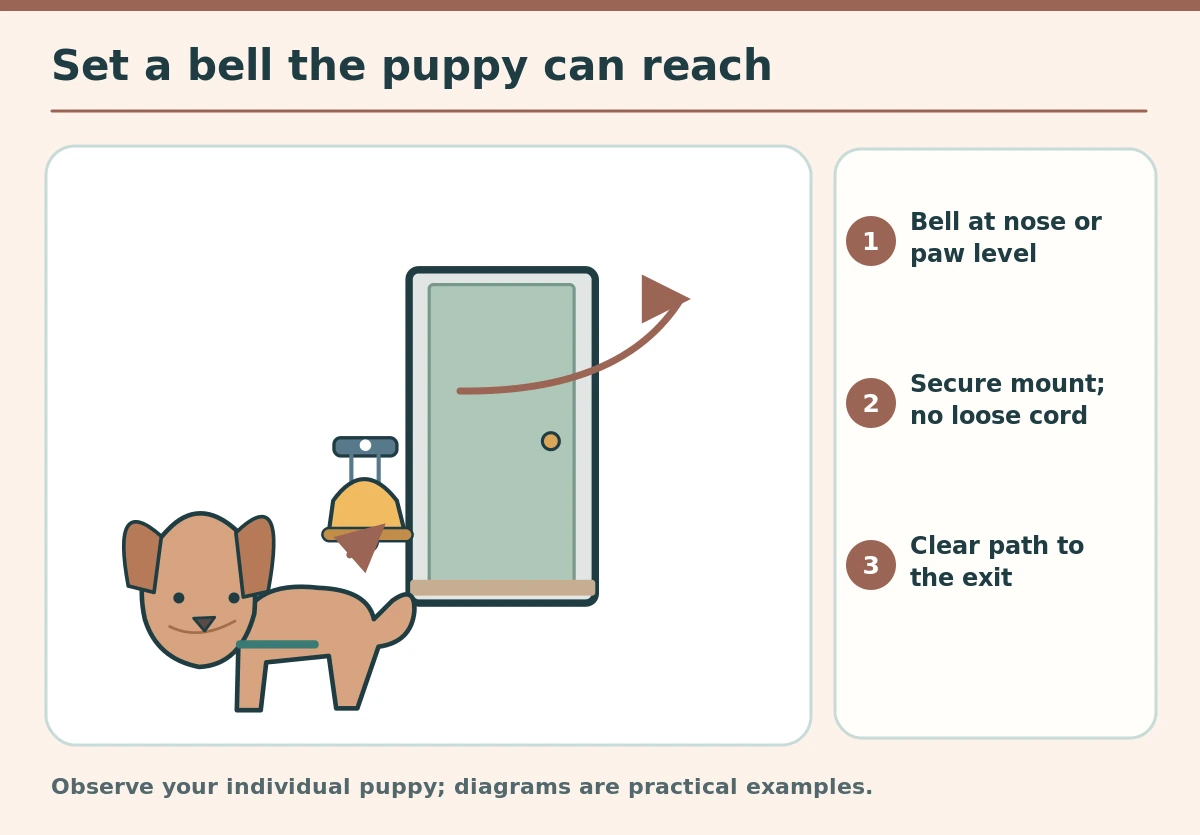
Select a bell that makes a gentle audible sound and is large enough to avoid swallowing if it becomes detached. Mount it securely at a comfortable nose height or, for a paw-targeting puppy, where a light tap is easy. Avoid long dangling straps that could catch around legs or be chewed into pieces. The bell should not block the door swing or encourage jumping against glass. If your puppy fears the noise, try a quieter chime or a touch target without a sound. Supervise early use and inspect the fasteners often.
Teach one gentle touch away from the door
Hold the bell still, let the puppy sniff, and reward any calm voluntary interest. Gradually reinforce a light nose or paw touch that makes a small sound. Use a consistent marker such as ‘yes’ and a tiny food reward, then reset. Keep sessions short; a few correct touches followed by a break are better than making the puppy slap at the bell until frustrated. Never move the bell suddenly into a puppy’s face or startle them with a loud ring. A reluctant puppy can learn a different signal instead.
Move the learned behavior to the exit
Once the puppy touches reliably, secure the bell beside the designated exit and practice the same easy cue. Bell, door opens, and the puppy gets a brief opportunity at the usual potty area. Do not require a long performance or repeated ringing while the puppy urgently needs to go. If the puppy sniffs, circles, or whines before touching, take them out immediately. The bell should be an additional communication option, never a gatekeeping rule. Reward successful outdoor elimination separately from the bell touch.
Respond consistently but keep potty outings simple
Whenever a genuine bell request happens, guide the puppy outside promptly to the toilet area. Keep these outings calm and relatively short, allowing enough time to eliminate without introducing a vigorous game every time. If nothing happens, come back inside with supervision and offer another chance when appropriate. This pattern helps distinguish the bell from a general ‘open the door for fun’ button. Still meet the puppy’s exercise and exploration needs on their own schedule; withholding normal play can make the bell unusually tempting.
Use an easy door-layout test
Stand where the puppy will naturally approach from the rest area and check whether furniture, slippery flooring, or a high threshold makes the bell hard to access. A dog that must squeeze past a gate may not be able to communicate in time. A bell on a closed door is only helpful if a caregiver can hear it. If you wear headphones or work in another room, do not rely on sound alone. Continue scheduled outings and use a baby monitor only as a supplement, not as a replacement for direct care.

Understand the difference between signaling and holding
VCA notes that a learned bell can help a physically mature dog request an outing, but a young puppy’s control is still developing. Early training can make the touch familiar, yet accidents will still happen. If the puppy rings repeatedly and urinates tiny amounts, strains, or seems unusually thirsty, speak with a veterinarian; do not interpret the behavior solely as an attention habit. Record when the bell rings and whether the puppy eliminates to see whether the signal has become meaningful. Treat it as communication, not a command to suppress.
Prevent the bell from turning into a play dispenser
If the puppy rings and runs straight to a favorite game rather than toileting, respond with a calm, ordinary potty visit instead of a stimulating chase. After the visit, offer planned play at another time with a different cue. Do not scold, remove essential bathroom opportunities, or ignore a puppy who may truly need to eliminate. The solution is a clearer sequence, not making the bell frightening. If many false alarms occur, shorten training to quiet indoor touches while continuing dependable non-bell potty breaks.
Coordinate everyone who opens the door
Post one simple instruction by the exit: one gentle ring leads to a quiet toilet chance; successful potty earns a reward at the spot. Family members should not treat the bell as a toy or ring it themselves before every fun outdoor activity. Guests and children may need a reminder not to encourage frantic pawing. A signal works when the consequence is predictable. If one caregiver ignores ringing and another rewards repeated noise with an exciting adventure, learning will be inconsistent even though the puppy has mastered the bell itself.

Adjust for apartments and different exits
Apartment puppies may need an elevator or shared corridor before reaching a suitable bathroom spot. Keep the leash and cleanup supplies ready, and consider whether the bell will actually provide enough advance notice. Some puppies are better served by an established schedule plus an obvious approach-to-door behavior until they can wait through the trip. If multiple exits exist, teach one consistent potty route first before expanding the signal. Never encourage a puppy to rush through an unsecured exterior door in response to a bell.
Watch for frustration, noise sensitivity, and chewing
Pause training if the puppy backs away from the chime, startles, barks intensely, or begins chewing the mount. Make the sound gentler, increase distance, reward relaxed investigation, or drop the bell and use another communication method. A puppy who swallows part of the fixture needs prompt veterinary advice. Do not try to force a frightened puppy to ring or punish repeated requests. Humane reward-based learning is the standard recommended by AVSAB; a reliable signal should be pleasant to use for both dog and people.
Measure success by fewer missed requests
A useful potty bell produces clear gentle touches that caregivers notice and answer, while the puppy continues to have regular, successful bathroom outings. Over several days, compare the number of rings that lead to toileting, the overall accident pattern, and whether the puppy seems comfortable. If the signal has little value, simplify rather than adding more devices or complicated cues. Some puppies naturally ask by waiting at the door; that is a perfectly good alternative. The goal is mutual understanding, not a particular gadget.
How We Research
We based the distinction between a learned request and physical bladder readiness on VCA housetraining guidance. ASPCA and AVSAB inform the non-punitive, reward-based steps; this is a behavioral training guide, not a product performance review. Read About HubPet for our general editorial approach.
Sources
VCA Animal Hospitals — Housetraining for Puppies and Dogs: Read source. Reviewed October 27, 2026.
ASPCA — House Training Your Dog or Puppy: Read source. Reviewed October 27, 2026.
American Veterinary Society of Animal Behavior — Humane Dog Training: Read source. Reviewed October 27, 2026.
American Kennel Club — Setting Schedules and Developing a Routine for Your New Puppy: Read source. Reviewed October 27, 2026.
Safety note: This puppy care and training guide cannot replace individual veterinary advice. Seek veterinary care for illness, painful elimination, suspected ingestion, or significant ongoing distress. Read our veterinary disclaimer.
You can introduce gentle touching early, but a very young puppy still needs frequent scheduled trips and may not have the control to signal in time. Never wait for a ring before meeting an obvious need.
Either can work if the motion is comfortable and gentle. A nose target may reduce scratching on some door layouts, while a light paw tap suits other dogs.
Respond with a calm bathroom opportunity, then return inside if no toileting occurs. Provide outdoor play separately so the bell does not always produce an exciting game.
A long or chewable strap can create entanglement or ingestion risks. Use a secure mount, inspect it regularly, and remove it if your puppy tries to dismantle it.
Not immediately. Keep predictable opportunities until your puppy reliably communicates and can physically wait. Adjust the schedule cautiously based on behavior and veterinary advice.