
Mental stimulation for puppies does not require complicated puzzles or endless activity. The best first games are simple enough for a young dog to succeed, safe enough to stop at any moment, and short enough to leave room for sleep. A puppy who walks away, lies down, or starts mouthing the equipment may need a break, not a harder challenge. Begin with one calm game in a familiar room. Keep tiny rewards within the puppy’s normal food allowance, and supervise every new object.
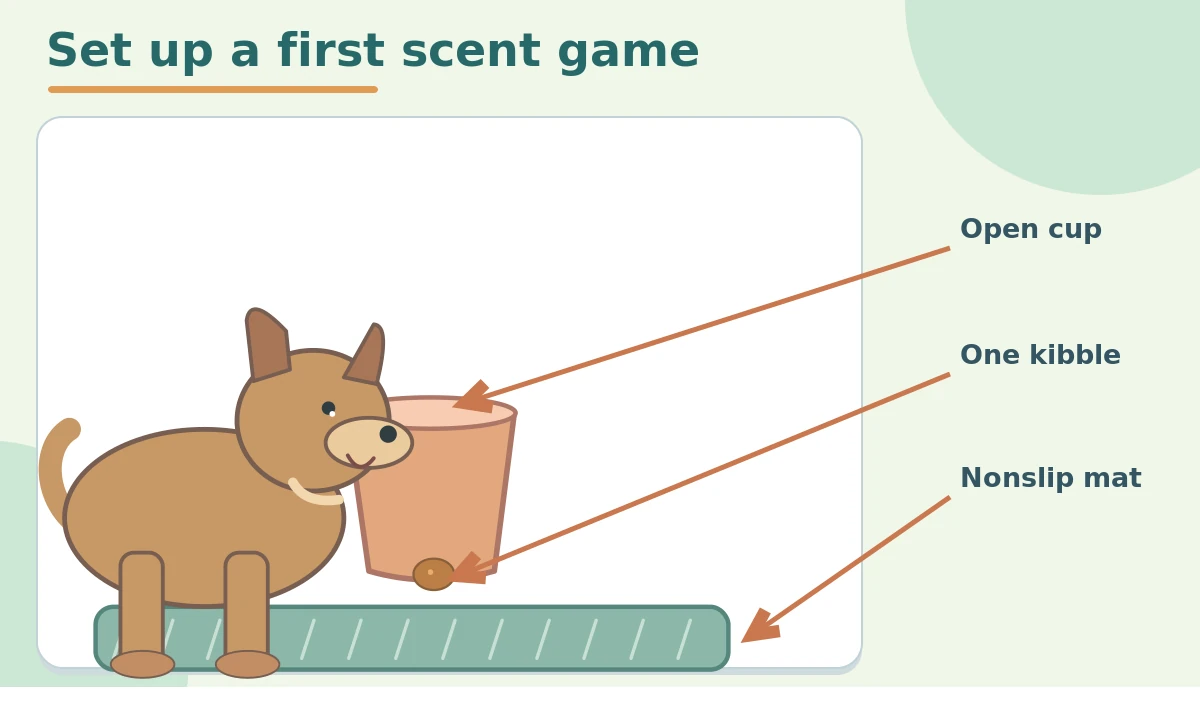
Choose a quiet, low-pressure play space
Before opening a treat pouch, clear the floor of cords, slippers, and small items that a puppy could swallow. Choose a nonslip surface and put other pets behind a door if competition over food or toys is possible. Leave an open route to a bed or resting place. A puppy who hesitates at the edge of a new mat may be responding to the surface rather than the puzzle. Let the puppy sniff an empty container or toy and walk away freely. Start when the puppy is relaxed, not overtired after vigorous play. The room should make success easy, not create obstacles.
Game one: find one visible piece of kibble
Place one piece of regular puppy kibble on a clean floor where the puppy can see it. Say a quiet release phrase and let the puppy find the food without pointing repeatedly or pushing the nose toward it. When that feels easy, move the piece a short distance behind a stable, low object. Avoid narrow furniture gaps where a puppy could get stuck. This is beginner scent work, not an obedience exam. If the puppy cannot locate the piece, reveal it and simplify the next attempt. End before searching becomes frantic. Count the kibble as part of the puppy’s meal, rather than adding an unlimited supply of treats.
Game two: a hand target with a choice to disengage
Offer an open palm a few inches from the puppy’s nose. When the puppy voluntarily sniffs or touches it, mark the moment with a friendly word and reward. Move your palm slightly to one side for another easy touch. Never grab the muzzle, tug the collar, or lure the puppy over slippery furniture. A hand target gives the dog a small problem to solve and can later help with gentle positioning for care. Keep your hand steady and allow a pause after each try. If the puppy starts nipping instead of touching, stop briefly and return to a simpler version when everyone is calm.
Game three: a two-cup choice
Place two large, stable cups upside down on a mat. Put one kibble piece beneath one cup while the puppy watches, then leave the cups far enough apart for easy access. Lift the chosen cup as soon as the puppy noses it; do not make a young dog wrestle heavy plastic. Avoid brittle cups, sharp rims, and anything small enough to chew or swallow. Change sides only after the basic rule makes sense. The goal is curiosity and a small success, not proof that the puppy can remember a hiding place. Put the cups away as soon as the game ends.
Game four: explore a safe texture path
Lay a flat towel beside a secure rubber mat and invite the puppy to investigate each surface at their own pace. Reward a glance, a sniff, or a comfortable step. Keep every surface low and stable; this is not an obstacle course or jumping workout. Remove any towel that bunches or becomes a chew target. Puppies vary widely in confidence, and some need several sessions to approach a new texture. Watch relaxed movement rather than counting steps. If you see paw slipping, stiff posture, or an attempt to escape, return to an ordinary nonslip floor and let the puppy rest.

Game five: an easy food puzzle with a visible reward
Choose a puppy-size puzzle with no loose pieces the puppy can remove. Place a few pieces of the normal meal in an open compartment first, not behind several locks. Show how a single gentle paw or nose motion releases food. Once the puppy understands, close only one easy cover. Check the product’s instructions and supervise the first sessions closely. If the puppy bites the edge, flips the board angrily, or loses interest, the level is too difficult or the material is unsuitable. Replace the puzzle with an easier sniff game rather than forcing persistence. Wash and dry food-contact parts after use.
Notice the difference between engagement and frustration
Healthy play may include curiosity, a loose body, sniffing, and short pauses to think. Red flags include relentless scraping, repeated hard biting of a device, growling when approached, or a puppy that cannot settle afterward. Do not punish frustration, and do not take a high-value toy by force. Offer a simple trade if needed and remove equipment only when it is safe. In a home with several dogs, give each pet a separate space for food puzzles. If guarding or repeated conflict develops, consult a qualified reward-based trainer or veterinary behavior professional before making the activity harder.
Give rest as much priority as the game
A puppy is still developing coordination and self-regulation. Short sessions with an obvious ending help prevent a cycle of stimulation and exhaustion. You do not need a universal number of minutes; observe your individual puppy’s pace and stop while play still looks comfortable. Put away the puzzle, offer water, and leave access to a quiet resting spot. A puppy that settles after a sniff game has not failed to finish the lesson. Keep intense activities away from bedtime if they make the puppy more restless. Calm exploration and sleep belong in the same routine.
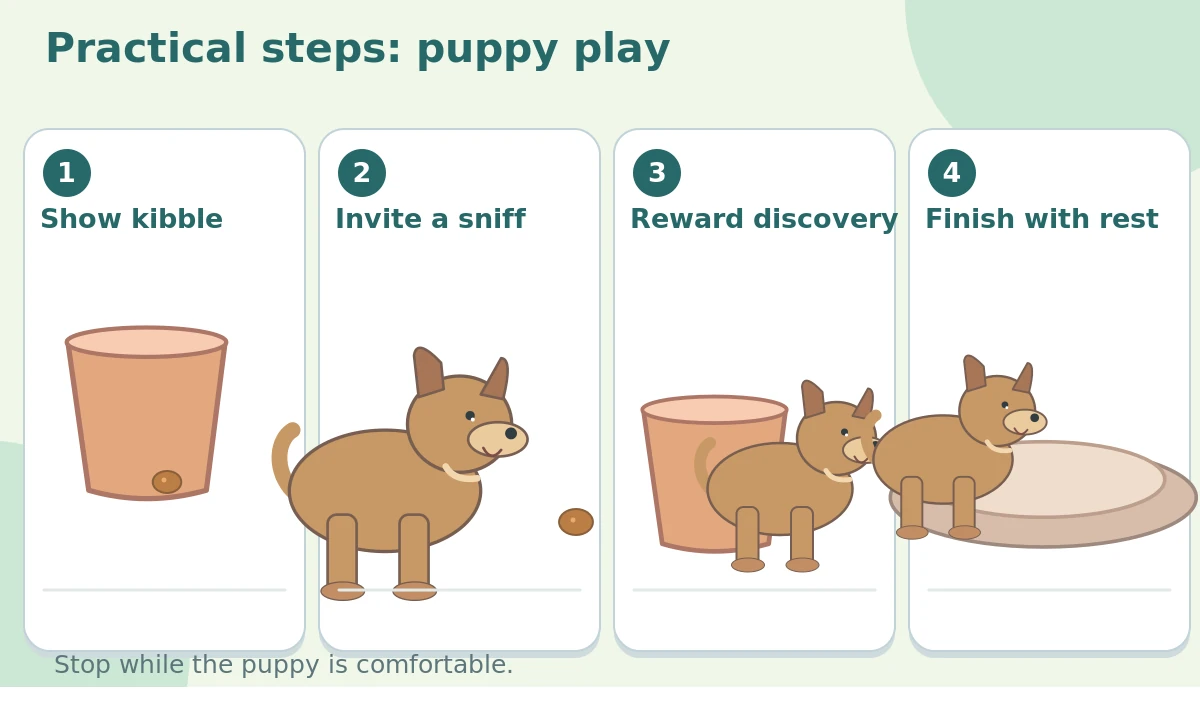
Adjust the challenge without increasing risk
A new challenge can mean moving one food piece a little farther, changing the location of a familiar target, or making a single compartment less obvious. It should not mean giving a puppy tiny removable parts, hanging a puzzle at an awkward height, or requiring jumps. Recheck toys as the puppy grows; a once-safe opening or chew surface may become unsuitable. Keep a note of which activity brought relaxed concentration and which led to chewing or avoidance. Rotate among two or three successful games rather than adding novelty every day. The puppy’s comfort, not completion speed, decides the next step.
When games should pause for professional advice
Sudden refusal to play, low energy, difficulty standing, persistent pain signs, or major changes in appetite deserve veterinary attention rather than a new enrichment purchase. Excessive fear, defensive behavior around food, or distress that continues after a session also warrants help. Never use food puzzles to delay necessary meals or replace normal social interaction and house-training breaks. Ask your veterinarian about safe food portions for a puppy with dietary restrictions. Brain games supplement patient care and positive training; they are not a treatment for illness, separation distress, or persistent behavior problems.
How We Research
We reviewed practical play and environmental-enrichment guidance from established animal welfare organizations and veterinary teams. We prioritized direct supervision, safer materials, clear opportunities to stop, and cleaning. These drawings explain handling principles; they cannot establish product certification or suitability for every pet. See our editorial information and veterinary disclaimer. Ask a veterinarian about pain, swallowing hazards, dietary restrictions, or sudden behavior changes.
Sources
AKC — Puppy Exercise and Mental Stimulation — guidance on practical enrichment, play, welfare, or food safety.
VCA — Using Enrichment, Predictability and Scheduling to Train Your Dog — guidance on practical enrichment, play, welfare, or food safety.
VCA — Behavior Management: Enrichment and Activity Toys — guidance on practical enrichment, play, welfare, or food safety.
ASPCA — Canine DIY Enrichment — guidance on practical enrichment, play, welfare, or food safety.
A few comfortable, short opportunities can work well; the right amount depends on age, temperament, rest, and health. Stop before frustration.
Yes, you can reserve a small measured portion of the regular meal, provided the puppy can still eat their full daily allowance.
No. Supervise use and remove it if the puppy chews fibers, swallows material, or cannot find food comfortably.
Pause, remove the device safely, and return to a simpler food-find game. Check the size and materials before another try.
Yes. A few voluntary touches can teach problem solving while building a useful cooperative skill.