
A rigid-shell crate can be easier to wipe down, but ventilation, joining bolts and door alignment deserve a close inspection. For crate-related stress, discomfort or mobility changes, follow your veterinarian’s advice. See our veterinary information disclaimer.
Understand what the rigid shell does
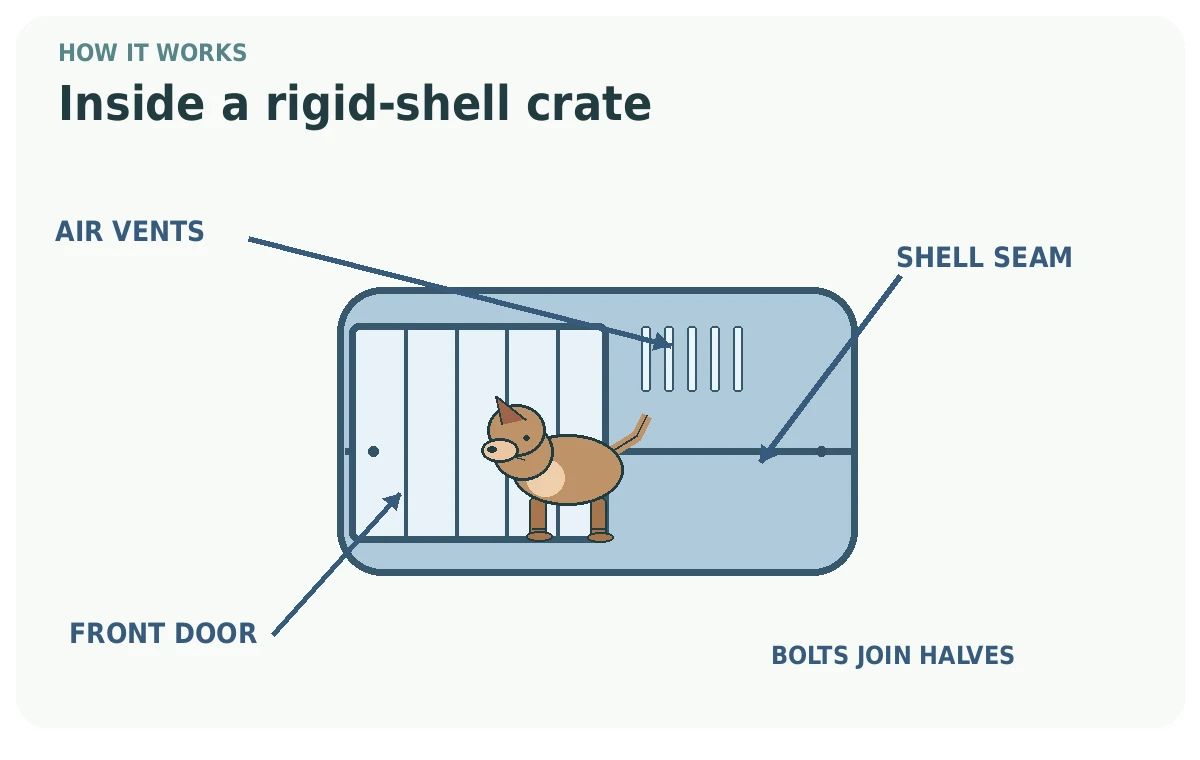
Plastic dog crates typically combine two molded halves, a front grille and connecting fasteners. The solid walls can reduce some visual distractions and contain small messes. However, a heavy shell does not automatically offer crash protection or satisfy airline rules. Check the exact product and intended use. For routine home resting, prioritize accessible doors, airflow, shape and easy cleaning. Some dogs prefer a more open view. A new enclosure should support relaxed entry rather than forcing a timid dog into an unfamiliar dark space.
Measure the space inside the curved walls
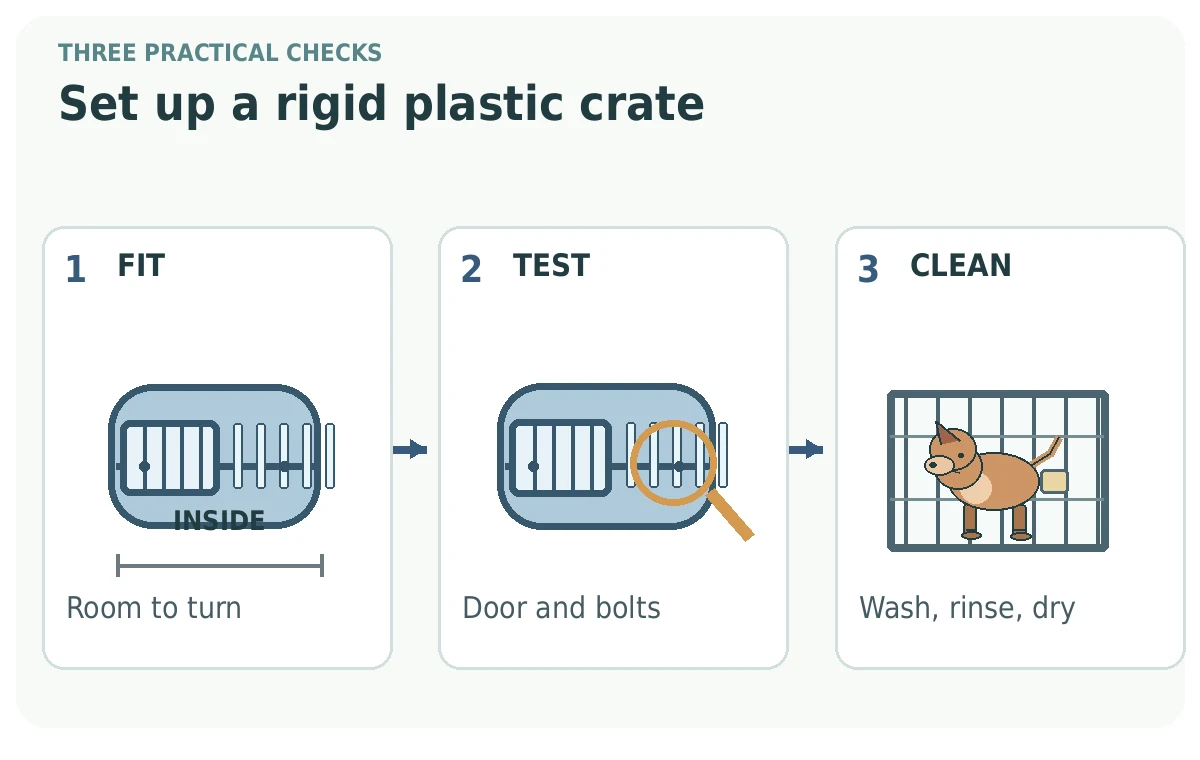
External product measurements overstate available room when the plastic shell slopes toward the roof. Measure internal length and width near the floor, then check shoulder and head clearance at the highest standing point. Your dog should stand without crouching, turn and lie on its side in a natural position. Consider the size of a washable mat or tray, which may make the usable area smaller. Do not choose by breed name alone. Compare the actual dog’s posture with the internal dimensions before buying.
Inspect shell joining hardware
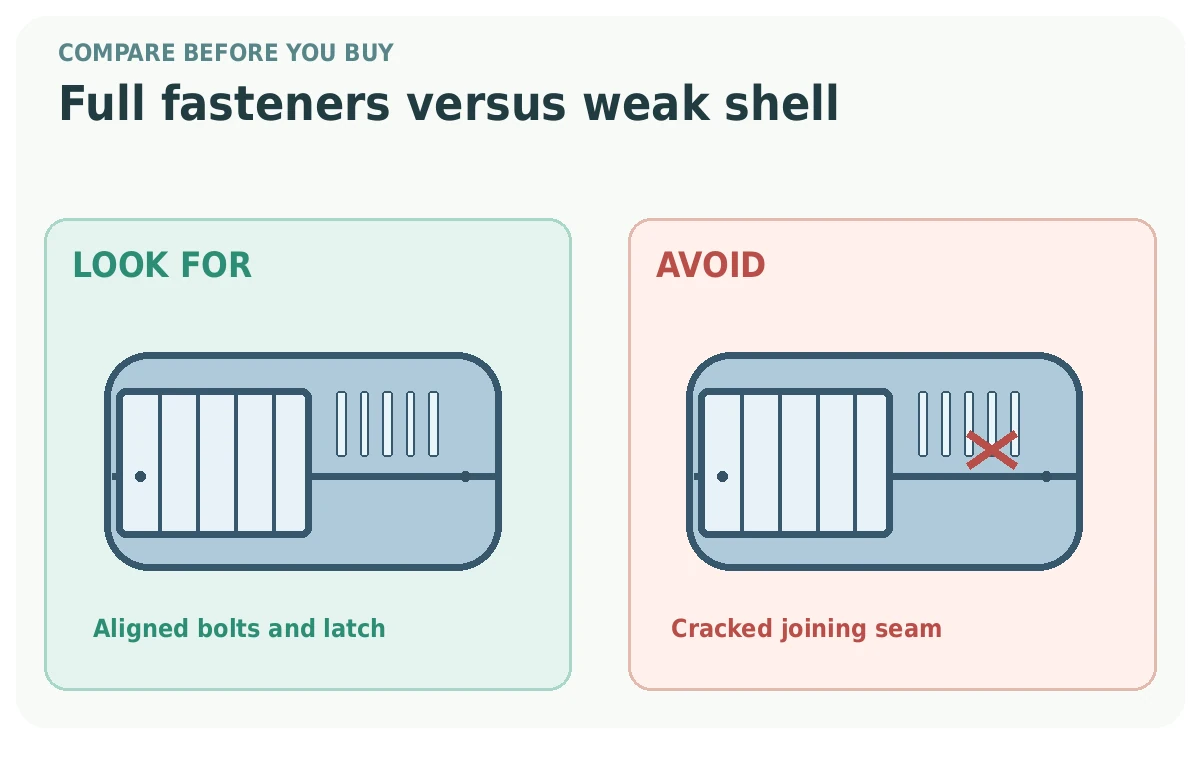
Many models secure top and bottom halves with bolts, nuts or other maker-specific fasteners. Count the connection points and inspect each for cracking, missing parts and uneven tightening. Do not substitute random household screws, especially where their tips could project into the crate. A shell that separates or twists when lifted needs repair with approved parts or replacement. Some crates have top handles for carrying, but their ratings differ. Test the empty crate before placing any animal inside, and follow the stated lifting limits.
Check the door from every angle
Open and close the front grille several times with the crate empty. The door should swing without scraping a distorted frame and should latch consistently at all required points. Look for loose wire ends, sharp hinges and a locking pin that stops short of its receiver. A clever dog may paw at a simple catch, so choose hardware suitable for that dog’s habits. Do not modify the door with improvised clips that could trap a collar or delay release. Keep the opening clear of furniture and cables.
Keep ventilation holes unobstructed
Solid walls make correctly placed vents especially important. Inspect the side holes, door grille and any rear slots, then check that the crate still breathes after placement beside furniture. Do not block vents with blankets or storage boxes. Monitor indoor heat and drafts instead of using a rigid shell as a temperature control device. Short-nosed dogs and animals with breathing concerns need individualized veterinary guidance about travel and confinement. A fan pointing at the outside shell does not fix inadequate ventilation inside.
Place the crate on a stable, dry floor
Look for a flat base that does not rock when your dog shifts weight. Avoid high shelves, unstable tables and pathways where people might trip over the door. On slick tile, use an appropriate non-slip mat under the crate if the manufacturer allows it. Keep the rear vents away from curtains and heater outlets. Put the crate where you can see the dog and open the door easily. Household positioning often matters as much as shell design for a comfortable resting space.
Do not confuse everyday crates with crash-tested restraints
A hard shell is not proof of vehicle crash performance. ASPCA recommends securing suitable hard-sided carriers during travel and warns against wire or collapsible crates as vehicle restraints. Follow the travel product’s documented vehicle instructions rather than looping a belt through arbitrary slots. Never claim a crate meets an airline requirement merely because its product page uses travel language. Airlines and routes may set different rules. In the home, use the crate as a resting and management tool, not a promise of crash safety.
Clean the base without hiding residue
Lift out the mat and inspect the shell seam for food crumbs, urine or trapped water. CDC recommends washing hard pet items with soap and water before any situation-specific disinfecting. Follow the product label and rinse or dry fully before the dog returns. Never combine bleach with other cleaners. Deep grooves and handles can hold moisture after a quick wipe. Allow both shell halves to dry separately when disassembly is permitted. Replace bedding that has become frayed or that the dog persistently chews.
Introduce the dog through an open door
Set the empty crate in a quiet place, secure the door open and place a small reward just inside. Let the dog choose whether to enter. Gradually shift rewards farther in as confidence grows. Keep early sessions brief and stay nearby. Later, close the door for a moment, reopen it calmly and extend only while the dog remains comfortable. Excessive vocalizing, drooling and escape attempts can signal distress, not stubbornness. Cornell cautions that some dogs need a pen or room instead of crate confinement.
Plan for real-life emergencies
Check how quickly an adult can release the latch with one hand. Keep an unobstructed route to the door and avoid stacking boxes on top of the shell. If the dog becomes stuck, do not pull a limb through narrow holes. Open or carefully disassemble the unit with help as needed. Inspect the crate after any fall, relocation or rough handling. Tiny cracks around bolt holes can grow, especially as plastic ages. Keep the maker’s replacement-parts information for future hardware needs.
Choose a model that stays maintainable
Look for clearly described internal measurements, available replacement hardware and construction you can inspect without special tools. Compare handles, door alignment, drainage grooves and ventilation coverage in person if possible. A compact model may fit the room yet leave the dog cramped; a huge one may become awkward to lift and wash. The best home model works for the dog’s normal posture and your cleaning routine. Do not mistake a brand’s word indestructible for a meaningful safety standard.
How We Research
We compared the design and maintenance questions for plastic dog crates against the veterinary, shelter, and public-health sources below. Our evaluation considered observable dimensions, hardware, cleaning access, animal comfort, and constraints specific to this use case. This project did not laboratory-test individual products, certify crash performance, rate retail brands, or diagnose behavior from a photograph. Manufacturer instructions and the individual dog’s response take priority. Read our editorial approach. Sources reviewed October 28, 2026.
Sources
Cornell University College of Veterinary Medicine, Dog Crates: When to Use Them and How to Pick One. Read the original guidance. Accessed October 28, 2026.
ASPCA, Traveling With Pets? Expert Dos and Don’ts. Read the original guidance. Accessed October 28, 2026.
CDC, About Cleaning and Disinfecting Pet Supplies. Read the original guidance. Accessed October 28, 2026.
AVMA, Traveling with Your Dog or Cat. Read the original guidance. Accessed October 28, 2026.
Safety note: If confinement causes persistent panic, repeated escape attempts, chewing of unsafe materials, or sudden difficulty moving, stop and reassess the arrangement. Consult a veterinarian or qualified reward-based trainer as appropriate. Do not leave dogs without needed water, rest, activity, or toileting opportunities.
They can work for dogs that rest comfortably inside them. Check interior room, airflow, working latches and daily cleaning access.
Use manufacturer-approved replacement hardware. Improvised fasteners may protrude inside or fail to hold the shell together.
No. Hard plastic alone does not establish crash performance. Use documented vehicle instructions for a suitable restraint system.
Remove bedding, wash with soap and water, follow relevant disinfectant directions when needed, and dry everything before reuse.
No. Leave all designed airflow routes clear and reassess the room temperature and placement before every prolonged use.