
Carpeted stairs collect pet hair along tread surfaces, risers, and hard-to-reach corners. Cleaning them involves a second challenge: stable footing and a vacuum that cannot tip or pull the user off balance. Instead of dragging a wide floorhead across every step, divide the job into areas and choose compatible small attachments. Start by checking the carpet condition and clearing the stairs. This guide covers the cleaning sequence, equipment placement, and warning signs that call for a different tool or professional care.
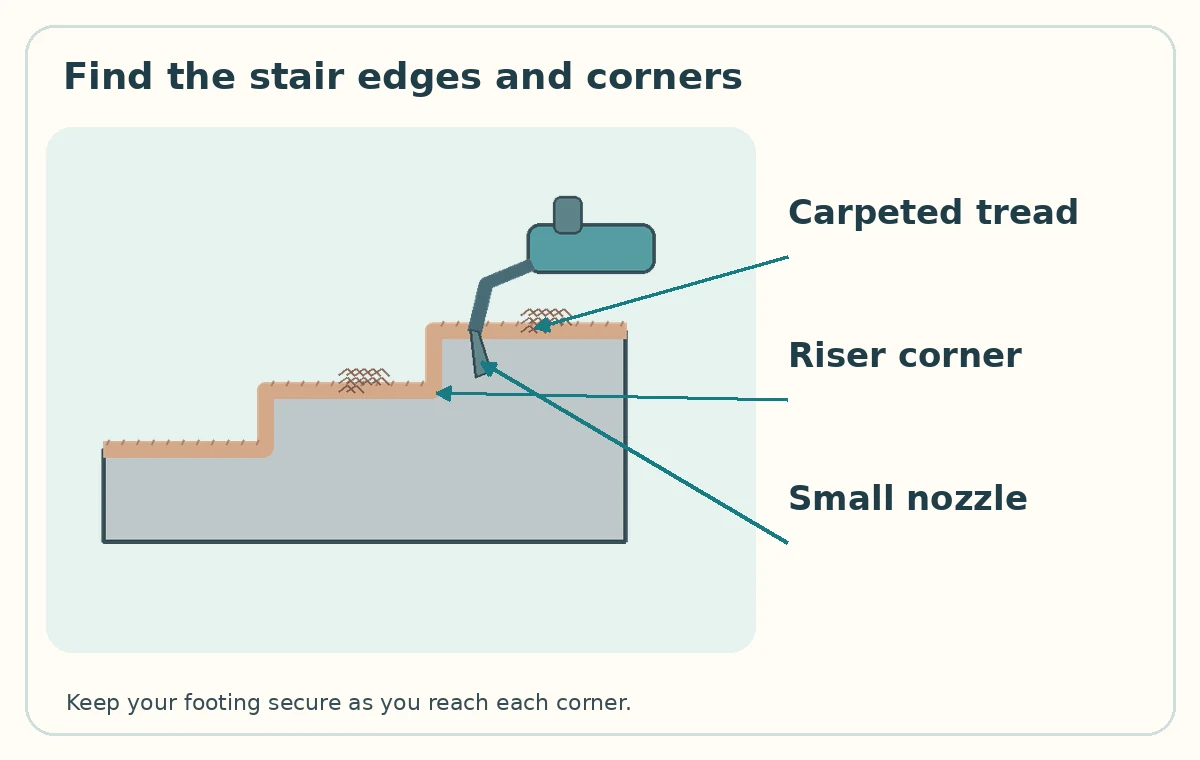
Break each stair into three cleaning areas
Carpeted stairs have a horizontal tread, a vertical riser, and narrow edges where fur collects against the wall or railing. A broad floor nozzle may sweep the middle but miss the corners. Plan separate passes instead of forcing one large head into every space. Remove small toys, shoes, and other trip hazards before you begin. Check whether the carpet runner is secured; loose edges may catch a brush and create a fall risk. Keep pets away from the staircase while the vacuum is running.
Check carpet material and runner condition
Read any available care information for the carpet or runner. Short synthetic pile may tolerate a small rotating head, while wool, loops, fringe, or a delicate binding can call for gentler suction. Look for lifted seams, exposed staples, worn stair nosings, or loose edging before a machine touches the surface. A powerful spinning brush can worsen a snag. Do not attempt a wet cleaning method simply because hair remains after vacuuming. For antique rugs or delicate runners, seek maker or professional guidance.
Choose compact and compatible attachments
A hand-held upholstery nozzle can cover the flat tread; a crevice tool reaches the junction with the riser and the wall. A mini motorized head may lift embedded hair on carpet that permits agitation. Verify that the tools fit the exact vacuum model, including any electrical connection. Consider the machine’s weight, hose reach, cord routing, and stability. A head that collects fur well on a floor is not useful if its handling makes you lose balance on a narrow staircase.
Put the vacuum body in a stable location
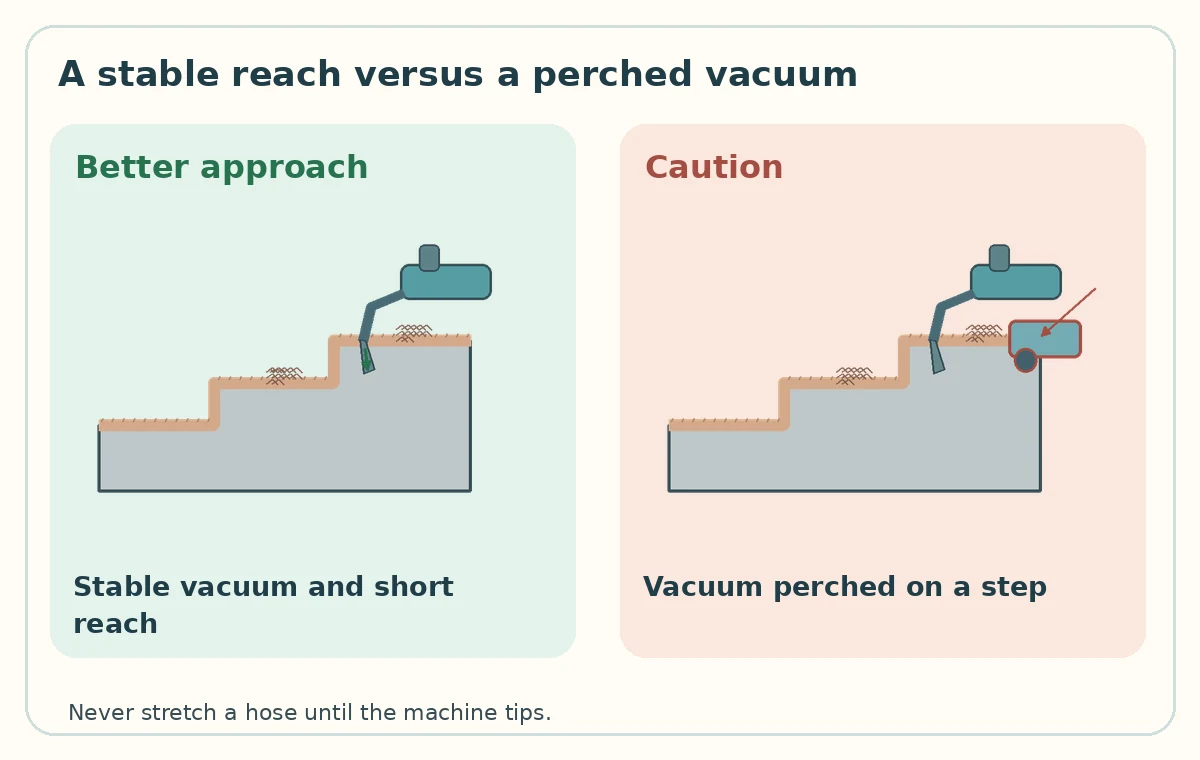
Place the vacuum on a level stable surface within the manufacturer’s hose and cord limits. Do not perch a heavy upright on a narrow step, pull it up by the hose, or stretch toward the last stair until it tips. Keep the cord out of the walking route and avoid blocking anyone’s access. If the hose does not reach safely, stop and reposition the machine. Pet hair removal is never worth a fall. Work while you can use one hand for the cleaning tool and maintain secure footing.
Start at the top and finish each tread
A top-to-bottom routine lets loosened fur and debris fall toward steps you have not cleaned yet. Make slow overlapping passes across each tread with the nozzle suited to the carpet. Do not jab at fibers or pull fringe into a brushroll. Collect visible clumps when the machine is switched off if they block the tool. If the carpet surface changes or a seam begins lifting, stop. One careful pass with the right head is more useful than many aggressive passes with a mismatched attachment.
Clean risers and the tread-riser junction
The vertical riser can hold dust and fur even when the tread appears clean. Use a small upholstery tool or gentle nozzle for the riser, then the crevice attachment along the inside angle. Keep hard plastic tips from scraping painted trim. Work in short sections so the tool remains controlled. Check the outer corner beside a railing or spindle, where a large head cannot enter. Avoid leaning across several stairs to reach a distant corner. Reposition yourself rather than overextend.
Compare a stable setup with a risky reach
In a safer arrangement, the body of the vacuum rests on a suitable stable surface, the hose reaches without tension, and the attachment moves along one step at a time. In a risky arrangement, the machine balances on an edge or the operator stretches the hose across multiple steps. The warning is about balance as much as cleaning performance. If your equipment cannot reach without tipping or tripping, change to a lighter compatible tool or divide the work into smaller sections.
Handle stubborn fur without damaging the pile
Try a second light pass in another direction only if the carpet maker and attachment instructions permit it. A small rotating brush may help lift embedded strands, but watch for snagging. Do not scrape loop pile with a rigid blade or use an abrasive cleaning sponge. If hair remains inside a seam, use a narrow suction tool instead of pulling the carpet backing. Regular light maintenance reduces the need for intense pressure. If dirt or stains are the larger concern, consider a separate carpet-safe cleaning plan.

Finish with a safety and maintenance check
After each flight, inspect the carpet for lifted edges and check whether the tools collected string or hair around a roller. Power down and disconnect the machine before cleaning a motorized head. Empty the dirt bin or change the bag according to the manual, and keep the stairway clear while you put equipment away. Avoid leaving a wet tread from incidental cleaning; a damp step can be slippery. Return the pet to the area only after cords, tools, and other hazards are removed.
A repeatable cleanup and maintenance checklist
Before each session, identify the material, confirm that your equipment is suitable, and start with the gentlest method. Inspect the result under good light before moving across the whole surface. Stop if you notice a snag, a change in finish, abnormal noise, unstable equipment, or discomfort in the pet. Keep cords and small loose tool pieces away from animals. Collect gathered fur into the trash and clean or store the device using the maker’s instructions. These checks matter more than a product claim that any one tool removes all pet hair.
How We Research
HubPet reviewed manufacturer guidance for upholstery, vacuum attachments, and carpet-cleaning tools, along with established humane pet-grooming information. We distinguished instructions for one manufacturer’s product from general safety principles; not every material accepts identical pressure, moisture, or brushroll use. We did not conduct independent laboratory comparisons or test removal percentages. Recommendations prioritize a visible hidden-area test, appropriate equipment fit, gentle technique, and realistic limitations. For unusual skin shedding, painful coat changes, or persistent bald patches, contact a veterinarian. See our editorial method and veterinary disclaimer.
Sources
BISSELL — How to Clean Carpet on Stairs. Reviewed for material-care precautions, specific tool use, and stated limitations.
Dyson — How to Use Vacuum Cleaner Attachments. Reviewed for material-care precautions, specific tool use, and stated limitations.
BISSELL — How to Clean Upholstery. Reviewed for material-care precautions, specific tool use, and stated limitations.
A top-to-bottom cleaning route usually keeps loosened debris moving toward steps not yet cleaned.
A compatible crevice tool can reach the tread-riser angle and side edges better than a wide nozzle.
Only if the manufacturer explicitly supports a stable placement. Avoid balancing heavy machines on narrow steps.
No. Check whether the carpet type, bindings, and manufacturer instructions allow rotating agitation.
Use a small suitable upholstery tool in controlled strokes, then a crevice tool along the edge without scraping trim.