
Finding more fur on the sofa does not automatically mean your dog is ill. Dogs replace old or damaged hair, but normal shedding depends on coat type, living conditions, and the individual animal. The useful question is whether this amount is normal for your dog. A sudden change, bald patch, or inflamed skin deserves veterinary attention; consult our veterinary information disclaimer.
This guide gives you a repeatable coat log, a gentle grooming plan, and clear limits for home care. It does not diagnose skin disease or promise to stop normal shedding. Start by noticing where loose hair appears, whether the skin looks healthy underneath, and what changed in the household during the past few weeks.
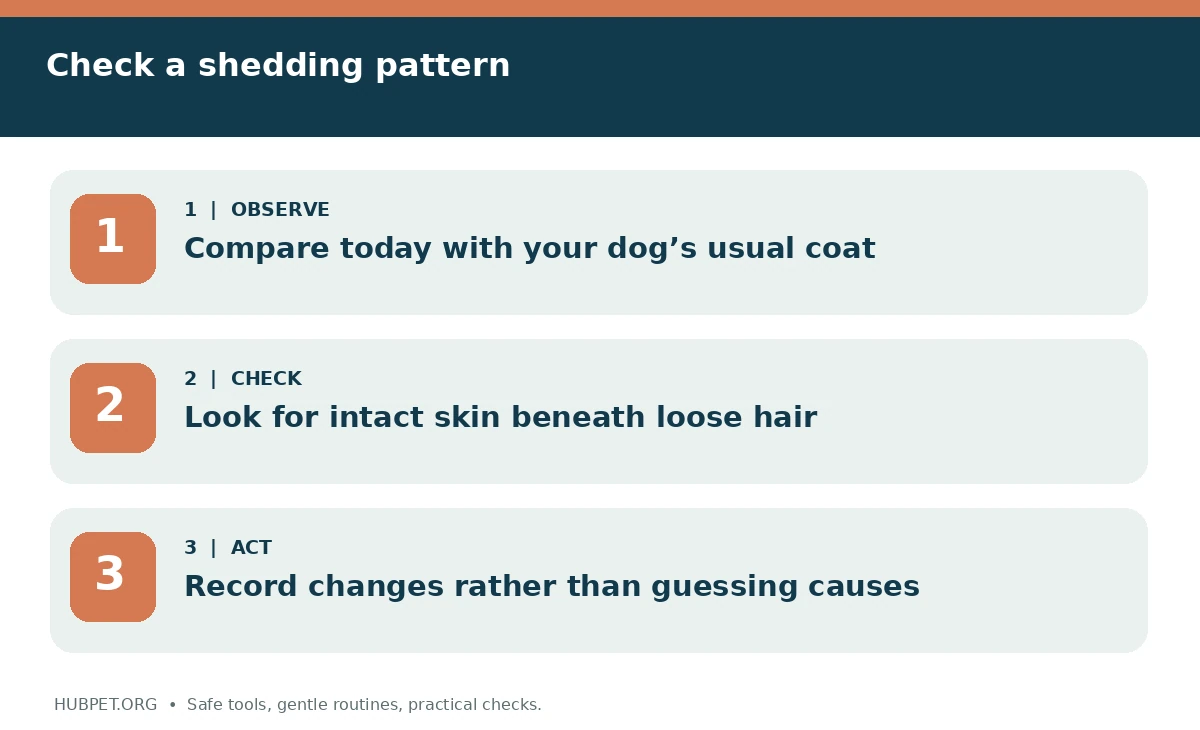
Establish your dog’s own shedding baseline
Gather observations across several regular grooming sessions rather than relying on one dramatic pile of hair. Note the date, where hair gathers, how much collects on the brush, and whether your dog seems uncomfortable. Compare similar brushes and session lengths. A quick phone photo of the brush or coat can make later changes easier to describe.
Look for steady coverage across the body, without exposed patches or redness. A long coat is not necessarily a heavy shedder, and a short coat can leave surprising amounts of hair on fabrics. If you recently changed tools, the extra hair in the brush may reflect more efficient collection rather than a biological increase in shedding.
Understand seasonal and year-round patterns
Some double-coated dogs release more undercoat as seasons and daylight change, while other dogs shed more evenly all year. Indoor lighting and temperature can blur a seasonal pattern. Ask yourself whether a similar increase occurred last year and whether your dog still acts normally and has intact, comfortable skin.
An expected seasonal shed should not produce painful sores, widespread bald areas, or persistent scratching. Hair everywhere is inconvenient, but visible skin damage changes the priority from housekeeping to veterinary assessment. Avoid interpreting the time of year as proof that every new coat change is harmless.
Match your brush to the actual coat type
Use a rubber grooming mitt or soft brush on many smooth coats, a suitable slicker and comb for longer hair, and an appropriate undercoat tool only where the coat requires it. The goal is to remove loose hair without scraping the skin or breaking healthy coat fibers. If you cannot identify the coat type, ask a qualified groomer to demonstrate the tool.
Start with a short session in a calm setting. Brush in the direction of growth, checking frequently for irritation. Do not repeatedly rake one patch until the brush stops collecting hair; that can cause friction and discomfort. A dog that pulls away, flinches, or guards an area may be communicating pain rather than stubbornness.
Inspect the skin while you groom
Part the fur at several locations and look for flaking, redness, scabs, an unusual smell, moist areas, or parasites. Compare matching areas on both sides of the body. A photo can be useful if a veterinarian later asks when a patch appeared. Never assume a bare spot is simply the next stage of a seasonal coat change.
Watch for frequent licking, rubbing, chewing, or scratching as well as a newly dull coat. These signs have many possible explanations and cannot be sorted reliably from an online symptom list. Arrange a veterinary visit if they persist or worsen. Avoid home remedies and medicated shampoos without individual professional advice.
Separate loose coat from broken or missing hair
Hair that sheds naturally often comes from across the coat, while damage may show as uneven lengths, brittle strands, or isolated thin places. Grooming tools that tug and tear can create a misleading picture. If you recently bought an aggressive de-shedding blade, pause its use and switch to gentler handling while you assess the coat.
True patches of missing hair, tender skin, swelling, or crusts require attention beyond a brushing schedule. Take notes about when these first appeared and whether other pets have symptoms. A veterinarian can examine the skin and determine whether testing is appropriate; guessing an allergy or infection from appearance alone can delay care.

Review routine changes without assigning a diagnosis
Consider grooming frequency, a move, more time indoors, stress, new bedding, or a recent change in daily routines. These observations can help the veterinarian understand the timeline if needed. Do not change your dog’s diet abruptly or start supplements just because a label claims to reduce shedding. Nutrition decisions should fit the whole dog.
If the coat change follows a new grooming tool or bathing routine, note that detail. Dry skin after repeated washing does not prove a particular disease; it may mean the routine is too harsh. Select gentle, dog-appropriate products and follow the maker’s directions rather than repeatedly bathing a dog to control household fur.
Use a realistic home-hair management routine
Brush in a comfortable place where loose fur is easy to gather, then pick it up before it spreads. Wash the dog’s bedding according to its label and keep a lint tool near heavily used fabric. Regular cleaning reduces stray hair in the house but does not alter the dog’s normal coat cycle.
If brushing seems overwhelming, shorten the session and return later rather than restraining the dog for a long session. Give the dog an exit and reward calm cooperation. Professional grooming can be useful for complex coats, but ask for coat-preserving techniques rather than requesting that all undercoat be removed at once.
Know when to call your veterinarian
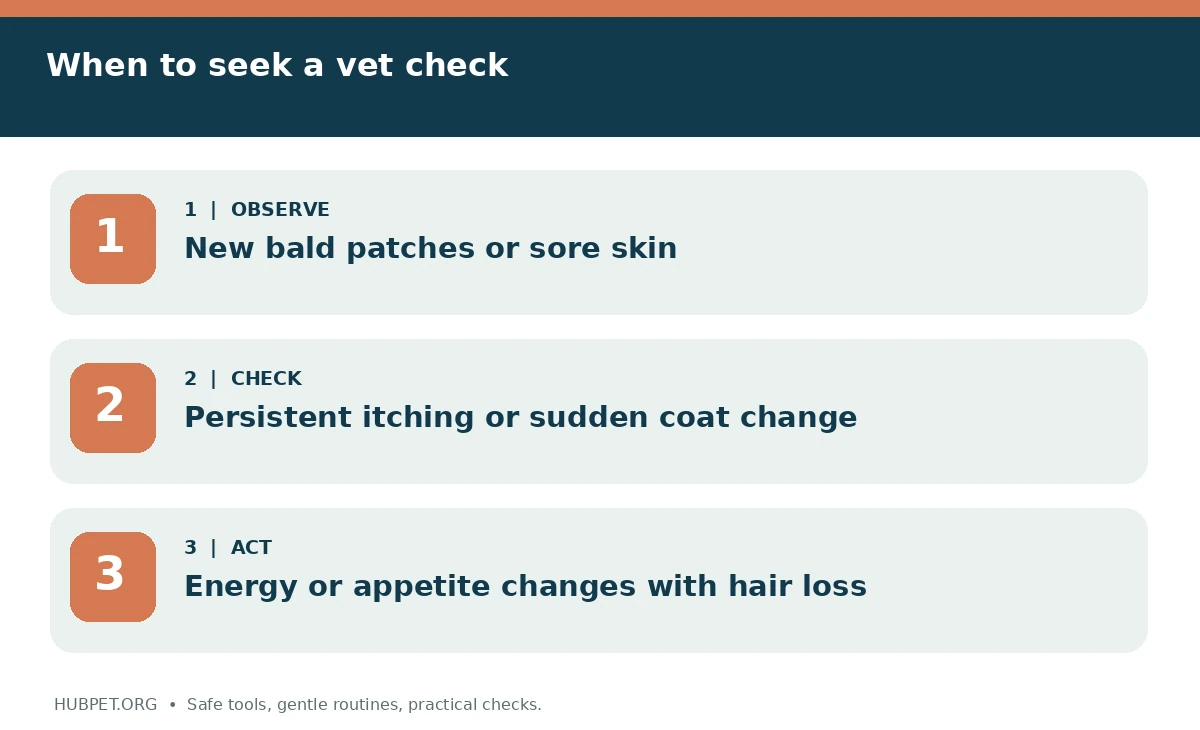
Book a visit for a sudden sustained change, bald patches, inflamed or painful skin, persistent scratching, or changes in appetite, energy, or behavior. Seek timely veterinary care for rapidly spreading irritation or signs that your dog feels unwell. Share the baseline notes and photos instead of guessing a cause.
If a veterinarian recommends a specific skin-care plan, follow that individualized advice rather than this general guide. A symptom-free seasonal shed usually calls for routine coat care, while an abnormal pattern needs a clinician’s assessment. No vacuum, brush, shampoo, or supplement can substitute for finding the reason behind disease-related hair loss.
Build a two-week observation plan
Choose a manageable grooming schedule suited to your dog’s coat and tolerance. Record the same few observations after each session: amount collected, skin comfort, any new bare places, and the dog’s response. Use consistent lighting for photos. The point is to recognize a trend, not to count individual hairs.
At the end of the period, compare the notes with the dog’s usual pattern. If concerns arise at any time, contact your veterinarian rather than waiting for the log to finish. If the coat remains comfortable and the amount matches a familiar seasonal cycle, continue the gentle routine and adjust household cleaning as needed.
How We Research
Our editorial process compares animal-welfare, veterinary, government, and consumer-safety guidance relevant to dog shedding a lot. We separate supported safety principles from marketing claims and review practical use, maintenance, and limits. This is independent desk research, not hands-on product testing or veterinary endorsement. Sources were reviewed on October 26, 2026. Read more about HubPet and our editorial approach. This guide does not replace veterinary advice for your individual animal.
Sources
AAHA: Why Does My Pet Shed?. Accessed October 26, 2026.
ASPCA: Dog Grooming Tips. Accessed October 26, 2026.
American Kennel Club: Dog Shedding: What to Expect and How to Manage It. Accessed October 26, 2026.
No. Coat genetics, indoor conditions, and each dog’s pattern affect how much loose hair appears. Compare your own dog across time rather than assuming every breed sheds on the same schedule.
No. Brushing collects loose hair before it spreads around the house, but it does not switch off a natural hair cycle. Choose tools that protect the skin and coat.
Sudden changes plus bald patches, skin redness, discomfort, itching, or wider changes in health deserve a veterinary assessment. A photograph and grooming log can help explain the timeline.
Frequent bathing may irritate the skin and will not solve every reason for hair loss. Follow appropriate product instructions and ask your veterinarian if the skin is already uncomfortable.
Do not start supplements solely to address loose hair without veterinary guidance. A balanced diet and any medical needs must be considered for the individual dog.