
This article provides general pet-product and home safety information, not medical diagnosis or treatment. If your dog shows pain, limping, weakness or persistent reluctance to move, consult a veterinarian before using stairs or ramps. See our veterinary disclaimer.
Dog stairs for couches solve a different layout problem from bedroom steps. Sofa cushions shift as a dog steps on them, coffee tables narrow the route, and a human may move the staircase aside during the day. The best arrangement gives a predictable, wide approach with a step height the dog can manage. This guide focuses on the connection between stairs, couch and room traffic. It also explains why a non-slip tread alone will not solve a wobbly staircase or a landing that disappears as the cushion compresses.
Measure the sofa seat rather than the armrest
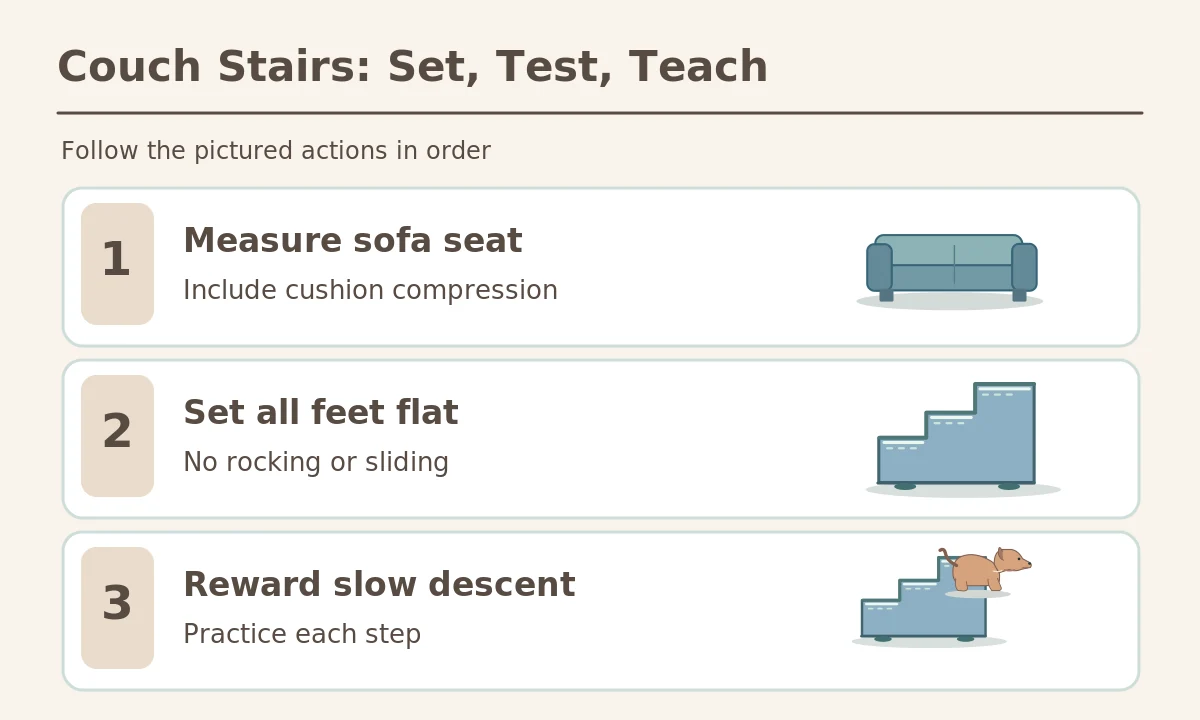
Measure the distance from the floor to the firm front edge of the seating cushion, with the cushion pushed down gently as it would be by weight. Compare it with the top landing of each stair unit. If the final move is a large hop or the top step leaves the dog short of the cushion, the accessory may not reduce jumping as intended. Measure the free horizontal space in front of the couch, including the path around a coffee table. A stair unit with many tiny steps may be steep and awkward; wide, shallow rises can be easier for many dogs to negotiate. Check the sofa upholstery, too: slippery leather may make the last step feel unstable.
Check tread depth with the dog’s full paw stance
A listing may emphasize the overall length while hiding shallow steps. Look at the horizontal landing area of each tread from the dog’s point of view. A dog should be able to settle its paws without hanging toes over a lip before moving upward. Test whether an excited dog will be tempted to turn around halfway and step off the side. Narrow units can be especially awkward when placed perpendicular to a couch in a tight room. Choosing wider treads and an unobstructed route is often more useful than adding another step. If the dog’s foot placement seems hesitant or the dog repeatedly skips steps, stop and reassess the geometry.

Test the frame, feet and couch contact
Before inviting the dog, grip the top rail or platform and apply gentle pressure forward, sideways and down. The staircase should not rock diagonally, slide backward or fold unexpectedly. Inspect all feet for equal contact with the floor; uneven rugs and raised floor transitions can leave one foot hovering. A non-slip floor pad helps only if it remains flat and the stair frame itself is rigid. Avoid resting the top platform directly on a soft couch cushion unless the maker designed the product for that use. Never rely on a strap around a moving cushion to prevent tipping. Follow any wall or furniture attachment instructions exactly.
Choose a sensible position in the room
Place the stairs where the dog naturally approaches instead of forcing a sharp turn between a side table and the couch. Keep walkways for people clear, especially at night. Do not set steps next to a hot radiator, loose charging cables or an area where a door swings into the stair unit. Leaving the stairs in the same position every day makes the route more predictable. If they are temporarily stored, remove them fully rather than setting a folded model halfway in a busy passage. Keep a comfortable dog bed nearby as a voluntary alternative to couch access. Consistent house rules matter more than whether the stairs match the furniture.
Compare stairs, a couch ramp and a single platform
Dog stairs save floor length but still ask a dog to lift paws over several risers. A ramp uses more room and offers a continuous incline, which may feel better for some dogs. A single broad platform can help with a relatively low sofa, provided the jump from platform to cushion remains modest and the surface does not slide. VCA recommends avoiding unnecessary strain on dogs with mobility problems and using stable, non-slip aids. There is no one universal solution for every breed or age. If a dog has stiffness, limping or reluctance to jump, discuss it with your veterinarian instead of treating a piece of furniture as medical treatment.

Teach the entire route in both directions
Dogs often learn how to climb steps before they are comfortable descending them. Practice approaching the first step from the side of the room the dog usually uses, reward a voluntary paw placement, and progress slowly. For descent, reward calm movement toward a lower tread rather than calling the dog excitedly from far away. Never pull the leash to force a step. A couch cushion may shift when the dog reaches the top, so train with the cushion in its normal position and a person nearby for supervision. Keep sessions short and stop if the dog freezes or jumps off the side. AKC guidance favors gentle introduction and rewards.
Maintain the setup when furniture moves
Recheck the stair position after vacuuming, rearranging the room or replacing an area rug. Wipe dust off grip feet and inspect the attachment points and joints for cracks. Tighten hardware only as the manufacturer directs. If removable tread pads begin peeling up, replace them with maker-approved parts rather than letting nails catch. Watch whether the dog uses the entire sequence or chooses to jump from the top step; that behavior may mean the final reach is wrong. A sturdy staircase is only useful if the dog chooses to use it. Keep the route open and revisit the measurements whenever a different sofa or slipcover changes the landing.
How We Research
We reviewed current veterinary and pet welfare guidance from VCA Animal Hospitals, American Kennel Club, Canine Arthritis Resources and Education. We compared advice about secure traction, access angles, voluntary introduction and supervised use with the physical setups illustrated here. The drawings show simplified generic equipment rather than specific products or independently tested load ratings. We did not perform laboratory slip, strength or water-rescue testing. Always verify manufacturer instructions and any local building or pool requirements before installation. For more information about our approach, see About HubPet.
Sources
VCA Animal Hospitals, Creating a Comfortable Home for Your Mobility Compromised Dog. Read the original guidance.
American Kennel Club, Dog Stairs vs. Ramps. Read the original guidance.
Canine Arthritis Resources and Education, Assistive Devices for Dogs. Read the original guidance.
Safety note: Never force a dog onto steps or a ramp. Inspect the device for shifting and damage before use, and keep children clear of folding hardware. For pain, weakness, a fall or difficulty walking, consult a veterinarian; use urgent care for collapse, trouble breathing or severe injury. Pool exit devices do not replace fencing or attentive adult supervision.
The top tread should reach close to the actual loaded seating surface without requiring a large final jump. Measure the sofa rather than relying on a generic size label.
Check the underside feet and use a flat, compatible non-slip surface. Replace unstable feet or the unit rather than adding a loose folded towel.
A wider stable tread usually gives more margin for paw placement, but the rise, depth, floor space and the dog’s confidence also matter.
You can, but make access rules predictable. A dog expecting a staircase may otherwise jump; block furniture access or provide a stable alternative.
Yes. Descent can be harder than ascent. Practice voluntarily in short rewarded sessions, with supervision and no forcing.