
Portable steps can make a familiar climb easier, but folding hardware adds failure points that fixed steps do not have. A stair unit must unfold fully, resist rocking, and offer secure paws a predictable path. This guide covers the hinge, each tread, the ground contact points, and a gentle first-use routine. If your dog has pain, weakness, recent surgery, or a sudden reluctance to climb, ask your veterinarian whether steps are appropriate before starting. See our veterinary disclaimer.
Confirm the staircase actually fits the destination
Measure the vertical rise from the floor to the resting or loading surface. Next, measure the available run, including room for your dog to approach and turn. Compare those dimensions with the product unfolded, not folded in storage. A staircase with a top step well below its landing can invite one final awkward jump. Conversely, a stair set that overhangs an edge may tip. Keep the arrival surface fully supported and do not bridge empty space with unsupported step ends.
Inspect both sides of every folding hinge
Unfold the unit on a flat, firm surface before allowing a pet near it. Look closely at hinges, links, rivets, pins, and any molded catches on both sides. They should align in the maker’s intended position without gaps, bending, or loose movement. A click alone is not proof of engagement; check the manual for the actual locking indicator. Never improvise with tape or a zip tie to hold an uncertain joint. Retire or repair a defective unit through its manufacturer.
Measure step height and landing depth
Count the usable treads and compare each rise with the length of your dog’s legs and gait. An agile small dog may prefer low risers; a stiff or hesitant dog may still find repetitive stepping difficult. Examine the depth of each platform, not only the width listed in a product title. Your pet should be able to place paws before moving to the next tread. If paws overhang and the body bunches up, try a deeper step or a ramp instead.

Check traction from paws to floor
A fabric stair cover can feel soft while slipping over smooth plastic beneath. Pull lightly at the covering to check whether it shifts. Inspect each edge for curling, staples, torn seams, and exposed hardware. At floor level, rubber feet must contact the ground and stay free of dust or hair. Test the unloaded steps for sliding on your actual flooring. On polished floors, an approved grippy mat under the entire base may improve contact; avoid loose rugs that bunch.
Keep weight ratings and dog movement separate
Read the stated weight capacity and any restrictions on proper use. A static laboratory rating does not promise safety when a dog bounds sideways, skips a tread, or lands off center. Watch for frame flexing and uneven leg contact during a gentle supervised trial. Do not let children sit on pet steps or use the unit as a human ladder. If the pet is near the equipment limit, choose a sturdier option with an appropriate safety margin.
Make the first introduction on the ground
Put the stairs where the landing is low and the route is quiet. Let your dog sniff the folded equipment first, then open it and reward calm investigation at the base. Guide a voluntary single step with a treat held at nose level. Stop before the dog becomes hurried or worried. Practice descending as thoughtfully as ascending because the approach looks different from the top. Do not drag the collar or lift the front paws onto a step to force progress.
Choose a safe position away from traffic
A hallway may appear convenient but can leave a dog squeezed between feet and the stairs. Position the base perpendicular to the destination and clear cords, bags, toys, and furniture corners from both sides. Leave enough open floor for the dog to pause. If the stairs face a door that might swing, move them out of its arc. A wall beside one side can help define the route, but never use the wall to hold an unstable stair frame upright.
Fold and carry without trapping fingers or paws
Before closing any hinge, move pets away and check that no loose blanket, leash, or strap enters the mechanism. Use the designated handle or grip rather than picking up the unit by a single tread. Protect fingers from scissoring hinge points. After transport, inspect the bottom feet and locks again; a folded unit may have rubbed against luggage. Store it away from moisture and places where a pet could climb the closed frame.
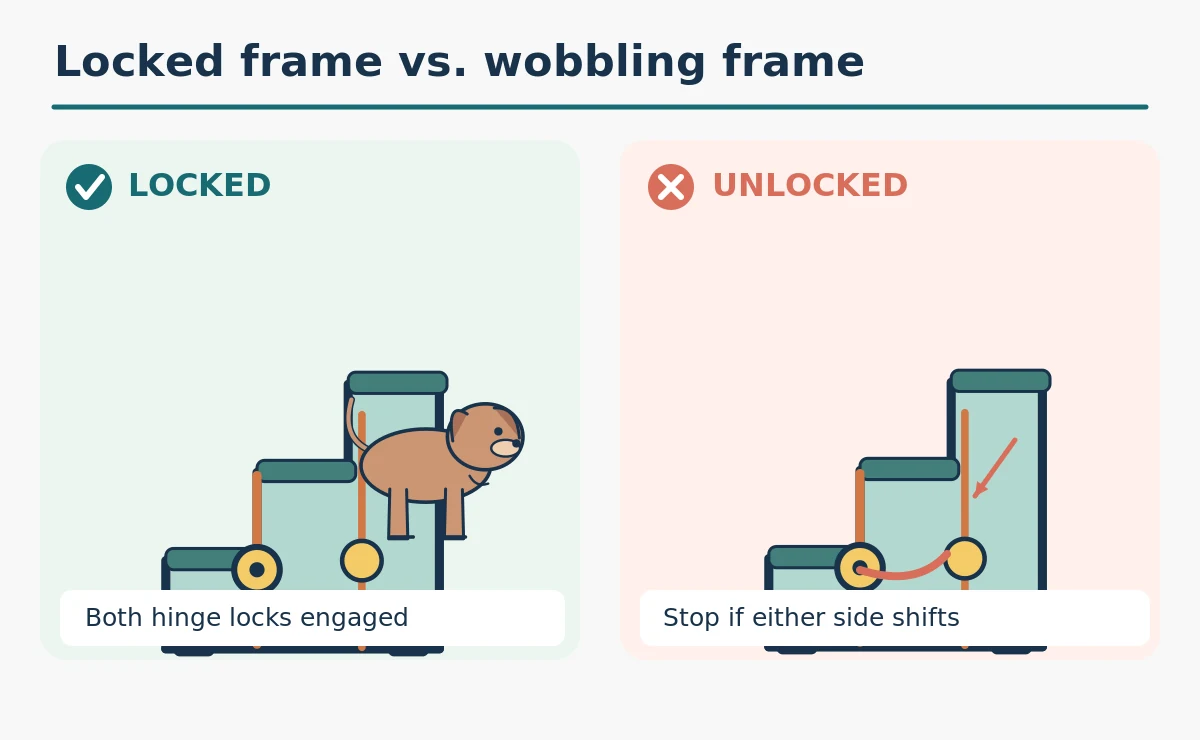
Compare portable steps with a low-angle ramp
Steps take up less floor length, which helps in compact rooms. However, they still require repeated stepping and a steady transfer at the top. A ramp spreads the rise across a longer run but needs more clear floor and good traction across its full surface. Dogs with limited mobility may require professional guidance rather than a product swap alone. Pick according to your dog’s observed movement and the real space, not just the smallest folded dimensions.
Run a brief inspection before every climb
Start with the feet, hinge locks, and platform alignment. Press lightly on different unloaded corners to detect rocking without applying human body weight. Check that each tread covering is dry and attached. Walk the approach and landing in your dog’s direction of travel to spot missing floor space. If the unit creaks unexpectedly, collapses partway, or shifts under a calm dog, discontinue use immediately. A repeatable check takes less effort than coping with a fall.
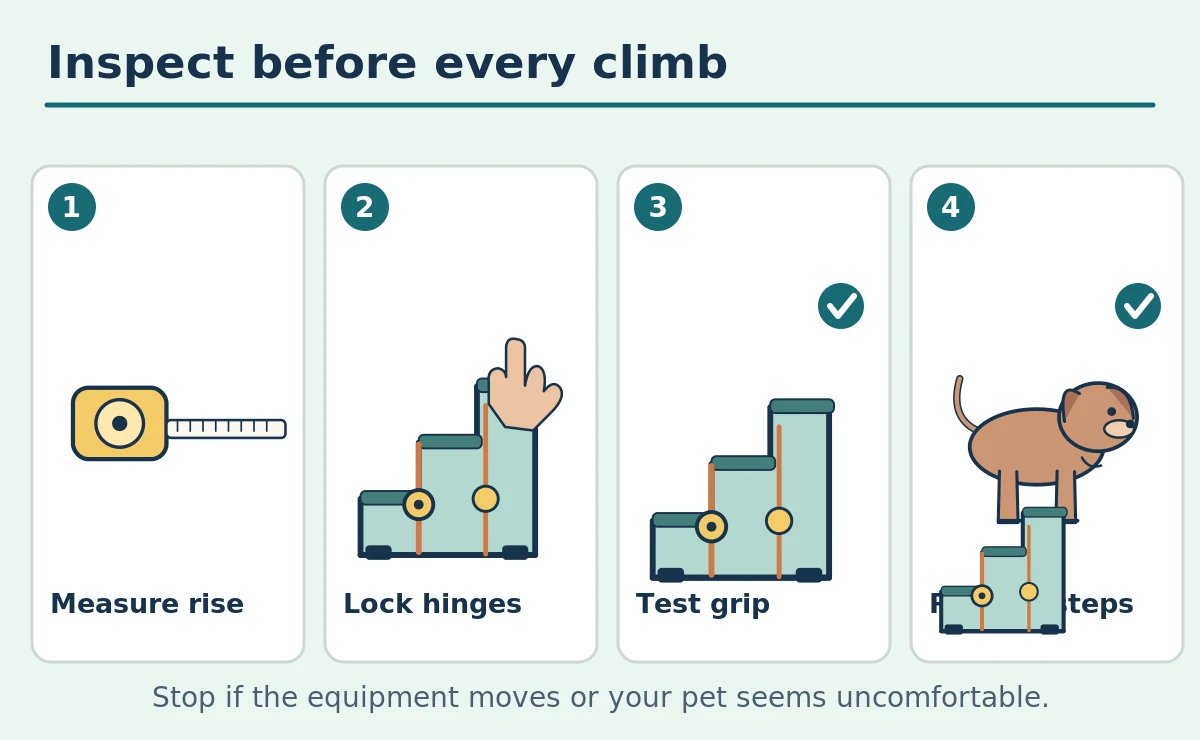
Know when stairs are the wrong answer
Refusing the steps, limping afterward, or hesitating at every descent can signal a mismatch or a medical problem. Move rest options to ground level until you get advice. Similarly, an uneven campsite or slick vehicle sill may be unsuitable for a folding stair with small feet. Do not compensate by holding a wobbly frame while your dog climbs. Professional assessment can help distinguish a training issue from pain, weakness, or a mobility restriction.
How We Research
We follow the HubPet editorial approach and compared veterinary and animal-welfare recommendations on traction, voluntary training, and safe access with the practical measurements above. Equipment examples are illustrative rather than tests of a specific brand. Manufacturer instructions determine the approved unfolding, contact, and cleaning methods. We separate routine setup advice from medical decisions and recommend veterinary assessment for pain, sudden mobility changes, injury, or recovery needs. This article does not claim that a ramp or stair prevents all falls.
Sources
VCA Animal Hospitals: Accessible home for dogs — guidance on mobility, stable access, and positive introduction.
American Kennel Club: Dog stairs and ramps — guidance on mobility, stable access, and positive introduction.
Canine Arthritis Resources and Education: Lifestyle modifications — guidance on mobility, stable access, and positive introduction.
Not automatically. Stairs require stepping, whereas ramps need more floor space but can offer a gentler path. Stability and your dog’s movement matter most.
No. Confirm the manufacturer’s locking position on both sides and test the unloaded unit for unexpected movement before use.
Avoid unstable rugs. All feet need firm, even contact on the floor, with grip that does not bunch up beneath the frame.
Yes. Descending requires a different view and balance. Start low, reward voluntary movement, and stop if your dog seems uncertain.
Stop using it until the manufacturer confirms safe repair or replacement. Never improvise a temporary hinge lock or support.