
This guide is general information, not individualized veterinary advice. If your pet shows pain, distress, illness, or a sudden behavior change, speak with a veterinarian. Read HubPet’s veterinary disclaimer.
The best vacuum for pets and carpet removes embedded dog and cat hair without damaging the pile. Emptying it should not release a large cloud of collected dust. Pet-hair labels alone are not performance measurements. Look first at tested pickup on similar carpet, then at the powerhead, ease of cleaning tangled fur and availability of bags or filters. This guide is specifically for carpet-dominant rooms, including runners and medium-pile living-room carpet. Mixed hardwood-and-carpet homes require a different choice: a head that also protects hard finishes. Here you will find a selection checklist, a pile-type comparison and a practical trial plan rather than unverified model rankings or changing prices.
Match the vacuum to carpet pile before comparing models
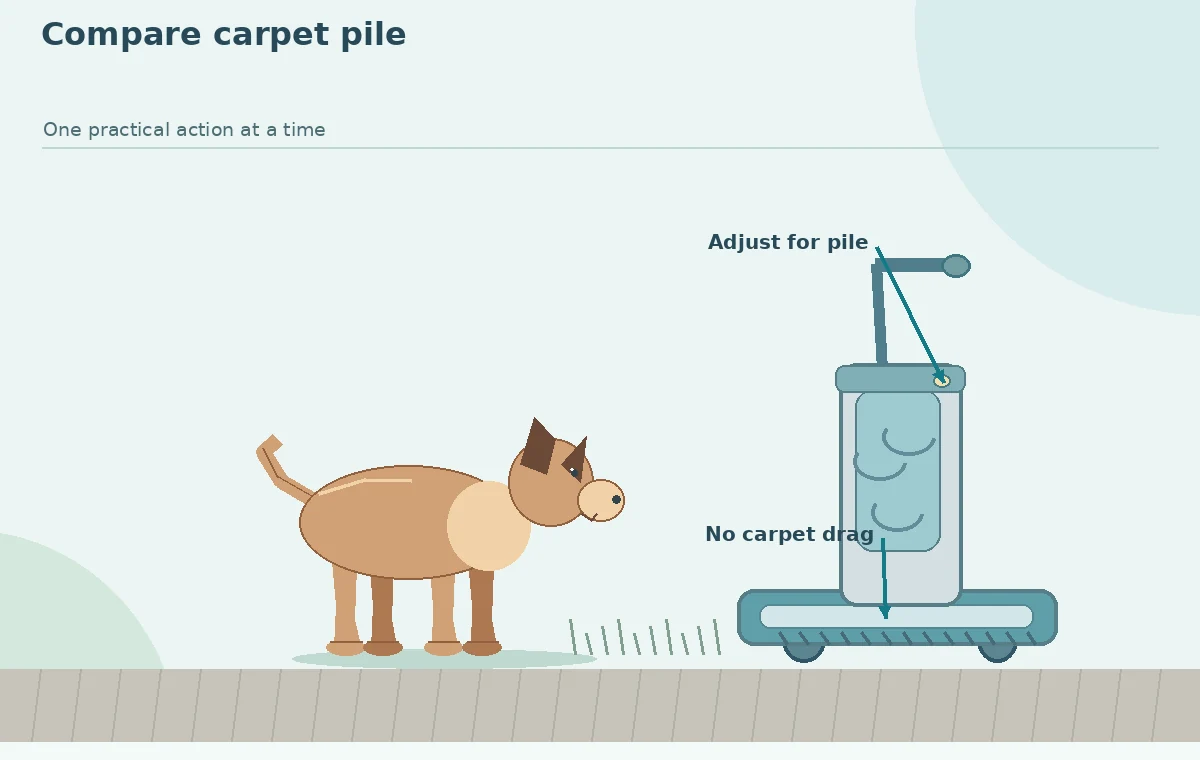
Carpet fibers hold shedding fur differently. On low pile, a well-designed rotating brush can help release strands, but excessive force may be unnecessary. Medium pile often rewards a motor-driven floorhead with a brush that keeps turning under load. Thick, plush or delicate rugs need height and suction adjustment so the head does not seal itself to the material or tug at backing. Consumer Reports tests pet-hair pickup on medium-pile carpet using a controlled amount of cat fur; that is stronger evidence than promotional photos. RTINGS also separates carpet and pet-fur tests, and explains why air-driven turbo tools can struggle on deeper pile. No single laboratory score guarantees safety on every heirloom rug. Read carpet care labels and check whether the vacuum maker explicitly supports the weave and pile. A machine that performs brilliantly in one pass but cannot be pushed comfortably is a poor household match.
| Carpet type | Prioritize | Red flag |
|---|---|---|
| Low-pile or flatweave | Steady pickup with controllable brush action | Aggressive head on a fragile weave |
| Medium-pile carpet | Motorized brushroll and accessible hair-cleaning path | Hair wrap that blocks the roller |
| Deep or plush pile | Adjustable head height and suction | Head sticking or dragging |
| Delicate wool or vintage rug | Carpet-maker-approved gentle tool | Stiff bristles pulling loops |
| Stairs and narrow runners | Safe light tools and manageable weight | Bulky head that cannot turn safely |

Run a five-part in-store or at-home performance check
Before buying, record the areas you clean: pile type, square footage and stairs. Note your pets’ fur length and the upholstery attachments you need. Check the machine’s permitted surfaces, not just its advertised wattage. For a showroom trial, listen for a brush that keeps turning without racing or stopping on carpet; assess whether the handle needs excessive effort. During a permitted return-window test, use a visible tuft of naturally shed fur on a hidden carpet area. Make a few normal passes and inspect what remains. Do not grind or repeatedly rub the same fibers. Check the brush endcaps for wrap and how easily you can clear fur with the machine unplugged. Finally, inspect emptying: a sealed bag may be preferable if loose dander is a concern, while a bagless bin requires more careful disposal.
- Confirm the carpet care label and the vacuum maker’s permitted pile range.
- Compare independent pet-hair pickup and carpet scores, not unsupported suction claims.
- Try normal forward and backward passes on an inconspicuous area without forcing the head.
- Check brushroll access, clog points, replacement filters and bag availability.
- Assess weight, emptying dust exposure, noise and whether a small upholstery tool is included.
Choose the configuration for your home and your pet
Corded uprights can suit large stretches of carpet because there is no battery-runtime limit, although carrying it on stairs may be awkward. Canister vacuums with motorized carpet heads can reach under furniture and into narrow edges, but check hose handling and storage. Meanwhile, a cordless stick may be easier for short daily sessions yet could require charging between whole-home cleans. Robot vacuums can help with surface fur between full cleans, though their pickup on embedded carpet hair varies widely by model and debris type. Avoid assuming every soft roller works for dense carpet: soft rollers are typically designed for bare floors, not to agitate trapped fur. If your dog sheds on couches too, compare the actual upholstery tool instead of accepting the phrase “pet attachment.” Our guide to removing fur from furniture covers fabric-safe care. Filtration matters most when the full air path seals properly; a HEPA label on one component is not proof the entire machine retains fine particles.
| Household situation | Consider first | Verify in a test or manual |
|---|---|---|
| Rooms mostly carpeted | Corded upright with suitable powered head | Pile compatibility and push effort |
| Carpet plus tight stairs | Canister with safe compact tools | Weight and stair reach |
| Quick daily touch-ups | Cordless with carpet-capable head | Measured runtime on high power |
| Heavy long-haired shedding | Accessible tangle-resistant brushroll | How to open and clean it safely |
| Dust-sensitive household | Well-sealed filtration and cleaner emptying | Filters, bags, replacement cost and seals |

A maintenance routine that protects both carpet and vacuum
Empty or replace the collection container before it is packed with hair; reduced airflow can hurt cleaning performance. Unplug the appliance before checking a removable brushroll and never cut wrapped hair near wiring or moving parts. Follow the manual’s instructions for rinsing or replacing filters; not every filter is washable. Hair can also gather at hose bends and narrow tool openings, so check those only where the manufacturer authorizes access. On rugs, start with the gentlest approved head setting and stop if loops pull, the brush stalls or the surface shows damage. Brush pets regularly where appropriate to reduce the load, and use washable throws where they rest most. These habits prevent repeated heavy passes on fragile carpet.
The practical verdict is a checklist, not a single “best” badge. Prioritize pickup on your pile, controlled agitation, brush access and dust management in that order. If cleaning leaves a pet unusually distressed by noise, make a separate quiet resting space and work in short sessions. For routine prevention, use a pet-safe floor-cleaning routine and gentle shedding care. A good machine should make normal floor care easier without damaging the rug or requiring constant repair.
Safety and When to Get Help
If your vacuum sparks, overheats, smells burnt or repeatedly stalls, stop using it and contact the manufacturer or a qualified technician. Unusual bald patches, skin inflammation or sudden heavy shedding in your pet warrant a veterinary appointment; a stronger vacuum will not treat the cause.
How We Research
We checked independent Consumer Reports and RTINGS pet-hair and carpet test methods against manufacturer floorhead guidance. Our recommendations are condition-based evaluation criteria, not personal lab tests or a ranked endorsement of individual models. Sources reviewed November 2026. For site editorial information, read about HubPet.
Sources
Consumer Reports — How We Test Vacuums for Pet Hair. RTINGS — Tested Pet-Hair Vacuum Performance and Floorhead Types. RTINGS — Carpet Vacuum Testing and Selection. Electrolux — Choosing a Vacuum for Carpet and Hard Floors.
No. A suitable brushroll, carpet compatibility, manageable movement and tested hair pickup usually tell you more than an isolated wattage or suction number.
A carpet-capable motorized head is often more reliable for embedded fur, especially on medium pile. Delicate rugs may require gentler approved attachments.
A sealed bag may reduce exposure when disposing of collected fur and dust, but check whole-machine filtration and the correct bag-replacement procedure.
Often not entirely. A robot may collect daily surface fur, while embedded hair can require a suitable upright or canister carpet head.
Inspect the permitted head setting, bin or bag fullness, accessible brushroll wrap and filter maintenance before assuming more suction is needed.