
The word orthopedic on a dog bed can sound like a medical guarantee. It is not. Manufacturers use the term across many designs, and a product label alone does not show how a specific dog will rest or rise. An effective buying checklist looks at steady support, entry height, grip, and the dog’s individual mobility.
Persistent stiffness, limping, or pain deserves a veterinary assessment. Bedding is only one part of a home-comfort plan, not a replacement for care. Review our veterinary information disclaimer, then use the practical tests below to compare options safely.
What orthopedic can and cannot tell you
Orthopedic beds often contain supportive foam and may spread pressure across a larger surface. However, the term does not specify one required material, density, or clinically proven result. Read the construction details and avoid advertisements that claim a mattress alone treats arthritis. A comfortable surface can help daily rest, but it cannot establish a diagnosis.
Ask what lies beneath the top fabric, how the base resists sagging, and what happens after washing. Remember that your dog’s posture and movement offer more useful feedback than a badge on the package. A veterinary team can recommend accommodations for a known condition.
Start with the problem you are trying to solve
Is the dog avoiding hard floors, hesitating before lying down, struggling to stand, or slipping off a cushion? Each issue suggests a different feature. Pressure comfort may favor a supportive surface. Difficulty crossing a rim favors a lower opening. Sliding while rising calls for better traction around and beneath the bed.
Do not use a shopping checklist to explain away sudden mobility changes. Record what you observe and ask a veterinarian. In the meantime, clear clutter and make the resting route predictable. Our senior dog comfort guide covers the surrounding routine.

Support should hold shape without creating a trap
A mattress that compresses all the way to a hard floor offers little cushioning under weight. Yet a very soft nest can make standing harder for a dog with weak limbs. Look for a steady, supportive core and a top the dog tolerates. Observe normal rest and rising movements rather than pressing the foam with one finger alone.
For a larger dog, compare usable dimensions and the manufacturer’s intended load range. Examine whether the sleeping area stays level, especially near the edges. PetMD’s veterinarian-reviewed guidance also emphasizes size, style, and easy access rather than one universal bed design.
Low entry matters as much as the foam
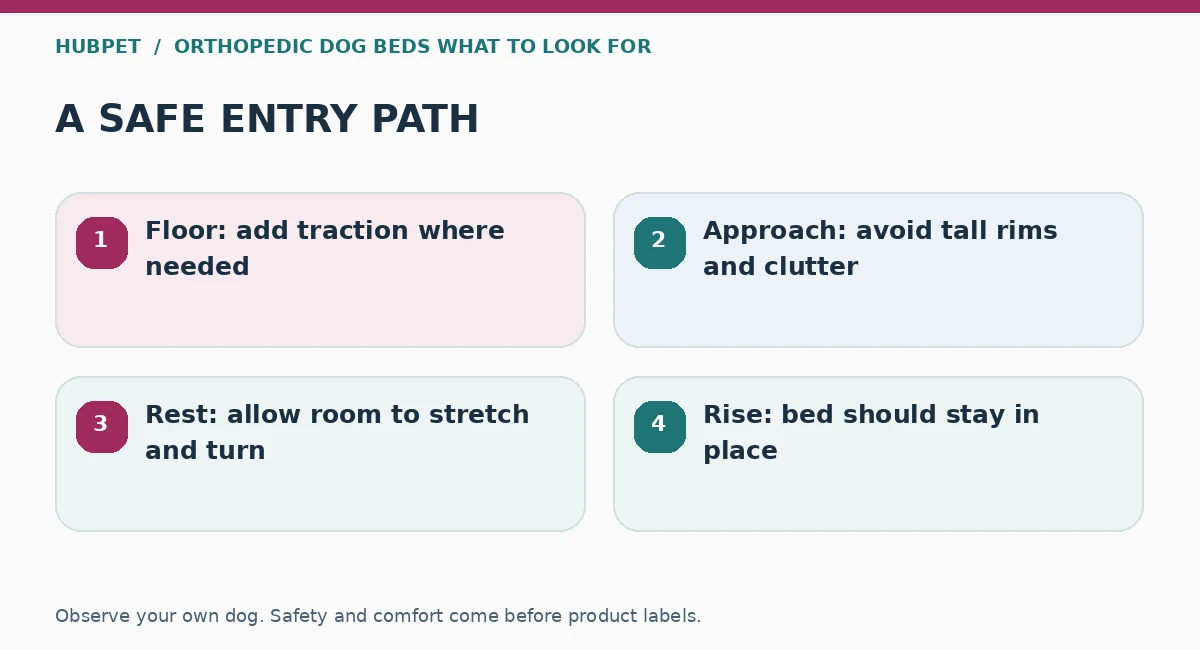
A tall continuous bolster may provide a headrest but block an older dog. A three-sided design with an open front can offer a compromise. Flat mats provide another route when stepping up hurts. Choose the lowest safe transition your dog can manage without jumping or dragging feet across the edge.
Place a grippy mat nearby if your flooring is smooth. Then watch whether the dog can stand and turn without the bed sliding. VCA advises low-access bedding for mobility limitations. Also read our guide to accessible rooms for senior pets.
Match the bed to the sleep posture
A dog that sleeps stretched on one side needs unobstructed length. A curling dog may enjoy a supported edge, provided entry stays easy. Some dogs prop their neck on a low bolster, while others move away from raised sides. Measure the actual space the dog uses and compare it with the interior bed dimensions.
Avoid letting attractive product photographs decide the fit. A thick rim can take away several inches of usable space. If the dog changes position often, favor enough room to rotate without hanging over the edge. Comfort should allow choice, not lock the body into one posture.
Prioritize traction around the entire sleep area
Even a supportive bed can become unsafe when it slides across polished tile. Test the underside on the real floor. Check that nearby rugs do not curl up or shift as the dog steps forward. The path to water and outside should also offer reliable footing, particularly at night.
If your dog seems fearful of standing, watch the first few steps after rising. A veterinary assessment can separate joint discomfort from other causes. Meanwhile, reducing slips is a useful home adaptation. Our senior pet home checklist provides a room-by-room review.
Choose washable construction for long-term use
A washable cover and a protected insert simplify accidents and shedding. Read whether the foam needs spot cleaning and whether the cover can enter a dryer. Check zipper placement and removable parts. For dogs that scratch, reinforced seams may help, but inspect the bed often for loose filling.
If a dog has frequent accidents, use a suitable protective liner that does not create a slippery or noisy surface. Dry all components completely before use. Replace beds that sag, hold persistent odor, or expose unsafe foam fragments. Maintenance is part of comfort, not an afterthought.
Avoid relying on heat or therapeutic promises
Some beds advertise warming effects, medical recovery, or pressure relief without explaining how makers tested the claims. Consider these statements cautiously. Additional warmth may feel pleasant in some settings, but a dog should always be able to leave a warm area. Never assume heat is safe for a dog with a medical condition.
Instead, ask your veterinarian about temperature management when mobility or illness affects comfort. Keep the room at a safe temperature and offer another resting option. The goal is everyday ease rather than an unsupported claim of treatment.
Watch an ordinary week, not a staged trial
Invite your dog to approach the new bed voluntarily. Over several days, note where the dog chooses to rest, whether turning seems smooth, and how easily they rise. Do not force repeated standing tests to compare mattresses. If a dog avoids the bed, check entry height, floor grip, temperature, and placement.
A change from usual behavior can guide small adjustments. However, the absence of visible struggle does not prove that pain has resolved. Keep veterinary follow-ups when recommended. Bedding should support the wider plan instead of replacing it.

A safe orthopedic-bed buying decision
Prioritize usable dimensions, stable support, low entry, secure traction, and a care routine you can maintain. Ask for layer construction and return options. Skip claims that imply a product can prevent joint disease or reverse its symptoms. Product rankings are not necessary to find a sensible fit for your dog.
If the dog has a known medical problem, bring observations and possible bed dimensions to your veterinarian. That conversation may reveal an access issue you missed. A calm, comfortable resting setup can improve daily life while professional care addresses health needs.
How We Research
We reviewed veterinary care and animal-welfare guidance alongside material-specific shopping information. Sources were checked on October 26, 2026; practical buyer observations remain distinct from clinical claims. HubPet does not endorse brands, claim hands-on product tests, or recommend a bed as a treatment. Learn about HubPet at About HubPet.
Sources
VCA Animal Hospitals: Creating a Comfortable Home for Your Mobility Compromised Dog. Accessed October 26, 2026.
VCA Animal Hospitals: Helping Your Dog With Osteoarthritis. Accessed October 26, 2026.
PetMD: Best Orthopedic Dog Beds of 2026: What to Consider. Accessed October 26, 2026.
No. A bed is a comfort accessory, not a medical treatment. Dogs with arthritis or ongoing stiffness need an individualized veterinary care plan.
No single material defines every orthopedic bed. Compare support, stability, entry height, and your dog’s real comfort instead of relying on a material label.
Some like a headrest, but tall rims can make entry difficult. A flat mat or an opening at the front may better suit a dog with limited mobility.
Watch whether your dog sinks deeply and struggles to rise. Check for a collapsed middle or unstable edges, and ask a veterinarian if mobility concerns persist.
A bed change might improve comfort, but sudden limping requires veterinary advice. Do not assume a bedding purchase addresses the cause.