
Large dog water fountains need to work at muzzle height, not just advertise a large tank. A big reservoir can still feed a narrow tray that crowds a dog’s nose, and a high stream can splash onto the floor. Evaluate the usable drinking area, base stability, accessible water when the pump stops, and the effort needed to clean the entire circulation path. Those details matter more than a promotional gallon number. This guide offers practical measurement and setup checks without claiming a fountain prevents medical problems. Your dog should always have fresh drinking water in another stable bowl while you test a new device.
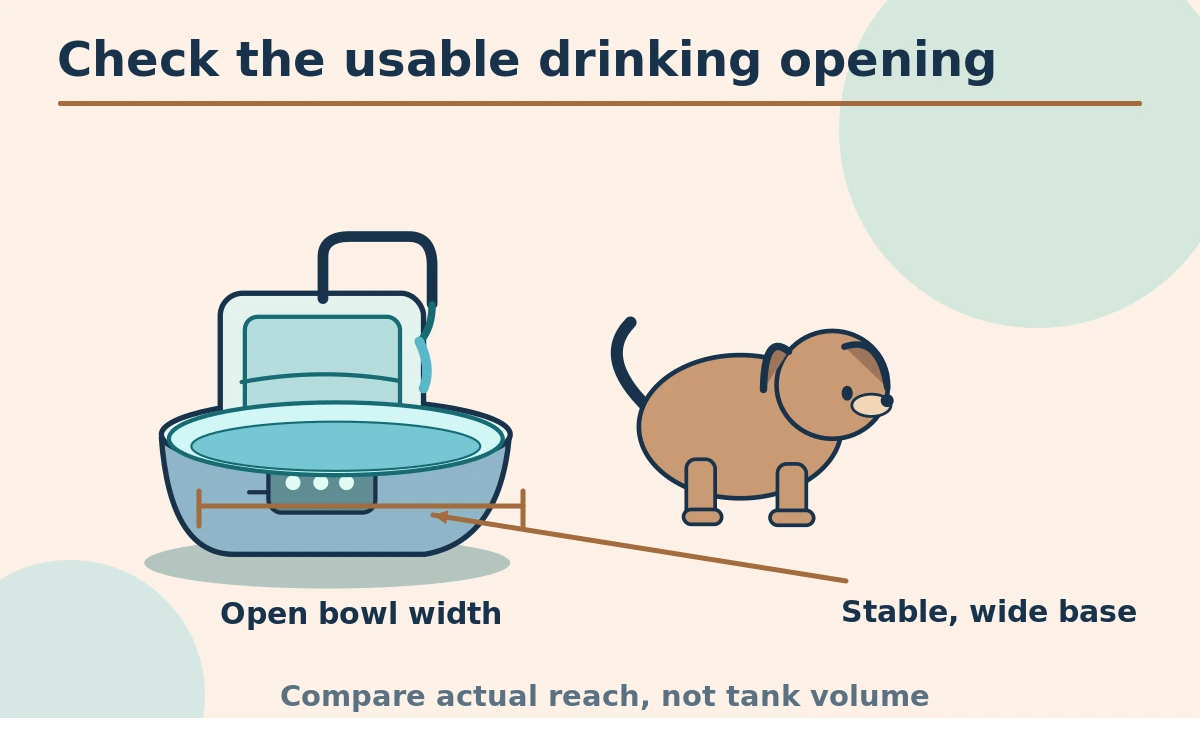
Measure the drinking opening, not the carton
Look at the actual top bowl or accessible lower tray. Can the dog reach water without rubbing its muzzle against a narrow rim or pushing the fountain across the floor? Measure the open width and compare it with a current bowl your dog uses comfortably. A decorative tall spout does not make the usable water surface larger. If the water is only available at a tiny raised outlet, a broad-muzzled dog may struggle. Test the approach with the motor off and empty before adding water. Keep every product-specific weight or size limit tied to the manufacturer’s instructions.
Separate tank capacity from usable capacity
Manufacturers may list the total amount held by the reservoir, including water below an elevated drinking platform. That does not tell you how much remains accessible if the motor stops, or how quickly the lower pump chamber can run low. Check the marked minimum and maximum levels. In a home with multiple dogs, estimate how often you can inspect and refill the basin rather than assuming one fill lasts a set period. An independent bowl provides water during cleaning or a power outage. Avoid promising a fixed number of days of hydration from a capacity claim.
Check the base against nudges and paw contact
Choose a broad base with non-slip feet and a low center of gravity where possible. Large dogs can shift a light fountain while drinking, and a raised stand may make a top-heavy unit easier to tip. Place it on a level washable floor and check for wobble before filling. Do not wedge the bowl against a door or stair edge. The power cable must not become a handle or trip line. If the unit is too easy to move with a light hand nudge during setup, reassess its placement before your dog uses it.
Choose a gentle flow with a usable fallback
A dramatic waterfall may look attractive but can throw water outside the tray when a dog laps quickly. Compare a modest stream with a calm, shallow drinking pool if your dog prefers still water. Some fountains have adjustable flow; set it according to the manufacturer’s instructions rather than blocking the outlet with objects. Observe whether the dog can drink without repeatedly startling at the motor or touching the spout. A dog who dislikes moving water may prefer a standard clean bowl. A fountain should expand options, not eliminate the familiar one.

Watch posture, reach, and floor traction
The dog should stand comfortably and approach without slipping, balancing on stairs, or turning into a tight corner. Place the station where the head can lower naturally to the water and the animal can leave freely. Raised fountains are not medically necessary for every large dog; avoid making height claims without veterinary guidance. For dogs with mobility limitations, ask your veterinarian about suitable placement. A non-slip mat can help if it remains flat and does not curl under paws. Wipe splash zones before the floor becomes slippery.
Inspect the pump and removable parts
A large outer basin may conceal a small pump, narrow filter slot, or difficult-to-reach channel. Check how the device comes apart before purchase and look for a compatible replacement pump. Hair and food debris can collect at intake openings. The manufacturer may require regular cleaning of the impeller and filter holder. Follow those directions with the unit unplugged, and avoid submerging the external adapter. A strong motor does not compensate for a dirty water path. Choose parts you can wash and reassemble correctly without forcing tabs.
Plan the daily and deeper cleaning work
The CDC recommends daily cleaning of pet water bowls. Replace the drinking water, remove visible debris, and wipe accessible food-contact surfaces as appropriate for the model. Follow the fountain manufacturer’s specific cycle for full disassembly, filter replacement, and pump cleaning; multiple-pet use can require more frequent attention. Use mild detergent on approved surfaces and rinse thoroughly. A thick reservoir may be heavy when full, so scoop out water before lifting it toward the sink. Never lift the device by the cable or spout.
Compare fountain and bowl behavior in a trial
Place the new fountain near a safe, familiar water station without removing the old bowl. Observe from a comfortable distance whether the dog approaches, drinks normally, or avoids the flowing surface. Do not force the dog’s muzzle toward a spout. Some animals take time to accept a new sound or texture. If the dog repeatedly drinks only from the original bowl, keep that option and reconsider the purchase. A big tank is not a benefit if the drinking surface or motor makes the animal reluctant to use it.

Think about multi-dog traffic and backup access
A single large fountain can become a crowded resource when two dogs want to drink after a walk. Provide more than one water station, especially when one dog blocks access or the household spans several rooms. Space stations apart so pets do not have to pass a resting animal or narrow hallway to drink. The same setup supports easy cleaning: wash one unit while another bowl remains available. If a dog guards the fountain, do not force shared drinking; create separate options and consult a qualified behavior professional if tension persists.
Know when drinking changes need veterinary advice
Sudden excessive thirst, reduced interest in water, vomiting, weakness, or changes in urination deserve veterinary attention. Do not assume a new large-capacity fountain caused or resolved the change. Note when the behavior started, what water sources remain available, and whether the dog is still eating and acting normally. Cleaning a pump is sensible maintenance, not treatment for illness. The safest buying choice is the station your dog can access comfortably and that your household can reliably keep clean.
How We Research
We compared published animal-welfare, veterinary, public-health, and manufacturer guidance against real fountain components, access routes, and cleaning steps. Product dimensions and service intervals vary by model, so we explain what to verify rather than inventing universal numbers. The illustrations are original instructional drawings, not a model endorsement. Read our editorial information and veterinary disclaimer; contact your veterinarian about sudden changes in drinking or health.
Sources
CDC — About Cleaning and Disinfecting Pet Supplies — specific background on fresh water, safe cleaning, equipment care, and pet drinking preferences.
PetSafe — Disassemble and Clean a 1- or 2-Gallon Fountain — specific background on fresh water, safe cleaning, equipment care, and pet drinking preferences.
PetSafe — Troubleshoot a Drinkwell Platinum Fountain Pump — specific background on fresh water, safe cleaning, equipment care, and pet drinking preferences.
Cats Protection — Cats and Drinking — specific background on fresh water, safe cleaning, equipment care, and pet drinking preferences.
No universal height fits every dog. Start with comfortable reach and stability, and ask a veterinarian about specific mobility needs.
Not by itself. Check the usable drinking opening, refill needs, traffic between pets, and access to backup bowls.
A separate clean bowl provides backup if the motor stops, a plug is disconnected, or the fountain is being cleaned.
Flow rate, spout geometry, lapping behavior, and floor angle all matter. Choose gentle adjustable flow and a broad drinking surface.
Refresh and clean accessible water-contact surfaces routinely, and follow the specific maker instructions for deep cleaning and filters.