
A dog water fountain needs to serve a much wider range of bodies and habits than a small decorative bubbler. Large dogs may empty a shallow tray quickly. Short-legged dogs might struggle with a tall rim. Excited drinkers can also create splashes that send water toward nearby outlets. See the HubPet veterinary disclaimer for health and safety limits.
This guide focuses on dog-specific fit, water access, spill management, and reliability. Circulation does not replace cleaning. Keep a separate accessible bowl of fresh water ready during power failures or maintenance, and ask your veterinarian about unusual changes in drinking behavior.
Measure the dog at a relaxed drinking posture
Watch how your dog lowers its head to a familiar water bowl. The fountain should not require awkward stretching or climbing over a high edge. For short-legged and elderly dogs, a floor-level basin with unobstructed access may be more comfortable than a raised dispenser.
Big dogs may prefer a wide opening with room for the muzzle. A narrow spout can slow access during heavy panting after exercise. Avoid assuming a tall device is better simply because the dog is tall. The correct fit lets the animal drink calmly without balancing or pawing at the unit.
Compare usable capacity with everyday demand
Tank capacity on a product listing may include water trapped below the pump’s minimum operating level. Ask how much clean drinking water the dog can actually reach. Large reservoirs reduce refill trips, but they also require deliberate cleaning and regular water replacement.
Consider the dog’s routine, number of pets, indoor temperature, and activity. Capacity is not a substitute for checking the basin at least daily. A pump may run dry unexpectedly if a dog drinks vigorously. Keep a manual bowl nearby rather than trusting a water-level window alone.

Evaluate bowl width and drinking behavior
Some dogs lap rapidly, pushing water over the edge. Look for a broad basin, moderate rim height, and a catch surface that stays simple to wash. Watch where the stream lands so it does not startle a dog or spray onto nearby carpet.
A dog that carries toys to the drinking station may drop debris into the basin. Removable grates can catch particles but may also trap hair and saliva. Avoid complicated drinking openings that hinder tongue movement. Comfort, easy access, and cleaning matter more than an impressive waterfall effect.
Check stability against nudging and pawing
Heavy or broad-based fountains can resist tipping, but no design is immune to a determined dog. Examine the footprint, non-slip feet, center of gravity, and whether the basin shifts when touched. A lightweight tower may be easy to wash yet unstable around energetic pets.
Place the unit away from traffic routes. Protect the surrounding floor with a washable water-resistant mat that does not become slippery. Avoid blocked doorways or narrow corners. A dog should be able to approach and leave the fountain without competing with another pet for space.
Protect cords and inspect the electrical system
Water and electricity require careful placement. Route cords behind barriers that pets cannot chew or tug. Inspect the adapter, pump cable, and plug for damage before use. Do not place a power strip where water can reach it during a spill.
Follow the manufacturer’s electrical and cleaning instructions. Disconnect the device before accessing the pump or reservoir. Replace damaged parts rather than taping a cable near water. For outdoor or patio use, choose equipment explicitly rated for that environment and follow applicable electrical safety guidance.
Understand the filter and pump limitations
A filter may trap particles or alter taste, but it cannot eliminate every contaminant or make stagnant water safe indefinitely. Pumps and intake screens collect hair, saliva residue, and mineral deposits. A washable unit must allow access to these areas, not just to the visible reservoir.
Read the filter replacement schedule and pump-cleaning steps before purchase. Check whether spare impellers, lids, and filters remain available. A device with hard-to-reach corners can take more time than a plain bowl. Daily water checks remain essential even when the fountain has automated features.
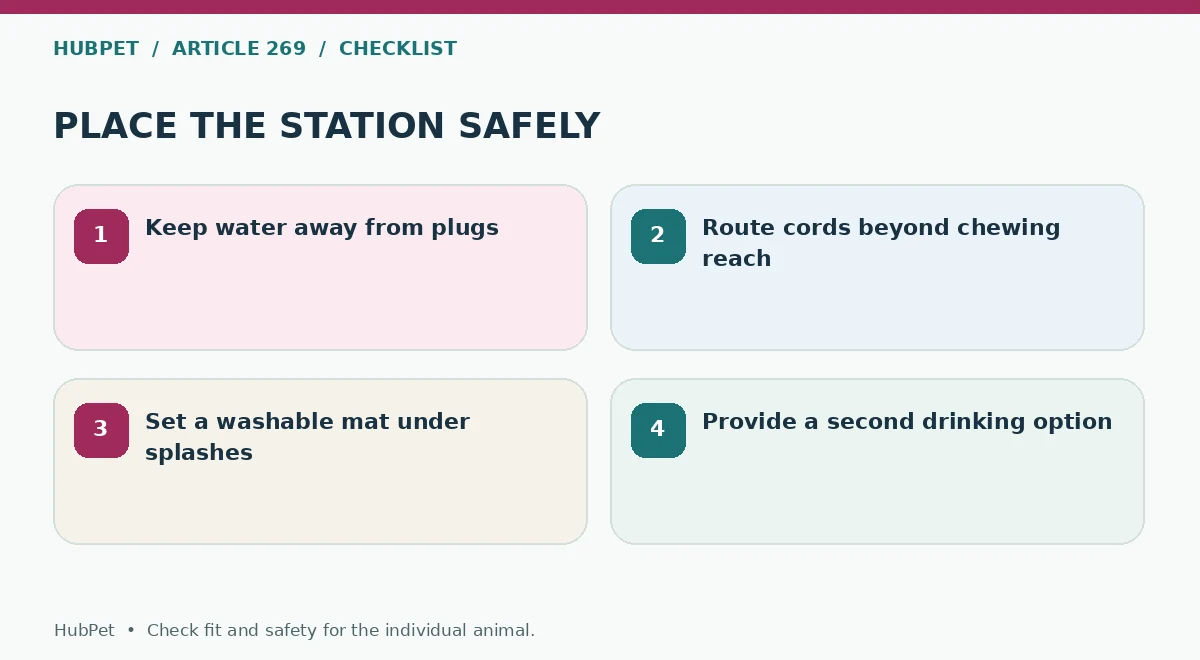
Build a water station you can maintain
Keep the drinking area separate from litter, chemicals, and food debris when possible. Choose a washable floor surface and a spot with reliable airflow. Plan where you will empty dirty water without splashing it into food-preparation areas.
CDC recommends daily cleaning for water bowls and proper washing of pet supplies. A fountain requires additional attention to channels, seams, filters, and pump housing. Scrub and rinse components as the manual directs. If the unit develops slime or an unpleasant smell, clean it promptly instead of waiting for a timer.
Introduce circulation at the dog’s pace
Let the dog explore the unplugged fountain while its usual water bowl remains available. Start the pump when the dog is relaxed and at a comfortable distance. Praise or reward calm investigation if the animal chooses it, without pushing the muzzle toward running water.
Observe actual drinking rather than initial curiosity. A dog might sniff a new device repeatedly yet return to its old bowl. If pump noise or vibration causes stress, switch it off and use the ordinary bowl. Do not withhold water to encourage adoption of the new equipment.
Consider households with several dogs
Multiple dogs may crowd a single station, particularly in a busy kitchen. Provide separated water sources so one dog cannot block access. Measure practical capacity with the group, not just a manufacturer’s claim for a single animal.
Keep an eye on guarding, jostling, or spilled water. A second simple bowl is inexpensive redundancy when a pump fails. During warm weather or after exercise, check supplies more frequently. A circulating fountain never replaces supervision and adequate fresh-water access for every dog.
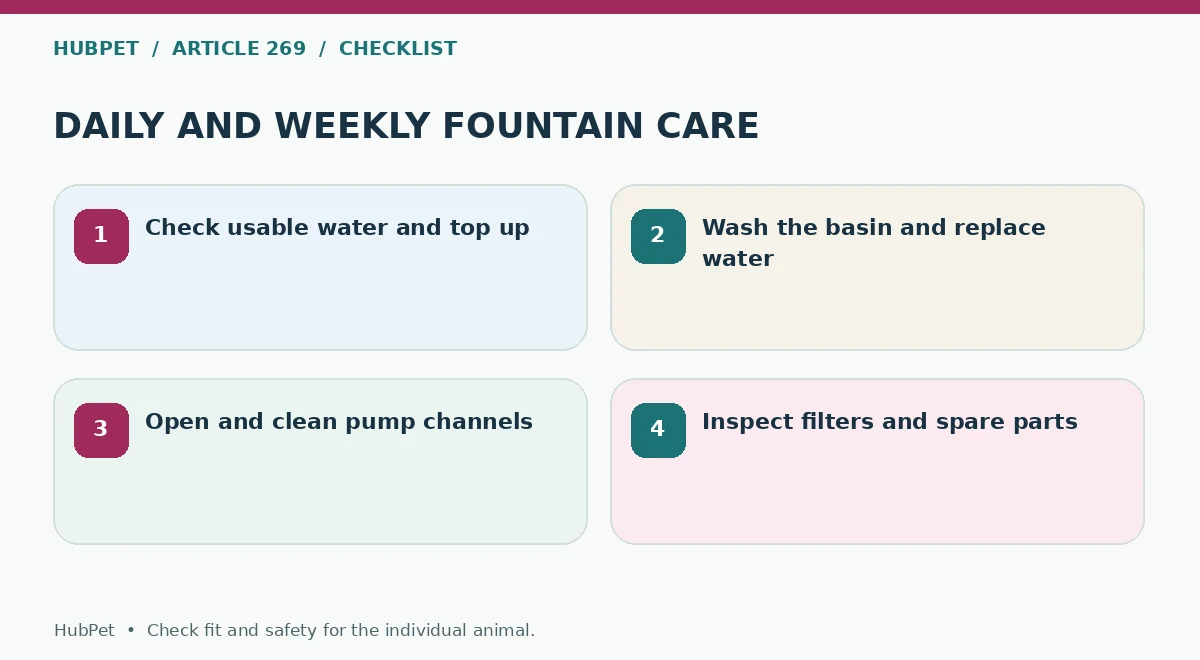
Make a final selection checklist
Check accessible basin dimensions, actual drinking depth, stability, cord protection, noise, pump access, filter cost, and replacement parts. Include drying and cleaning time in your decision. Read current instructions for what happens when the power cuts out.
After installation, look for comfortable posture, voluntary use, and clean water. Continue checking normal urination and drinking patterns rather than relying on the device’s settings. Increased thirst or an unexplained drop in intake merits veterinary advice. A fountain is equipment, not a health treatment.
How We Research
We checked this guide against the authoritative sources listed below on October 26, 2026. We reviewed practical differences, safety limits, and relevant home conditions rather than drawing conclusions from brand advertising. Specifications, warranty policies, and device capabilities change; check the manufacturer’s current manual. We did not purchase, laboratory-test, rank, or endorse individual products. Where a pet has pain, skin concerns, or fear, seek individual veterinary advice. See our approach at About HubPet.
Sources
USDA APHIS: Potable Water for Dogs. Accessed October 26, 2026.
CDC: About Cleaning and Disinfecting Pet Supplies. Accessed October 26, 2026.
CDC: Hygiene Practices Around Animals. Accessed October 26, 2026.
Not necessarily. The dog must reach the water comfortably, and a large reservoir still needs regular washing and water replacement.
Some can, but assess opening width, accessible water depth, stability, capacity, and whether a dog can drink without crowding the spout.
Circulation stops. Check whether the basin still holds reachable water, and always provide a separate bowl as a backup.
Check and refresh water daily, wash accessible drinking surfaces regularly, and follow the device instructions for pumps and filters.
No device can diagnose the reason for altered drinking. Continue providing fresh water and consult your veterinarian for persistent or unusual changes.