
Pet water fountain cord safety starts before you plug in the pump. The outlet, wet basin, cable route, and animal’s movement all affect the setup. A fountain may be easy for a cat to reach yet awkwardly placed beside a busy doorway, an exposed plug, or a trailing cord. Choose a stable surface and a dry power connection, then route the lead so nobody trips or chews it. Follow your fountain’s specific electrical instructions and local electrical safety requirements. This article focuses on ordinary preventive setup, not electrical repair. If a plug, adapter, or outlet is wet or damaged, stop using the appliance and get qualified help.
Start with the outlet location and dry surfaces
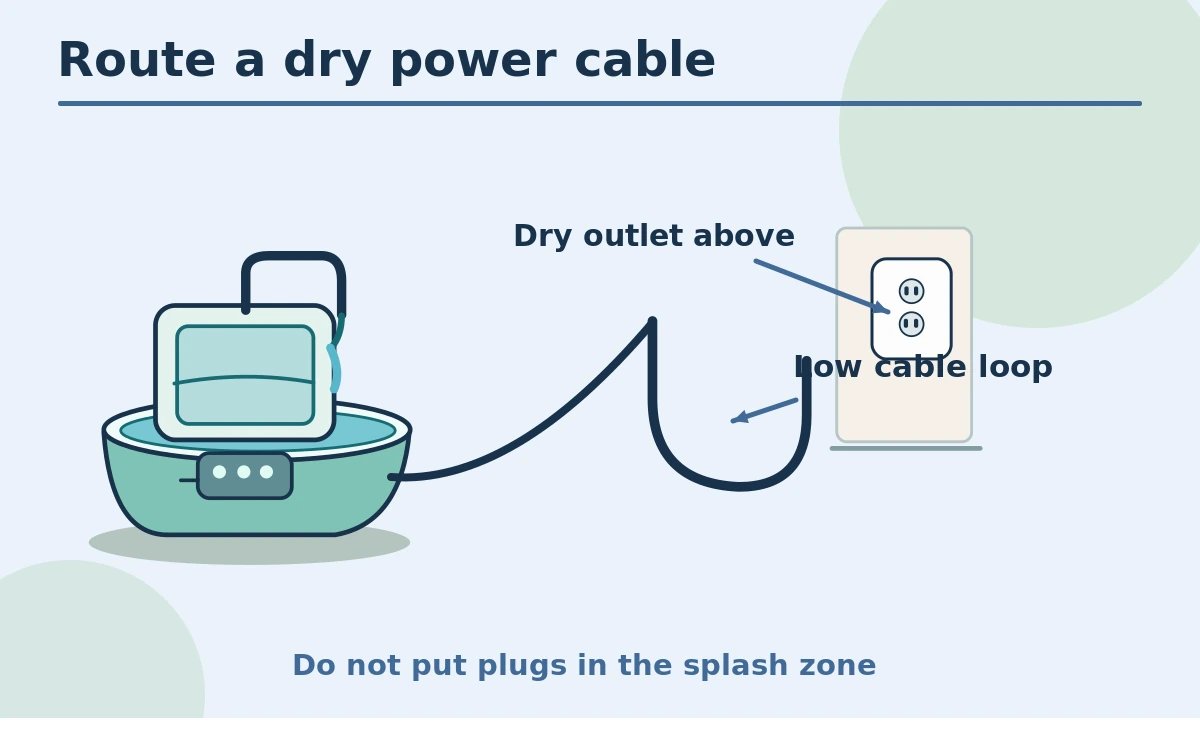
Before adding water, choose a receptacle that stays above the fountain’s water level when the product instructions require it. Avoid placing the basin directly where drips can run into an extension connector on the floor. Check the manufacturer’s guidance on indoor-only operation, adapter placement, and permitted accessories. The plug must be reachable without moving a full, powered bowl. If the cable is too short, do not improvise with an exposed chain of extension cords. A different placement or properly rated solution following the manual is safer than stretching the lead tight.
Know what a drip loop is meant to do
Some fountain manuals illustrate a downward cable loop below the height of the outlet to discourage water traveling along the lead into a receptacle. Draw the loop only when the manufacturer recommends it, and do not treat it as waterproofing. The cable should curve gently, never kink under furniture, and remain away from standing water. A drip loop does not justify placing plugs on the floor next to a spill-prone bowl. In a home without an appropriate outlet, ask a qualified electrician about safer electrical arrangements instead of altering the plug.
Keep paws and teeth away from the lead
Route the cord behind a fixed surface or through a suitable cord protector where pets cannot chew it. Keep the protective cover compatible with the cable and free of trapped moisture. Avoid placing the cord through a doorway where the door could crush insulation. A dangling loop near the drinking area invites play, especially for a kitten. Observe your animal during the first days and move the station if the cable becomes a target. A damaged cord is not fixed by taping over exposed wires; disconnect the unit safely and replace approved parts.
Set the basin on a dry, grippy station
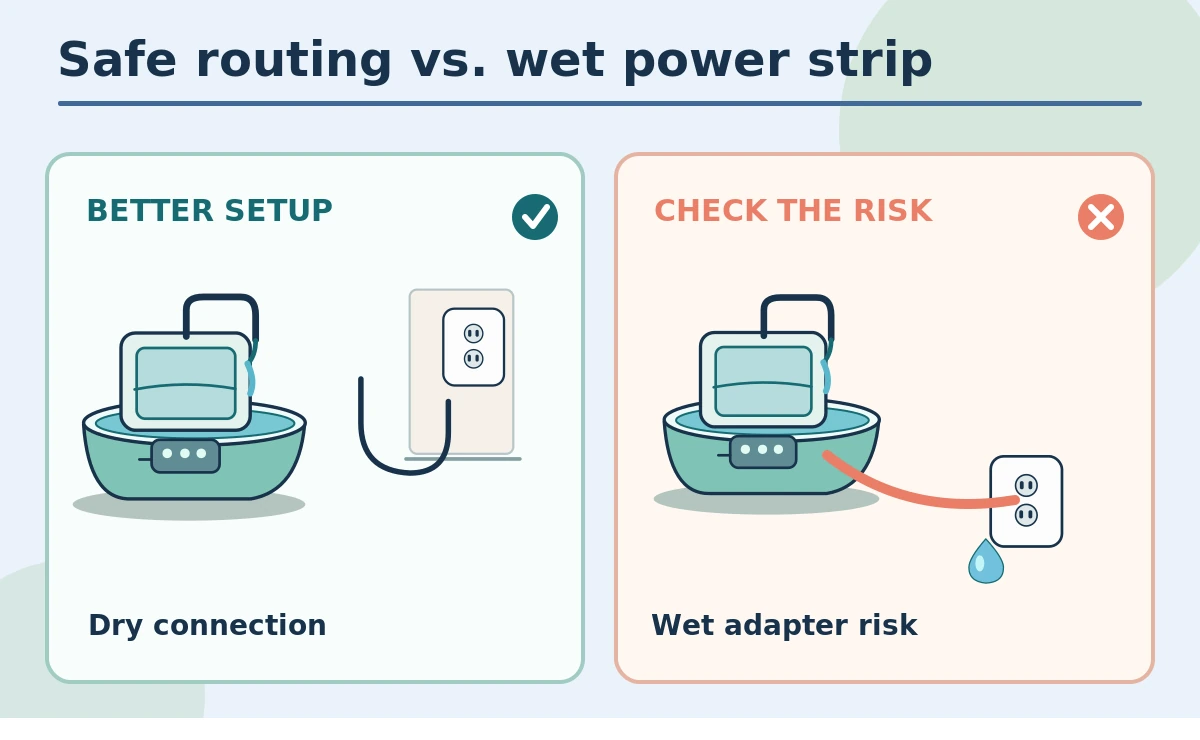
A flat waterproof mat can capture small splashes while non-slip feet help the fountain stay still. The mat should extend beyond the main drinking area without creating a curled edge that catches paws or walkers. Never cover an electrical adapter with a wet towel or place it inside a splash tray. Choose flooring that tolerates routine cleanup, then inspect seams near walls where water might collect unseen. If the unit tips when lightly bumped during a dry setup test, correct the base before allowing access. Stability matters more than a compact look.
Separate splashes from the electrical route
Watch how your pet drinks and where water lands. Some cats paw at streams, and larger dogs may carry water away from the bowl on their muzzle. Place the fountain so splashes cannot reach a socket, power strip, charging cable, or floor-level adapter. Do not position the fountain directly below electronics. A washable splash mat helps with cleanup but does not make power strips safe around water. Keep any cable slack away from the wettest corner. If splashes reach electrical connections, discontinue use and resolve placement before plugging in again.
Clean only after you disconnect the pump
Turn the fountain off and unplug it according to the manufacturer’s directions before removing covers, filter holders, or pump parts. Keep dry hands and a dry approach to the socket. Lift out water separately rather than dragging a heavy, full device across the cable. Wash approved parts with mild soap and rinse well, keeping the adapter and plug out of the wash area. Let components dry before reassembly where required. The CDC advises cleaning pet water bowls every day; additional pump cleaning follows the fountain’s instructions. Never submerge an adapter that is not made for immersion.
Handle a wet plug as an electrical hazard
If water reaches an outlet or plug, do not touch the plug or attempt to pull it out with wet hands. Have power disconnected at the appropriate circuit if it is safe to do so, and seek qualified electrical assistance for suspected damage. Do not restart the fountain merely because the outside of the plug looks dry. A scorch mark, crack, unusual smell, or repeatedly tripped breaker is a reason to stop using that setup. Do not provide makeshift repair instructions to children or visitors. Prevention and professional inspection are safer than troubleshooting energized hardware beside water.
Reassess the setup after moving furniture
Shifting a desk or pet bed can change the fountain’s escape route and expose a previously hidden cord. Check that the animal has a clear approach without stepping over cable, and that humans can walk past without pulling the reservoir. Examine the cord visually for wear where it contacts the wall or floor. A cord cover should not restrict ventilation around electrical accessories. Recheck the splash pattern after refilling or changing a spout setting. Small changes in placement can make a once-safe arrangement inconvenient or risky.

Provide water if the fountain must stay unplugged
A standard clean bowl is an important fallback during repair, cleaning, an outage, or a move. Place bowls in quiet accessible spots, not where the unplugged fountain blocks them. Cats Protection advises offering multiple drinking places; this remains useful even when a motorized fountain works correctly. An animal should never have to wait for you to repair a cable before drinking. If the fountain is unsafe to power, remove or isolate it and keep fresh water available in washable bowls.
Make a quick electrical and hygiene checklist
Before normal use, confirm the fountain is stable, the cable is out of reach, the outlet is dry, and the pump is working at the intended water level. During daily care, refresh drinking water and wipe new spills. During a deeper cleaning, unplug, inspect permitted parts, and dry the equipment thoroughly. Follow the model manual for any drip-loop diagram, cleaning intervals, and safety warnings. Stop and seek help when electrical parts appear damaged or wet. Good cable routing is a safety system, not an accessory that can substitute for supervision.
How We Research
We compared published animal-welfare, veterinary, public-health, and manufacturer guidance against real fountain components, access routes, and cleaning steps. Product dimensions and service intervals vary by model, so we explain what to verify rather than inventing universal numbers. The illustrations are original instructional drawings, not a model endorsement. Read our editorial information and veterinary disclaimer; contact your veterinarian about sudden changes in drinking or health.
Sources
PetSafe — Disassemble and Clean a 1- or 2-Gallon Fountain — specific background on fresh water, safe cleaning, equipment care, and pet drinking preferences.
CDC — About Cleaning and Disinfecting Pet Supplies — specific background on fresh water, safe cleaning, equipment care, and pet drinking preferences.
Cats Protection — Cats and Drinking — specific background on fresh water, safe cleaning, equipment care, and pet drinking preferences.
PetSafe — How to Clean the Drinkwell Original Fountain — specific background on fresh water, safe cleaning, equipment care, and pet drinking preferences.
Avoid placing power strips or adapters where water may splash or collect. Follow the manual and use a dry, appropriate power connection.
No. A drip loop may reduce water traveling along a cable, but it does not waterproof the plug or remove the need for safe placement.
Stop access and disconnect safely. Replace damaged components with manufacturer-approved parts and use a pet-inaccessible cable route.
Yes. Disconnect power according to the fountain instructions before disassembly, handling wet parts, or cleaning the basin.
Do not touch the wet plug. Turn off the circuit if safe and seek qualified help before using the connection again.