
A cat water fountain refill mark is a practical maintenance cue, not a guarantee that water is always available. Water evaporates, pets drink, and a small pump may continue running as the level gets too low. Begin with the manufacturer’s marked minimum, the actual reservoir shape, and the part of the basin that feeds the pump. Then create a short daily check that includes fresh water, flow, and cleanliness. This guide explains how to read a window, what to do if a pump sputters, and why a separate bowl still belongs in your cat’s home. Never assume a light or automatic alert can replace looking at the fountain.
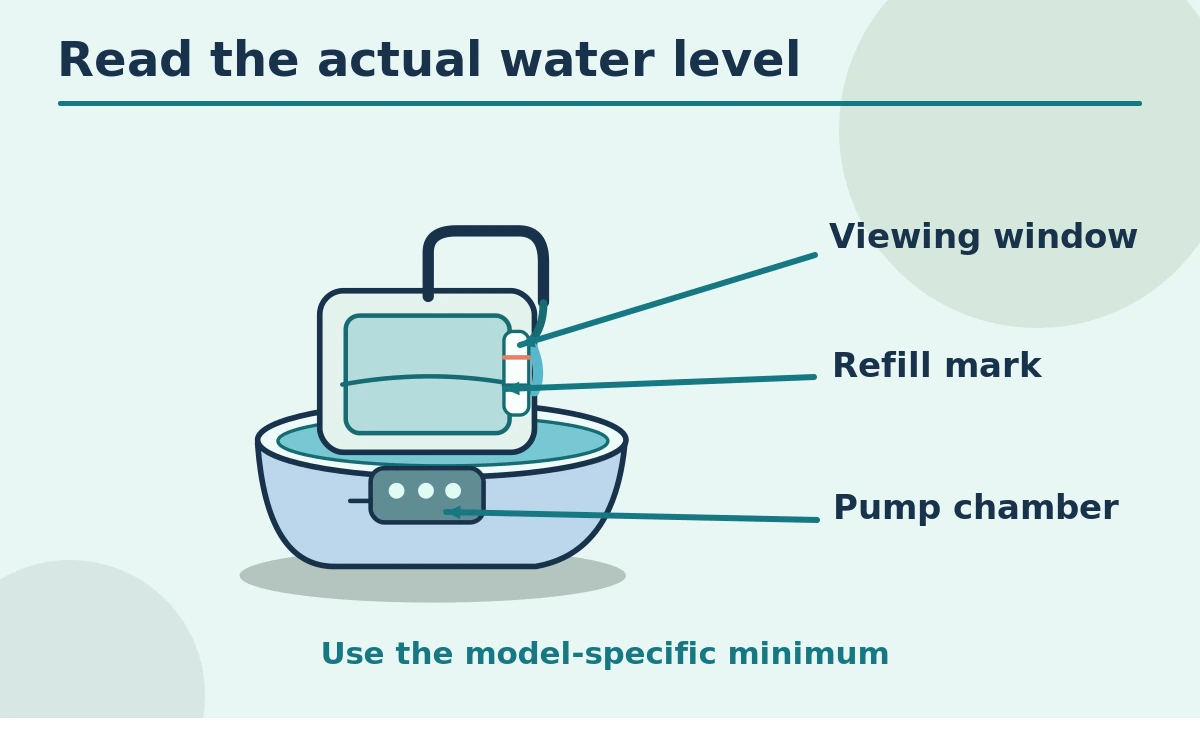
Locate the real minimum, not just the fill line
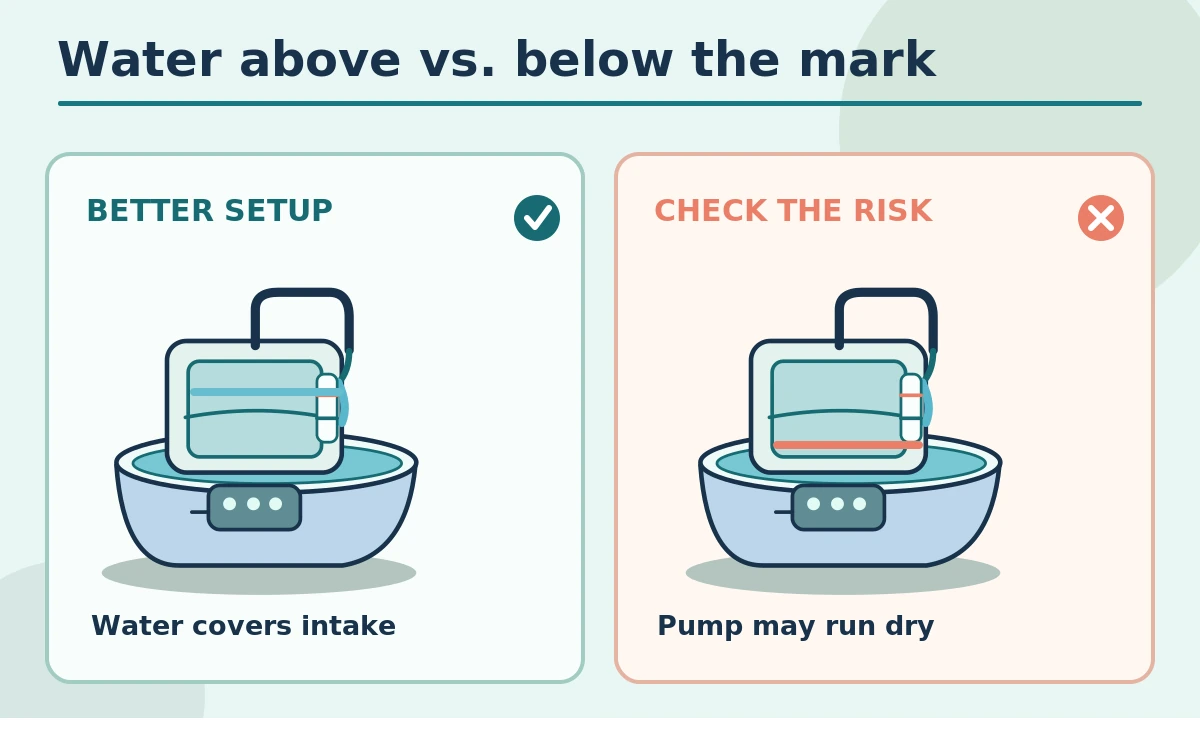
Start with the owner’s manual for your exact fountain. Some models have a translucent window, some show two marks, and others hide the pump in a shallow lower chamber. The upper line may mean the recommended fill capacity rather than the point below which operation becomes unsafe. Look at the water entry opening near the pump and determine whether the water remains above the manufacturer’s minimum at rest. A different brand’s depth measurement is not a universal rule. Markings can become hard to see through condensation or limescale. Wipe the window and inspect the basin before relying on its appearance.
Read the level on a flat, still surface
A fountain on a tilted floor can show a deceptively high level at one side while the pump intake draws from a lower area. Set the unit on a firm, level surface and let the water settle before reading a window. Check from the same angle each day. Do not move a plugged-in fountain while water can splash onto a connection. If the reservoir is opaque, follow the approved method for inspecting the lower basin. A phone flashlight can help you see through a dry clear panel; never put a phone or electrical device into water.
Understand why a pump may sound different
A new rattling, sucking, or gurgling noise may mean the water level has fallen, air has entered the pump path, or an impeller needs cleaning. Mineral residue can also affect flow. Those clues are not a diagnosis of one problem. Turn off and unplug the unit before checking any removable parts. Add water to the correct level, then follow the maker’s restart procedure. If flow remains weak, inspect the pump and filters using its instructions. Do not keep an unfamiliar noisy pump running unattended or try to oil its motor.
Know what the window cannot reveal
A full-looking reservoir does not confirm that the water is fresh, the bowl is sanitary, or the pump is moving water through every channel. Fur can collect under the drinking surface while the outside looks clean. A filter can accumulate debris even when the window shows plenty of liquid. Look at the actual water surface for floating particles and feel only accessible, unplugged parts for slippery residue during cleaning. The CDC recommends cleaning pet water bowls daily; follow the fountain maker’s more detailed schedule for the assembled device and pump.
Place the fountain where checks are easy
Choose a low-traffic place with stable footing and a dry outlet arrangement, rather than tucking the reservoir behind a sofa. Leave room to lift the cover and empty the basin without tipping it toward the plug. Keep the bowl away from the litter box and offer another drinking station elsewhere. Cats Protection recommends multiple water locations because cats differ in their preferences. If the room is very sunny, inspect evaporation and warm water more often. A fountain that is convenient to clean is more likely to stay properly maintained.
Use a simple refill routine that fits your home
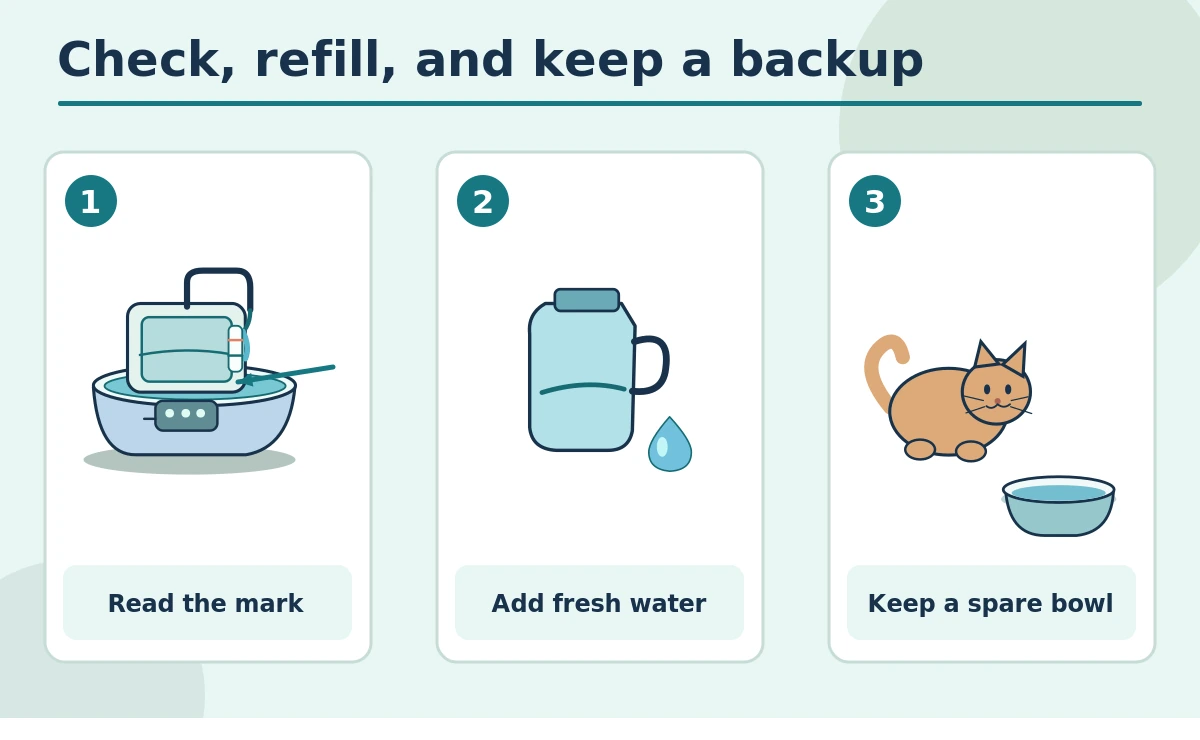
Inspect the level in the morning and again when you notice the pump sound changing. Households with several pets, warm rooms, or narrow reservoirs may need more frequent checks. Empty and replenish drinking water regularly rather than continually topping up old water without washing the bowl. If you refill from a pitcher, use clean potable water and avoid touching the spout to the pet’s drinking surface. Record unusually rapid drops after moving the fountain; a leak or spill is possible. Never rely on a fixed number of days between refills.
Keep a separate water bowl available
An electric fountain can stop because of a power outage, blocked impeller, damaged cable, or someone unplugging it during cleaning. A wide, clean stationary bowl provides a second water option. Place it in a different quiet location instead of immediately beside the moving-water unit. Choose a stable material that can be washed daily, and watch whether the cat prefers the bowl to the fountain. Do not force a cat to drink from a new device. A change in drinking habits or unusual thirst deserves a veterinary conversation, not simply a larger tank.
Restart safely after the reservoir runs low
First disconnect power with dry hands in a dry area; if the outlet is wet, switch off power at the circuit rather than touching a wet plug. Inspect the cord and housing for damage. Refill to the model’s correct operating level and prime the pump if the instructions call for it. Reconnect only when surfaces and electrical connections are dry. Observe steady flow and listen for unusual noise. If the pump does not recover after the approved cleaning steps, replace it with a compatible part or contact the manufacturer rather than modifying wiring.
Compare convenience features realistically
A large viewing window helps some owners, but clarity, reservoir shape, and visible markings matter more than a decorative display. An indicator light might report power without confirming water reaches the top tray. Some fountain designs keep a small lower bowl accessible when the motor stops; others do not. Inspect the real configuration before buying. Choose a fountain with parts you can disassemble and clean without specialized tools. Treat automatic low-level alerts as an extra reminder, not a substitute for a physical inspection and backup bowl.
Watch for changes that need more than maintenance
If your cat suddenly avoids water, drinks much more than usual, vomits repeatedly, seems lethargic, or shows signs of discomfort, contact a veterinarian. A fountain fault can explain an empty dish, but it should not be used to explain away possible illness. Make a note of your cat’s usual drinking stations, food type, and recent water changes. You do not need to measure water intake with clinical precision at home. The goal is to notice meaningful changes and preserve access to fresh, safe water while seeking appropriate advice.
How We Research
We compared published animal-welfare, veterinary, public-health, and manufacturer guidance against real fountain components, access routes, and cleaning steps. Product dimensions and service intervals vary by model, so we explain what to verify rather than inventing universal numbers. The illustrations are original instructional drawings, not a model endorsement. Read our editorial information and veterinary disclaimer; contact your veterinarian about sudden changes in drinking or health.
Sources
PetSafe — Troubleshoot a Drinkwell Platinum Fountain Pump — specific background on fresh water, safe cleaning, equipment care, and pet drinking preferences.
CDC — About Cleaning and Disinfecting Pet Supplies — specific background on fresh water, safe cleaning, equipment care, and pet drinking preferences.
Cats Protection — Cats and Drinking — specific background on fresh water, safe cleaning, equipment care, and pet drinking preferences.
PetSafe — Disassemble and Clean a 1- or 2-Gallon Fountain — specific background on fresh water, safe cleaning, equipment care, and pet drinking preferences.
Yes. Water can drop below the pump minimum during drinking or evaporation, especially in a small basin. Check levels frequently and keep a backup bowl.
Not necessarily. The upper mark can indicate capacity; consult the exact model manual for the minimum safe running level.
No. Sound alone cannot verify the level or cleanliness. Inspect the actual reservoir and confirm visible flow.
Refilling does not replace washing. Clean the bowl regularly and follow the manufacturer instructions for filters and pump parts.
Unplug, inspect for damage, refill correctly, and use the model-specific priming and cleaning instructions. Do not run a damaged unit.