
This article provides general educational and pet-safety information, not veterinary or pediatric advice. If an animal may have swallowed experiment materials or shows concerning symptoms, contact a veterinarian promptly. Read the HubPet veterinary disclaimer.
A clear bag with a damp paper towel lets children watch a seed develop roots and shoots. University Extension activities use this simple method to teach germination. However, loose seeds, plastic film, and damp materials should remain inaccessible to dogs. The bag is a temporary observation container, not a hanging toy or an edible sprout project. Choose seeds carefully, position the setup in a secured room, and watch for excessive moisture or mold. This guide separates the plant-science activity from pet feeding and houseplant advice.
Select seeds for observation, not pet eating
Use a few identifiable untreated beans from a reputable gardening or educational source. Check the seed package and avoid coated, chemically treated, or unknown seeds. Do not assume a food crop seed is safe for a dog to chew. In addition, inspect the room for dropped beans before opening the bag. Some seeds can cause choking or digestive problems. Set the seeds in a shallow dish while preparing the towel, and keep the dish behind a closed door. A child should never feed the sprouts to a pet.
Prepare a clear bag and damp paper towel
Choose an intact, transparent bag large enough to hold a flat towel without crushing it. Dampen the towel with clean water and wring out excess liquid. The paper should feel moist, not drip when lifted. Next, slide it flat into the bag. A puddle encourages mess and can reduce the quality of the observation. Avoid adding fertilizer, cleaning solutions, or essential oils. They are unnecessary for this germination lesson. Use a dedicated tray under the bag during setup, then wipe the tray. Do not reuse the bag for food.

Place the seeds where roots stay visible
Position a small number of seeds against the inside surface so children can see them through the plastic. Space them apart rather than piling them in a wet cluster. West Virginia University Extension illustrates a bean-in-a-bag method using a damp towel. However, do not copy any hanging location that a household dog can jump to. Close the bag as the activity instructions permit while allowing appropriate air exchange. Keep the opening and folds inaccessible to pets. Record the start day and seed type in a notebook.
Choose light and temperature sensibly
Place the bag in a bright indoor location with indirect natural light, away from strong heat. Avoid a sunny window where the plastic could overheat or leak onto a sill. Next, secure the bag upright inside a shallow tray or holder behind a door. Do not hang it by a loose string at dog height. The exact germination pace depends on seed variety and growing conditions. Check the source instructions for the specific seed. A stable setting makes repeated observations more meaningful than moving the bag between hot and cold spots.
Know which structures to observe
At first, a seed may absorb water and swell. Later, a small root may emerge and extend downward. A shoot or leaves can follow if the conditions support growth. Draw the visible changes with arrows to the root and shoot, but avoid identifying mold as a plant part. Use the bag as a viewing window, not as a sealed terrarium for long-term growth. In addition, explain that germination depends on water, oxygen, and suitable temperatures. A sprouting seed does not need to be touched every day to teach the process.
Compare healthy observation with a neglected bag
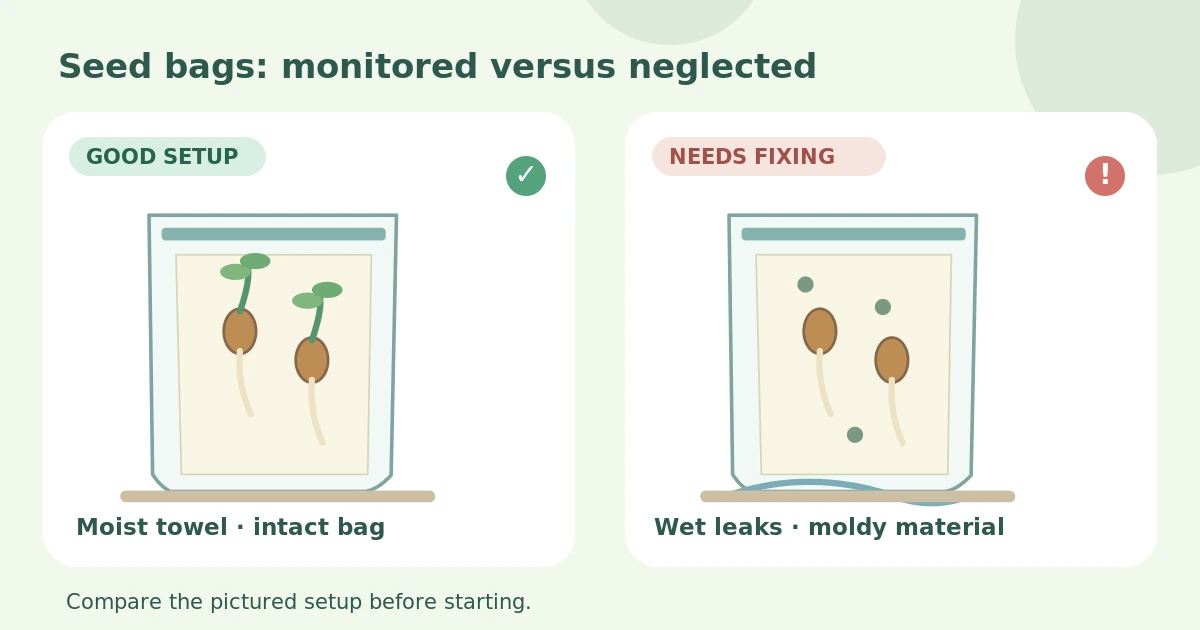
The illustrated comparison distinguishes an intact, damp viewing setup from one with excessive moisture and possible mold. The latter is a reason to end the activity, not a challenge to grow a stronger plant. Inspect for foul odor, leaks, discolored fuzzy growth, or torn plastic without opening it near the dog. If the bag looks contaminated, place it inside a second waste bag for disposal and clean the surface. Do not invite children to sniff the inside of the bag. A clear visual record can replace direct handling.
Record changes without opening the container
Make a short diary with dates and drawings of the seed, root, and shoot. A ruler outside the bag can help estimate growth without wetting the paper. Compare observations at similar times of day when practical. However, do not promise that every seed will germinate. Even seeds from the same packet can respond differently. Avoid opening the bag repeatedly, which can alter its moisture and spread materials. If the towel becomes dry, an adult can adjust it in the pet-free work area. The child can document that change as part of the experiment.
Understand what the bag cannot tell you
A seed bag shows early growth but does not test whether a plant is safe for pets or suitable for a particular yard. It also does not establish the quality of the seed for food production. Therefore, keep the classroom observations separate from gardening decisions. The plant species matters if you eventually move a sprout to soil. Use the ASPCA plant database to investigate pet exposure risks rather than guessing from appearance. Do not plant an unidentified species where a dog grazes. An educational diagram should never replace individual plant identification.
Move or dispose of sprouts responsibly
Once the roots grow beyond a practical viewing stage, end the bag experiment. An adult can transfer a suitable identified plant to a contained growing area when appropriate. Otherwise, discard the entire moist contents in covered trash. Do not scatter ungerminated seeds in the yard or compost area that a dog can reach. Next, check the floor and window ledge for fallen seeds, tape, and plastic edges. Clean and dry the tray. Store extra seeds and tools in closed containers. The dog may enter once everything is out of reach.

Adjust the experiment for age and space
Young children can draw what changes while an adult prepares and handles the bag. Older children may compare two moisture conditions with the same seed type, provided neither becomes excessively wet. However, do not stage a deliberate mold-growing trial in a home shared with pets. Avoid small loose seeds for children who still mouth objects. If an inaccessible observation area is unavailable, use photographs or a classroom demonstration instead. A safe viewing method can still teach roots, shoots, and the idea of time in plant growth.
Troubleshoot failure to sprout
If nothing happens, check whether the towel dried out, the seeds were old, or the location became too hot or cold. Do not drown the seeds or add household chemicals to force growth. Try a fresh, suitable packet under consistent conditions. A seed that turns mushy or develops a fuzzy coating should go into covered waste, not a pet-accessible compost pile. Explain that a failed germination still provides information about conditions. Start a new record rather than claiming success from a photograph of a different trial.
How We Research
Our editorial review checked the activity mechanism against the educational methods described by West Virginia University Extension — Bean in a Bag and the supplementary references below. The review separates a simple family illustration from a laboratory instrument or a predictable result. For pet households, we considered unsecured dog access, small objects, fragile or damp equipment, and cleanup. This is an editorial synthesis, not a hands-on laboratory test or product endorsement. For our general standards and scope, see About HubPet. Follow product instructions, local rules, and your veterinarian’s individualized advice when they apply.
Sources
West Virginia University Extension — Bean in a Bag. Explains damp-towel bag setup and early bean growth.
Penn State Extension — Growing Gardeners: Mighty Seed. A home observation lesson using large seeds and a plastic bag.
ASPCA — Toxic and Non-Toxic Plants. Background on identifying plants before allowing pet access.
Safety reminder: Keep the project area closed to pets while supplies, test pieces, liquids, or scraps remain accessible. Stop if a container breaks, a part becomes loose, or an animal reaches the materials. For suspected ingestion or signs of illness, seek veterinary guidance rather than trying a home remedy.
Choose identifiable untreated seeds intended for planting or education. Avoid coated or unknown seeds, and keep every loose seed away from dogs.
No. A damp, wrung-out towel supports observation without a puddle. Excess water can cause leaks and spoil the setup.
Not where a dog or young child can reach it. Use a secure indoor location with a tray and manage loose plastic carefully.
Stop the experiment. Dispose of the bag in covered waste, clean the work area, and do not ask anyone to sniff the growth.
Do not feed experimental seedlings to pets. Species identity, seed treatments, and contamination risks need separate evaluation.