
This article is general information, not veterinary advice. If your pet seems unwell, is in pain or may have eaten something harmful, contact your vet or an animal poison control line right away. Read our vet disclaimer.
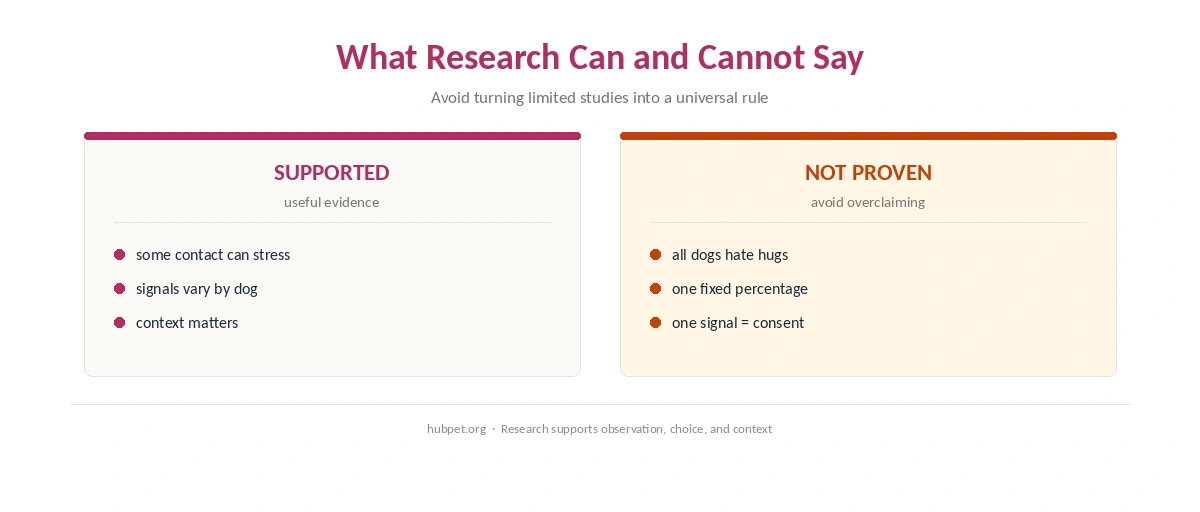
Is it bad to hug dogs? Not for every dog in every moment. However, hugging can restrict movement, and some dogs show conflict or stress signals during close physical contact. A 2014 study observed 28 pet dogs across nine kinds of human contact. Behavioral and cardiovascular responses differed, and some forms of restraint or contact appeared unpleasant. A 2024 video study also found frequent stress-related behavior during human-dog hugging, petting, and play.
The useful conclusion is not “all dogs hate hugs.” Watch the individual dog and the context. Also notice whether the dog can move away. Familiarity matters. A dog that approaches for contact may feel very differently when a stranger or child holds them.
Is It Bad to Hug Dogs? What the Research Actually Shows
Kuhne and colleagues studied 28 privately owned dogs in 2014 while people used different kinds of physical contact. The researchers measured behavior plus heart-rate-related variables. Responses varied by the type of interaction. The authors concluded that dogs may find some common human-dog interactions unpleasant. The study was small, so it does not justify a claim that every dog dislikes every hug.
A separate 2024 peer-reviewed study reviewed popular online videos in which people hugged, petted, and played with dogs. The researchers reported many stress-related and defensive signals. They argued for better education about canine body language and agency. The study used online videos rather than a controlled experiment. It shows what was visible in those interactions, not a universal percentage of dogs that dislike hugs. For the related care topic, see how to Spot Subtle Signs of Stress in Dogs.
Is It Bad to Hug Dogs If Your Dog Seems Happy?
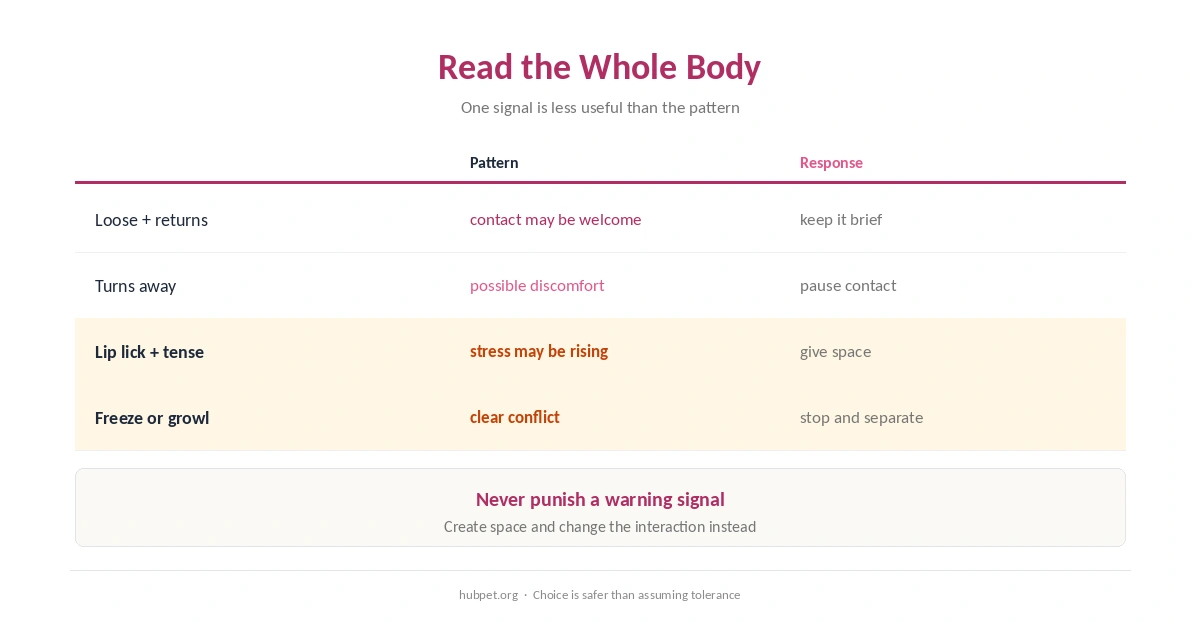
Look at the whole dog rather than one signal. A wagging tail alone does not prove comfort, which is why the wagging-tail myth guide matters here. A loose body and an easy approach are reassuring. So are relaxed facial muscles and a choice to stay or return.
ASPCA dog-bite prevention guidance accessed in 2026 lists several signs that can accompany fear or anxiety. Examples include turning the head away, lip licking, crouching, flattened ears, yawning, very still posture, and attempts to move away. If those signals appear during a hug, release the dog and give them space. Freezing is not the same thing as enjoying the contact.
Some expressions are easy for people to misread. The dog guilt myth explains why a familiar “look” does not necessarily reveal the emotion people assume. Why dogs lick people and why dogs tilt their heads provide two more examples. People should read behavior in context rather than translate it directly into human meanings.
| Dog response | What it may mean | What to do |
|---|---|---|
| Loose body; approaches again | Contact may be welcome | Keep it brief and pause again |
| Turns head; leans away | Dog may want more distance | Release and give space |
| Lip lick; yawn; ears back | Possible stress or conflict signal | Stop the hug and reassess |
| Freezes; growls; tries to leave | Clear reason to end contact | Create distance immediately |
Use Choice Instead of Assuming a Hug Is Welcome
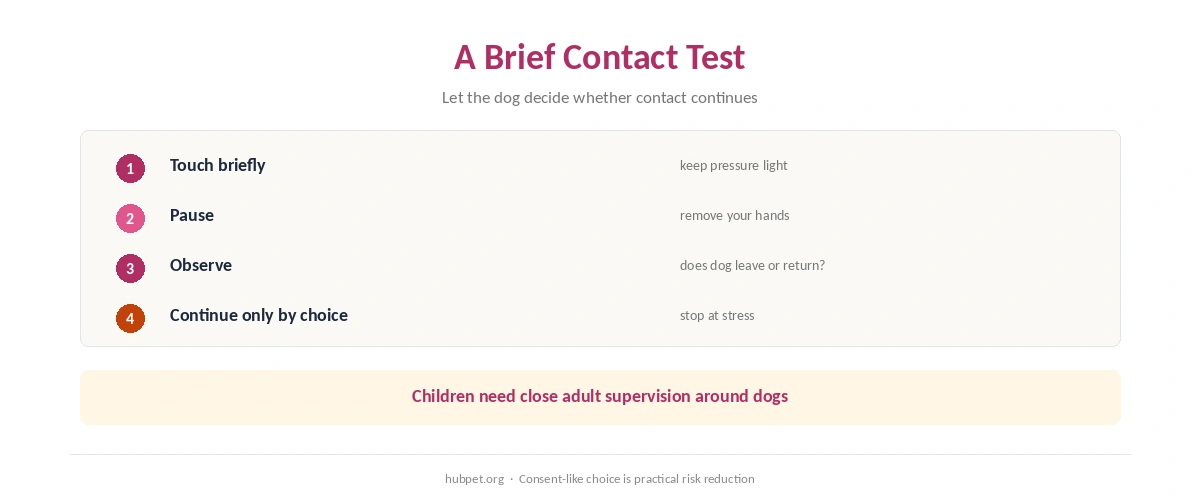
A practical approach is to keep close contact brief, then pause. If the dog moves away, turns aside, or does not re-engage, let the interaction end. If the dog comes back with a loose body, the dog is choosing more contact. Continue in the way the dog appears to prefer. Asking “is it bad to hug dogs” is most useful when the answer depends on that choice. The 2024 study specifically argues for cooperative interactions that respect the dog’s agency.
Children and unfamiliar dogs need a wider safety margin. Do not teach a child to give every friendly-looking dog a hug. Instead, build calm interactions with the reward-based principles in positive reinforcement. Use basic dog training at home to teach predictable cues without physical restraint.
If a dog jumps up because they want social contact, that is a separate training question. The jumping guide shows how to reinforce four-paws-on-the-floor behavior without turning affection into a wrestling match. For timing mistakes, see common dog training mistakes.
When to Get Professional Help
If close handling reliably produces freezing, growling, or snapping, stop practicing hugs. Use management to prevent repeated conflict. The reactive-dog guide explains the same principle of creating enough distance for the dog to cope. A qualified reward-based behavior professional can help you build safer handling without punishment.
Sudden sensitivity to touch can also have a physical cause. A sudden change in touch tolerance deserves a health check. If a dog avoids handling, flinches, or seems sore, review signs a pet may be in pain and contact your veterinarian.
How We Research
HubPet does not test handling techniques on dogs; see how HubPet researches behavior claims. We read the 2014 study of physical human-dog contact and the 2024 peer-reviewed human-dog communication study on October 11, 2026. The review also covered ASPCA dog-bite prevention guidance. HubPet did not use the popular fixed-percentage claim that dogs “hate hugs.” The stronger evidence does not support such a universal number.
FAQ
No. Dogs differ, and context matters. Research supports watching the individual dog’s behavior rather than assuming every dog likes or dislikes the same contact.
If the dog tries to move away or freezes, release the dog and create space. Do the same for growling or a cluster of stress signals.
Stillness can occur for different reasons. A frozen, tense body can be a stress response. Look at the dog’s face, posture, and what happens after you release them.
It is safer not to restrain an unfamiliar dog. Ask the owner before interacting and let the dog approach rather than leaning over or wrapping your arms around them.
Use the kind of contact the dog seeks: calm petting, play, training, or simply sitting nearby. Pause often so the dog can choose whether to continue.
The Bottom Line
Is it bad to hug dogs? It can be uncomfortable or stressful for some dogs, especially when a person restrains or surprises the dog. The risk also rises when the dog cannot leave. Research does not support a one-rule-fits-all answer. So, is it bad to hug dogs in every situation? No; the individual dog and context decide whether the contact appears welcome. Asking is it bad to hug dogs should always lead back to the dog’s body language and ability to leave. Keep contact brief, read the whole body, and let the dog’s choice determine whether the interaction continues.