
Heavy-duty is a marketing description, not a universal safety standard. For a large or strong dog, the complete system matters: frame, extension joints, wall structure, hinges, latch and daily behavior. A substantial steel panel may still fail when it rests against weak trim or includes an improvised extension. This guide explains what to inspect before relying on a high-strength barrier. If a dog repeatedly charges, panics, or attempts to escape, address the underlying behavior and choose safer temporary separation rather than testing the gate with the animal.
Start with the dog’s behavior rather than weight alone
Weight ratings do not capture the force of a dog running into a gate or climbing its horizontal rails. Observe whether your dog simply leans, jumps, paws, chews, or throws its body against barriers. A calm large dog and a panicked smaller dog pose different challenges. Choose equipment based on the dog’s actual actions and the manufacturer’s stated intended use. Do not perform a live crash test by encouraging the dog to push. If aggressive gate behavior appears, use distance, supervision, and professional advice before trying another product.
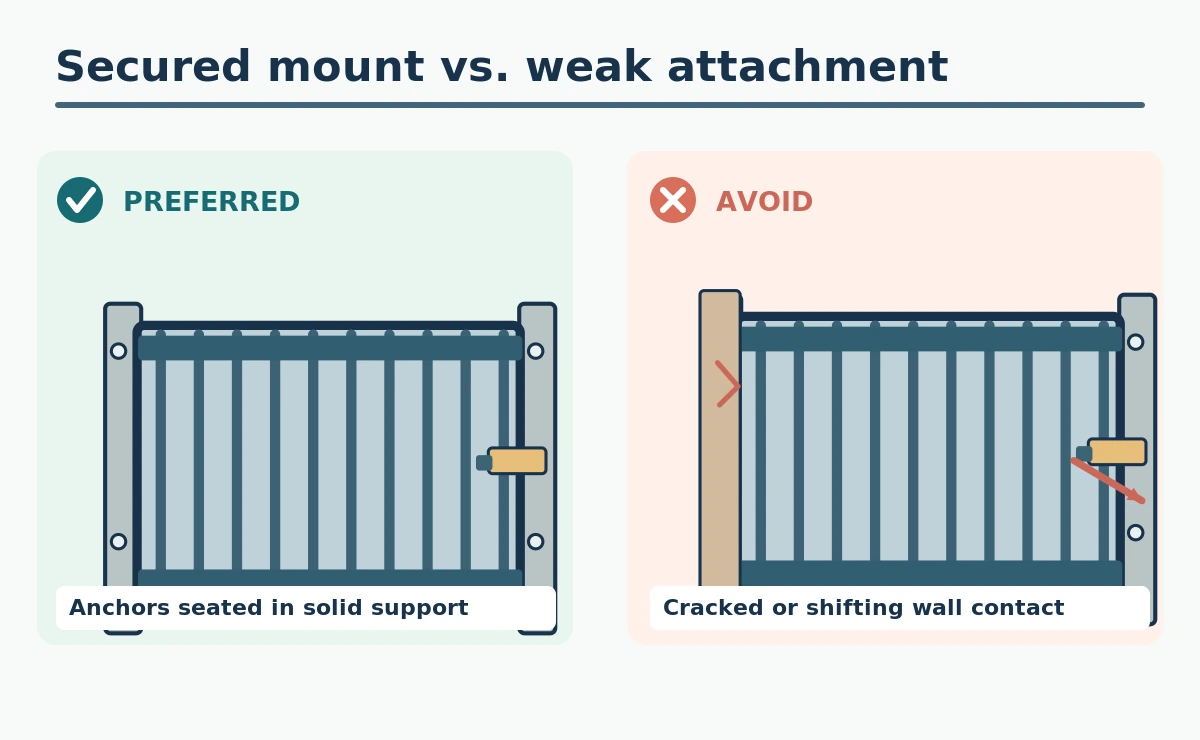
Inspect the entire load path from panel to wall
Trace how pressure reaches the frame, crosses any extension joint, travels through hinges or mounting brackets, and enters the wall. A weak connection at any point can undermine an otherwise rigid panel. Check whether all screws, cups, and plates come in the kit and have the maker’s approval for your installation. Avoid attaching heavy hardware only to decorative trim without verified support. For drywall or masonry, use the specific approved anchors and follow instructions. When the mounting surface is uncertain, ask a qualified installer instead of guessing about hidden structural supports.
Look for rigid frame corners and reinforced joints
Check welded or bolted corners for cracks, twisting, flaking finish, or gaps that widen under light unloaded movement. An extension panel should lock in its specified orientation; parts from different manufacturers are not automatically compatible. A removable joint may be the point most likely to work loose during repeated gate use. Look at the top and bottom rails as well as the center. If a panel bows, catches a collar tag, or develops a sharp edge, stop use. Reinforcement bars are useful only when they are part of the intended design.
Check hinge pins, latch strike, and the closed position
The latch must engage completely, not merely touch the strike plate. Close the gate gently and inspect both upper and lower locking points if present. An auto-close feature may fail if the hinge is out of level, the panel sags, or flooring obstructs its swing. Never rely on an audible click when visual alignment differs. Clean dirt from the latch and use only approved lubricant if instructions permit it. Keep fingers and paws out of pinch zones. Replace damaged components before using the gate again.

Compare mounting methods for this location
Hardware-mounted gates can be a better fit for situations needing a dependable fixed barrier, particularly where a fall is possible. Pressure-mounted products can be useful in approved level doorways but are not appropriate for a top-of-stairs installation. Consumer Reports advises a properly mounted, threshold-free swing gate at stair tops. Pet containment and child protection are separate purposes, so confirm actual certification when children also use the space. Do not install a pet gate simply because the seller calls it industrial or heavy duty.
Measure gaps at floor, wall, and extension joints
A powerful dog may discover a way under or around the frame before the center panel fails. Measure the finished opening and compare it with the manufacturer’s allowed range. Check the usable gap near baseboards and where wall trim creates offsets. Look at collar-tag traps, toe-sized gaps, and low bars that could serve as a climbing step. A pet’s head should not fit into a narrowing space from which it cannot withdraw. If the geometry is unsuitable, choose a different gate rather than stuffing in foam or loose filler.
Keep threshold and swing clearance practical
A heavy gate is often harder for people to handle. A raised lower bar can trip someone carrying items or stepping around a dog. Map the full arc of the swinging panel and leave access to doors, stairs, and emergency routes. If the gate cannot open fully without hitting furniture, its hinges may take unintended stress. Do not let household members climb over it as a daily shortcut. The strongest product is still a poor choice when the required traffic route causes people to leave the latch open.
Understand what strength claims do not guarantee
Product marketing may mention steel, heavy-duty hinges, or a high maximum weight. None of these statements by itself means the manufacturer tested the gate to restrain a charging dog. Ask the manufacturer for its intended use, tested conditions, mounting instructions, and replacement parts. A gate sold for pets is not automatically certified for child use, and a child gate is not automatically escape-proof for dogs. Avoid assuming a material or marketing badge offers certain containment. Assess the specific assembly in your actual opening.
Introduce the boundary in brief calm sessions
Keep a comfortable resting zone behind the gate and reward the dog for choosing to remain away from the bars. Practice moving through the doorway while another adult manages the dog if needed. If the dog lunges, barks at the gate, or becomes frantic when separated, stop using the barrier as a training challenge. The ASPCA cautions that repeated attempts to escape confinement may accompany separation anxiety and cause injuries. Get humane help and consider a safer temporary setup, rather than escalating height or stiffness without addressing distress.
Inspect after bumps, cleaning, or household changes
Look at fastener heads, lower brackets, extension seams, and hinge alignment before each use. Sweep debris out of the threshold and check that door closers work. If a delivery cart strikes the panel or a dog jumps against it, remove the dog and repeat the unloaded checks. Reconfirm mounting when someone repaints wall trim or replaces flooring; a new surface can change contact points. A missing screw or shifting bracket means the barrier is out of service. Use approved replacement components rather than improvised bolts or straps.

Know when physical containment is not enough
No household gate can guarantee safety for a dog that feels terrified, trapped, or determined to escape. Consider a safe closed room, managed supervision, or professional behavioral support when the dog repeatedly challenges barriers. Do not use a gate to separate fighting animals without a broader safety plan. For high-risk households, ask a qualified installer about the opening and a certified behavior professional about the dog. Good management includes safe retreat options and realistic limits; it is not a contest of force.
How We Research
We follow the HubPet editorial approach and use verifiable animal-welfare and product-safety guidance, rather than treating marketing phrases as certifications. For this article we compared the sources below, then organized the most practical inspection points for a real household. The drawings are original explanatory illustrations, not tests of a particular brand. Gate design and installation vary by model, so follow the manufacturer’s exact limits, approved hardware and cleaning directions. No household barrier guarantees containment, and signs of serious distress or destructive escape attempts warrant humane professional help. This is general safety guidance, not veterinary diagnosis. See our veterinary disclaimer.
Sources
Consumer Reports: How to Choose a Baby Safety Gate — background on gate construction, setup, containment limits, or animal welfare, as applicable.
CPSC: Gates and Enclosures Business Guidance — background on gate construction, setup, containment limits, or animal welfare, as applicable.
ASPCA: Separation Anxiety — background on gate construction, setup, containment limits, or animal welfare, as applicable.
No universal pet-gate rating is conveyed by that phrase. Read the maker’s specific testing and mounting instructions.
Do not use pressure-mounted gates at the top of stairs. Choose an appropriate hardware-mounted gate designed for that location.
A compatible extension can be safe within the approved width, but every joint needs correct installation and inspection.
Stop the session and use safer separation. Address the dog’s distress or trigger; never test containment by inviting impact.
Not in every situation. A secure room can offer better separation when the gate is repeatedly challenged or the opening is unsuitable.