
A gravity dog water dispenser holds a reservoir above a drinking tray and lets water drop as the level in the tray falls. It can reduce how often you need to refill a small bowl, but the stored water is not magically fresh and the unit can still tip, leak or collect residue. This guide focuses on the physical details owners can inspect: reservoir neck, outlet seat, tray width, base grip and the route used to remove the bottle for washing. Gravity dispensers do not require a powered pump, yet they still need everyday drinking-water hygiene and a backup water option. For veterinary questions, read our veterinary disclaimer.
Understand the upside-down reservoir
Most gravity units use a bottle or tank whose mouth sits in a drinking tray. Water leaves the bottle until the tray level covers the outlet and limits air entry. When a dog drinks, the level falls and a little more water can escape. Some designs add a valve, threaded collar or locking tab. Examine the actual mechanism before purchase, since not every bottle or jug fits every base. Confirm that seals and threads are intact and that the tank sits straight without a wobble. An inverted tank may be heavy when full, so choose a size you can safely lift, turn and wash without relying on a child to steady it.
Measure the real floor footprint and bowl access
The volume printed on the reservoir is not the whole fit question. A large dog needs room to place its muzzle in the drinking tray without pressing against a tall bottle. Measure the tray opening, bowl depth and clearance around the dispenser. Check the full base footprint, including any projecting handle or frame. A narrow, tall bottle on a lightweight tray can topple if bumped by a playful dog. Place the unit on a flat, washable surface away from walking routes. For temporary outdoor use, bring it inside for cleaning and protect it from direct heat and debris.

Check the outlet seal and refill behavior
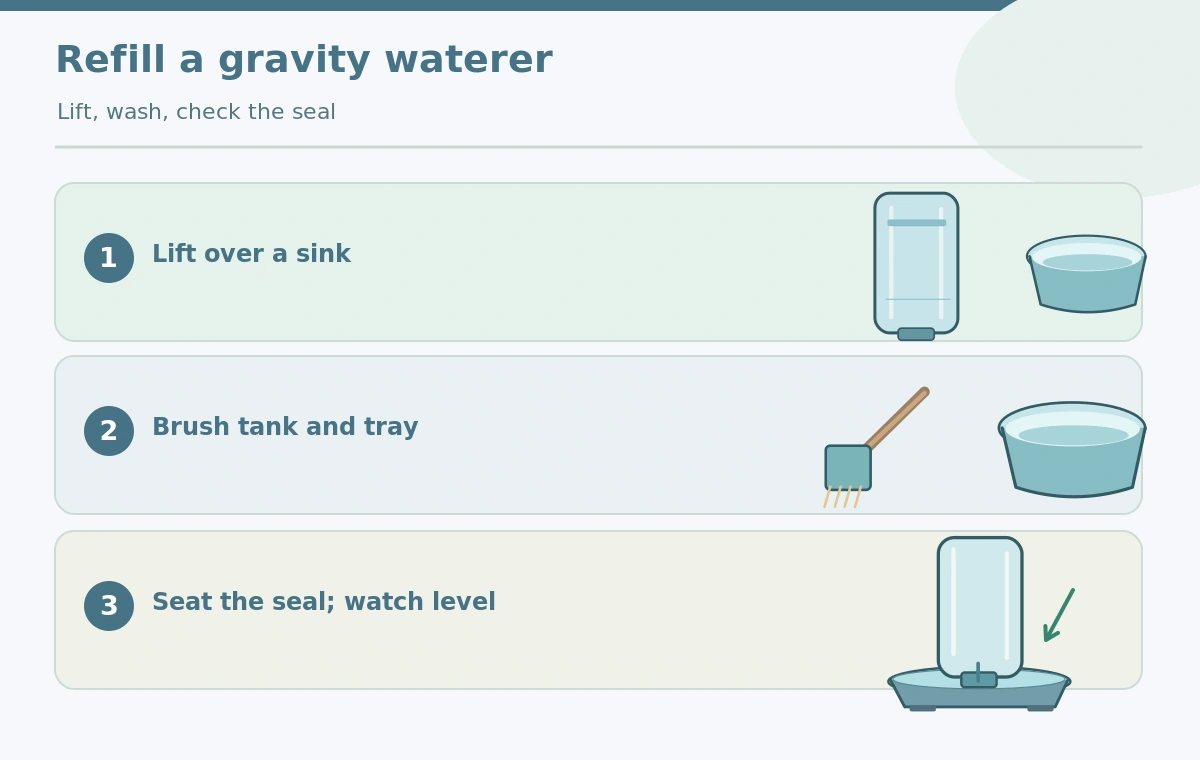
Fill and assemble the unit exactly as the manufacturer instructs, ideally over a sink on the first attempt. Seat the tank fully, then watch the tray level rise and stop where intended. Continuous overflow can indicate a poor seal, loose collar, damaged valve or incorrectly fitted reservoir. Do not repair a drinking-water seal with improvised glue or tape. Check whether a narrow outlet can trap hair or kibble crumbs. If the reservoir has molded corners that are hard to reach with a brush, consider a different model. Refill should be predictable rather than a water-spilling puzzle every time you remove the tank.
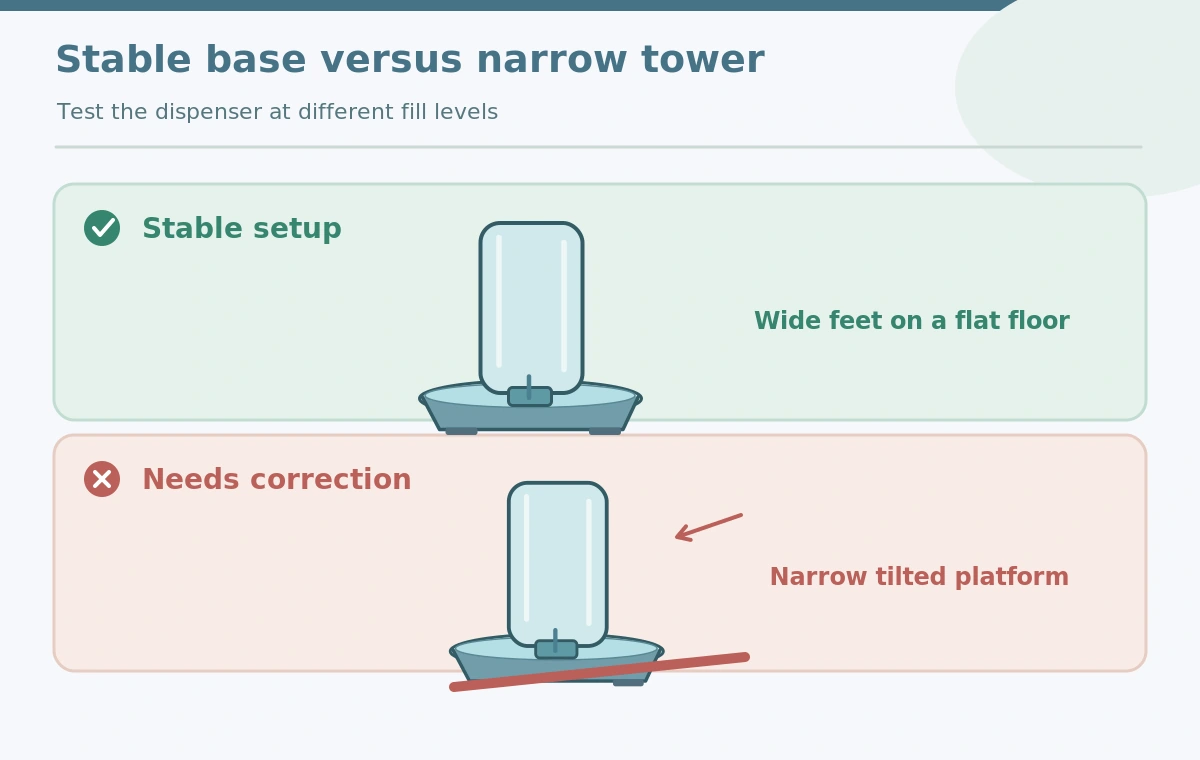
Contrast a stable tray with a tipping setup
In a stable setup, the reservoir rests firmly in its socket, the drinking tray has a broad non-slip base and the dog’s muzzle reaches water without pushing the tower. A risky setup uses a narrow top-heavy bottle, a slippery tile floor and a tray that skids whenever the pet drinks. A heavier product is not automatically better if you cannot lift it safely to wash. Test the unit with the bottle full, half full and nearly empty. Watch whether your dog noses or paws the dispenser. If the tank moves, choose a wider base or a simple non-slip bowl instead.
Clean the bottle neck and tray every day
CDC guidance says pet water bowls should be washed daily. With a gravity dispenser, the tray functions as the bowl and the neck carries water into it. Empty stale water, wash the drinking tray with soap and warm water, rinse and dry as appropriate. Clean the reservoir according to the manufacturer’s directions rather than just topping it off indefinitely. Use a bottle brush to reach the neck and any interior ribs, and let approved parts dry after washing. Keep electrical appliances away from the wash area even though this dispenser itself uses no motor. If you notice algae-like residue, slime or odor, stop and perform a complete cleaning.
Choose capacity around real access, not vacation claims
A larger reservoir may be helpful for a dog that drinks frequently, but it is not a substitute for checking water daily. Hot rooms, multiple animals, spills and heavy use can empty a tank faster than expected. Mark a realistic refill routine and look at the level at least daily. If you leave pets with a caregiver, provide clear instructions for removing and refilling the tank and a second ordinary water bowl. Avoid promises that a dispenser can safely replace human care for several days. Sudden changes in drinking or urination call for veterinary advice, not just buying a larger reservoir.
Plan access for multiple dogs
A single dispenser can become a bottleneck when one dog guards the space or when two large dogs need water at once. Cornell emphasizes accessible water locations for cats, and the broader lesson applies to mixed-pet households: place more than one station so animals can drink without conflict. Keep the gravity dispenser away from crate doors that could block exits and away from busy food-preparation spaces. If a dog shares the home with a cat, position a second cat-only water resource where the dog cannot crowd the smaller animal. Track who uses each station rather than assuming a full bottle means everyone is drinking.
Decide when a plain bowl is safer
A simple wide bowl may be easier to sanitize and less likely to spill for an enthusiastic dog. Choose that option if the gravity unit rocks, the neck will not clean thoroughly, or the collar leaks repeatedly. Check replacement seals only through the product maker, and never insert random plugs into a water outlet. If the dispenser is damaged, stop using it until repaired with approved parts or replaced. It should make daily water access easier while preserving fresh water and straightforward cleaning. The goal is not maximum tank capacity; it is a stable and hygienic drinking space your dog can actually use.
How We Research
We reviewed veterinary hydration guidance, public-health cleaning recommendations and manufacturer instructions for relevant water equipment. Product diagrams illustrate features readers can inspect, not a tested brand or a certification. We did not independently measure pump output, material safety or drinking behavior. We checked these sources on October 28, 2026.
Sources
Centers for Disease Control and Prevention, Cleaning and Disinfecting Pet Supplies. Read source.
U.S. Food and Drug Administration, Proper Storage of Pet Food and Treats. Read source.
University of Minnesota College of Veterinary Medicine, How to Increase Water Intake in Pets. Read source.
American Veterinary Medical Association, Safe Handling of Pet Food and Pet Treats. Read source.
Safety note: This is general pet equipment and hygiene information, not a veterinary diagnosis. Seek veterinary advice for a sudden change in thirst, appetite, urination, or suspected dehydration. Recognize urgent pet warning signs.
As the tray water level falls, air can enter the reservoir outlet and let more water flow until the outlet is covered again.
Do not rely on it as a substitute for daily water checks, washing and appropriate care for your dog.
Check the correct tank seating, seal, collar and valve. Stop using the unit if parts are cracked or it continues to leak.
Choose a broad stable base, place it on level flooring, and test it at different fill levels without leaving the dog unsupervised.
It has no powered pump, but the tray, reservoir neck and seals still require frequent thorough washing.