
A cat bubbler water fountain lifts water into a small dome or low mound instead of sending a long stream from a tall spout. That can change the sound, surface motion and splash pattern, but it does not make the fountain universally better for cats. Some pets lick a moving bubble while others choose a quiet, still bowl. The practical question is whether the fountain offers a comfortable, accessible water surface without soaking the surrounding floor. This guide compares flow shapes, basin depth, pump settings and safe introduction so you can evaluate the design for a particular cat instead of buying on looks alone. For veterinary questions, read our veterinary disclaimer.
Recognize a true bubbling return
A bubbling return pushes water gently upward through a center opening so it spreads across a rounded top and flows back into the basin. A spout fountain instead throws water across a short air gap, while some waterfall units sheet water down a ramp. These are different water paths and create different sounds and splashes. Look at the assembled unit from cat height, not only from directly above. The drinking surface should be easy to reach without pressing the chin against an edge. Check whether the dome locks firmly in place; a loose cap may rattle or expose a small detachable part.
Examine the pump and bowl beneath the dome
Even a low-profile bubbler has a pump, intake guard and internal passage that require washing. Study the product’s cross-section or parts diagram and check how the dome lifts off for cleaning. Make sure the basin remains open enough for a sponge and that you can reach the intake without navigating a narrow channel. Water must remain above the manufacturer’s minimum mark to protect the submerged pump. A clear water-level window is useful only if you can inspect it easily. Unplug before removing the dome or repositioning the pump, and keep hands away from a live adapter whenever water might splash.

Measure splash around the drinking surface
Place the fountain on a waterproof, level mat with room for the cat’s front paws. Observe where droplets land when the pump first starts and as the cat touches the bubble with its nose or paw. A shallow basin might look elegant but spill when an active cat taps the surface. A raised spout may create a wider splash ring, while a low dome can still mist nearby furniture at a high pump setting. Keep outlets, extension cords and porous flooring out of the spray zone. A splash-resistant mat should catch small droplets without making the base slide or tilt.
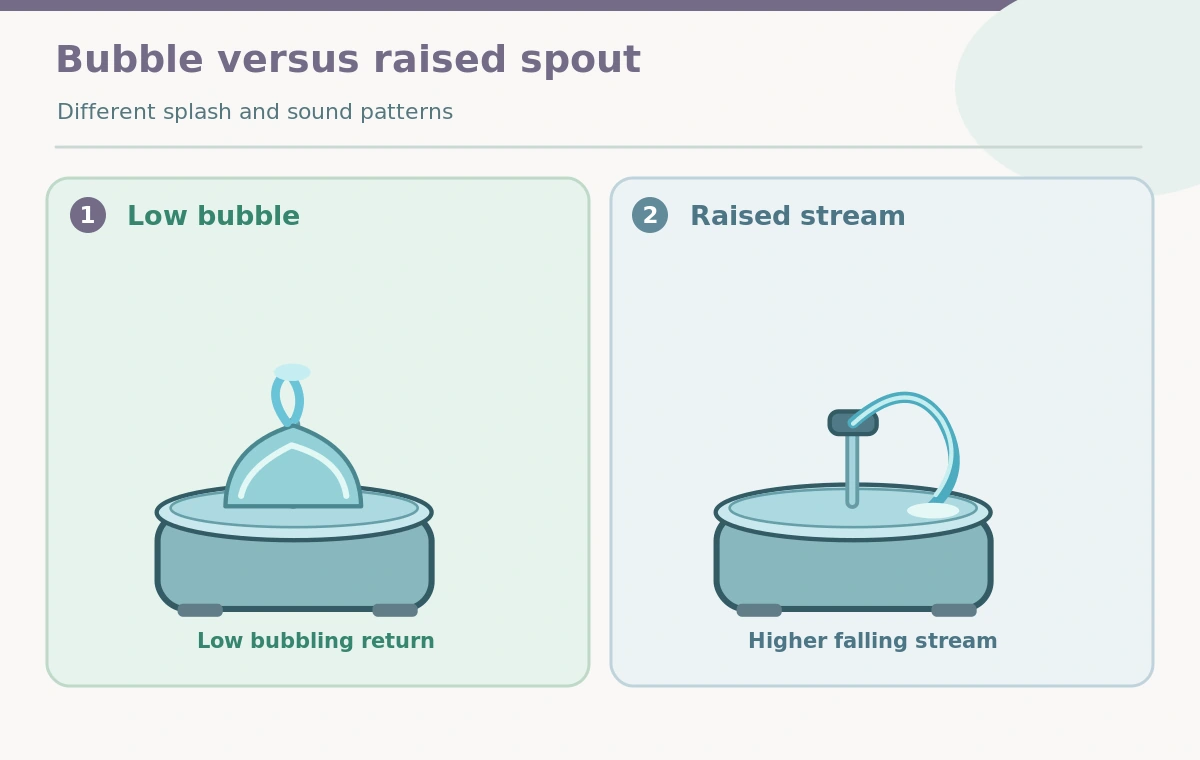
Compare a low bubble with a falling stream
In a low bubbler, water rises a short distance and spreads across a rounded surface. In a taller spout design, water passes through air before landing in the bowl. A bubble may be easier for a timid cat to investigate gradually, but no shape guarantees higher intake. Research comparing still and flowing sources has not established a universal feline preference for flowing water. Watch the individual cat rather than inferring comfort from how attractive the fountain appears. Keep a plain bowl as a stable alternative, especially during the first several days and while you test water movement.
Introduce the new shape without forcing contact
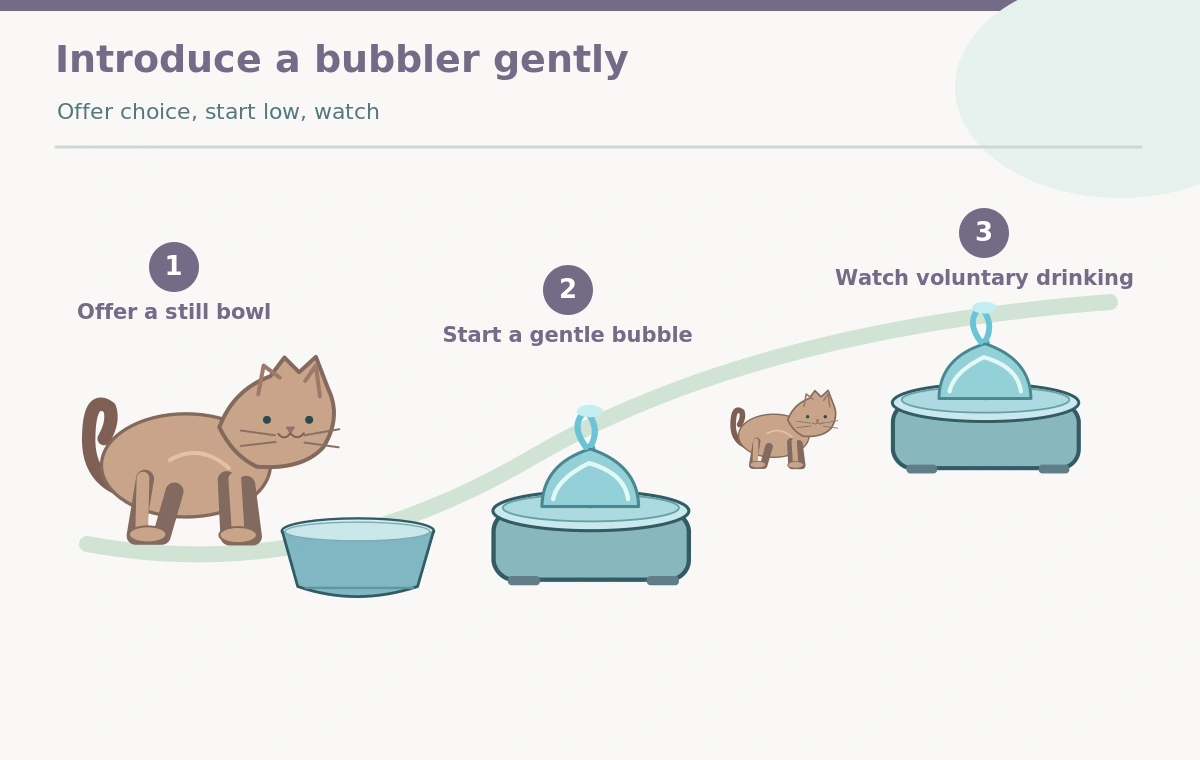
Place the switched-off bubbler near a familiar clean bowl and let the cat inspect it voluntarily. After the cat seems comfortable, start the pump at a suitable water level with the lowest reasonable flow setting. Avoid holding the cat above the stream or putting its paw in the water. Offer treats at a distance if the cat chooses to approach. Gradually adjust placement if the noise or spray causes hesitation. Cornell notes that household conflicts can limit water access, so keep another station away from other pets. Success means the cat drinks comfortably, not merely stands beside the device for a photograph.
Keep the return clear without harsh cleaning
Water flows over the dome and down the internal return path, so both surfaces need regular cleaning. Empty and wash the accessible bowl frequently; the CDC recommends daily washing of water bowls. At the maker’s interval, unplug, remove the dome, clean the internal passages and accessible pump parts with an appropriate soft brush, then rinse thoroughly. Mineral crust can form around a small outlet even if the outer bowl looks clear. Avoid abrasive tools that enlarge or scratch the opening. Replace a worn gasket or cracked cap with a model-compatible part instead of attempting an improvised drinking-water repair.
Choose a stable spot for an independent drinker
Cats often drink more comfortably where other animals cannot approach from behind or crowd them. Put the fountain where a cat has an easy exit route and enough floor space to stop comfortably. Keep it separate from the litter box and away from strong detergent odors. Choose a surface where you can notice splashes quickly; a hidden outlet behind a dripping fountain is unsafe. Some cats dislike the sound or feel of a bubble, and a different flow shape or plain bowl may be the more comfortable choice. A quiet location and fresh water are more important than a complex stream effect.
Judge the result and know when to ask for help
During a short trial, observe whether your cat approaches willingly, drinks normally and can leave without rushing. Compare use of the bubbler with the familiar bowl while keeping both clean. If the cat begins avoiding water sources or shows a sudden change in thirst, do not assume the fountain shape is the cause. Contact your veterinarian if drinking changes significantly or illness is suspected. For routine purchase decisions, prioritize washable parts, stable placement, low splash and easy maintenance. A simple bowl can outperform a fountain that looks impressive but is difficult to clean or unpopular with the cat.
How We Research
We reviewed veterinary hydration guidance, public-health cleaning recommendations and manufacturer instructions for relevant water equipment. Product diagrams illustrate features readers can inspect, not a tested brand or a certification. We did not independently measure pump output, material safety or drinking behavior. We checked these sources on October 28, 2026.
Sources
Cornell Feline Health Center, Hydration. Read source.
VCA Animal Hospitals, Tips to Encourage Cats to Drink More Water. Read source.
Pachel and Neilson, Comparison of Feline Water Consumption Between Still and Flowing Water Sources. Read source.
Centers for Disease Control and Prevention, Cleaning and Disinfecting Pet Supplies. Read source.
Safety note: This is general pet equipment and hygiene information, not a veterinary diagnosis. Seek veterinary advice for a sudden change in thirst, appetite, urination, or suspected dehydration. Recognize urgent pet warning signs.
Not for every cat. The return shape changes splash and sound, but individual drinking preferences differ.
Some designs can, but the pump intake and basin still need cleaning and the unit must follow its own assembly instructions.
Check whether the cap, water level and flow setting match the manufacturer’s instructions and whether any passage is blocked.
No. Keep a clean familiar bowl so the cat can choose and has drinking water during outages or cleaning.
A little exploration may be normal, but protect the floor and cords, maintain a stable base and remove the device if parts become loose.