
This article explains general outdoor setup and pet safety. It is not veterinary advice. For a suspected swallowing incident, contact your veterinarian promptly. Read the veterinary disclaimer.
Fence post caps protect or finish exposed tops of wood, vinyl and metal posts. In a dog yard, however, a cap is also a small outdoor component that may loosen, crack, drop to the ground or present an enticing edge to chew. A decorative cap cannot correct a leaning post or damaged fence.
Choose a cap that fits the exact post profile and matches the required attachment method. Work with the dog away from the fence, inspect the attachment and collect every loose piece. The goal is a durable finished top that stays out of the dog’s reach without introducing sharp metal or plastic fragments.
Identify the post material and profile
Measure the actual outside dimensions of a square wood or vinyl post and the specific diameter or profile of a metal post. Some caps sit over the outside of the post; others insert into a hollow opening. Nominal lumber sizes do not always match real finished measurements, so a photo and a tape measure are more useful than guessing.
Look at the installed top for splitting, rot, bent walls or an old screw that protrudes. If damage reaches below the cap, repair the post itself first. A cap must not conceal a structural problem, especially where a dog could push against a fence section or gate.
Compare over-post and insert-style designs
An over-post cap forms a skirt around the top; an insert-style cap relies on an interior fit. The correct choice depends on the original post and cap manufacturer’s directions. A very loose friction fit may let wind or vibration dislodge it, while a forced oversize cap can crack or stress a hollow post.
For wood, consider whether moisture can become trapped at an untreated top. On metal, avoid an unfinished raw edge beneath a hollow cap. On vinyl, use compatible components that do not require improvised fasteners through thin walls. A smooth rounded or beveled perimeter is preferable to jagged decorative spikes in pet areas.

Ask what actually secures the cap
Some models specify adhesive, a screw, a clip or another proprietary attachment. Follow that exact product method, including its surface preparation and drying time. Do not substitute an unverified construction glue where a dog can lick or chew uncured residue. Keep pets away while you install the product and until it is safe for normal access.
If the design permits fasteners, check for flush heads and inaccessible sharp points. Decorative metal finials, loose balls and brittle plastic ornaments deserve extra scrutiny because a detached piece can become a choking or ingestion hazard.
Do not make fence tops climbable
Changing a fence top can accidentally create a broader ledge that a climbing dog uses for leverage. Caps are not a solution to jumping or roaming. Humane World for Animals describes how dogs may use nearby objects to climb and advises addressing both escape routes and motivations.
Inspect the post, adjoining rails and anything parked beside the fence. If a chair, compost bin or pot forms a step, move it. Supervise the dog outdoors and address anxious, bored or reactive behavior with humane support rather than installing spiked deterrents or hazardous barriers.
Inspect decorative shapes from dog height
Look for points, hooks, open fastener slots and small detachable ornaments. A high cap may seem inaccessible, but pieces can fall after a storm or maintenance work. Check the lawn beneath each post before letting out a dog that mouths objects.
Consider smooth, plain shapes when pets share a yard with visiting children. Avoid assuming that a “weatherproof” label means the cap cannot crack in freezing temperatures or fade after long sun exposure. Inspect the real installed product rather than relying on the package claim.
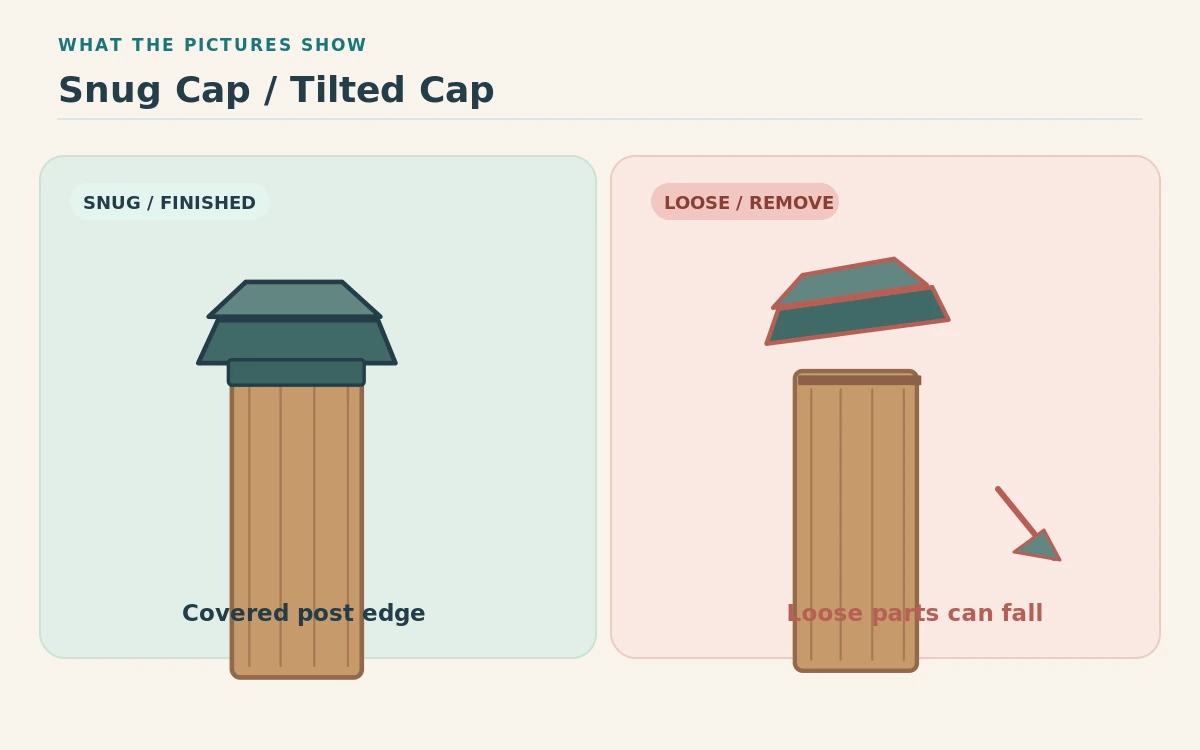
Compare secure and failing examples
In a secure example, the cap sits level, covers the post top and shows no visible snag or gap. In a caution example, one side lifts. The exposed post edge and cracked fragments create hazards. The difference should be obvious even from the yard path.
If a cap rocks during a gentle hand check, keep your dog away until you fix it. Do not leave a partially attached cap in place because it has not yet fallen. Replacement with a properly matched product is preferable to repeatedly wrapping a damaged cap with exposed wire or tape.
Install with a clean and contained work area
Place the dog indoors and collect the needed cap, measuring tape, approved fastening supplies and a container for screws or scraps. Confirm the post surface is clean and sound. Use the installation method the manufacturer provides, protecting your hands and eyes when using tools.
Afterward, pick up drilling debris, packaging, dropped hardware and adhesive waste. Wipe the post where necessary according to the product label. Never allow the dog to investigate uncured adhesive, sharp shavings or a fresh cut. Leave a clear walking route along the finished fence.

Repeat a short storm and seasonal check
After high wind, freeze-thaw weather or fence cleaning, visually check every cap from the ground. Look for a lifted edge, new cracks, loose hardware or a cap missing entirely. If you see one on the lawn, keep the dog away while retrieving it and checking for broken pieces.
Keep a list of the right replacement sizes. Never force an incompatible spare into place. If a post repeatedly loses its cap, ask a fence professional to examine the post movement and approved attachment rather than treating every cap failure as an isolated cosmetic problem.
How We Research
HubPet reviewed the linked animal-welfare, pet-safety, and relevant product-safety resources and applied them to a practical yard inspection sequence. We distinguish general safety principles from product-specific instructions: precise capacities, wind ratings, hardware and dimensions must come from the actual manufacturer and, when appropriate, a qualified installer. Sources checked November 4, 2026. Read About HubPet for the editorial approach.
Sources
Humane World for Animals — Keep Your Dog From Running Away. Consult the original resource for scope and limitations.
Humane World for Animals — How to Stop Dogs From Digging. Consult the original resource for scope and limitations.
ASPCA — Toxic and Non-Toxic Plants. Consult the original resource for scope and limitations.
Frequently Asked Questions
Use the attachment method listed by the cap and post manufacturer. A generic adhesive or exposed screw may not suit the material or pet-accessible position.
Avoid unnecessary sharp or detachable points in areas used by pets. Smooth designs with secure attachments create fewer snag and dropped-piece hazards.
A loose or brittle cap can drop, break into chewable fragments or reveal sharp edges. Restrict access and repair or replace it promptly.
Measure the real outside dimensions and check whether the cap fits over or inside the post. Nominal labels alone may not establish compatibility.
No. They cover or finish a post top; they do not repair rotted wood, unstable footings or a gate pulling its post out of alignment.