
This article provides general cat-care and home-setup information, not a veterinary diagnosis. If your cat strains, cries, passes blood, or makes repeated unproductive trips to the box, seek prompt veterinary care. Never punish a cat for toileting problems. Read the veterinary disclaimer.
A litter box in a home with dogs needs more than a hidden corner. Cats should reach it without passing a dog that watches, chases, or noses into the tray. Dogs must not be able to eat litter or waste. The solution is a stable room boundary and a cat-friendly route, not a tiny opening that forces the cat to squeeze or jump when it needs to go. Observe each animal before changing the layout, and keep an established backup tray available while testing a new spot.
Watch who controls the doorway
Spend a few quiet minutes observing the hallway that leads to the tray. A dog need not growl to make a cat avoid a space; standing across an entrance, following closely, or sniffing the pan can feel intrusive. Notice whether the cat waits until the dog sleeps or rushes away before finishing. Move the dog during a trial, rather than repeatedly moving the litter tray. If the dog guards the route or the animals fight, ask a qualified reward-based trainer or behavior professional to help manage separation.
Choose a real cat-only destination
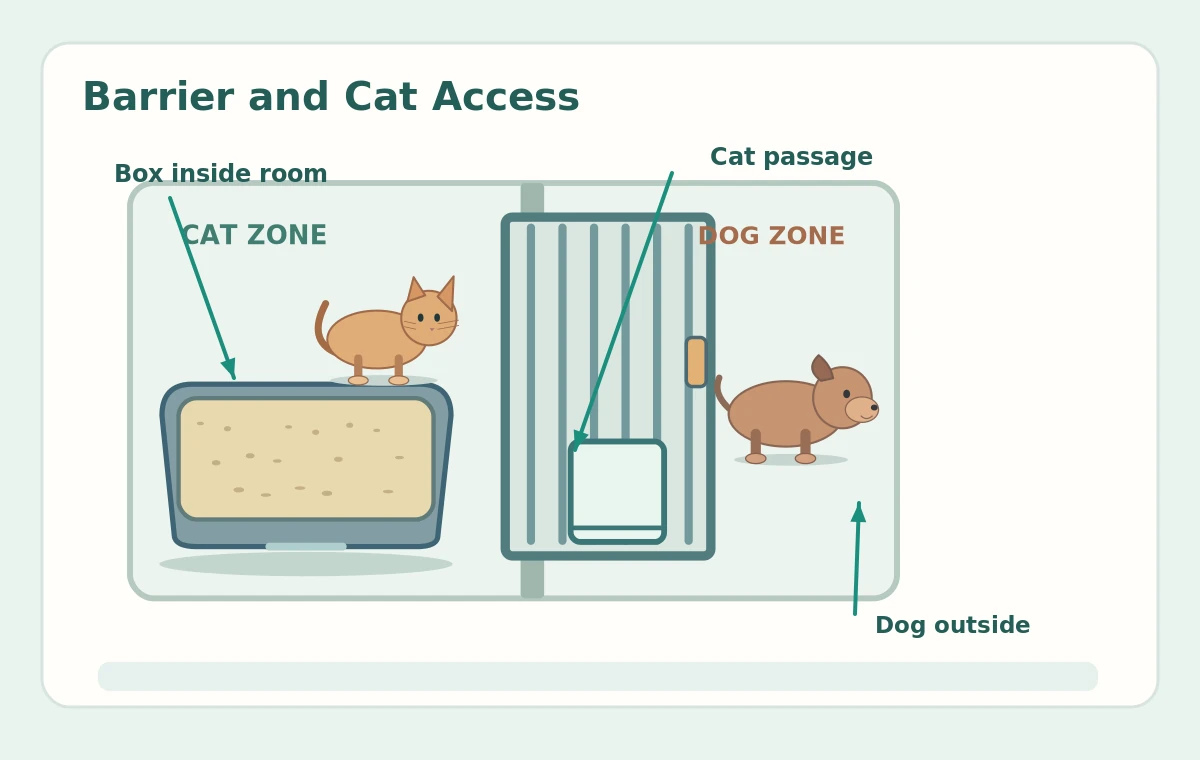
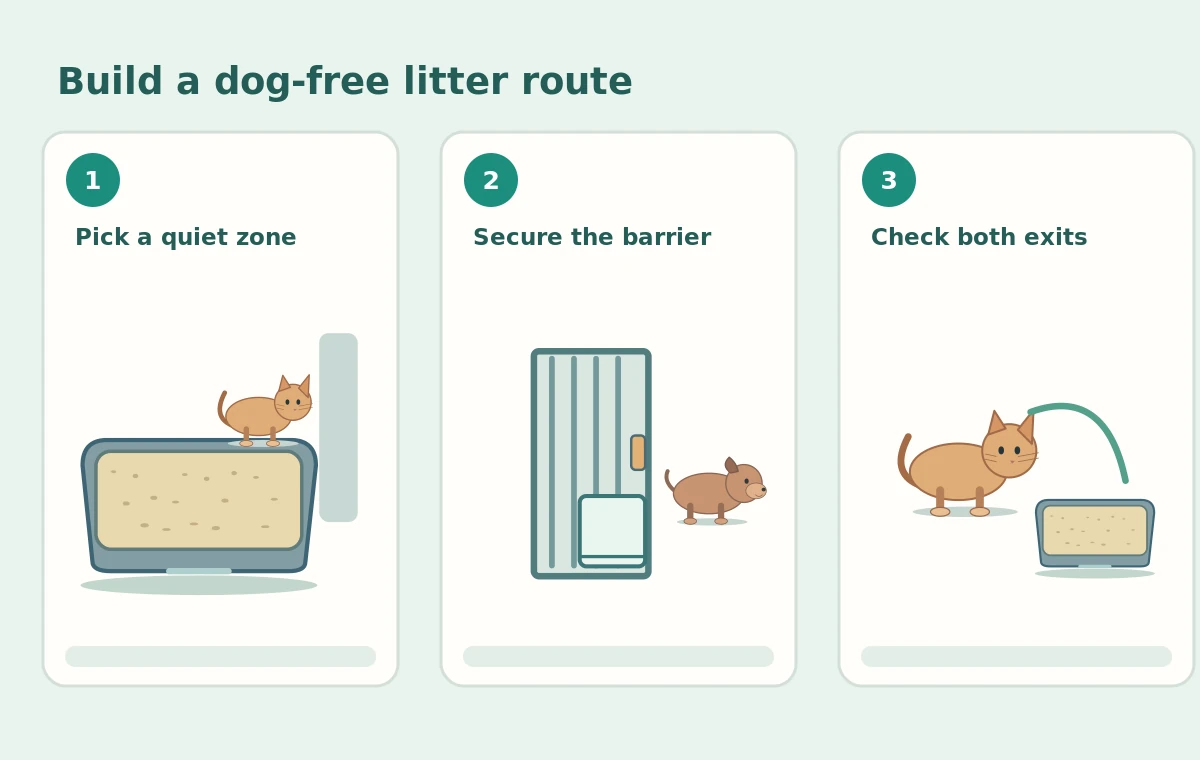
Select a low-traffic area that stays open to the cat at all hours. A spare room or quiet section behind a suitable gate may work better than a bathroom used by several people. Keep food and water away from the tray and leave enough floor for the cat to turn around, dig, and retreat. Avoid placing the pan directly beside the gate: the dog can still stare through bars or reach its nose toward waste. Position the tray farther inside, out of a direct sightline.
Choose an approved barrier, not an improvised obstacle
Use a purpose-made gate or door arrangement appropriate for your animals and the opening. Check the manufacturer’s mounting instructions, height, gaps, and latch before use. A cat opening should allow comfortable passage without rubbing or trapping the cat; an athletic dog may also fit through an unexpectedly large opening. Do not cut a hole in an unsuitable gate or prop a door with a loose object. Never install a pressure-only gate where the manufacturer requires hardware mounting.
Keep the exit open and predictable
A cat may hesitate to enter a room if its only exit lies beside a dog. Make a second escape direction or sheltered route available when the room layout permits, and keep the approach clear of shoes, boxes, and swinging doors. Test the route when the house is busy, not only during a quiet afternoon. If the cat must pass a dog, create a management plan that moves the dog away from the corridor before toileting. Do not lure a reluctant cat through a risky passage with food.
Control dog access to used litter
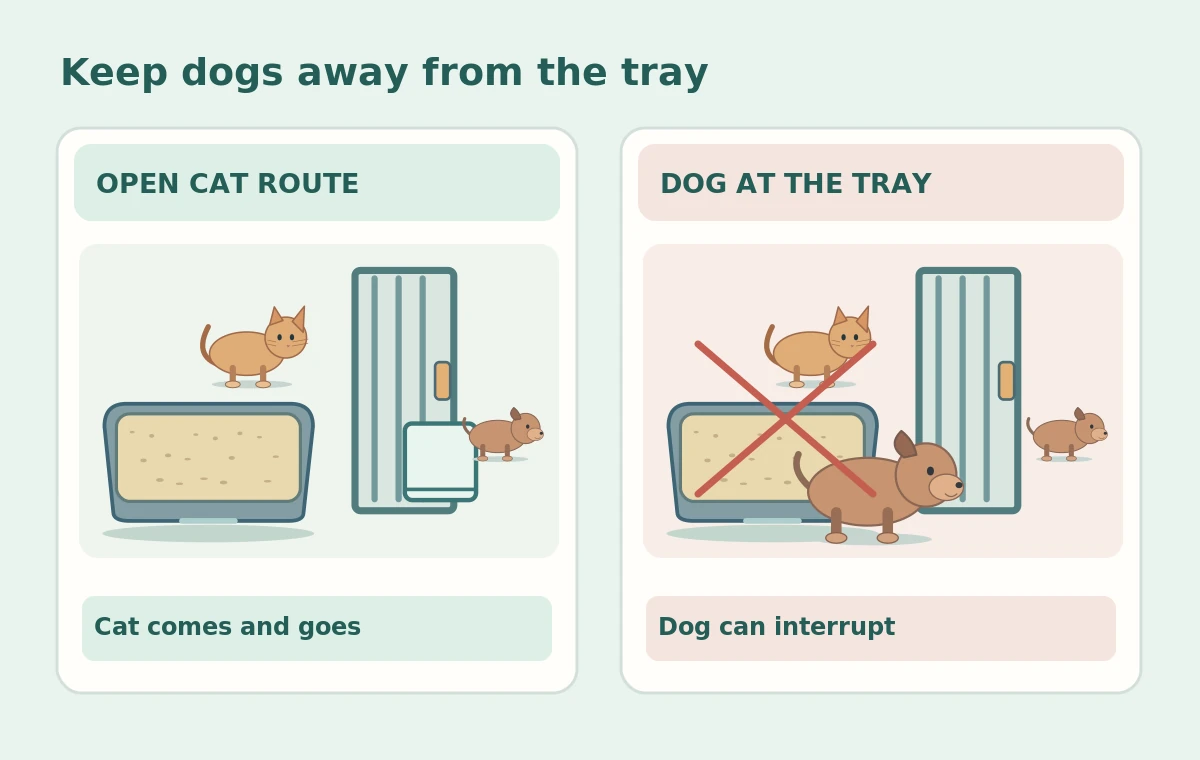
Cat waste can attract some dogs, creating both a hygiene problem and repeated disruptions. Scoop the tray every day and place tied waste in a dog-proof receptacle. Pick up spilled litter promptly and wash your hands after handling waste. Do not rely on scented products, covered litter boxes, or punishment to stop a dog from investigating. The physical boundary should work even when you are occupied. If your dog has eaten litter or shows illness after consuming waste, contact your veterinarian.
Avoid turning the litter area into a trap
A covered enclosure behind a gate may look discreet but can reduce airflow and block the cat’s view of a possible approach. Favor a roomy uncovered tray unless the cat clearly prefers a different style. Ensure no dog can stand over the exit, and do not place the pan under a shelf that restricts turning. Cats vary in confidence; one may accept a cat flap, while another avoids a noisy swinging panel. Offer an open, familiar alternative during the adjustment period.
Introduce the boundary without pressure
Keep the familiar tray accessible while you install and test the gate. Let the cat inspect the opening voluntarily, and reward calm exploration away from the tray without disrupting actual toileting. Separately teach the dog to settle in another area using treats and a predictable cue. Watch for new hesitation, accidents, or sudden vocalizing. Do not carry the cat through a new flap repeatedly or scold the dog beside the tray, because the commotion can make the entire area unpleasant.
Build a repeatable inspection routine
Check the latch and mounting points every day, especially after cleaning or guests move the gate. Test access from cat height and confirm the dog cannot reach around a corner. Scoop daily and clean the surrounding floor according to its material. Record whether the cat uses the new route comfortably for several days before retiring the temporary backup. If the cat strains, cries, repeatedly enters without eliminating, or suddenly avoids the tray, seek veterinary advice promptly rather than assuming a territorial disagreement.
Know when the setup needs revision
If the dog learns to vault the gate, the cat must leap over it, or family members regularly leave the door closed, the solution is not dependable. Redesign the room boundary or choose a different location instead of adding unstable boxes or furniture as steps. A durable setup gives the cat unhurried entry and exit even when the household is active. More than one separate litter station often improves choice, especially where dogs can disrupt a single doorway.
How We Research
We reviewed feline environment guidance from animal welfare and veterinary organizations, plus current public-health guidance for handling litter and waste. We checked routes, separation of resources, physical access, predictable maintenance, and situations in which a veterinarian should assess the cat. This is a practical home-layout review, not an equipment endorsement, clinical assessment, or hands-on test of a specific product. We avoid invented safety certifications and one-size-fits-all measurements. Learn how HubPet researches pet-care articles.
Sources
Cats Protection — Preparing Your Home for a Cat
RSPCA Knowledgebase — Encouraging Litter Tray Use
AAFP/ISFM — Feline Environmental Needs Guidelines
CDC — Ways to Stay Healthy Around Animals
Only if its design, installation, and opening reliably exclude that individual dog while allowing the cat easy access. Test it under supervision.
It is usually better farther inside, beyond the dog’s direct view and reach. Leave room for digging, turning, and a calm exit.
A lid alone rarely prevents determined dogs and may trap odor or make cats feel cornered. Provide a secure boundary instead.
Offer the familiar open route and allow gradual voluntary investigation. Use another barrier design if the cat stays uncomfortable.
Contact your veterinarian if avoidance begins suddenly or comes with straining, pain, blood, increased frequency, or unusual urination.