
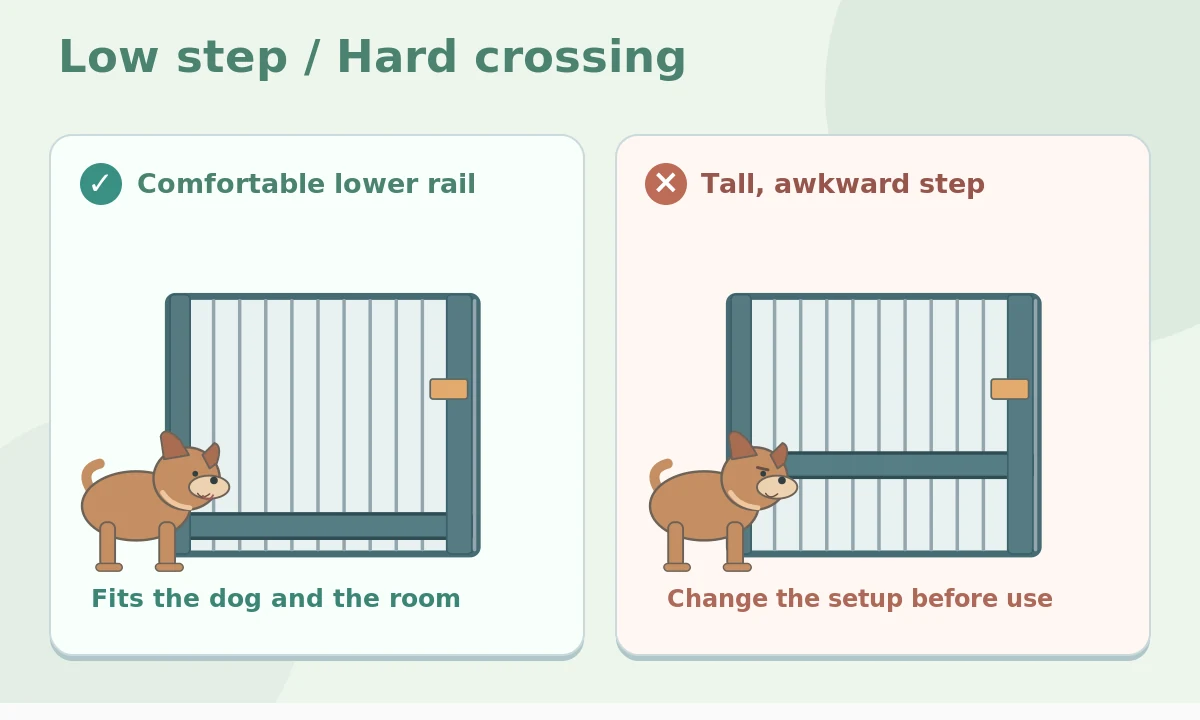
A playpen door can be wide enough for a dog yet awkward to cross because of the raised bar at the bottom. Small puppies, short-legged dogs, and pets with mobility changes may trip or hesitate at that transition. The issue is not the advertised overall gate height; it is the usable opening and how feet move across the lower rail. Examine the threshold, hinge, latch, and surrounding floor before deciding whether the pen offers comfortable daily access.
Measure the usable opening, not the panel height
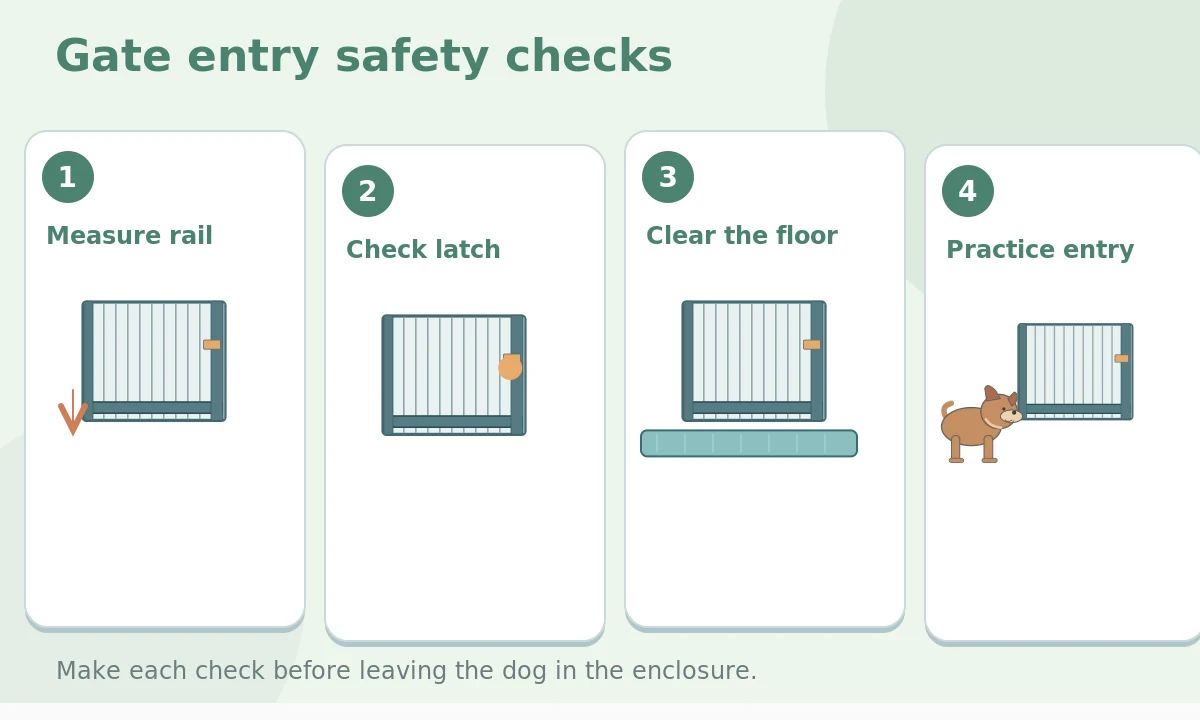
Open the gate and measure the clear width between its frame edges and the distance from the floor to the top of the lower bar. Compare that step to the dog’s normal movement without forcing a trial. Some pens have a high human step-over barrier but a much lower pet access door; others require the person to lift the dog through the opening. Check manufacturer instructions for the exact dimensions. A broad entry is helpful only if the dog can walk through without catching paws or brushing its back against a latch.
Watch the dog approach a low threshold
Practice with the gate fully open and secured so it cannot swing. Let the dog walk toward the opening at its own pace. Look for a natural step, a pause to investigate, or a change in weight before the rail. A dog that repeatedly stumbles or scrambles may need another design or a veterinary mobility assessment. Do not pull the dog forward by its collar. If you use a reward, place it so the dog can choose whether to cross, then allow an immediate exit.
Locate the latch outside chewing range
Inspect the gate latch while the pen is empty. It should engage clearly, be reachable by an adult, and not expose a loose clip at muzzle height. Test both the upper and lower fasteners if the design uses two. A partly seated latch can open when the dog leans on it. Do not leave a dangling padlock, rope, or carabiner where teeth can reach it. Choose hardware designed for that pen and keep a direct release route for emergencies. Replace broken latches rather than improvising around a bent frame.
Keep hinge gaps and toe spaces clear
At some gate corners, the gap becomes narrower as the panel swings. Inspect from the dog’s paw level, not just standing height. Move the empty door slowly and watch each pinch point around the hinge and lower rail. A toe, dewclaw, or nose could become trapped if the dog tries to squeeze through a moving gap. Never operate the gate while a dog is pressing against it. Use an adult to manage entry calmly and keep the dog’s route away from the moving edge.

Assess floor grip on both sides
A step over a low bar still requires traction at the landing. Make sure mats lie flat outside and inside the pen so the dog does not land on a loose edge. Avoid placing a slippery waterproof pad precisely where paws change direction. Test floor stability with the enclosure empty, then observe gentle walking. If the pen shifts when the door is opened, check the feet and panel joints. A threshold is not safe merely because it is low; the entire gate must stay stable during passage.
Compare walk-through and step-over designs
Walk-through gates let an adult operate a door rather than lifting a leg over a tall panel, but their bottom rail may still create a pet step. Step-over pens can be simple yet awkward to enter with a water bowl or supplies. A wide gate is easier to use during cleaning, provided the latch and hinge remain secure. Think about the people using the enclosure as well as the dog: someone carrying a puppy or managing limited mobility should not need to balance over a high wire barrier.
Use rewards without forcing the crossing
Place a few treats on the approach side, let the dog sniff the rail, and reward any calm investigation. When the dog steps through voluntarily, praise and allow a return trip. If the dog backs away, stop and simplify the practice. Do not lure a fearful dog into a closed space and immediately latch the gate behind it. Positive associations build gradually. Some dogs prefer an open pen as a resting zone rather than repeated confinement; respect that preference while you plan safe household management.
Plan for overnight and unsupervised safety
A playpen should not become a substitute for appropriate bathroom breaks, exercise, rest, or social contact. Confirm that the dog can access water and that toys or bedding do not create entanglement hazards. If the dog climbs, bites bars, or pushes the gate, reconsider the setup rather than adding restraints. Frantic escape attempts and persistent distress are reasons to stop confinement and seek professional advice. An easy doorway helps daily care, but it cannot make an unsuitable pen safe for a particular dog.
Inspect the threshold during cleaning
Hair and litter can build up around the base rail and prevent a gate from closing. Wipe the threshold and hinges after the dog is elsewhere, dry the area, and check for corrosion, cracking, or bent wire. Open and close the latch several times before the next session. Make sure no mat corner, training pad, or food bowl obstructs the door sweep. Replace any cracked threshold trim or loose fastener using approved parts. Small damage at paw height can worsen quickly with daily use.
Adapt the entry as the dog changes
A puppy may clear a threshold easily one month and begin rushing it when excited the next. An older dog may lose confidence after an injury or illness. Reassess the opening regularly and avoid training through visible discomfort. A low-threshold model, different pen layout, or pet-proofed room can be safer than asking the dog to jump. Ask your veterinarian about a new limp, stiff gait, or reluctance to step over small objects. Comfortable access is a moving target, not a one-time measurement.
How We Research
We compared current dog-crate and playpen guidance from veterinary teams and animal welfare organizations, then translated the handling and environment principles into practical home-equipment checks. The diagrams illustrate decision points, not manufacturer-approved assembly instructions or crash testing. Follow your own product manual, and stop if the dog appears distressed. Read our about page and veterinary disclaimer. Seek veterinary advice for injuries, pain, sudden mobility changes, or severe confinement distress.
Sources
Cornell University College of Veterinary Medicine: Dog Crates — reference guidance on humane crate or pen use, stable setup, and pet comfort.
RSPCA: How to Crate Train a Puppy — reference guidance on humane crate or pen use, stable setup, and pet comfort.
VCA Animal Hospitals: How to Crate Train Your Dog — reference guidance on humane crate or pen use, stable setup, and pet comfort.
There is no universal ideal height. Compare the exact lower rail to the individual dog’s comfortable walking and stepping ability.
Only if the manufacturer permits a stable design that does not block the latch or create a loose climbing aid; often another gate is safer.
Stop use and inspect alignment, hinge movement, and approved hardware. Do not rely on an improvised clip to hide a damaged latch.
Only when necessary and with gentle full-body support. A safe low entry the puppy can use voluntarily is preferable when practical.
A new hesitation can reflect slippery flooring, fear, or discomfort. Check the environment and ask a veterinarian about sudden mobility changes.