
This article provides general vehicle-accessory and pet-care information, not a crash-test certification or veterinary advice. Follow your vehicle and restraint manufacturer instructions. For individual pet health or travel concerns, consult your veterinarian. Read our veterinary disclaimer.
A dog car door protector shields an interior panel from muddy paws, claws, and nose prints, but it does not keep a dog safely in place. Unlike a seat cover, it must fit a vertical, often curved panel with controls and handles. A good protector leaves necessary switches, door release hardware, and window movement accessible. Start with a secure restraint suited to your vehicle and dog, then assess the protector as an accessory. This guide explains how to measure the panel and spot hidden attachment problems before your first drive.
Map the actual door, not the advertising photo
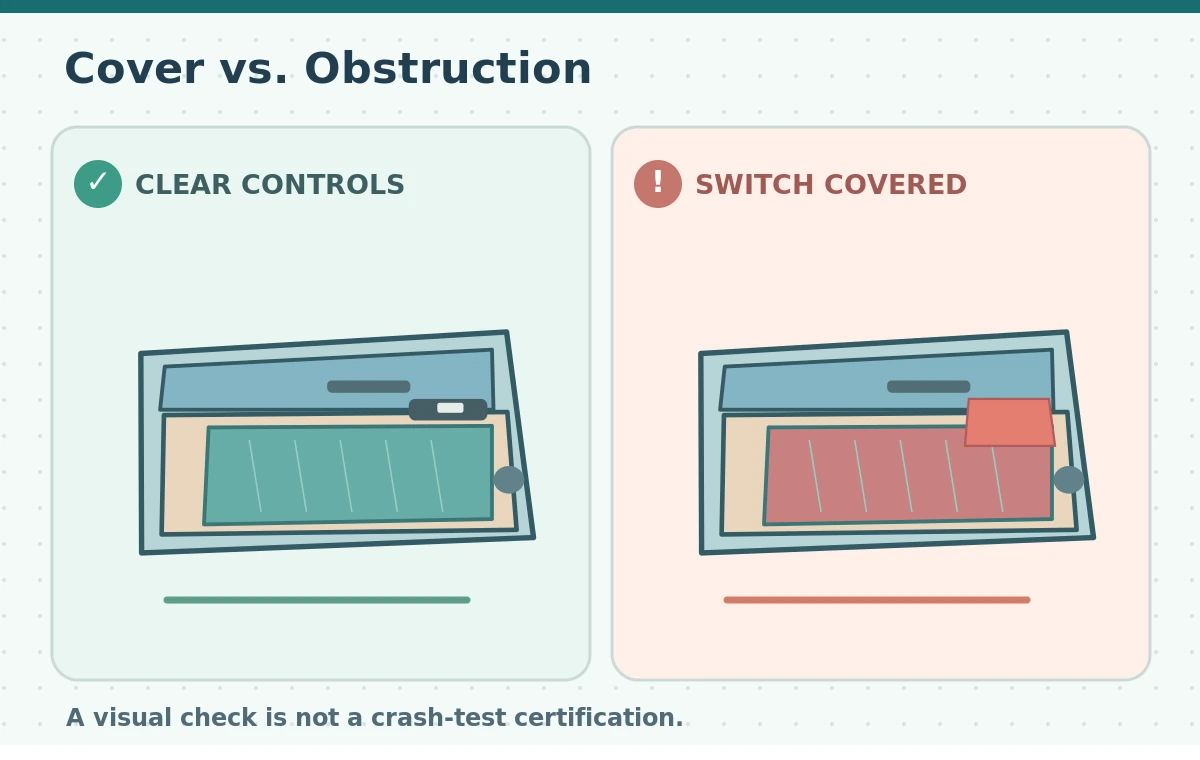
Open the rear door while parked and locate the armrest, interior latch, child-safety lock, window switch, speaker grille, cup pocket, and weather seal. Doors that look alike from outside may have very different trim. Note which sections receive paw contact and which must stay uncovered. A full-height protector is not automatically better: fabric stretched across a handle or switch can create a new hazard. Photograph the door straight on with a measuring tape for a reliable comparison when browsing specifications.
Measure the coverage zone from several points
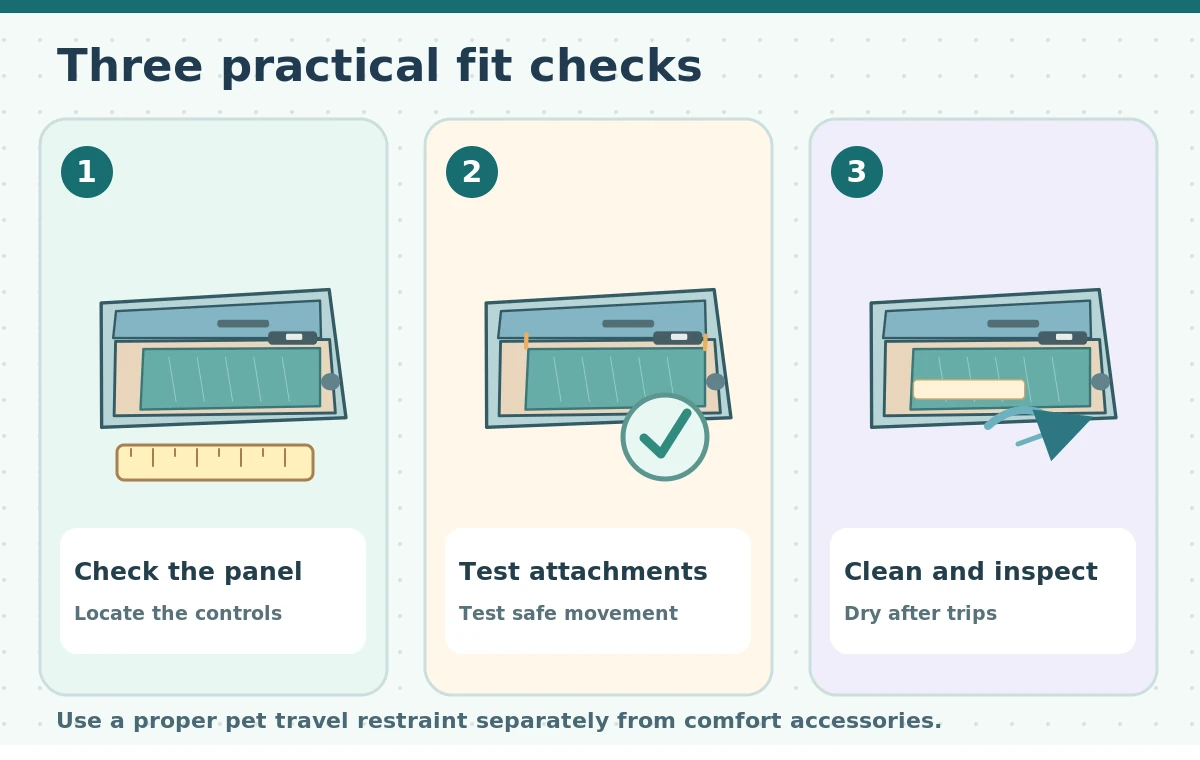
Measure the upper panel at the window sill, the widest mid-panel point, and the lower trim area the dog can reach. Include curves and protruding armrests instead of measuring only one rectangle. Decide where the protector may rest without rubbing the glass. Choose a panel that sits flat rather than pulling diagonally across the door. Some products include adjustable tabs; these do not compensate for a poor panel shape. Check that the rear door still opens easily with the cover installed.
Examine window-tab and suction attachments
Many door guards tuck small tabs between the glass and the interior weather strip. Other versions use suction cups on glass or straps around fixed trim. Follow the product and vehicle instructions carefully: never force a tab into tight trim or obstruct the window track. A suction cup may release in temperature changes, and a loose tab can fall into a door pocket. Test raising and lowering the window when parked. If operation rubs, snags, or distorts the guard, remove it and select another design.

Keep all essential door controls accessible
A door protector should not conceal the release handle, safety lock instructions, power-window controls, or a child passenger’s access route. If a cover hangs over a switch, trim the product only when the manufacturer explicitly allows alteration; otherwise choose a different size. Activate the vehicle child lock as appropriate, independently of the guard. A paw can press a reachable window switch even through thin fabric. Review every door function with the car parked and an adult outside the vehicle.
Choose a surface that cleans without harsh rubbing
Look for abrasion-resistant woven fabric with a washable or wipeable outer face. Smooth waterproof coatings can reduce moisture reaching trim, but stitching, seams, and cutouts may still leak. Read the care tag before using a cleaner, and avoid harsh chemicals that might damage interior surfaces. If the guard traps moisture against a padded door panel, remove it promptly after a wet trip. Let both sides dry before reinstalling. A protector that remains damp defeats much of its upholstery-protection purpose.
Check the attachment with a parked-car tug
Fit the protector with the door fully open and windows at rest. Gently pull the corners and top edge to see whether tabs slip out or suction cups release. Close and reopen the door several times. Ensure that no fabric becomes caught between the door and its frame; do not pinch the weather seal with thick straps. If the bottom swings into the seat or floor, choose a shorter pattern or a properly designed anchor. Never rely on a panel protector to restrain a pet.
Pair it with an independent restraint plan
The AVMA recommends securing dogs in vehicles and keeping them out of the front passenger position with an airbag. A door protector may prevent scratch marks, but crash protection depends on the chosen properly installed restraint. Check belt routing and fastening with the protector installed; upholstery accessories must not cover buckle receivers, lower anchors, or straps. Do not encourage a dog to lean out the window. ASPCA advice also emphasizes secure travel and avoiding loose movement that distracts the driver.
Compare stitched pockets with plain panels
Storage pockets can look convenient, but pets may nose into them, chew their seams, or pull out stored items. A flat panel generally has fewer catch points. Pockets may work for occasional human use only if placed out of the dog’s reach and free of loose supplies. If a pocket droops onto a latch or button, skip the design. Watch for dangling strings or hook-and-loop pieces that could detach. The simplest washable panel often provides the clearest safety check.
Build an after-trip inspection routine
Before driving, check the cover lies flat and the window controls work. On return, remove grit with a soft brush or vacuum and wipe stains according to its label. Inspect stitching and attachments at the top edge. Wipe trapped condensation from the underlying door, especially after rain. Replace guards that shred into loose fibers or whose hooks no longer hold. Treat a recurring problem as a fit issue rather than compensating with more improvised clips or cords.
Decide when a protector is not appropriate
Skip a door guard if it restricts safe exit, blocks vehicle equipment, interferes with window operation, or cannot sit securely on curved trim. Not every vehicle door accepts the same tab style. If a dog persistently paws the panel, address travel comfort and use a safe restraint, rather than hiding the behavior under thicker material. A short supervised stationary fit test helps, but it cannot predict collision performance. Follow the vehicle manufacturer’s advice for anything near a restraint or control.
How We Research
HubPet compared recommendations from veterinary and animal-welfare organizations, along with principles of vehicle compatibility and ordinary accessory upkeep. We distinguish upholstery protection, sun reduction, and surface grip from devices intended to restrain a pet during a vehicle crash. Specific routing, fit, allowable attachment points, and safety equipment depend on the vehicle and product manuals. This article does not independently crash-test accessories or certify any brand. Our original illustrations demonstrate inspection concepts, not a universal vehicle installation. Read more about our editorial research approach.
Sources
AVMA: Traveling with your dog or cat — source guidance on secure pet travel, ventilation, or restraint limitations.
ASPCA: Travel safety recommendations for pets — source guidance on secure pet travel, ventilation, or restraint limitations.
Merck Veterinary Manual: Traveling by Car With Pets — source guidance on secure pet travel, ventilation, or restraint limitations.
AKC: Dog Car Safety Training — source guidance on secure pet travel, ventilation, or restraint limitations.
American Red Cross: Pet Travel Safety — source guidance on secure pet travel, ventilation, or restraint limitations.
No. Fabric is not a replacement for working window or child locks. Keep controls accessible to people and use the vehicle safety features.
Neither is universally better. Try only attachment types allowed by the car and protector instructions, and check window movement when parked.
Only where the product and vehicle instructions permit it. Thick straps trapped in a door seal can prevent a proper seal or closure.
No. Seams, stitching, and edge gaps can still admit moisture. Remove and dry a wet guard after the trip.
No. It protects the panel, not the animal in a sudden stop. Use a suitable independently installed travel restraint.