
A dog GPS tracker without a subscription sounds like a one-time purchase. However, that label describes a billing arrangement, not a dependable way to see your dog on a map. Some systems use a handheld radio receiver, some need prepaid data, and others rely on nearby phones rather than live GPS reporting. The best choice depends on where your dog travels and whether you can accept gaps in location updates. Trackers are backups to secure handling, visible identification and microchip registration. For collar discomfort or sudden distress, consult your veterinarian and see HubPet’s veterinary information disclaimer.
Ask what actually carries the location to you
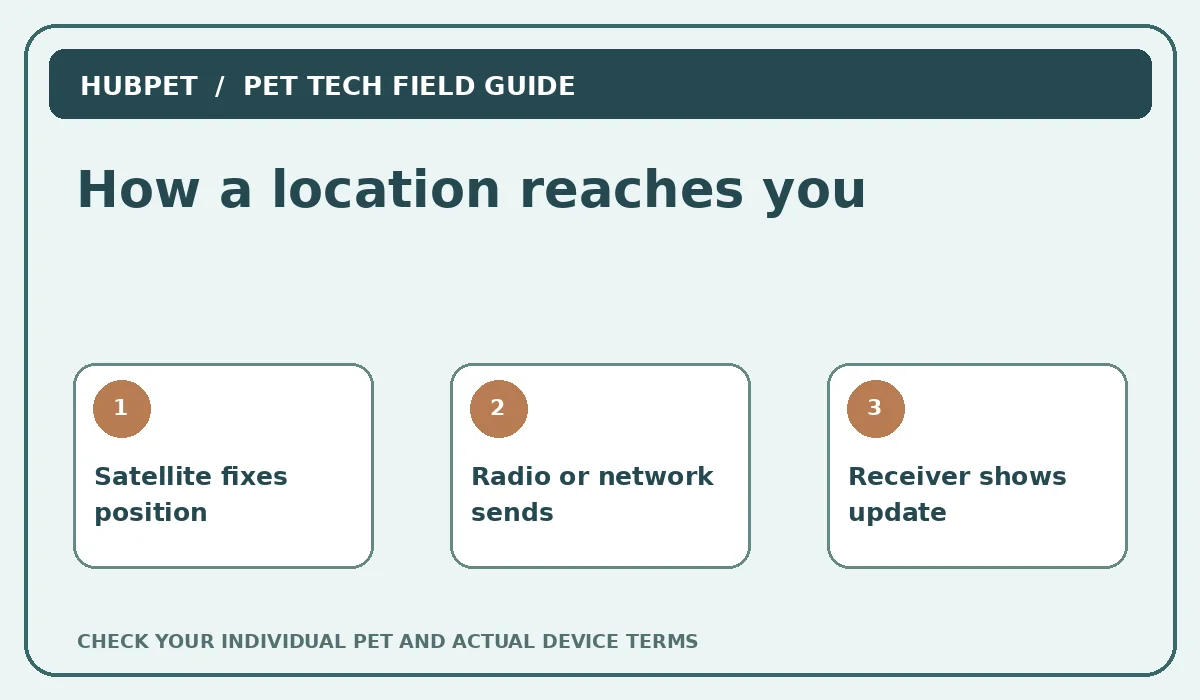
GPS satellites help a receiver estimate its position; they do not send that position directly to your phone. The tracking system still needs a communication channel. A cellular tracker generally uses mobile data, while radio-based systems send information to a compatible handheld unit within supported conditions. Crowd-network tags report sightings when other participating devices happen to be nearby. Ask the seller to identify the exact path from collar to screen. If the description says only “GPS enabled,” you still do not know how or when an owner receives updates.
Distinguish no monthly bill from no ongoing expense
A device can avoid a recurring subscription yet require an expensive handheld receiver, replacement batteries, accessories or occasional data purchases. In addition, some vendors offer prepaid multiyear service rather than a truly fee-free system. Compare a three-year ownership period: hardware, activation, connectivity, accessories, battery replacement and potential service changes. Read the current written terms, not a product banner promising “free GPS.” Avoid assuming a lifetime service claim covers discontinued mobile networks. If renewal is optional, find out which functions remain usable when payment ends.
Compare rural radio and cellular conditions
Think through a realistic lost-dog scenario, not just a demonstration in a park. In a crowded neighborhood, cellular coverage may support timely phone updates, but buildings can affect satellite positioning. In remote areas, a radio-to-handheld system might be useful without a mobile network, yet hills, woods and distance can limit reception. Borrow or test a device where you actually walk. Make a note of what “last seen” means, how old the location can be, and whether the receiver can find an animal that moves out of communication range.
Test the entire alert chain before trusting it
Do a controlled test with another adult and your securely leashed dog in a safe area. Check that the unit obtains a position, sends it to the receiver, and records an understandable timestamp. Walk behind a building and then return to open sky to observe whether updates resume. Check the app when the screen is locked and phone notifications are muted. Do not deliberately release your dog to test escape performance. If the equipment fails during a supervised demonstration, fix the setup before using it as an emergency backup.
Budget for batteries under real settings
Advertised battery life may refer to occasional updates, standby mode, or an ideal signal environment. Frequent location requests often increase power demand. Assess the charging connector, waterproofing claims, low-battery alerts and whether someone in the household will remember the schedule. A dead device offers no current position even if its map app works perfectly. Write a calendar reminder for charging and inspect the mounting hardware at the same time. If the dog swims or gets muddy, follow the manufacturer’s maintenance directions rather than assuming a splash rating covers every use.

Keep identification separate from technology
A tracker may detach from a collar, run out of power, or fail to connect exactly when a dog goes missing. Maintain a legible contact tag and confirm that your veterinarian or shelter can read the dog’s microchip. The American Veterinary Medical Association explains that a microchip is a passive identification device, not a GPS transmitter. Update the registered phone and address whenever they change. This layered approach means a finder still has ways to reach you even without access to your tracker app.
Review location privacy and account control
A pet tracker can reveal household routines through repeated location records. Ask whether maps are stored remotely, who can see them, how long records remain, and what happens when you sell the device. Use a unique account password and enable stronger sign-in protection if provided. Remove former household members from location sharing when appropriate. The Federal Trade Commission notes that location-enabled apps require careful data security; the practical question is whether the particular provider explains those protections. Do not share a live tracking link publicly during a search unless you understand its access settings.
Choose from a specific use-case checklist
During urban dog walks, prioritize reliable update delivery, attachment security, readable alerts and access to a real support channel. On hikes without cellular service, examine the radio system’s receiver needs and terrain limitations. Swimming dogs need suitable seals, maintenance instructions and a backup ID method. Write down your top three real-world scenarios before considering brand names. Compare claims only when they use similar testing settings. If no available system meets your needs, improve containment and recall routines rather than buying a misleading “no-fee” solution.

Set a recovery plan that works without the app
Share a recent photograph and your veterinarian’s and local shelter’s contact numbers with another trusted household member. Practice checking the dog’s ID tag and chip registry information. If a dog disappears, use the last reliable tracker position as one clue while contacting local animal control and shelters promptly. Follow local search-safety guidance and never enter dangerous traffic or private property on the strength of a map pin. A modest device paired with a rehearsed plan may serve you better than complicated hardware nobody knows how to operate.
How We Research
HubPet compared guidance from veterinary, animal-welfare, consumer-privacy, and government positioning sources, focusing on device limitations and practical safety rather than sponsored product rankings. We have not performed hands-on tests of commercial GPS trackers and do not claim endorsement by these organizations. Device specifications, app fees, coverage and availability may change; confirm current conditions with the manufacturer. These articles are educational, not a substitute for veterinary assessment or professional lost-pet assistance. Learn more About HubPet.
Sources
GPS.gov: GPS Accuracy. Editorially checked October 27, 2026.
American Veterinary Medical Association: Microchipping: FAQs for pet owners. Editorially checked October 27, 2026.
American Humane: Identification Tags and Microchips. Editorially checked October 27, 2026.
Federal Trade Commission: App Developers: Start with Security. Editorially checked October 27, 2026.
No. Verify the radio, cellular or crowd-network reporting channel and update frequency for the specific system.
Some radio-to-handheld systems can operate without cellular coverage, but they still have range and terrain limits.
No. Bluetooth crowd-network tags depend on nearby participating devices to report sightings.
Not necessarily. Read the vendor terms for which features remain after a membership ends.
No. A registered microchip and readable ID tag remain important if the wearable tracker stops working.