
Waterproof Pet GPS Trackers can make pet care more convenient, but the useful details live behind the marketing headline. This guide walks through settings, equipment checks, everyday limits, and a practical way to test your own setup. Never interpret a location marker as a safety guarantee. The device cannot replace supervision, safe containment, readable identification, or a registered microchip. If your pet shows discomfort from wearing equipment, remove it safely and contact your veterinarian. See our veterinary disclaimer for the boundary between general guidance and medical advice.
Read the complete water rating
A tracker described as waterproof may still have limits on depth, time, water temperature, and wear. An IP rating describes test conditions, not permission for any water activity. For example, the protection conditions associated with one manufacturer’s IP68 devices are specific to its products and instructions. Do not apply those figures to every pet tracker. Read the exact model’s manual, including exclusions for damaged housings or improperly closed covers. Pet behavior in deep water and long submersion can be outside ordinary product testing.
Separate splash resistance from swimming
A rainy walk, puddle splash, dog bath, and extended swim expose a device differently. A model designed only for splashes may not be suitable for swimming. Even a swim-rated tracker cannot serve as an underwater locator. GPS signals cannot reliably reach a submerged receiver; tracking may resume after the unit surfaces and connects. Consider where your animal actually goes and select a rating and mounting method that match those conditions.
Find the vulnerable parts
Look for seams, button edges, charging pins, charging-port covers, and mounting points. A sealed device can lose protection after a hard fall or damaged cover. Dirt trapped around a port may also prevent a reliable electrical connection. Do not open a sealed housing to inspect the battery. Instead, clean the accessible surfaces only as directed and check for cracks or missing parts. Replace a worn or damaged component through an approved service route.
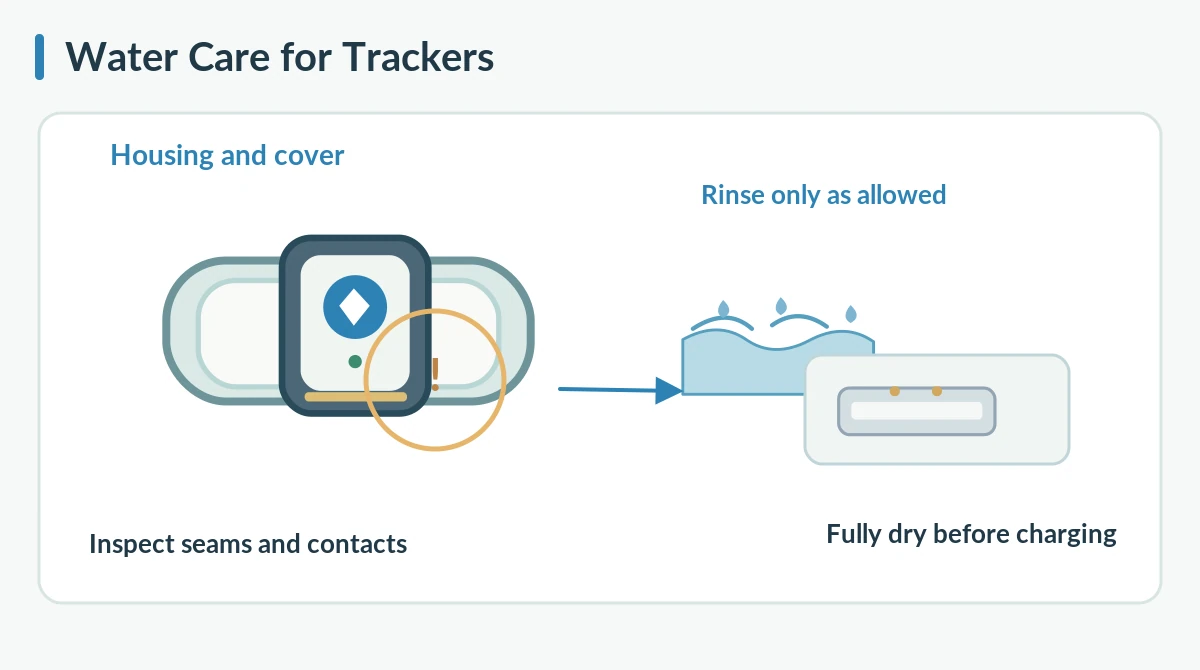
Rinse salt and grit according to instructions
Saltwater and sand can collect around clips, contacts, and buttons. If the maker allows rinsing, use fresh water after beach outings and gently wipe away residue. Do not assume the manual permits submerging every device for cleaning just because it survived rain. Avoid abrasive pads, strong solvents, and direct heat. Once clean, allow the tracker to dry with the port protected as the manufacturer directs. Examine the attachment strap too; sand can wear textile loops and snap fittings.
Never connect power to a wet port
Water near electrical contacts can damage the tracker or charger. Some models display a specific moisture warning; others do not. If you suspect a wet connector, stop and follow the manufacturer’s drying procedure before charging. Do not insert tissues or metal picks deep into ports, blast hot air at seals, or plug the cable in repeatedly. A tracker can look dry on the outside while droplets remain around a recessed connector. When unsure, ask the manufacturer rather than guessing.
Check attachment after wet play
Swims and rough outdoor play can shift a collar or loosen tracker mounts. Check the manufacturer-approved clip or sleeve once the pet is in a safe place. The tracker should not wobble against a sensitive spot, catch on a harness edge, or prevent a collar’s safety release. Do not tighten equipment excessively to prevent loss. For cats, breakaway collar safety matters even when the tracker is water resistant. If a mount has cracked or stretched, replace it.

Compare two realistic use cases
An occasional rain walk may call mainly for a secure splash-resistant housing and dry charging contacts. A dog that swims frequently needs a model specifically rated for its expected immersion, plus a durable attachment and a plan for rinsing. Neither use case makes the device a substitute for safe swimming supervision. Look beyond labels such as “rugged” or “outdoor-ready.” Demand clear manufacturer limits and instructions for salt, chlorinated water, and cleaning.
Recognize damage before the next outing
Stop using a tracker if it develops visible cracks, unusual heat, swelling, corrosion, failed charging, or a persistent moisture warning. Do not continue charging a compromised rechargeable battery. Ask the maker about service, replacement, and electronic waste disposal. After any hard impact, reassess waterproof claims rather than assuming seals survived unchanged. A wet tracker that cannot report location is not dependable for escape monitoring.
Plan a safe post-walk routine
When back inside, remove the device only after the pet is secure. Check the housing, wipe or rinse as permitted, and separate the charging cable from wet items. Place the tracker out of your pet’s reach to dry. Inspect the mount and check the app when it is ready. This procedure helps prevent the common mistake of plugging in a wet unit just because the battery indicator is low.

Choose plain-language support over hype
A trustworthy product page should state a protection rating, actual test limits, cleaning guidance, compatible attachments, and what to do after water exposure. Check whether the manufacturer has model-specific help, not just a generic waterproof badge. Favor realistic restrictions over absolute promises. Keep readable ID and current microchip details even if the tracker can withstand water, because devices can lose power, coverage or attachment.
How We Research
We compared official satellite-positioning guidance, manufacturer documentation for consumer trackers, and established veterinary information about backup pet identification. Features, prices, and service plans can change by model and country. We describe product-specific details as examples rather than promises that every tracker works the same way. We did not perform independent hardware tests or certify any device. Our source review covers October 2026. Learn about our editorial purpose on the About HubPet page.
Sources
Manufacturer guide: Water and Dust Resistance (accessed October 2026).
Indicator reference: Device LED Lights (accessed October 2026).
Support article: Charging Troubleshooting (accessed October 2026).
GPS.gov — GPS Accuracy (accessed October 2026).
Safety note: Keep the pet comfortable and supervise any attachment. Electronics, cables and small components must stay out of chewing reach. Never use an app notification to justify unsafe searches near traffic, water or private property. Consult a veterinarian about irritation or injury from equipment.
No. Protection depends on the manufacturer’s stated test conditions and model instructions.
Do not expect reliable GPS tracking underwater. Position updates may resume after the device surfaces.
Follow the model manual. Manufacturers sometimes recommend rinsing swim-rated devices with fresh water to remove salt and sand.
No. Dry the charging area according to the manufacturer’s guidance before connecting power.
Stop relying on the water-resistance claim and contact the maker about service or replacement.