
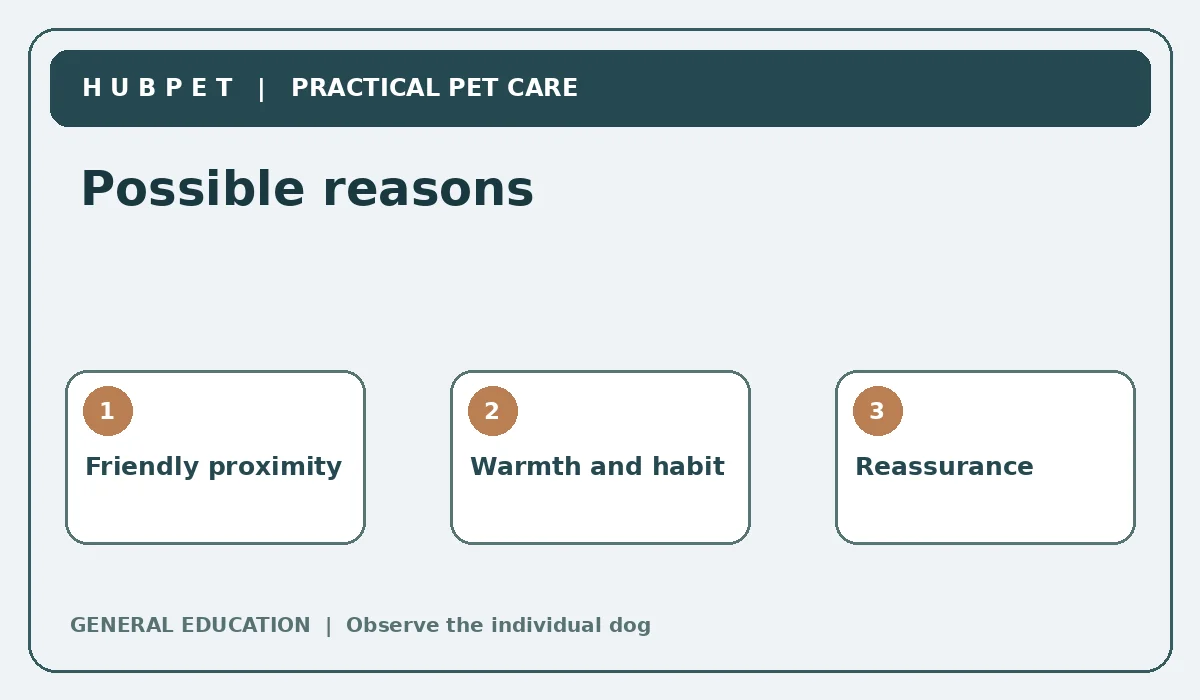
You sit down, and your dog promptly settles across your shoes. That familiar behavior can reflect companionship, warmth, habit, or a search for reassurance. It does not automatically mean the dog wants to dominate you or guard the room. The useful clues are what happens before the dog sits there and how freely it can move afterward. Notice body softness, environmental triggers, and whether the dog relaxes independently at other times. If clinginess appears suddenly with other changes, consult your veterinarian; see HubPet’s veterinary information disclaimer.
Proximity often reflects a social preference
Dogs commonly choose locations close to familiar people. Your feet are predictable: they remain in one place when you sit, and the dog can notice when you get up. For example, a dog may settle there during reading time and then move happily to its own bed. That pattern suggests comfort with the routine. However, affection is not the only explanation. A dog that continually blocks your steps or seems unable to rest away from you deserves a broader look at behavior and well-being.
Warmth and habit can also explain the choice
Warm shoes and a familiar chair can become an attractive spot in cooler weather. Some dogs repeat a location simply because it reliably leads to petting or gentle attention. Meanwhile, others settle by feet because the room offers few alternative resting places. Change one factor at a time: add a nearby washable mat or shift the chair slightly. Observe whether the dog chooses the new surface. This is a practical test of preference, not a scientific diagnosis of its motivation.
Read the rest of the dog’s body
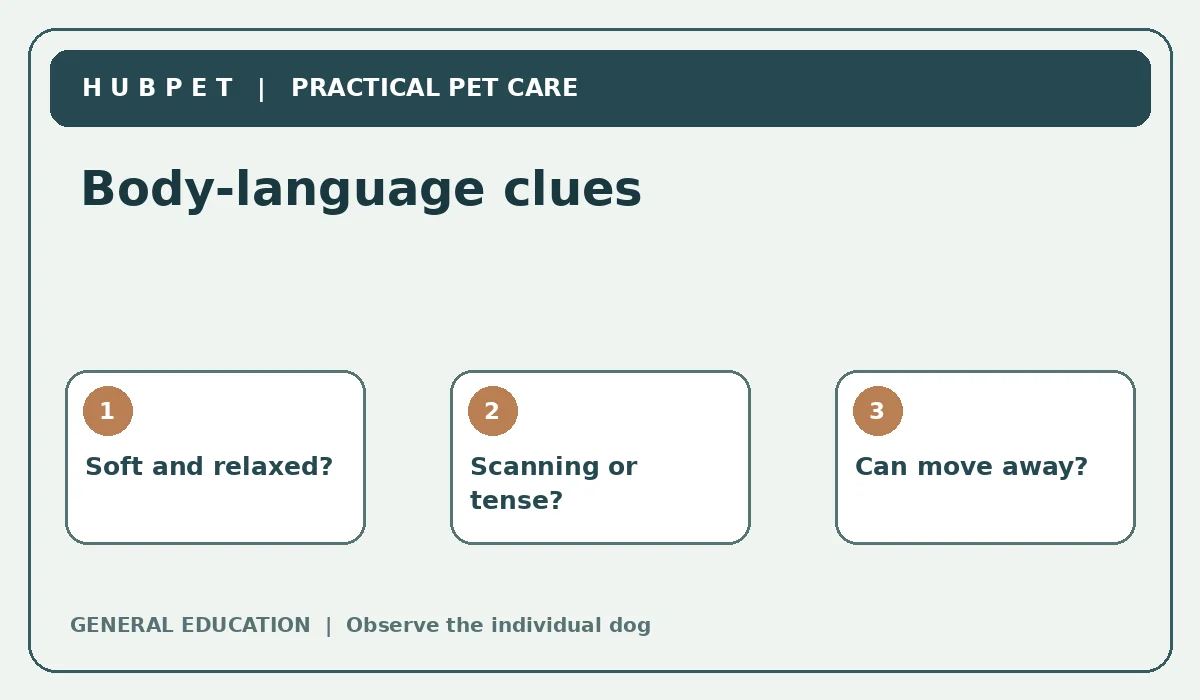
A loose posture, soft eyes, steady breathing, and easy transitions between spots usually differ from a tense, vigilant dog. Look for stiff muscles, head scanning, panting, or repeated startling during loud events. For example, a dog may press against your legs during thunder and then leave as the noise fades. That behavior could indicate a need for reassurance. Avoid declaring an emotional state from foot-sitting alone. Body language and context work together to tell a more useful story.
Avoid assuming it is dominance or control
The idea that a dog sits on feet to control its owner does not follow from the behavior itself. Dominance labels can encourage unnecessary confrontation when a dog may simply prefer closeness. Instead, ask whether the situation creates a practical problem: tripping, blocking a wheelchair, or conflict between pets. Address those risks directly. Teach a comfortable alternate position with rewards and use consistent household cues. Do not push or kick a resting dog to prove authority; startling increases uncertainty.
Respect consent during close contact
Some dogs want proximity without touch. A dog that settles on your slippers may still move away if you reach for its head. Allow that choice. You can pause petting and see whether the dog leans back for more. Also give the dog room when standing from the chair, especially if movement surprises it. If children share the room, teach them not to step over or hug the dog while it rests. A clear escape path is more important than forcing cuddles.
Give an anxious dog practical support
When thunderstorms, visitors, or unfamiliar settings trigger close contact, start by reducing the pressure. Move to a quieter space and let the dog rest near you if that helps. However, proximity alone may not resolve persistent fear. Watch for trembling, inability to eat, panic, or frantic following. A veterinary assessment can rule out health issues and guide safe behavior support. Reward-based training and predictable routines help dogs learn, while punishment for seeking closeness can worsen distress.
Teach an alternative when feet become a trip hazard
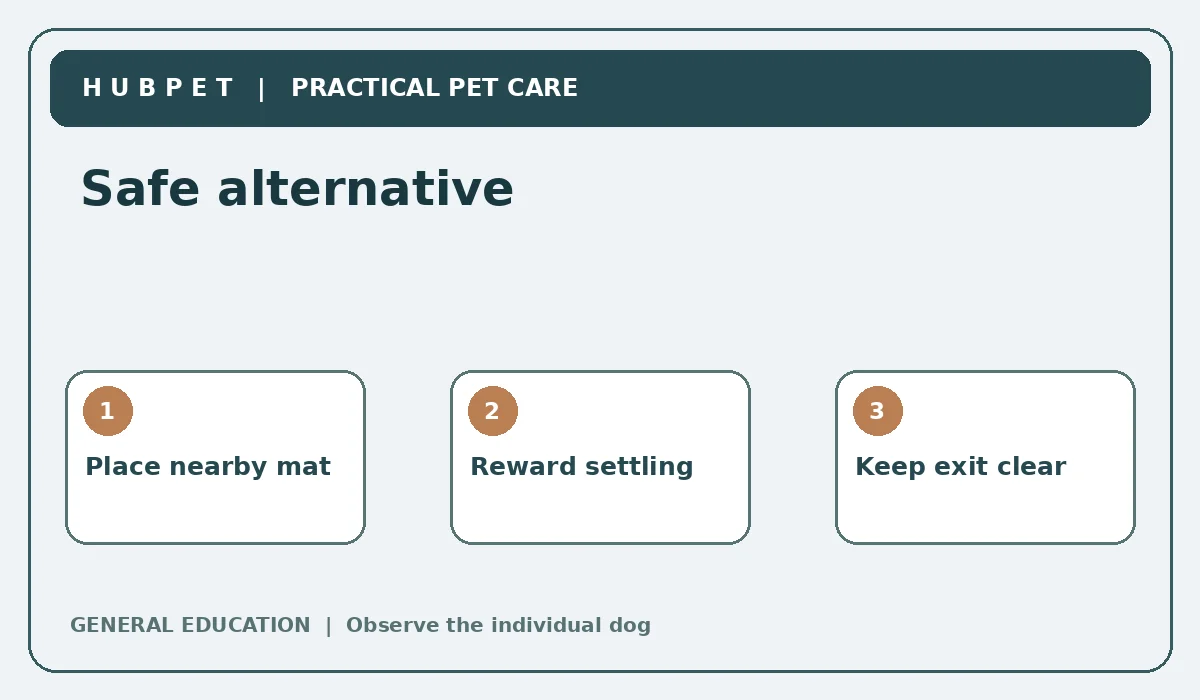
Place a comfortable mat beside your chair. Reward the dog for looking at it, stepping onto it, and resting there in short stages. Next, add a gentle cue only after the dog understands the task. Practice when the room is quiet, not while guests crowd the doorway. You can still welcome closeness without allowing a dog to lie directly under moving feet. Choose a mat position that gives the dog visual contact and an easy exit. Keep sessions brief and pleasant.
Consider multi-dog and resource conflicts
In a home with several dogs, a favorite resting spot may become contested. Watch for blocking, freezing, hard staring, or growling near your chair. Do not punish a warning growl; it provides information about discomfort. Instead, increase space and provide multiple desirable resting areas. Reward calm movement between spots and avoid making access to you a competition. If conflict escalates or a dog threatens to bite, consult a veterinarian and qualified behavior professional for an individual safety plan.
Decide whether anything needs changing
A relaxed dog that occasionally sits at your feet may need no intervention. If someone could trip, teach a nearby alternative and make it worth choosing. If the habit appears during stress, focus on the underlying trigger. Track changes when the behavior becomes unusually intense or paired with health symptoms. Most importantly, avoid turning a pleasant routine into a power struggle. Your goal is a dog who can enjoy closeness and still feel comfortable resting independently when necessary.
How We Research
Our editorial team reviewed veterinary and animal-welfare guidance on dog body language, everyday routines, and safe handling. We compared practical owner observations with the limits of behavioral interpretation. These materials support general education; they do not allow us to diagnose pain, anxiety, or other conditions from a single behavior. We did not test commercial products or claim endorsement by any organization. Learn more About HubPet and ask your veterinarian about new or severe symptoms.
Sources
American Kennel Club: Why Does My Dog Sit on My Feet?. Reviewed October 27, 2026.
VCA Animal Hospitals: Signs Your Dog Is Stressed. Reviewed October 27, 2026.
AVSAB: Reward-Based Training Methods. Reviewed October 27, 2026.
Often it reflects closeness, but warmth, habit, or reassurance may also play a role. Consider the situation.
No. The behavior alone does not establish dominance and does not call for confrontation.
The dog may be seeking security during noise. Provide a calm space and ask a veterinarian if fear becomes severe.
Reward resting on a nearby mat and practice a gentle move-to-mat cue when the environment is quiet.
Contact a veterinarian if it appears suddenly or with pain, confusion, appetite changes, or marked distress.