
Cat GPS trackers have a different fit problem from most dog trackers. A small cat may climb through narrow gaps, groom around its collar, rest under furniture, and squeeze beneath fences. A tracking device that seems compact can still catch, rub, or disrupt normal movement. Location technology also has limits when a cat is indoors or near dense buildings. This guide explains the trade-offs before purchase. Read our veterinary disclaimer for health or skin concerns.
A GPS tracker is not the same as a microchip. The American Veterinary Medical Association states that an implanted chip carries identification data rather than broadcasting a location. For household prevention, see our balcony and window safety guide. This article focuses instead on what cat guardians can realistically expect from a wearable tracking device.
First ask whether a wearable device suits this cat
Consider your cat’s size, sensitivity to collars, scratching habits, and whether it regularly explores furniture or dense vegetation. A tracker should not be a reason to let an indoor cat roam unsecured. If your cat refuses a collar or shows repeated distress, prioritize a secure environment and permanent identification instead of insisting that every cat wear electronics.
Watch for rubbing, loss of fur, head shaking, hiding, or a changed gait during a brief supervised fit check. A cat that is comfortable for one minute may still react after hours. Never continue use while skin is irritated, and do not leave a new collar-tracker combination on an unsupervised cat without a careful introduction.
Examine collar release and snagging risks
Outdoor cats can become caught on branches, fences, or furniture. Some cat-appropriate quick-release collars separate under specific loads, but attaching a device can change weight and behavior. Check the tracker manufacturer’s stated compatibility with quick-release collars and follow the instructions of both products.
A secure, non-releasing mount can retain a tracker but may increase entrapment risk in some contexts; a releasing mount may be lost with the collar. There is no universal zero-risk setup. Never modify a safety buckle, tie a tracker directly to a cat, or attach it to a harness for unsupervised outdoor roaming.

Compare real device size, weight, and projection
Look at the complete dimensions of the housing plus its clip rather than a cropped marketing photograph. The protrusion under a cat’s chin may be more annoying than the weight alone. Consider how the unit rests when the cat crouches, eats, squeezes through a doorway, or sleeps curled up.
During a supervised trial, check that the buckle sits correctly and the device does not rotate into the throat. Inspect any sharp plastic corners or exposed screws. A tracker sized for a large dog may not suit a small adult cat despite a shared product listing. Avoid using a heavy case to improve protection if it compromises comfort.
Know how GPS, mobile networks, and Bluetooth differ
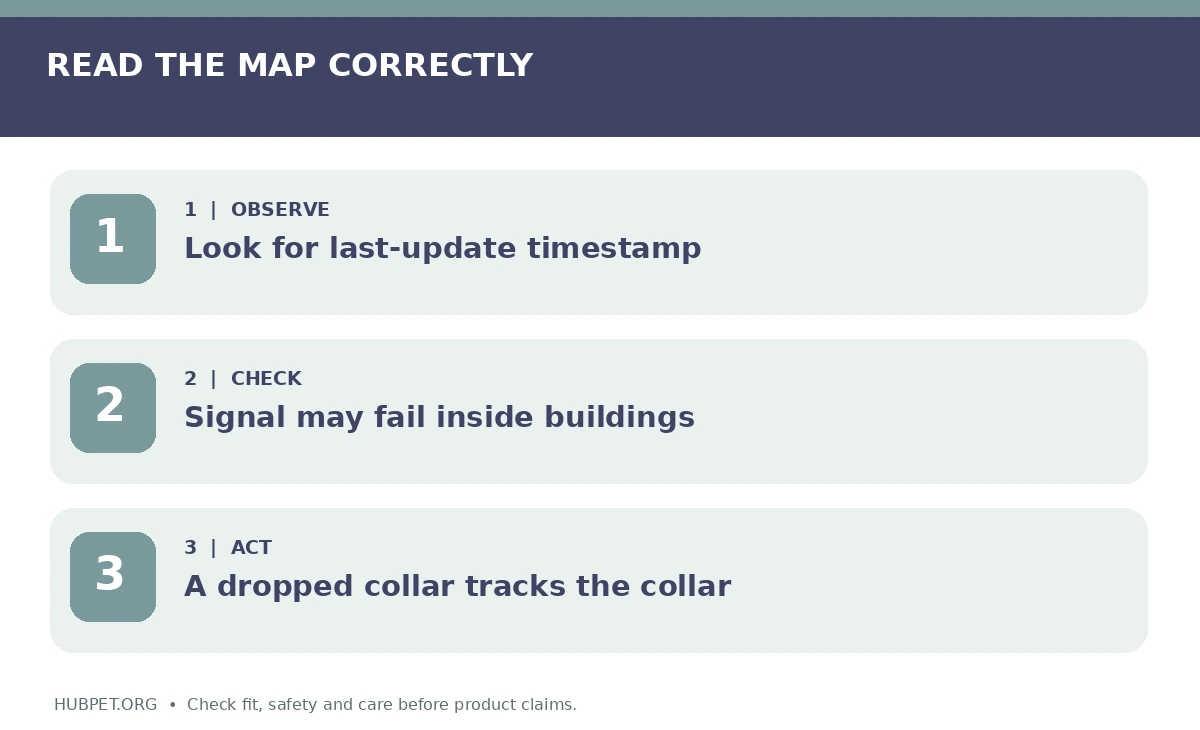
GPS or another satellite-navigation system estimates position; a separate radio or cellular link often sends the result to your phone. A disconnected tracker may have an old location even if its satellite receiver still works. Bluetooth item trackers may depend on compatible nearby devices; do not assume they deliver live GPS service.
Look for timestamps, signal status, and clear explanations of what the app does when a fix is unavailable. Under roofs, thick walls, or dense tree cover, reception can vary. Treat a map pin as a clue with uncertainty, not proof that your cat is standing on that exact patch of ground.
Verify coverage before paying for a plan
Find official information for the country, cell networks, and neighborhoods where the cat may travel. Outdoor coverage maps cannot predict every basement, garage, roofline, or alley. Ask whether notifications and recent locations continue while roaming and what happens after coverage returns.
Some services require subscription activation before tracking works. Check trial periods, renewal prices, cancellation policies, and whether a lost-collar replacement requires another plan. A device with inexpensive hardware may cost more over time. Compare those real terms with the value of a reliable fit and useful recent location history.
Read battery claims in the context of update rates
Battery life depends on how often a tracker checks or transmits its position and how much energy the radio needs. A long standby claim may assume very little live tracking. Find out what happens to update frequency after the battery drops below a threshold and whether the app warns you early enough to recharge.
Set a charging schedule you can maintain. Removing the collar to charge can leave a temporary gap in tracking; ensure ID and home containment do not rely on the electronic device. Check whether replacement chargers and batteries remain available. Keep all charging cables away from a cat that chews strings.
Interpret geofences as alerts rather than containment
A virtual boundary can notify you when a reported location crosses a set area, but the cat may already have moved. Delays are possible when connectivity is poor or the service updates infrequently. Choose a feature that shows the age of a report so you can distinguish a current alert from a stale event.
Test alerts on yourself by moving the tracker around a secure home or yard while your cat stays safe indoors. Do not intentionally release a cat to test the boundary. Use physical containment and secure doors as the primary strategy for an indoor cat, not software warnings alone.
Plan for a lost tracker separately from a lost cat
A properly releasing collar can save a cat from entanglement, yet it may leave the tracker on a branch or in a garden. That location is then the device’s position, not necessarily the cat’s. A detached-collar alert, if available, may help but cannot remove this ambiguity.
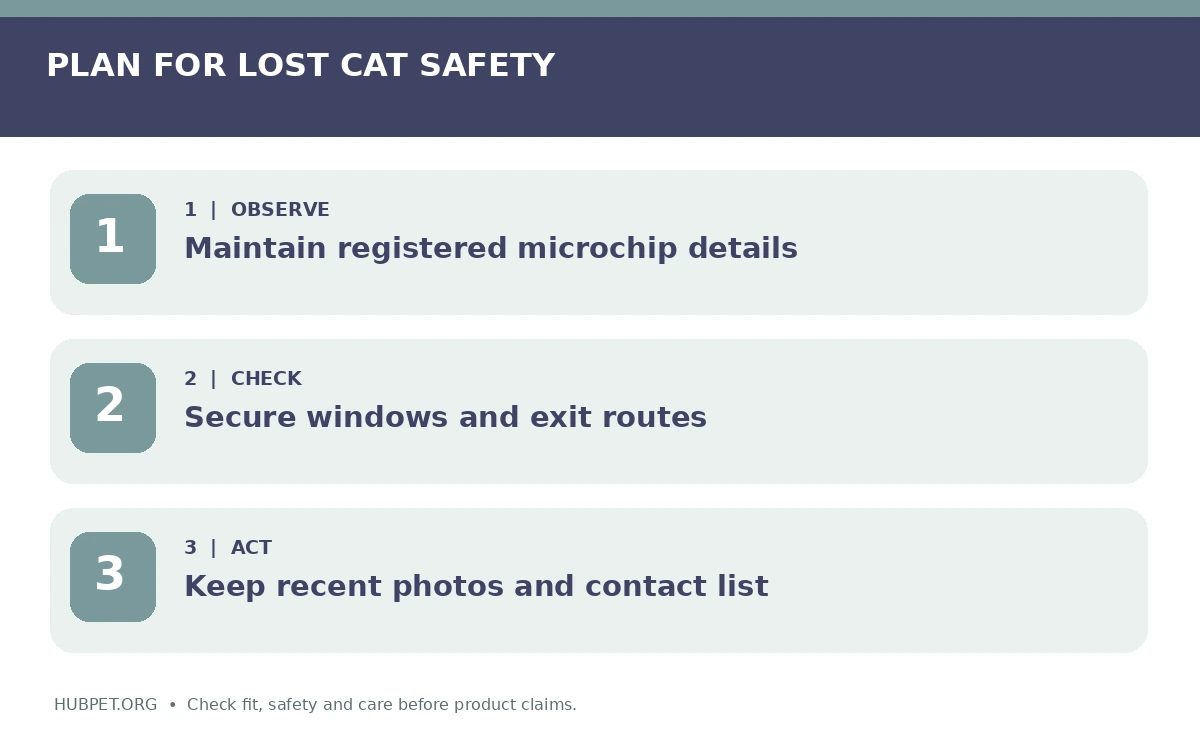
Keep your cat microchipped with up-to-date registry details and maintain recent identifying photographs. If a cat disappears, contact local shelters and veterinarians and follow a broader search plan. Our guide to sudden hiding explains why a cat may stay close yet remain difficult to spot.
Protect household location privacy
A tracking history may disclose the address of your home, familiar paths, and a pet sitter’s routine. Review how the app stores data, who can view it, and whether account-sharing invitations expire. Use a unique password and enable multifactor authentication when offered. Remove access when a caregiver relationship ends.
The Federal Trade Commission advises shoppers to inspect privacy practices for connected products and apps. Avoid posting screenshots that expose your street or live position. Check whether the service allows history deletion and shares location data for purposes beyond the tracker’s core function.
Make the buying decision with a calm trial plan
Compare collar compatibility, device dimensions, coverage, update timestamps, subscription terms, and return conditions. Then test the unit in a controlled setting before relying on it. Introduce the collar gradually with treats and voluntary pauses. Remove the equipment if the cat tries persistently to escape it.
For many cats, the best starting investment is better window security, enriched indoor space, and registered identification. A tracker can add useful information for an appropriate cat, but it cannot replace responsible supervision or make outdoor hazards disappear. Choose the entire system, not just a glowing map animation.
How We Research
We prepared this guide using animal welfare guidance and practical questions owners can ask about size, materials, supervision, fit and safe use. We did not purchase or independently test products, and we do not rank brands or claim veterinary endorsement. On October 26, 2026, our editorial review considered these sources. Learn more about HubPet and our editorial approach. This material does not replace advice for a specific animal from its veterinarian.
Sources
American Veterinary Medical Association: Microchipping: FAQs for Pet Owners. Accessed October 26, 2026.
Federal Trade Commission: Online Shopping. Accessed October 26, 2026.
Cats Protection: Our Guide to Indoor Cats. Accessed October 26, 2026.
No. GPS trackers can lose their attachment, power or network link. Microchip registration offers permanent identification if a scanner finds the cat and the contact information stays current.
Not necessarily. Compare complete size, weight, mounting method and manufacturer compatibility with cat-appropriate release collars. Observe comfort before considering routine use.
Indoor satellite and network reception can be unreliable. Check product limitations and the last-update timestamp rather than assuming a map pin shows the current room.
Yes. A release mechanism can allow a collar and tracker to detach, which may reduce certain snag hazards but means the tracker then reports its own location, not the cat’s.
No. A tracker does not prevent traffic injury, encounters with other animals, disease exposure or getting trapped. Containment and identification remain essential.