
Dog dewclaw trimming needs its own check because this nail often sits higher on the leg and may not wear down against the ground. Some dogs have front dewclaws, some also have rear ones, and anatomy varies. The safest routine begins with locating each claw and checking that the surrounding skin is comfortable before considering a small tip trim. This guide does not cover dewclaw removal or treatment of a damaged toe. If you find an embedded claw, swelling or a painful attachment, contact a veterinarian and see HubPet’s veterinary disclaimer.
Find every dewclaw before you start
Feel along the inner side of each front leg above the main paw, then inspect the back legs as well. By contrast, dewclaws can be positioned at different heights and may have a firm or more mobile attachment. Some dogs have multiple rear dewclaws. Do not assume a claw is absent simply because you cannot spot it through a thick coat. Separate the fur gently with your fingers and look from more than one angle. Support the dog on a stable surface so you are not pulling a leg sideways. If you cannot determine what is nail, skin or an abnormal growth, ask your veterinarian to examine it.
Understand why dewclaws can overgrow
Unlike the main weight-bearing claws, many dewclaws touch the ground rarely or not at all during normal walks. For example, they can keep growing while the other nails gradually wear on rough surfaces. A long curved tip may snag on bedding or become close to the skin. That does not mean every dewclaw needs the same trim length or schedule; nail growth differs from dog to dog. Inspect them during routine paw care and after activities that may catch a claw in brush or fabric. Remember that some dewclaws contribute to grip and movement, so do not treat the entire digit as a disposable accessory.
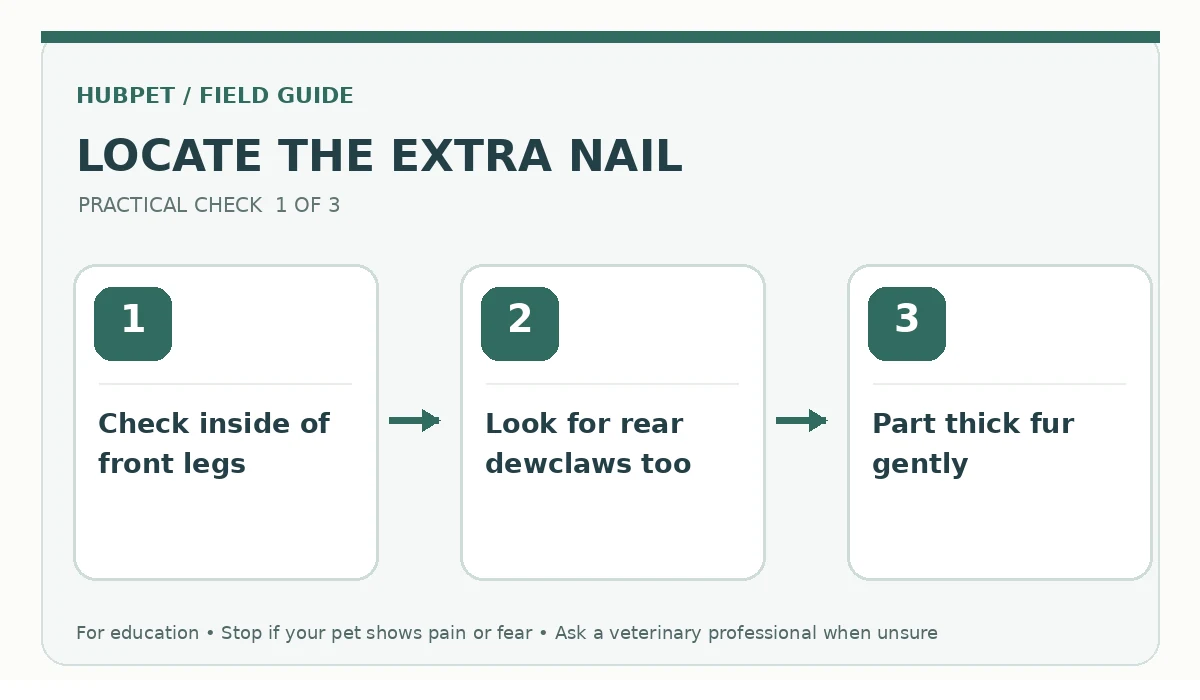
Check the skin and attachment first
Look for redness, a broken outer nail, bleeding, discharge, unusual warmth or a tip pressing into the surrounding skin. However, watch whether the dog suddenly guards that foot or licks the area excessively. Do not attempt to cut away a claw that has already punctured the skin; such cases need a veterinary assessment and may involve infection or pain. A nail that wobbles after trauma can also need professional care. If the area looks healthy but the tip is long, move on to handling and visibility checks. Taking a close photograph for your veterinarian may help explain an unusual shape, but it cannot replace an examination.
Practice a comfortable leg position
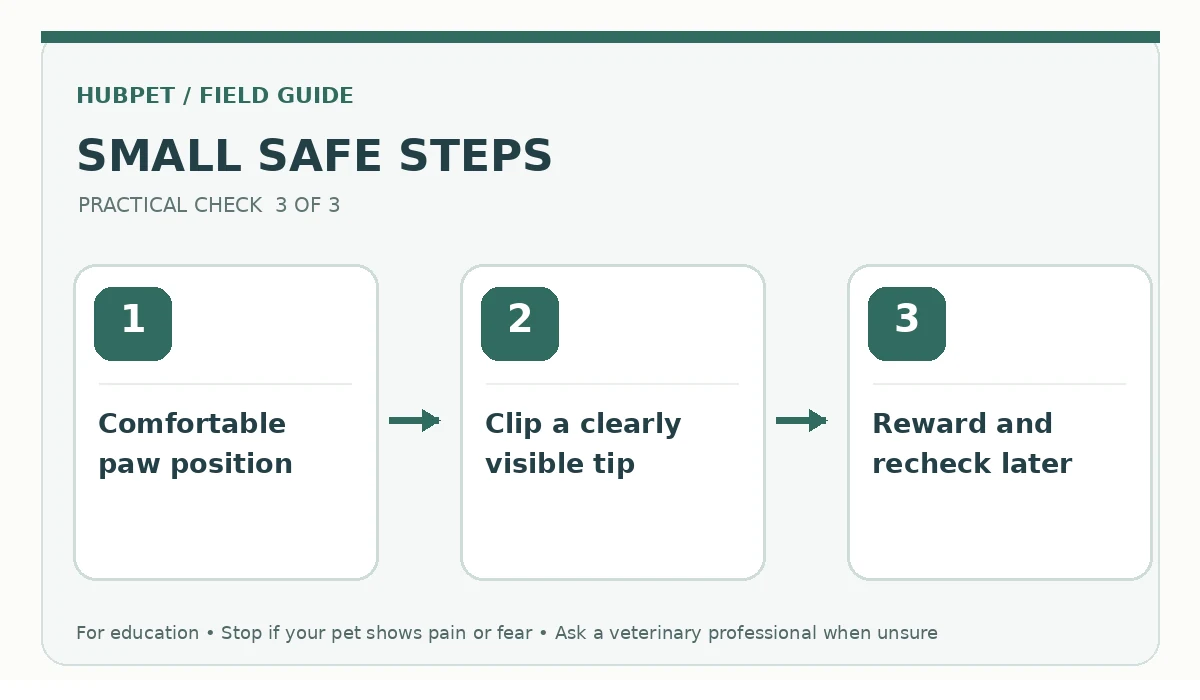
Ask the dog to settle in a familiar place with traction under its feet. In addition, touch the shoulder or leg first, then gently slide a hand toward the dewclaw while offering a reward. Try brief lifts only within the dog’s natural range of motion. Some dewclaws sit where you cannot see the clipper without twisting the wrist; reposition yourself instead of pulling the dog’s leg to an uncomfortable angle. Ask a helper to offer treats while you inspect, but never wrestle the dog into position. When a dog stiffens, growls or pulls away, give it a break and return to a slower plan.
Locate the safe outer tip
A pale dewclaw may show a pink quick near its base, while a dark one hides that tissue. Meanwhile, even a well-lit claw can curve sharply around the pad, so the visible tip is not always a safe long segment to remove. Identify only a small hard portion clearly beyond any quick you can see. Use a sharp, appropriately sized pet clipper and make a cautious cut rather than one ambitious bite. Stop if the claw is very curled, obscured by fur or unusually thick. For overgrowth, a veterinary nurse or experienced groomer can help determine the safe stages of reduction.
Choose a controlled clipping motion
Position the clipper so its head does not pinch skin between the handle and blade. Therefore, extend the paw only enough to see the dewclaw and keep the tool steady; a side-on approach may suit a high-mounted claw better than reaching beneath the paw. Remove a tiny tip and check the cut surface before considering another. Never yank on the claw to move it into view. If the dog pulls away after the first cut, end the session on a reward. A short successful trim is better than forcing a second cut while visibility has deteriorated. Keep styptic powder handy as a precaution.

Make room for individual anatomy
Dewclaws differ in shape, attachment and wear. Instead, some dogs have a short firm digit and others have a flexible-looking nail that needs a different handling angle. Do not assume you can safely shorten every one to match the main nails. Pay extra attention to older dogs, dense coats and animals that dislike paw handling. If a dewclaw seems to grow toward the pad repeatedly, ask your veterinary team about an appropriate check frequency rather than waiting until it snags. Never try to remove a dewclaw at home. Removal is a separate medical and welfare decision for a qualified veterinarian.
Check again after active outings
Running through shrubs, climbing, rough play and narrow gaps can catch long nails, including dewclaws. After an outing, calmly inspect each dewclaw for snagging, cracks or fresh sensitivity. If the dog suddenly limps or the claw bleeds after a snag, stop normal grooming and contact a veterinarian. Next, routine inspection should be brief and familiar, not an uncomfortable full grooming appointment each time. Record when you last trimmed each dewclaw because their wear may not follow the rest of the paw. Keep bedding free of frayed loops that could catch on any nail.
Keep a practical dewclaw care checklist
Start by checking location and skin, then observe whether the claw is curling, snagging or growing near the pad. Next, verify the dog accepts the proposed handling position, and use good lighting plus a sharp tool. If a safe tip is obvious, remove only a small amount, reward and stop when the dog asks for space. Seek professional help for injury, embedded tips, unusual anatomy or strong fear. Wash and dry the clipper after use, put it away safely and note when to recheck. A useful dewclaw routine is based on inspection rather than a fixed number of days.
How We Research
Our editorial review compared veterinary and animal-welfare guidance on healthy claws, handling tolerance, tools, and reasons to seek professional help. Practical owner decisions took priority over product claims. We did not conduct controlled tool trials, test specific brands, or provide diagnoses. Guidance may vary by age, lifestyle, anatomy, and stress response; ask a veterinarian about individual needs. We last reviewed the sources on October 27, 2026. Read about our editorial process on the About HubPet page.
Sources
VCA Animal Hospitals: How to trim a dog’s nails at home. Accessed October 27, 2026.
ASPCA: Dog grooming tips. Accessed October 27, 2026.
American Kennel Club: At-home dog grooming and nail care. Accessed October 27, 2026.
Many dogs have front dewclaws, but rear dewclaws and their attachment vary. Check every leg rather than assuming all dogs have identical anatomy.
Many dewclaws have little contact with the ground, so walking does not wear them down the way it may wear weight-bearing claws.
Only if the tip is clearly separate from skin and you can see a safe cutting margin. A claw pressing into skin needs veterinary attention.
Not necessarily. Anatomy and ground contact differ. Use the actual tip, quick visibility and skin clearance rather than matching lengths.
No. Trimming a tip and removing a digit are completely different procedures. Never attempt removal or treatment of a damaged dewclaw at home.