
This article provides general vehicle-accessory and pet-care information, not a crash-test certification or veterinary advice. Follow your vehicle and restraint manufacturer instructions. For individual pet health or travel concerns, consult your veterinarian. Read our veterinary disclaimer.
A truck rear bench may have a fold-up cushion, split backrest, removable headrests, and belt receivers in unexpected positions. A one-piece dog seat cover can protect fabric yet interfere with these important features. The goal is not simply the widest waterproof blanket: it is a cover that fits the exact rear-seat arrangement while leaving restraints and essential seat mechanisms fully functional. This guide is for cab seating, not for transporting dogs loose in an open pickup bed. The pet’s safety restraint always comes first.
Identify the cab and rear-bench layout
Determine whether your truck has an extended cab, crew cab, a full-width fixed bench, or separate folding sections. Measure the usable cushion width, cushion depth, and backrest height with seats positioned for travel. Check headrest post spacing and the location of top tether hardware, if present. A photo of the seat from an open rear door helps reveal raised floor humps and protruding belt anchors. Do not rely on a product photo showing an unrelated SUV bench as proof of compatibility.
Trace every seat-belt receiver and buckle path
Set the seat cover on the empty bench before threading or fastening it. Identify all belt buckle openings and confirm they align without pulling fabric taut across the buckle receiver. Avoid narrow cutouts that force a belt to twist or rub against a hard edge. Check that occupied passenger seating positions keep their normal belt operation. Never attach a pet restraint to a seat-cover loop unless the restraint specifically authorizes that connection. Upholstery straps do not become crash-rated attachment points because they look sturdy.
Consider independently folding seat sections
Some trucks lift one rear cushion to create a cargo platform or have asymmetrical split backrests. A full-width cover may prevent a seat from returning to its locked position. Choose sectional covers if you regularly change the cab layout. After any adjustment, verify seatback latches are fully engaged and the upholstery does not obstruct them. Never trap fabric inside a mechanical hinge. A removable split-panel system may be less convenient to wash but more practical when passengers use one side of the bench.
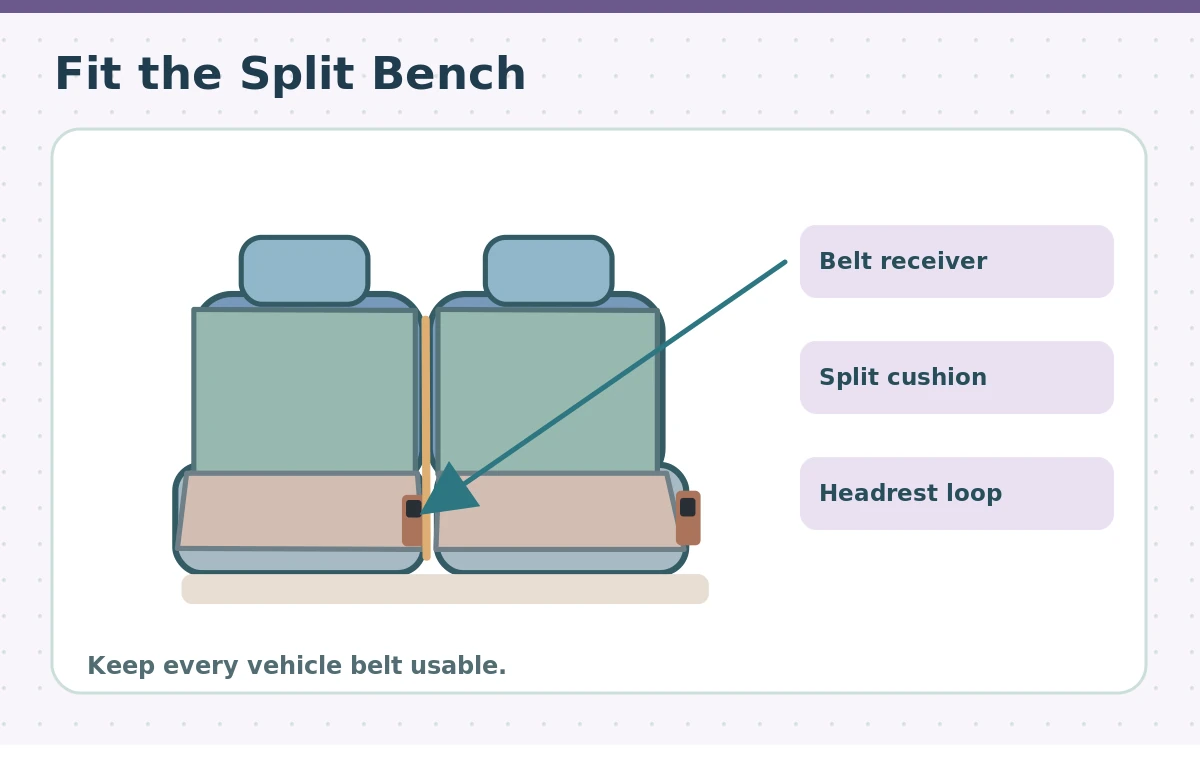
Check headrest loops and panel tension
Most covers hang from headrest loops or straps, but trucks with unusual headrest shapes may need model-specific fittings. Tighten only to the tension required by the product instructions; overstretching can bend loops or shift the lower panel. Watch for dangling straps that a dog might chew. A cover that sags into the floor can trip a passenger getting in and out. Do not add improvised bungee cords to compensate. Reevaluate the size or attachment style if corners pull away.
Choose grip and padding for realistic use
A textured backing may resist everyday sliding, especially on smooth seat upholstery. Thick quilting can catch fur but may trap moisture or make it harder to see belt openings. A waterproof membrane may protect the seat from damp paws, although needle holes and zipper seams can still leak. Check if the cover is permitted on leather or delicate seat material. Some non-slip backings can leave marks in heat; test only where the vehicle upholstery manufacturer allows. Never depend on padding for collision protection.
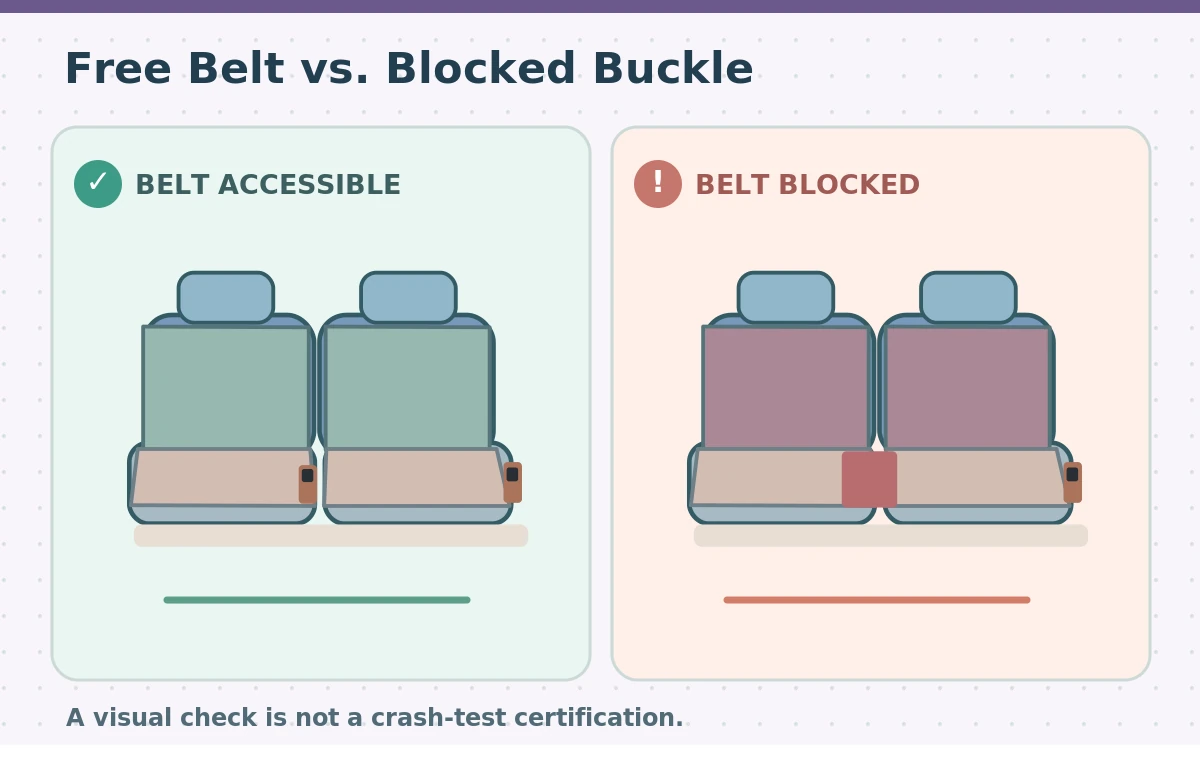
Keep doors, airbags, and safety devices clear
Truck rear seats can include side airbags or integrated safety hardware. Read the owner’s manual before covering any seatback sidewall or attaching straps around trim. Do not cover child restraint labels, tether points, seat-fold levers, or emergency release hardware. The AVMA advises secure pet travel away from front-passenger airbags. If a cover interferes with an airbag deployment zone or belt route, remove it. A decorative fit does not justify altering the safety features of the cab.
Understand what a hammock does not do
A seat hammock can bridge the back bench and the front-seat backs, protecting the footwell. It does not provide reliable collision restraint unless a manufacturer offers specific tested evidence and compatible installation instructions. A dog must still have an appropriate separate harness or secured crate. Never tighten a hammock around front-seat mechanisms so the driver cannot adjust their seat safely. Consider a simple fitted bench cover if hammock straps interfere with traffic flow or a passenger entry route.
Plan for mud, wet coats, and easy removal
After a muddy trip, lift the cover carefully without shaking hair and grit into belt receivers. Vacuum or brush dry debris outdoors, then wash or wipe according to the care label. Let the cover dry fully before reinstalling, particularly when a membrane traps moisture near leather or fabric. Check stitching around seat-belt slots and headrest loops. Replace material when openings tear or hardware cracks. A removable mat for the rear floor may protect a different surface without altering the bench arrangement.
Perform the complete stationary function test
With the truck parked, install the seat cover and check every seat belt, buckle, door, headrest, and seat-fold mechanism that will be used. Confirm the pet restraint fits and connects exactly as instructed. Ask a passenger to enter and exit without stepping on a loose flap. Adjust the cover only while stationary. If a buckle becomes hard to reach or a belt retracts poorly, stop and refit the cover rather than driving with the problem. Repeat after laundering because fabric tension can change.
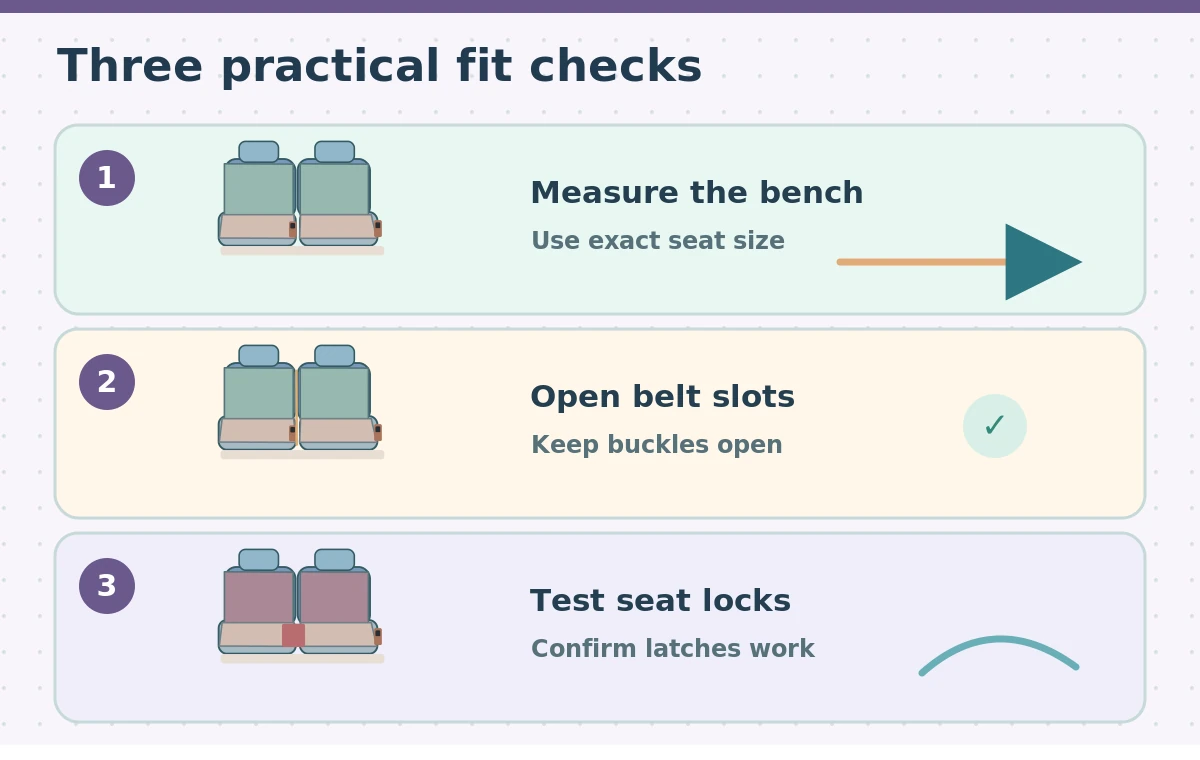
Avoid treating pickup-bed travel as rear-seat travel
The open cargo bed exposes pets to ejection, weather, debris, and serious injury. AVMA and AKC warn against transporting loose dogs in an open pickup bed. This guide covers the enclosed passenger cabin only. If there is no safe, compatible restraint configuration for your dog in the cab, make different travel arrangements. A truck bench cover is a cleaning accessory, not a certification of travel safety or a reason to remove normal restraint equipment.
How We Research
HubPet compared recommendations from veterinary and animal-welfare organizations, along with principles of vehicle compatibility and ordinary accessory upkeep. We distinguish upholstery protection, sun reduction, and surface grip from devices intended to restrain a pet during a vehicle crash. Specific routing, fit, allowable attachment points, and safety equipment depend on the vehicle and product manuals. This article does not independently crash-test accessories or certify any brand. Our original illustrations demonstrate inspection concepts, not a universal vehicle installation. Read more about our editorial research approach.
Sources
AVMA: Traveling with your dog or cat — source guidance on secure pet travel, ventilation, or restraint limitations.
ASPCA: Travel safety recommendations for pets — source guidance on secure pet travel, ventilation, or restraint limitations.
Merck Veterinary Manual: Traveling by Car With Pets — source guidance on secure pet travel, ventilation, or restraint limitations.
AKC: Dog Car Safety Training — source guidance on secure pet travel, ventilation, or restraint limitations.
American Red Cross: Pet Travel Safety — source guidance on secure pet travel, ventilation, or restraint limitations.
No. Rear-bench width, fold-up sections, headrests, and belt receivers vary; measure your exact seat configuration.
Yes. Misaligned openings can interfere with normal use. The buckle and belt must remain fully accessible.
No, not by default. A hammock protects upholstery but should not replace a suitable tested pet restraint.
Never transport a dog loose in an open pickup bed. Choose safe cabin travel with an appropriate restraint.
Only if the cover permits each required section to fold and lock fully without trapping fabric or blocking hardware.