
A dog crate water bowl solves a practical problem: a floor dish may tip when a dog turns around. However, a clipped or bolted bowl introduces its own questions about reach, hardware, and space. A secure mount must not snag fur, shift against a crate wall, or block the dog’s ability to lie down. This guide compares attached bowls, removable cups and travel trays, with a step-by-step fit check. VCA’s crate-training guidance discusses offering water during crate use, while other needs vary by age and medical situation. If a veterinarian has provided specific water instructions, follow those instead. See the HubPet veterinary disclaimer for the site’s care boundaries.
Choose a bowl for the crate, not only the dog
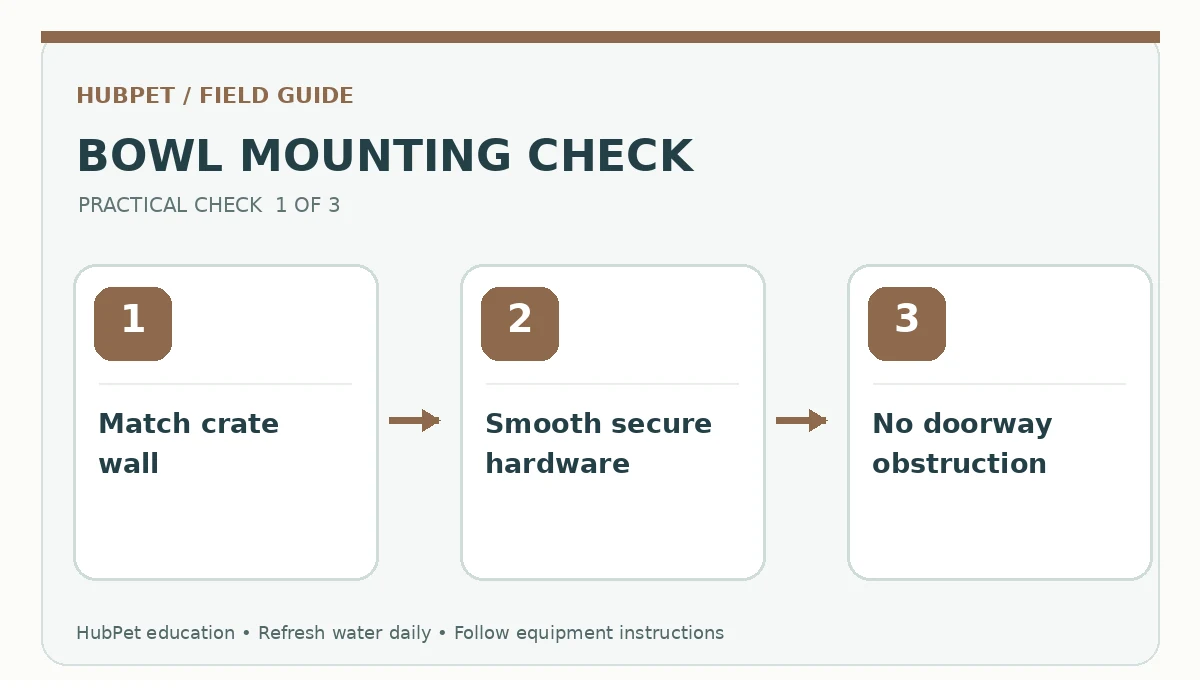
Start by noting the crate’s bar spacing, wall type and usable interior space. A hook designed for metal wire may not attach safely to solid plastic or fabric. A bolted bracket needs a smooth backing that will not protrude where the dog sleeps. Measure where the dog’s shoulders and head rest when it stands normally. Then position the drinking rim low enough to reach without stretching. Avoid crowding the doorway or resting surface. A narrow crate may not have a safe mounting location at all. In that case, a larger appropriate crate or different supervised watering setup may be necessary. Hardware fit matters more than marketing names.
Compare clipped cups and fixed brackets
Clip-on cups often detach for washing, but a playful dog may lift them off if the latch is weak. Screw-on brackets may feel sturdier, yet loose nuts or sharp exposed threads create hazards. Read the maker’s mounting limits and test the attachment with an empty bowl first. Next fill it partly and gently imitate the nudges a dog makes when drinking. The basin should stay level and the bracket should not twist the crate wall. Inspect all exposed edges with your hand before introducing the dog. Never use improvised wire ties that leave sharp ends or small chewable pieces near the animal.
Check drinking posture at normal body height
A bowl placed high to prevent spills can become uncomfortable for a puppy or smaller dog. Conversely, a cup close to bedding may soak blankets during enthusiastic drinking. Watch the dog approach with the crate door open. The dog should reach the water without twisting its neck sharply or stepping on hardware. If the cup sits behind a resting dog, reposition it so access remains clear. A senior dog with arthritis may need a different mounting height and easier movement. Avoid making posture assumptions from breed alone. The aim is voluntary relaxed drinking, not using an elevated bowl as a training exercise.
Prevent spills without restricting water
No bowl is completely spillproof for every dog. A deep cup may hold water during movement, but its shape can make cleaning or access harder. A splash guard can reduce sloshing but may catch food residue or become a chew target. Test the bowl while the dog moves naturally and check whether the base remains dry. If water routinely soaks the bedding, replace wet fabric and reconsider placement. Do not reduce drinking access simply to keep laundry dry. For a dog with special needs, seek veterinary advice about water availability and safe confinement. Spills are a design problem to solve, not evidence that the dog should go without water.
Keep sharp and chewable parts outside reach
Examine screws, nuts, plastic tabs and the outer hook. A persistent chewer may loosen a bracket that seemed secure during installation. Therefore, inspect the mount during every refill. Avoid hanging the bowl near collar buckles or harness straps that could snag. Many caregivers remove collars during unsupervised crate time when appropriate for the animal and environment, but discuss identification and safety needs with your veterinarian or trainer. Cracked cups and sharp rims need replacement. If the dog bites the bracket repeatedly, switch to another setup and work on crate comfort rather than adding stronger hardware without addressing the cause.
Wash and refill on a regular routine
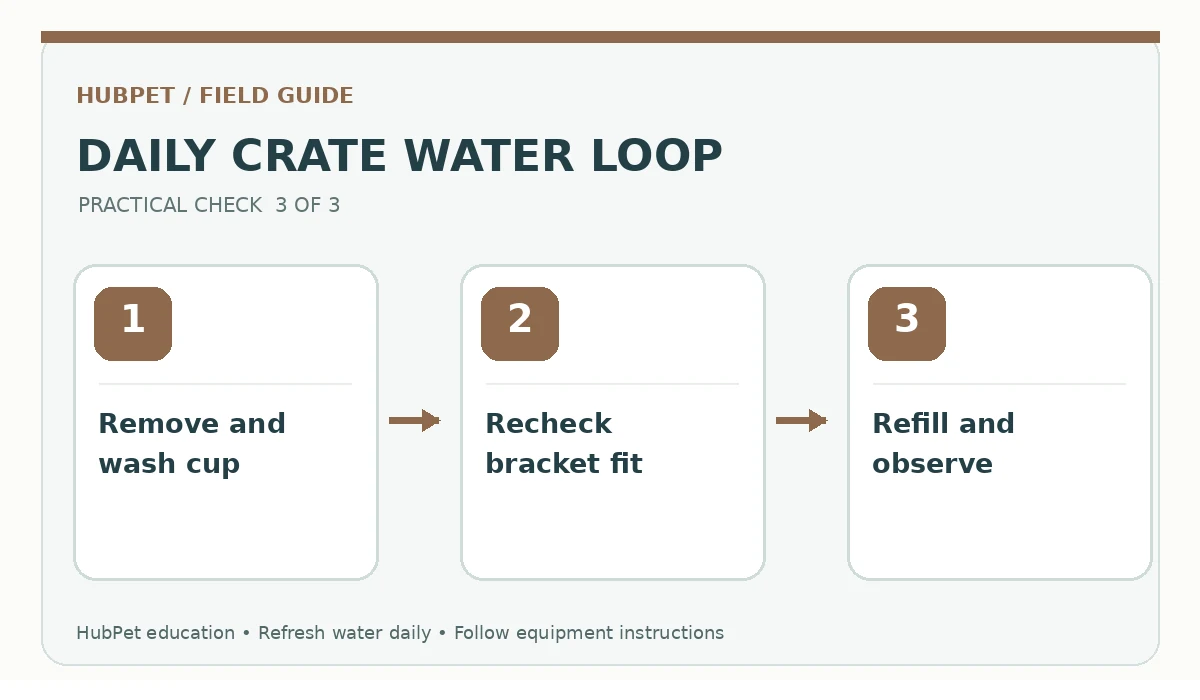
The CDC advises cleaning pet water bowls daily. Choose a removable cup you can wash without struggling with the whole crate. Detach the bowl, discard stale water, clean with suitable soap and rinse fully before refilling. Follow the product’s dishwasher instructions instead of assuming all metal and plastic parts are compatible. Dry the mount’s hidden crevices and inspect for residue. Keep spare drinking water available while washing. If a household uses several crates, label cups so each returns to its correct compatible bracket. A clean bowl that snaps back into place quickly supports consistent care far better than an elaborate fixed reservoir.

Distinguish home crates from travel carriers
At home, a dog may use a roomy wire crate for rest and training. Airline or cargo travel creates different rules about access from outside the carrier, leak resistance and placement. VCA describes externally accessible water trays for some airline travel arrangements. Do not assume your everyday clipped cup satisfies an airline’s live-animal policy. Verify the specific carrier and transport rules directly before any trip. In a moving car, a water cup must not become a projectile or undermine restraint; offer appropriate water during safe stops. A crate accessory cannot substitute for travel safety equipment or supervision.
Plan for puppies and short training sessions
Puppies learn to settle in a crate through gradual positive experiences. A new water cup may rattle or sway, so introduce it when the door is open and the puppy feels relaxed. Reward calm exploration without pushing the animal toward the bowl. Keep training sessions appropriate to age and bathroom needs. A puppy who spills water by pawing at a new cup may need a simpler placement and more supervised practice. Never punish fear, whining or water splashes. VCA emphasizes that confinement should remain a manageable part of a broader routine with movement, company and breaks. Water access needs individual planning.
Inspect the mount after cleaning and movement
Every time you reattach a cup, tug gently on the mount and check that the latch clicks or the bracket sits correctly. Listen for rattling when the dog stands and turns. Check the crate bars for bending around a clamp. If the dog pushes bedding against the bowl, adjust the setup so the water remains reachable. After moving or folding a crate, inspect all hardware again before the dog enters. A paper checklist by the crate can remind caregivers to confirm water, latch security, clean bedding and calm behavior. Frequent simple checks prevent a small loose fitting from becoming an overlooked hazard.
Know when to choose a different setup
Some dogs chew mounts, panic in confinement, or need a larger accessible water area than a clipped cup provides. Do not insist on one product type in those cases. A supervised pen, a stable bowl in an appropriate room, or a different crate configuration may work better. If a dog shows sustained distress in a crate, consult a qualified reward-based trainer or veterinary behavior professional. Keep veterinary water restrictions or special medical instructions separate from general shopping advice. A successful crate bowl stays secure, cleans easily and supports relaxed drinking. It does not justify extended confinement or replace human check-ins.
How We Research
Our editorial review compared animal-welfare recommendations with consumer safety guidance for pet drinking stations, material safety, cleaning routines, and equipment reliability. Each source supports the specific safety context named above; water circulation and filters do not replace fresh drinking water or cleaning. We did not test specific products in laboratory conditions, certify filtration claims, or receive manufacturer endorsements. Follow equipment manuals and seek veterinary advice when a pet’s drinking pattern changes. We reviewed these sources on October 27, 2026. Read about our editorial standards on the About HubPet page.
Sources
VCA Animal Hospitals: How to crate train your dog. Accessed October 27, 2026.
Centers for Disease Control and Prevention: Cleaning and disinfecting pet supplies. Accessed October 27, 2026.
ASPCA: Travel safety tips for pets. Accessed October 27, 2026.
Water access matters, but the setup depends on age, time in the crate, travel circumstances and any veterinary instructions. Choose a safe reachable bowl and never restrict water merely to reduce spills.
They may prevent tipping in some crates, but only when the attachment fits securely and the dog can reach it comfortably. A poorly attached cup can create additional hardware and spill hazards.
Position it so your dog can drink in a natural relaxed posture while standing. Check fit with the dog present and adjust for its size and mobility instead of following one universal height.
Do not assume so. Airlines and carriers have specific requirements, sometimes including external water-tray access. Confirm rules for the exact trip and equipment directly with the transport provider.
Remove the unsafe accessory, supply water through another safe arrangement and assess crate stress or boredom. Seek reward-based training help for repeated anxious chewing rather than adding improvised restraints.