
Educational guidance only, not a veterinary diagnosis. New pain, sudden behavior changes, intense fear, or a bite risk call for professional assessment. Read the veterinary disclaimer.
Dogs often jump toward people because they are excited to greet, want contact, or have learned that getting close to a face earns attention. A visitor laughing, talking, or even pushing a dog away can unintentionally make the behavior more rewarding. But not every jump means happiness: a dog may also be over-aroused, conflicted, or trying to create space. Read the situation before choosing a response.
This guide explains the reasons and the safety decisions behind jumping. For a detailed step-by-step training tutorial, HubPet already has How to Stop a Dog from Jumping on People. Here you will learn why different household reactions matter, how to tell a cheerful greeting from a tense encounter, and when to use a barrier instead of inviting more contact.
Face-Level Greetings Can Become a Learned Habit
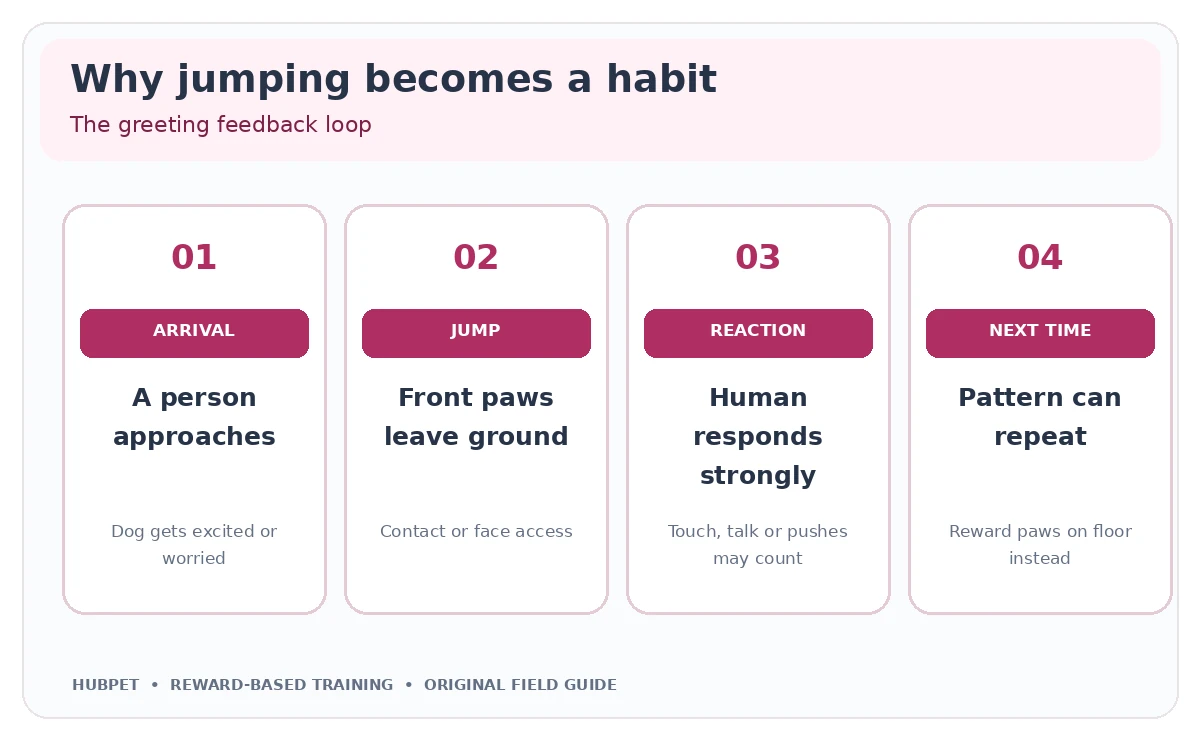
Jumping brings a dog closer to a person’s face and hands, where social contact often happens. If a puppy receives laughter, petting, or a lively response each time it springs up, those consequences can make jumping more likely next time. The same mechanism can continue into adulthood, when the dog is much bigger and a greeting can accidentally knock someone over.
Try observing who gets jumped on and when. Does the dog leap at arrivals but remain calm during quiet moments? Do family members allow paws on them in casual clothing but object when visitors are dressed up? Mixed expectations make the rule difficult for dogs to learn. A predictable greeting standard helps more than interpreting the behavior as deliberately rude.
Attention Can Reinforce Jumping, Even When It Is Negative
When a dog jumps and a person shouts, grabs the collar, pushes with hands, or lifts a knee, the dog may receive intense attention, fear, or physical discomfort. None of those outcomes teaches a clear alternative. Some dogs interpret pushing as play; others become more worried or defensive. The AKC emphasizes management and reinforcement of an appropriate greeting instead of physical corrections.
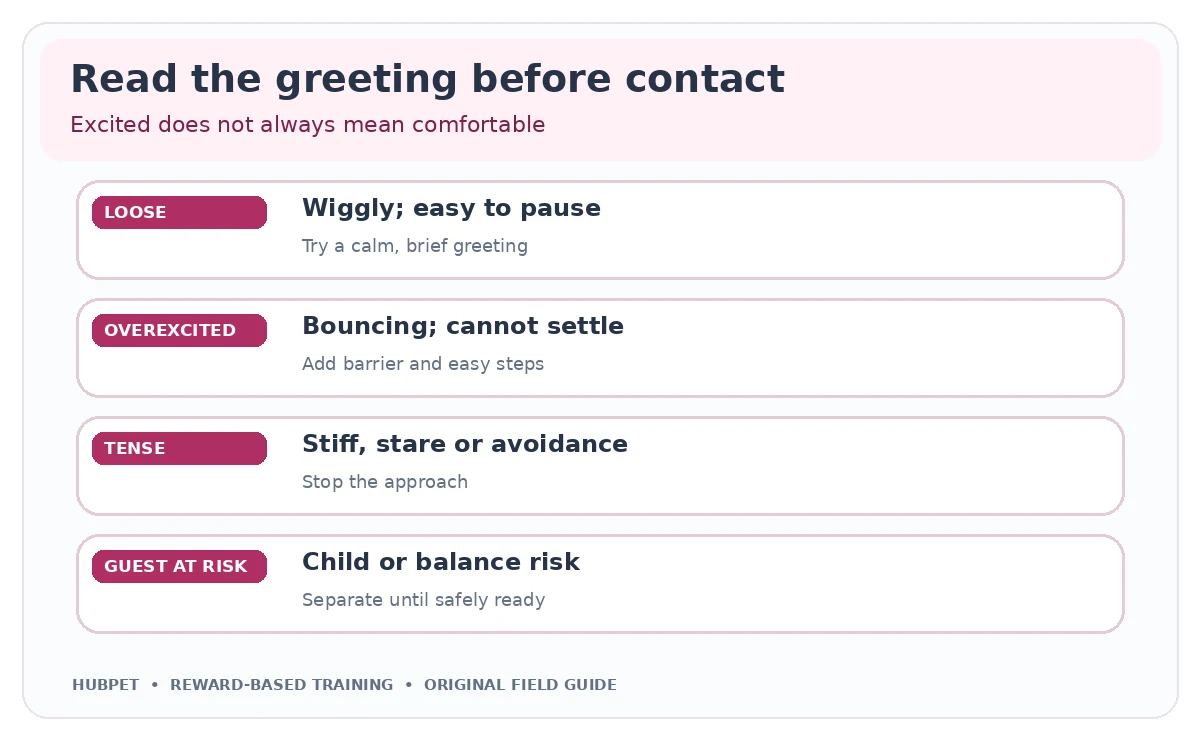
If safe, keep your reaction low-key and reward four paws on the floor immediately. However, do not rely on ignoring a powerful jumping dog near a child, older adult, or someone with mobility limitations. Use a gate or adequate distance first. Safety is not a test of whether your dog will calm down with enough persistence.
Excitement Is Not the Only Possible Emotion
Loose, wiggly movement and quick return to normal activity are different from a stiff body, fixed stare, pinned ears, or attempts to avoid contact. A dog that leaps toward a stranger while growling or showing tension needs distance, not petting. Never assume a wagging tail makes a contact safe. Individual dogs express emotion differently, and one gesture cannot establish intent.
Ask people not to lean over, reach at, or crowd your dog. Make introductions voluntary and brief; end them if the dog stiffens, avoids, or tries to leave. For dogs with a bite history or threatening behavior, avoid informal greeting practice and seek a veterinarian or qualified reward-based behavior specialist. Do not force children to interact with an excitable dog.
Build a Four-Paws Greeting Rule Everyone Can Follow
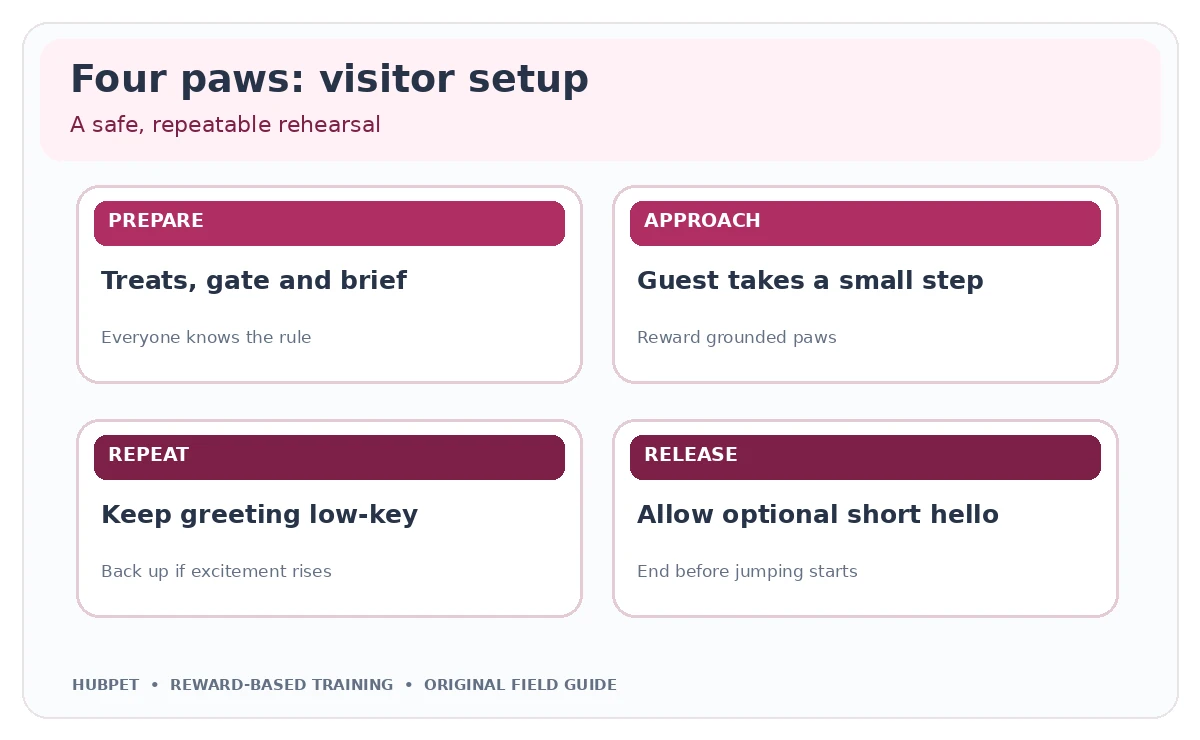
Choose one clear rule: paws stay on the floor before attention begins. Practice with a cooperative adult in a quiet room. The person approaches only while the dog remains grounded; you mark and reward, then allow a brief calm greeting. If the dog springs up, the visitor calmly steps back before trying an easier approach. Keep attempts short and use a barrier when needed.
An alternative such as sitting or walking to a mat also works, but the goal is not to demand a long sit when the dog is struggling. Make the required response easy at first, then gradually add the excitement of a new person, a door opening, or a jacket being removed. Our settling-with-guests guide adds a separate resting skill.
Manage Visitors Without Embarrassing or Endangering Anyone
Before guests arrive, prepare treats, a safe gate, a leash if appropriate, and a quiet spot for your dog. Tell visitors the rule before they enter: no reaching, talking, or petting while paws are in the air. Reward the first calm choice. A dog that becomes too excited can remain comfortably behind the barrier with a suitable enrichment activity instead of practicing a difficult greeting.
If your dog only jumps when the doorbell sounds, train the sound separately from the person appearing. Start with a low-intensity doorbell recording if the dog is comfortable, then reward a calm response before adding a real visitor. Our doorbell training article goes deeper. A guest who does not want to greet the dog should always be allowed to decline.
Think in Terms of Safer Contact, Not Perfect Obedience
Progress might mean the dog approaches with all paws on the floor, recovers quickly after excitement, or chooses the mat when guests enter. Record the setting, who participated, and whether your dog stayed relaxed. Dogs may need practice with several familiar adults before the rule transfers to a busy gathering or outdoor meeting.
If jumping is sudden, paired with pain signals, or shifts into threatening contact, seek medical or behavior guidance. Never punish growling or warning gestures to make a dog seem polite. The aim is predictable, consensual social interaction that protects humans and dogs alike. Share the same rule with your family using our household training-consistency guide.
How We Research
We reviewed the linked veterinary and animal-behavior resources on October 26, 2026, separating published guidance from our practical at-home examples. See the HubPet editorial approach. We checked each recommended response against animal welfare, ordinary owner safety, and situations requiring veterinary or professional assessment. We created original teaching diagrams and observation tools; they are not diagnostic instruments or clinical trial data. Dogs differ in temperament, age, and history; the material is educational, not an individual assessment.
Sources
American Kennel Club: Why dogs jump when greeting people and how to respond. Reviewed October 26, 2026.
American Kennel Club: Teach an alternative greeting rather than only ignoring behavior. Reviewed October 26, 2026.
American Veterinary Society of Animal Behavior: Humane dog training position statement and clarification. Reviewed October 26, 2026.
ASPCA: Dog bite prevention and body-language safety. Reviewed October 26, 2026.
Your reactions, timing, height, and greeting habits may differ from those of other people. Some dogs have also practiced jumping with one person more often. Track the context before assuming one fixed motive.
No. Excitement is common, but mixed emotions and discomfort are possible. Read posture, movement, facial tension, and the person’s approach. Avoid forced contact when the dog looks worried or stiff.
Pushing can provide contact and attention, which may reinforce jumping for a dog seeking interaction. It can also frighten a dog. Instead, prevent access when unsafe and reward a clear four-paws greeting.
Not necessarily. A calm stand with four paws on the ground can be an excellent rule. Choose a behavior your dog can perform comfortably, reward it consistently, and increase greeting excitement gradually.
Use gates, distance, or a safely managed leash; brief visitors before entry and allow them to decline greeting. Keep children and vulnerable adults away from jumping practice until the dog is reliably safe.