
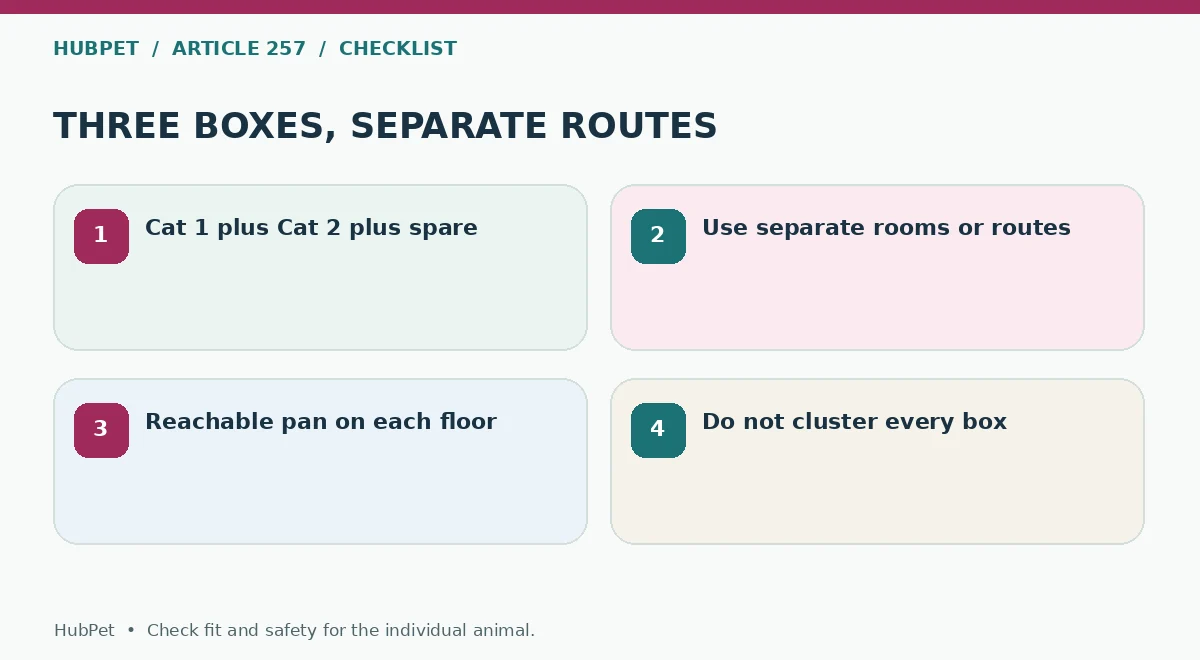
For two cats, start with three litter boxes: one for each cat, plus one extra. That widely used veterinary and feline-behavior guideline is about access and choice, not an expectation that each cat will use an assigned toilet. If the three boxes sit in one tight row behind the same doorway, a confident cat can still block every option. See the HubPet veterinary disclaimer for health and safety limits.
The practical goal is a spread of clean, easy-to-reach litter pans where each cat can toilet without crossing a rival’s path. This guide maps out locations, explains how to read subtle tension, and offers a straightforward maintenance plan. Some households need more than three pans because of house layout, mobility, or social conflict.
Start with three accessible pans
The familiar rule is number of cats plus one: for two cats, that means three litter boxes. This is a starting guideline, not a medical formula. Individual cats differ in how they share, and a home with narrow halls or separate territories may need extra resources to provide genuine access.
Do not label one tray for Cat A and one for Cat B. Both animals may use the same favorite pan, or one cat may prefer a separate spot for urine and stool. Choice matters more than assigning ownership. Keep the extra pan usable even if it seems less popular during calm weeks.
Spread boxes across genuinely different locations
Three pans side by side can function like one guarded toilet station. Put them in different rooms or distinct accessible areas, with enough distance that another cat cannot block a single narrow approach. A quiet bedroom corner, spare room, and separate hallway alcove may work if the cats can leave each safely.
Walk through each route at cat height. Identify doors that shut by accident, staircases that are hard to climb, and choke points where one pet waits. If a cat must pass a dog, loud machine, or assertive housemate, that pan may not be a practical option even when the floor plan looks convenient.
Plan at least one reachable box on each floor
Stairs change what accessible means, especially for an older cat, a kitten, or an animal recovering from injury. Start by ensuring each occupied floor has an easy option, then distribute remaining pans to avoid shared bottlenecks. A distant basement tray may not help a cat who spends most of the day upstairs.
Keep doors propped open safely where appropriate and prevent a dog from raiding litter without blocking the cat. Baby gates with cat access can help in some homes, but evaluate the height and gaps for kittens and mobility-limited animals before trusting the barrier.
Choose enough floor space inside each pan
Give each cat room to enter, turn, dig, and cover waste without touching the sides. A useful starting comparison is a tray about one-and-a-half times the cat’s nose-to-tail-base length, with an entrance low enough for easy access. Covered boxes can feel confining, especially during conflict.
Oversized low-sided storage-style pans may offer more usable space than visually sleek enclosed products. Watch whether either cat perches on the rim, backs out while digging, or leaves quickly. Those behaviors can suggest a poor fit, though a veterinary evaluation may be needed if habits change.
Keep scent and texture predictable
Many cats favor a fine-textured, unscented substrate, but their established preferences deserve respect. Do not simultaneously change every pan from familiar litter to a heavily fragranced alternative. That makes it difficult to identify why one or both cats begin avoiding the boxes.
If you want to test a new substrate, change one variable at a time while preserving at least one familiar pan. Observe which pan receives relaxed visits instead of judging only how the litter looks to a person. Cats do not need to agree on a single brand or texture.
Recognize quiet blocking and social tension
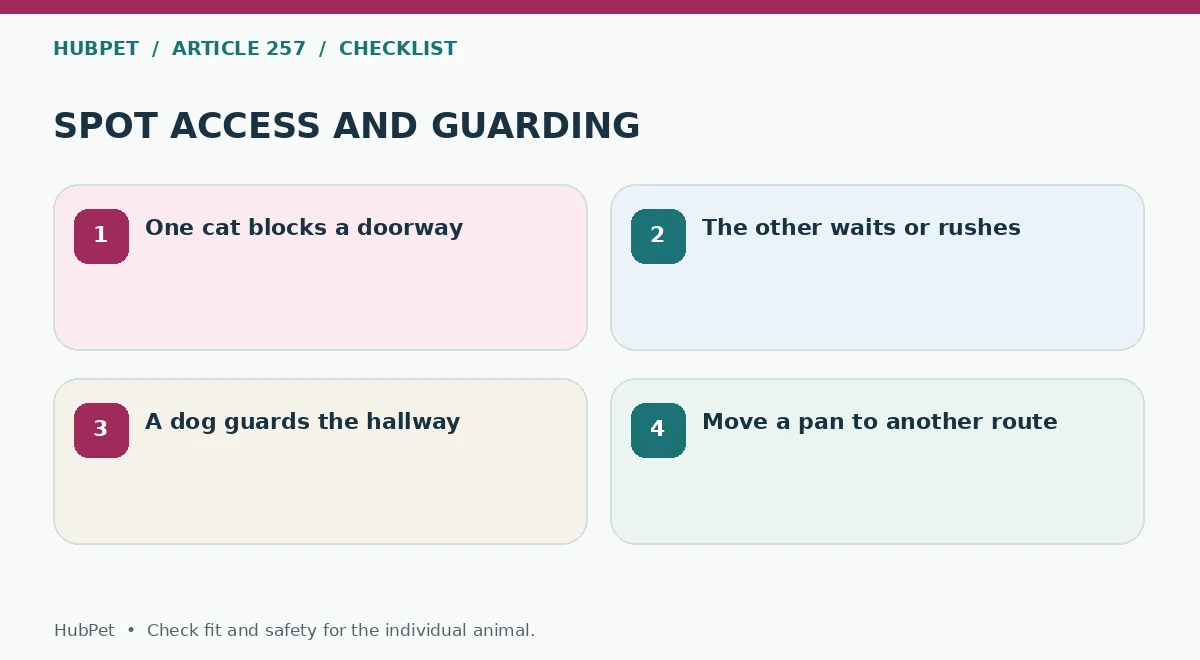
Conflict around a tray may involve staring, waiting outside the doorway, following the other cat, or occupying a passage instead of overt fighting. A cat who repeatedly rushes out or approaches only when the house is silent may lack a truly safe option.
Offer additional routes and a box outside the contested area. Improve resources more broadly, including separate water, resting spaces, and elevated retreats. Punishment does not solve resource guarding or stress and may make the toilet less predictable for both cats.
Scoop daily and clean without strong fragrances
Scoop urine clumps when the litter supports it and remove feces at least daily; many multi-cat homes benefit from more frequent scooping. Follow litter instructions for complete replacement, then wash pans with mild unscented soap and dry them thoroughly. Avoid ammonia-based cleaners or strong perfumes.
Set supplies near each station without blocking an exit: scoop, closed waste container, and spare litter. A pan can be physically present yet effectively unavailable if it is already saturated, inaccessible, or unpleasant to enter. A small daily routine protects the value of having extra boxes.
Make a simple room-by-room litter map
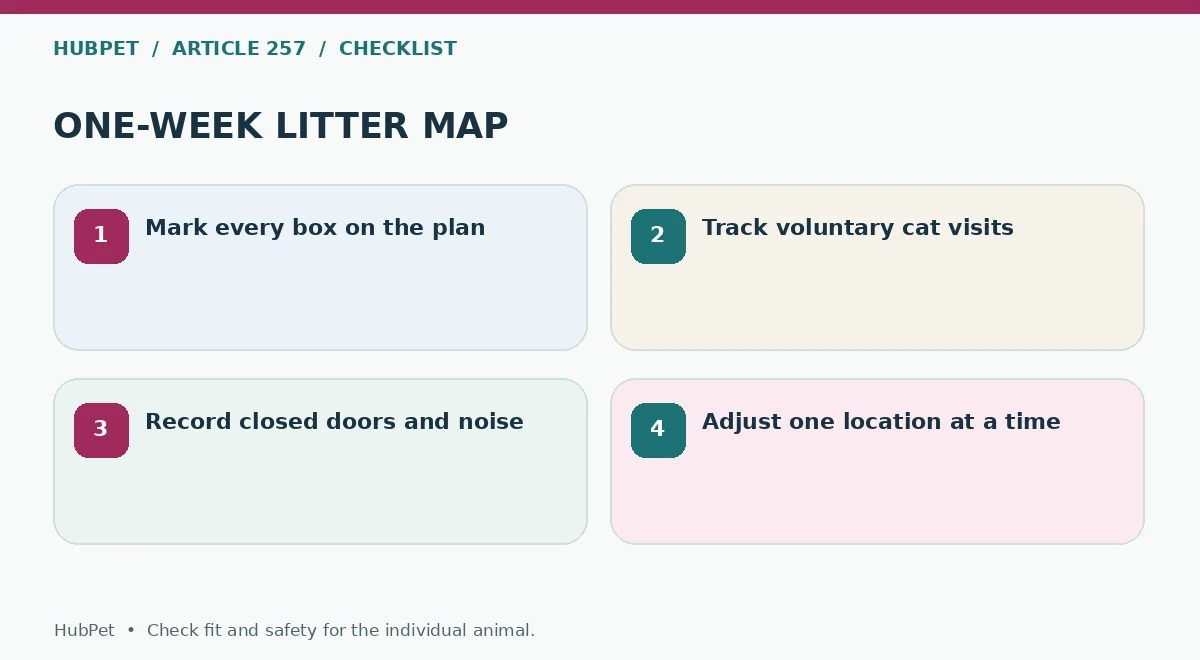
Sketch the home and place one mark per cat toilet. Draw an arrow showing how each cat reaches it from its usual resting area. If two arrows converge at one narrow door, move a pan. Include usual nighttime door closures and the routes during busy family hours.
Then observe for a week: which trays stay clean, which draw frequent visits, and where does one cat pause? This quick exercise gives more useful information than buying three identical pans and hoping placement works automatically. It also helps you brief a pet sitter.
Respond quickly to changes in toileting
Repeated straining, little or no urine, painful vocalizing, blood, or sudden trips outside the box need prompt veterinary assessment. Urinary obstruction is an emergency, particularly in male cats. Stress and litter setup problems can coexist with illness; an extra pan cannot treat a medical condition.
After a veterinarian evaluates the cat, review tray height, cleanliness, litter preference, household tension, and escape routes. Never scold a cat for accidents or force it into a litter box. Those reactions can make an already difficult location even more threatening.
Adjust numbers when circumstances change
A new kitten, aging cat, recovering patient, or tense reintroduction may call for temporary extra boxes close to safe resting spaces. Adding a pan rarely fixes a blocked route if every box remains in the same contested room. Placement and maintenance still determine how useful the number is.
Keep the three-box starting point visible on your household checklist. Reassess after moving furniture, adopting a pet, or changing a room’s use. The right setup is the one that supports relaxed, voluntary use by both cats throughout the day and night.
How We Research
We checked this guide against the authoritative sources listed below on October 26, 2026. We reviewed practical differences, safety limits, and relevant home conditions rather than drawing conclusions from brand advertising. Specifications, warranty policies, and device capabilities change; check the manufacturer’s current manual. We did not purchase, laboratory-test, rank, or endorse individual products. Where a pet has pain, skin concerns, or fear, seek individual veterinary advice. See our approach at About HubPet.
Sources
ASPCA: Litter Box Problems. Accessed October 26, 2026.
VCA Animal Hospitals: How to Litter Train Your Kitten. Accessed October 26, 2026.
VCA Animal Hospitals: Cat Behavior Problems: House Soiling. Accessed October 26, 2026.
American Association of Feline Practitioners: Cat Friendly Practice: Client Education. Accessed October 26, 2026.
They may sometimes choose the same pan, but one pan offers no safe alternative when it becomes dirty, guarded, or inaccessible. Start with three in different areas.
Three is the standard starting guideline, not a guarantee. Some households need additional pans because of layout, mobility, or friction between cats.
That can defeat the purpose if one doorway or cat controls access. Separate rooms and escape routes usually offer more useful choices.
No. Cats choose their own spots and may alternate. Provide enough clean, accessible pans without forcing either animal toward an assigned tray.
Arrange a veterinary check to rule out illness, especially with straining or reduced urine. Then assess cleanliness, entry height, location, litter texture, and social tension.