

How to Prevent a Pet from Licking Wounds
Protect a wound or surgical incision without unsafe home remedies: use the veterinary plan, fitted barriers, calm supervision, and timely follow-up.
Protect a wound or surgical incision without unsafe home remedies: use the veterinary plan, fitted barriers, calm supervision, and timely follow-up.
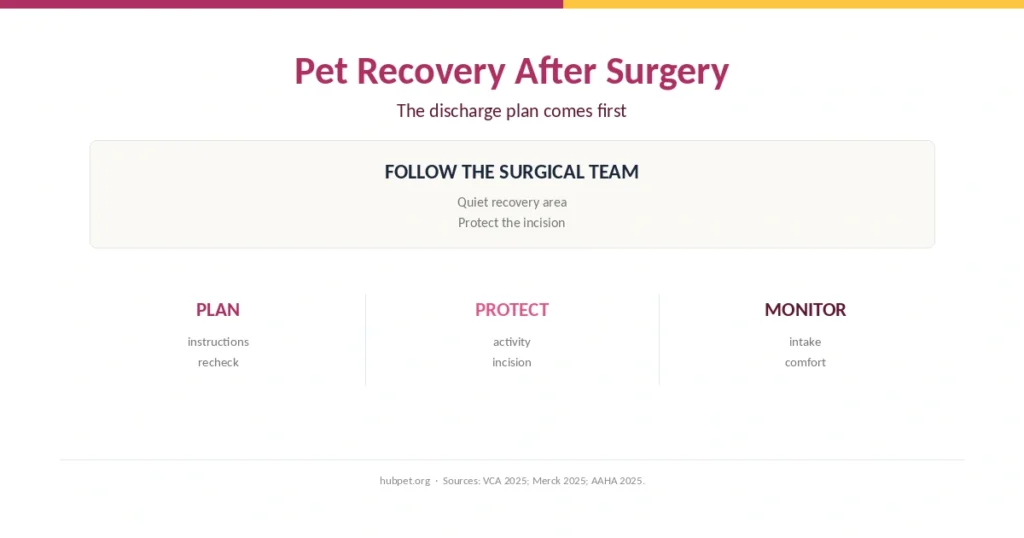
Post-surgery care at home is about following the individual discharge plan: quiet recovery, prescribed medication, incision protection, monitoring, and timely vet contact.

Subtle stress in dogs often appears as clusters of small body-language changes. Learn what to watch, how to lower pressure, and when to call your vet.
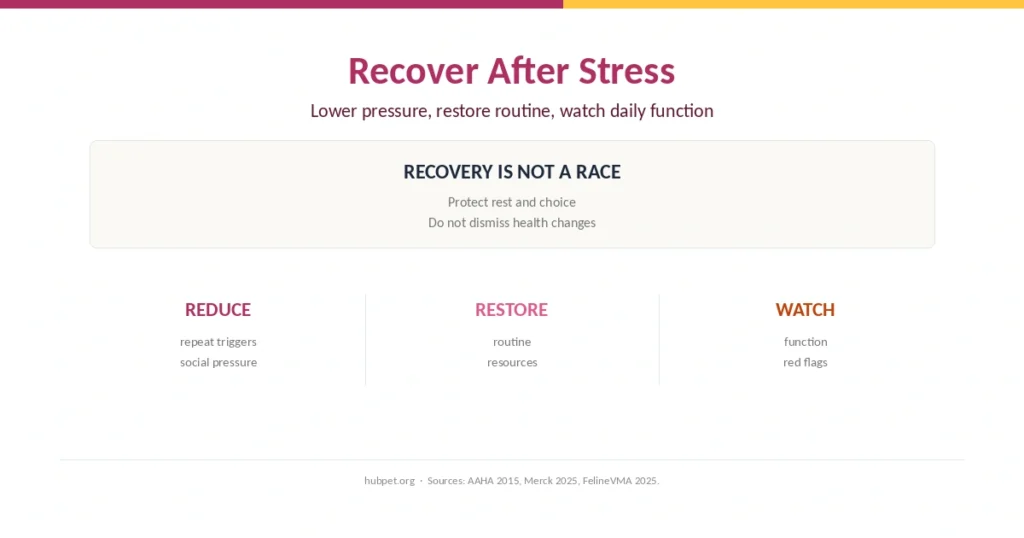
Recovery after a stressful event works best with lower demands, familiar routines, protected rest, and observation for medical red flags.
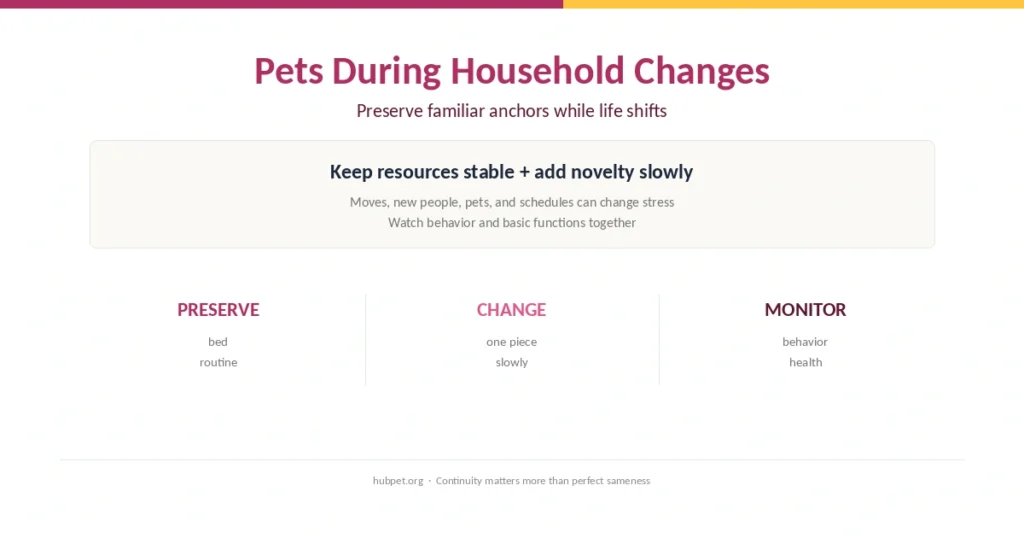
Support pets through moves, new people, new pets, schedule changes, and other household transitions with predictable anchors and gradual exposure.
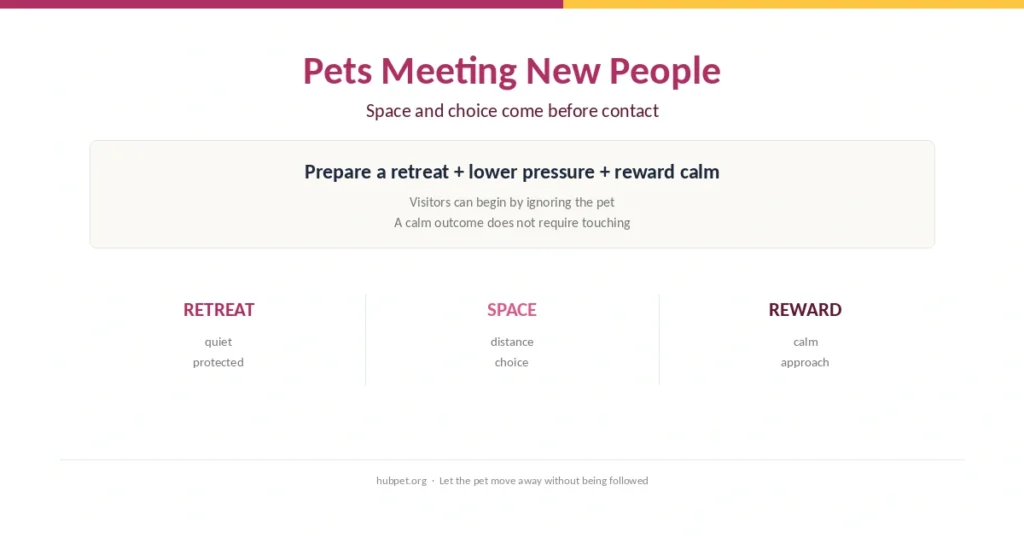
Help dogs and cats adjust to unfamiliar people with protected retreat space, predictable routines, voluntary contact, and a clear plan for rising stress.

Prepare pets for holiday guests, noise, food hazards, travel, and schedule changes with a quiet retreat, predictable routines, and a clear veterinary safety plan.

Prepare for fireworks with a familiar refuge, secure exits, reduced noise and flashes, and a veterinary plan when fear is severe.
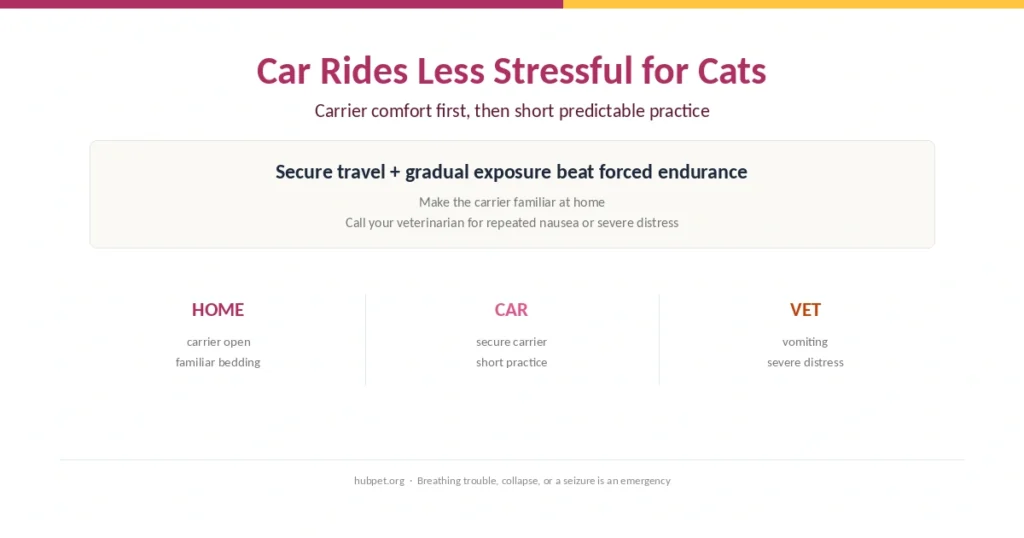
Build comfort with the carrier first, secure it correctly in the car, and practice short rides before asking a cat to handle a necessary trip.

Car anxiety can mix learned fear with motion sickness. Build travel gradually and involve your veterinarian when physical signs appear.