
Cat hammock beds range from fabric slings on low freestanding frames to wall-fixed cradles and window-mounted shelves. They share the idea of a suspended sleeping surface, but the engineering, installation demands, and fall risks are very different. Decide first where the cat will approach from, how high it will rest, and whether you can secure the supports without guessing. A low stable frame can offer a gentle introduction for a cat that likes shallow hammocks. Wall or glass mounts require verified compatibility with the structure, hardware, and manufacturer’s installation directions. Decorative appearance should come after reliable support.
Study the frame before choosing the print
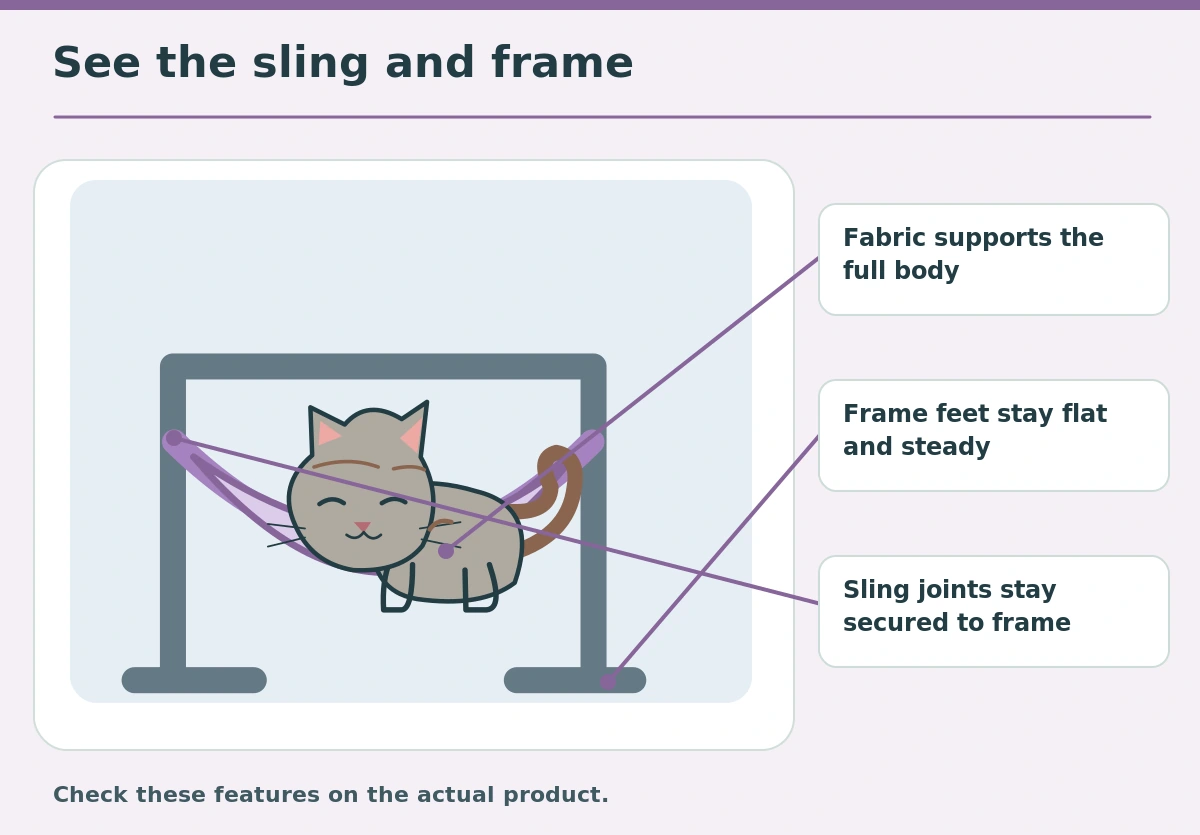
For a freestanding hammock, inspect the width between feet, the frame’s resistance to tipping, and whether pieces lock together securely. A narrow or tall frame can tilt when a cat steps on one edge. Run a hand over joints and ends for sharp points, exposed staples, or gaps that could pinch toes. Set the empty unit on its intended floor and apply a gentle side-to-side check, then repeat after attaching the fabric. If it wobbles noticeably, fix only as instructed by the maker or return it. Putting books beneath one foot is not a safe permanent installation.
Understand sag versus support
A slight cradle may feel secure to a cat, but a deep sag can trap the body in fabric folds or make it difficult to roll and exit. Examine how far the sling drops when weighted, whether the edges pull inward, and whether the cat has enough room to change position. A larger outer frame does not guarantee a roomy hammock if the textile forms a very steep pocket. Check for even load across stitched attachment points, rather than one strained corner. Fabric should be intact and securely hemmed without dangling strings. Do not assume a hammock is therapeutic for joint or spinal issues.
Treat the published load rating as only one check
A stated capacity is useful only when the manufacturer explains which frame or mounting method it applies to and you install the bed exactly as directed. A fabric strap may tolerate a load that an unsuitable wall anchor, weak furniture panel, or poorly prepared window cannot. Do not invent a safety factor or use a different screw because it happens to fit the hole. For wall mounts, identify the wall material and approved fasteners; for suction mounts, follow the surface preparation, maintenance, and replacement instructions. If those instructions are missing, choose a freestanding option rather than drilling or improvising.
Plan an approach and a landing zone
Imagine your cat stepping into the hammock from the actual side it prefers and leaving while half-asleep. Avoid a large jump over obstacles, slippery tile, low-hanging lamps, glass furniture, or exposed cords. A stable stool or short step can create a gentler path, provided it does not rock or crowd a doorway. For a senior cat, keep the hammock low or use a flat supportive bed instead. International Cat Care recommends making favorite sleeping places accessible as mobility changes. A hammock that looks picturesque but requires awkward acrobatics may simply stay unused.
Check wall and suction styles separately
A wall-mounted cat hammock requires hardware approved for the specific wall construction; an anchor rated for one type of wall may fail in another. Never mount above a crib, aquarium, hot cooktop, or an area where a fall would be serious. Suction cups require the manufacturer’s surface conditions and ongoing checks for loosening, temperature effects, and dirt. Do not assume a unit advertised as a window hammock will fit textured or damaged glass. Even properly installed products can wear or shift, so keep a low, safer alternative available. Never use a loose hook on a curtain rod as a substitute attachment.

Match fabric to paws, coat, and cleaning routine
Choose a close-weave fabric without long loops that can catch claws, and inspect the seams where the material meets rods or hooks. Mesh may ventilate well but can feel less supportive or present snag points if poorly finished. Plush fabric may be cozy but harder to dry quickly after washing. Check whether the sling detaches without disturbing frame alignment, and follow care labels. If the fabric stretches substantially after laundering, assess its shape again before allowing use. Remove a bed with a ripped seam or frayed load-bearing strap rather than stitching it back without manufacturer guidance.
Offer choice in a multi-cat home
Cats may seek different resting elevations and retreat locations during a day. Cats Protection recommends giving multiple options instead of expecting every animal to share a single napping spot. Position hammocks so a more assertive cat cannot block the only exit. A second low mat, shelf, or sheltered box can be more valuable than buying a larger sling meant to seat two cats together. Watch whether one cat avoids the hammock whenever another sits nearby; placement may need changing to reduce tension. A cat that ignores the hammock may simply prefer a firmer, unsuspended surface.
Introduce without lifting the cat into place
Assemble the hammock and leave it low and accessible for a trial. Let your cat smell it; place a familiar small cloth nearby if appropriate. You may reward voluntary investigation, but do not repeatedly deposit a reluctant cat into the sagging surface. First use should be observed closely so you can check whether the bed moves, shifts under load, or makes sudden noises. If the cat jumps out immediately, give it a choice of ordinary resting places and investigate the cause. Acceptance should be voluntary, with no pressure to demonstrate the product for a photograph.

Repeat the safety check after normal use
At least weekly and after every move or wash, inspect the feet, bolts, hooks, stitching, and sling tension. For mounted designs, follow any more frequent manufacturer inspection schedule. Remove accumulated fur and check for hidden fabric damage under the supports. If the frame rocks, attachment loosens, or the landing route changes, take the bed out of service until corrected. Keep it away from heaters and direct sun that could overheat a resting cat. The safest hammock is stable through the entire climb-in, rest, and exit sequence, not merely comfortable when your cat is already lying still.
How We Research
We combined Cats Protection advice about elevated sleeping choices and multiple rest areas with International Cat Care recommendations for accessible routes. Construction, mount type, and fabric-load concerns are treated as checks against the individual maker instructions, not universal certifications. For broader editorial methods, read About HubPet.
Sources
Cats Protection — How to Create the Perfect Cat Sleeping Spot: Read the source. Accessed October 27, 2026.
Cats Protection — How to Create the Perfect Cat Sleeping Spot: Read the source. Accessed October 27, 2026.
International Cat Care — Cat Carer Guide: Changes to the Home Environment: Read the source. Accessed October 27, 2026.
RSPCA NSW — Meeting the Needs of Cats: Read the source. Accessed October 27, 2026.
Cats Protection — How to Choose the Perfect Cat Bed: Read the source. Accessed October 27, 2026.
Safety note: This selection guide is not individual veterinary advice. Seek a veterinarian for sudden behavioral changes, pain, injury, or suspected swallowed material; see the HubPet veterinary disclaimer.
They remove wall-anchor uncertainty but can still tip. Check foot spacing, joints, surface grip, and your cat’s real approach rather than assuming one style is universally safe.
Enough for a gentle cradle, not so deeply that the cat struggles to change position or leave. Follow the manufacturer’s intended fabric tension.
Only if the product approves the exact glass and mounting conditions. Prepare the surface and inspect the cups as instructed; provide a safer lower alternative.
Only if access and exit remain comfortable. A low, stable hammock or flat resting surface is often easier when mobility is limited.
Replace or retire fabric with tears, loose load-bearing stitching, stretched attachment loops, or damage that the manufacturer cannot safely repair.