
A pet grooming vacuum collects loose fur close to the brush instead of letting it drift across the room. That sounds efficient, but a suction unit beside a nervous dog may turn an ordinary grooming session into a frightening one. Equipment choice should begin with coat type, tolerance for handling, and the ability to stop immediately. Review our veterinary information disclaimer for individual welfare concerns.
This guide separates grooming vacuums from household floor models, offers a realistic attachment checklist, and explains how to introduce sound in short voluntary steps. It is not a test of a named product or a promise that any vacuum is quiet enough for every pet.
Decide whether vacuum-assisted grooming fits your pet
Dogs that comfortably accept brushing may adapt to a collection hose after gradual introduction. A pet that panics at household appliances needs a slower plan, and some pets should continue with an ordinary brush. Observe ears, body posture, attempts to leave, and willingness to take treats when the machine remains off.
Do not buy a stronger motor to solve a pet’s resistance. Suction does not make an anxious animal cooperative. If handling itself causes aggression, pain, or severe fear, talk with a veterinarian or qualified low-stress grooming professional before testing new equipment.
Separate a grooming unit from a floor vacuum
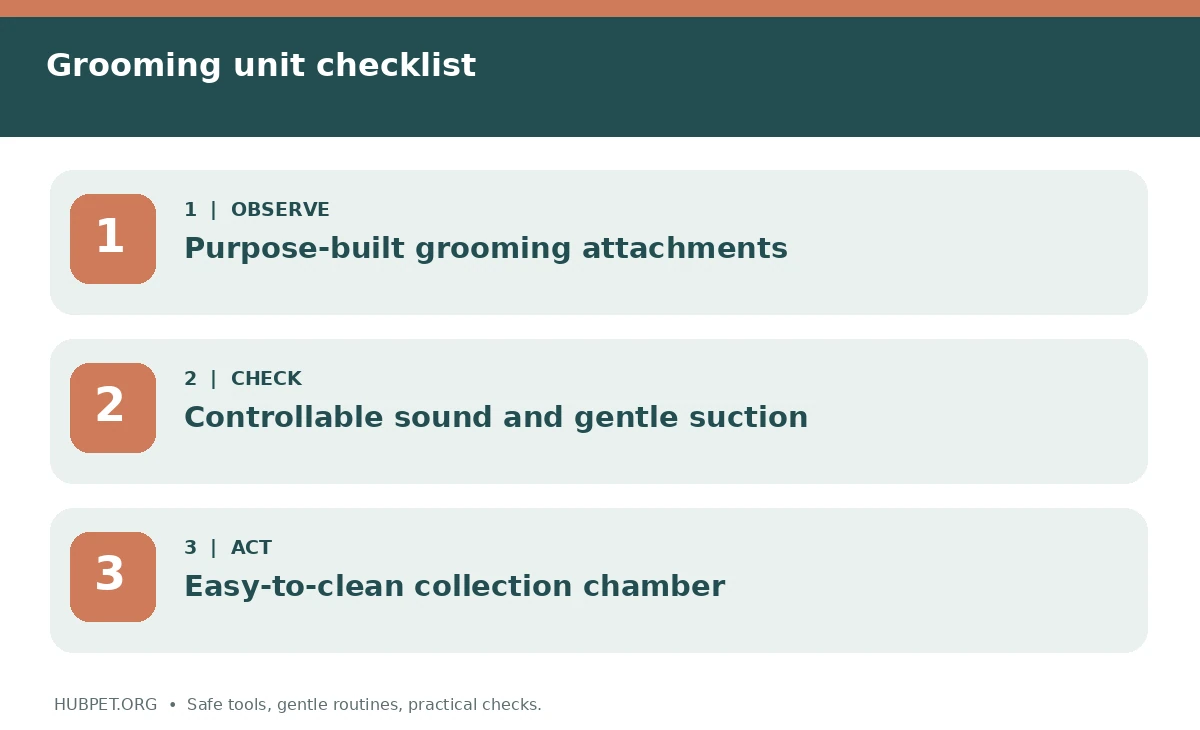
A grooming vacuum usually has a dedicated low-suction pathway and attachments intended to catch hair released by a brush. A floor vacuum focuses on carpets and debris; pressing its nozzle onto an animal is not an acceptable shortcut. Check that the product instructions explicitly permit use with the animal’s species and coat.
Look for a collection chamber that you can empty without re-releasing a cloud of fur. A long flexible hose may let the motor sit farther from the animal. More attachments do not automatically mean a safer or more effective kit; only the tools appropriate to your pet should matter.
Evaluate sound, suction, and control together
Manufacturers sometimes publish noise figures, but measurement distance and settings differ. Do not treat one decibel number as proof of comfort. Prefer several controllable suction levels, easy on/off access, and a hose that does not tug on the coat. Test the machine at a distance before moving any attachment toward the pet.
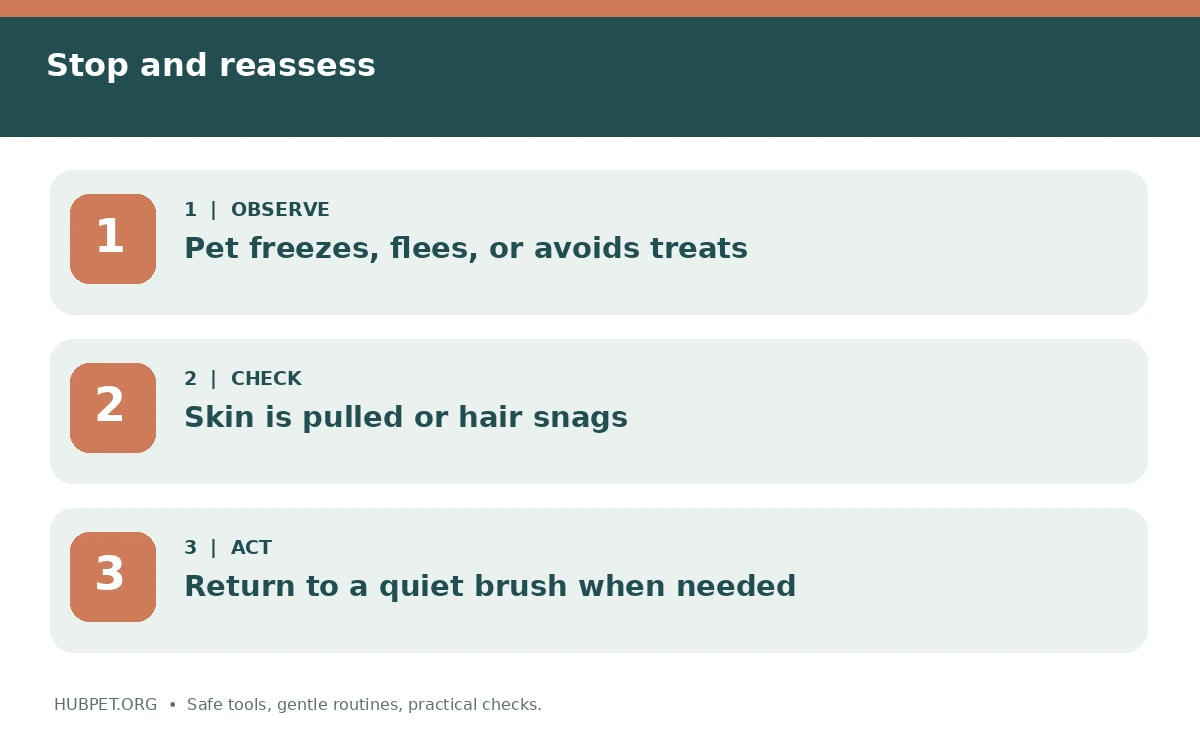
VCA describes introducing a feared vacuum in separate stages: stationary first, sound at a distance next, movement later. Apply that principle with the pet free to leave. Stop if the animal freezes, hides, barks in fear, or refuses food that it usually accepts. Never force progress to meet a product return deadline.
Choose brush heads based on hair and skin
A broad soft brush may collect surface hair from a short coat. A comb or slicker attachment may work for some longer coats, but stiffness and tine length matter. Check every edge for sharp molding seams and ensure the grooming surface does not scratch skin even with the machine off.
Avoid applying a de-shedding blade repeatedly to one area. Sensitive patches, matted fur, or sores need different care. The ASPCA stresses that grooming approach and frequency depend on the coat. Ask a groomer for a demonstration when you are unsure which attachment is appropriate.
Introduce the unit in short, separate stages
First place the unplugged or switched-off equipment in the room and reward calm investigation. On another session, briefly run the motor well away from the pet while someone offers a favorite reward. If the pet stays relaxed, turn it off before stress builds. Repeat until the sound predicts a calm experience.
Only then show the attachment with the motor off, touch a tolerant area briefly if invited, and reward. Add gentle suction later if the animal remains comfortable. Some pets need many short sessions; others may never enjoy this tool. Respect refusal and keep an ordinary brush as a valid alternative.

Watch for tangles, skin suction, and loose fittings
Hair can catch where the comb joins a hose or around a rotating mechanism. Inspect before every session and keep the equipment away from eyes, ears, tails, nipples, and sensitive skin folds. Never attempt to draw a mat into a suction head; that can pull the skin and cause pain.
Check that detachable heads lock securely and cannot fall into reach of a chewing animal. Keep cords away from mouths and paws. If the dog shows sudden pain or a skin injury occurs, stop, assess safely, and consult a veterinarian when indicated rather than restarting with lower suction.
Plan tank size and cleaning before purchase
Collection chambers fill quickly with dense undercoat. Read how to open, empty, and wash the container without scattering fur. Check whether filters require replacement, how much they cost, and whether spare parts are actually available. A vacuum that is difficult to clean may discourage regular low-stress sessions.
Follow instructions for drying washable parts before reassembly. Do not operate a unit without required filters or run it against a blocked hose. Store attachments dry and out of pet reach. A portable setup can be helpful, but portability should never come at the expense of a stable machine that cannot tip toward the animal.
Choose an environment that gives the pet control
Work on a nonslip mat in a familiar area with an open exit. Position the motor so its exhaust does not blow into the animal’s face. Keep the hose loose rather than draping it over the body. A helper can offer treats or watch body language, but no one should pin the pet in place.
For cats, many dogs, and noise-sensitive animals, an ordinary brush away from motor noise may be the welfare-conscious choice. Watch behavior after the session as well; prolonged hiding or avoidance suggests the setup was too stressful. Gentle handling matters more than capturing every loose strand.
Compare real value with a short at-home trial
Time a gentle brushing session without suction and note how much hair escapes onto the floor. After a successful introduction, compare collection and cleanup using the vacuum attachment. Record animal comfort, not just fur captured. An efficient tool that leaves the dog distressed is not useful for that household.
If the vacuum fails the comfort test, return to a normal brush and household cleaning. Do not interpret avoidance as something to overcome through restraint or aversive correction. Veterinary and reward-based behavior support may be appropriate for severe grooming fear, regardless of the appliance selected.
How We Research
Our editorial process compares animal-welfare, veterinary, government, and consumer-safety guidance relevant to pet grooming vacuum. We separate supported safety principles from marketing claims and review practical use, maintenance, and limits. This is independent desk research, not hands-on product testing or veterinary endorsement. Sources were reviewed on October 26, 2026. Read more about HubPet and our editorial approach. This guide does not replace veterinary advice for your individual animal.
Sources
ASPCA: Dog Grooming Tips. Accessed October 26, 2026.
VCA Animal Hospitals: Reducing Fear and Stress with Desensitization and Counterconditioning. Accessed October 26, 2026.
PetMD: Why Are Dogs Scared of Vacuums?. Accessed October 26, 2026.
No. A pet grooming unit should have dedicated attachments and manufacturer instructions for use on an animal. Never press a household floor nozzle directly onto pet skin.
Some can improve through gradual, voluntary desensitization, but progress varies. Keep the animal below its fear threshold and stop when stress signs appear.
Not automatically. Higher suction may pull hair, skin, or tangles and increase noise. Use an appropriate attachment and a gentle level that your pet tolerates.
No. They mainly collect loosened hair. Coat-specific brushing, skin checks, and professional help for difficult mats or handling challenges may still be necessary.
Turn the machine off, provide distance and an exit, and return to ordinary brushing. Avoid restraint and consult a qualified professional for persistent fear.