
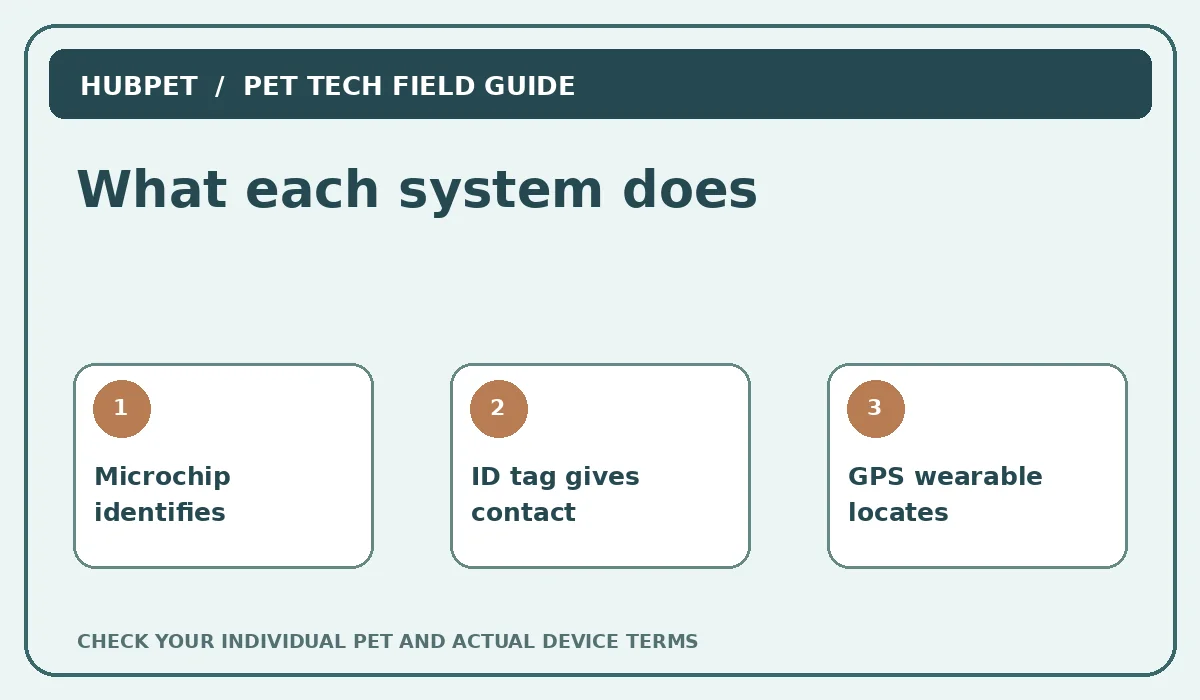
If you ask whether a dog’s microchip can track location, the clear answer is no. A standard implanted pet microchip carries an identification number that a scanner can read; it does not contain a satellite receiver or provide a live map of your dog. GPS collars and phone-linked tags do different jobs and have different failure points. Understanding the distinction prevents misplaced confidence during an emergency. Confirm your dog’s chip registration through a veterinarian or registry rather than an unverified app; see HubPet’s veterinary information disclaimer for general pet-care information.
How an implanted pet microchip actually works
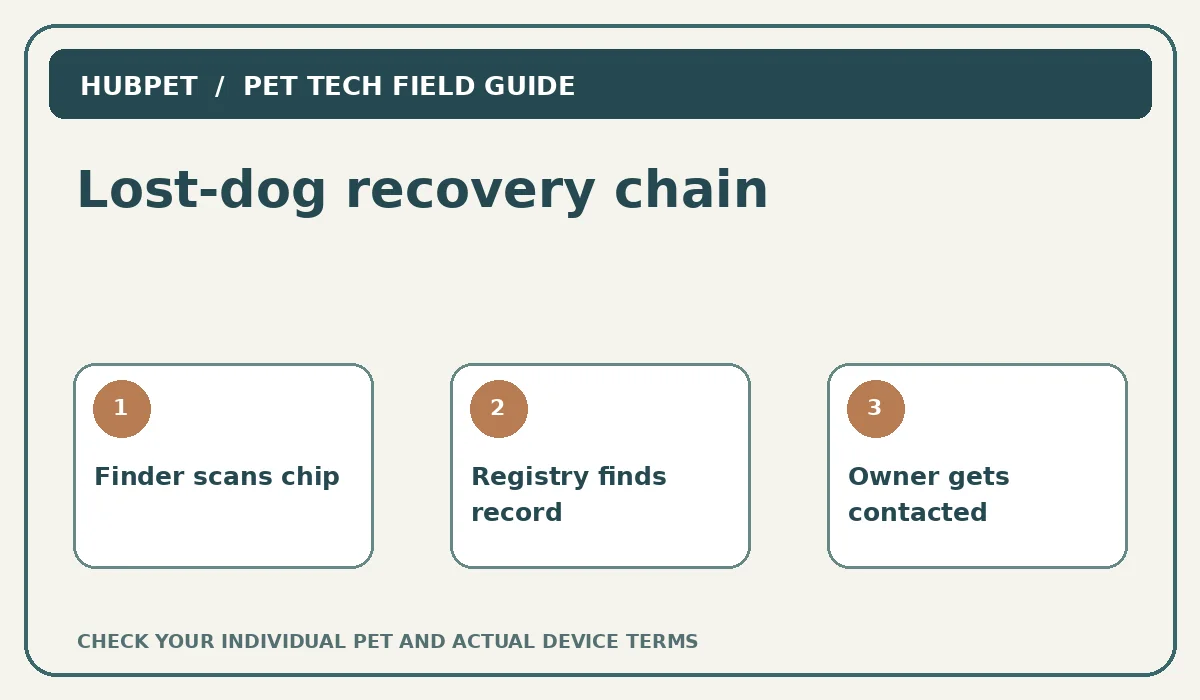
An implanted microchip is a tiny passive device. When a compatible handheld scanner passes nearby, radio energy activates the chip and it sends back a unique identification number. A clinic or shelter can use that number to identify the relevant registry and reach the contact details supplied by the owner. The chip does not broadcast its location, contain a GPS receiver or need routine battery charging. The American Veterinary Medical Association explains that registration information, not a live location trail, enables reunification. A microchip helps only after somebody finds the dog and obtains a scan.
Why you cannot open a map from the implant
Satellite positioning requires a receiver and processing electronics, and remote reporting needs an additional communication path. A standard pet microchip has neither a GPS receiver nor an always-on cellular transmitter. Apps that show a scanned microchip’s registration status are not evidence of tracking. Be skeptical of products advertised as an injectable GPS device for dogs without independently verifiable technical specifications and veterinary advice. If someone promises a map using only an existing implanted identification chip, ask exactly which hardware provides positioning and sends data. The ordinary veterinary microchip does not.
What a GPS dog collar can report instead
A compatible wearable GPS tracker can estimate a position from satellite signals and share it through a cellular or radio system, depending on its design. Location may appear in a phone app or handheld receiver. However, reporting depends on adequate battery power, communication coverage and the device remaining on the dog. Trees, buildings and indoor spaces can reduce GPS accuracy. The screen may show a delayed location rather than the dog’s current position. Wearable trackers offer optional search assistance, not a replacement for a registered chip.
How contact tags differ from both devices
The collar tag with a phone number needs no battery, scanner or network account. Finders can call immediately if the number is legible. The drawback is that a tag and collar can fall off, break or become unreadable. A microchip adds an identification backup if the collar disappears. A tracker may help locate a moving dog but can fail for technical reasons. Together, these three layers cover different scenarios. Do not remove a physical contact tag simply because your dog has an implanted chip or an app-based collar.
Register and update the chip before a crisis
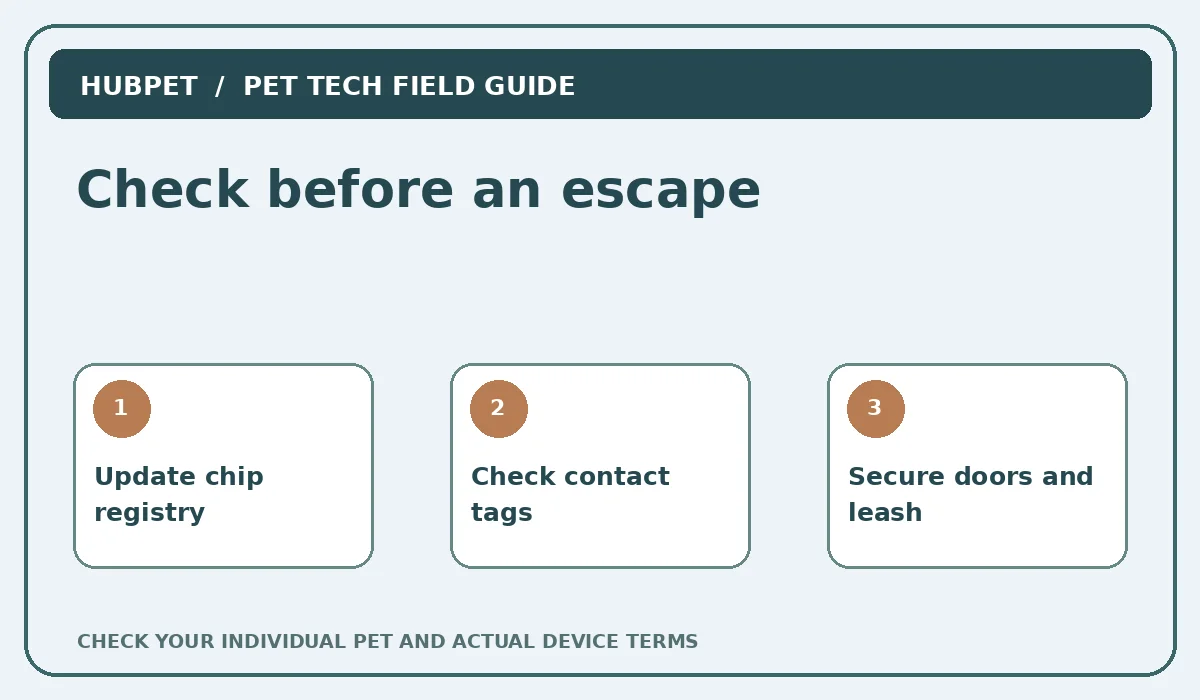
Ask your veterinarian for the chip number and registry details after implantation or adoption. Complete registration with current phone and address information. If you move or change numbers, update the record promptly. The United States does not operate a single central owner database, so keep the name of your dog’s specific registry. During a routine veterinary check, ask staff to verify that a scanner can read the implant. Do not post the full chip number publicly as a substitute for the registration process. The goal is a dependable route from scanner to you.
Find the registry linked to an unknown chip
When you have the dog’s microchip number but do not know the registration company, the American Animal Hospital Association maintains a microchip registry lookup service. It helps identify registries associated with the number; it does not itself display the owner’s personal contact information. A veterinarian or shelter can explain the normal procedure for reaching a registered owner. If you adopted a dog, confirm that the previous keeper transferred the contact details rather than assuming the previous keeper updated everything. A printed or securely stored record can help in a stressful lost-pet situation.
Make a lost-dog response plan for your family
Keep a recent photograph showing unique markings and current contact details. If a dog escapes, contact local shelters, animal control and nearby veterinary clinics promptly. Provide the chip registry name and share a reliable contact number. If a wearable tracker is active, note the age of its last location report before approaching an area. Do not enter unsafe traffic, dangerous terrain or private property on the strength of an app pin. Recruit a trusted helper to coordinate calls while you search safely. Physical ID and clear communication remain essential.
Spot misleading claims about GPS chips
Words such as “smart chip,” “locator chip” or “trackable microchip” may describe very different products. Ask whether the device sits under the skin or attaches to a collar, whether it needs charging, what scanner or app reads it, and how far its signal reaches. Check whether the claim refers to identifying a found animal or observing live location. A collar-linked tracker cannot turn an ordinary implanted ID chip into a GPS beacon. Avoid unofficial procedures that promise implanted tracking without a qualified veterinarian’s assessment and credible documentation. Precise terminology protects you from buying the wrong service.
Build a layered plan that does not depend on one device
Prioritize microchip registration, readable identification and secure daily handling. Add a tracker if its battery, coverage, fit and privacy settings suit your dog and household. Check gates and leash equipment regularly, and practice recall in safe enclosed areas. Make sure another adult knows the chip registry and search steps. Rehearse how to locate the most recent photo and contact local shelters. No one system guarantees recovery, but clear roles and multiple independent identification methods reduce the chance that a single failure leaves you without useful options.
How We Research
HubPet compared guidance from veterinary, animal-welfare, consumer-privacy, and government positioning sources, focusing on device limitations and practical safety rather than sponsored product rankings. We have not performed hands-on tests of commercial GPS trackers and do not claim endorsement by these organizations. Device specifications, app fees, coverage and availability may change; confirm current conditions with the manufacturer. These articles are educational, not a substitute for veterinary assessment or professional lost-pet assistance. Learn more About HubPet.
Sources
American Veterinary Medical Association: Microchipping: FAQs for pet owners. Editorially checked October 27, 2026.
American Animal Hospital Association: Pet Microchipping FAQs. Editorially checked October 27, 2026.
American Humane: Identification Tags and Microchips. Editorially checked October 27, 2026.
GPS.gov: GPS Accuracy. Editorially checked October 27, 2026.
No. A veterinarian can scan the identification number only when the animal is physically present.
The standard implanted identification chip has no battery. Registry policies may vary; verify current details directly.
A separate GPS-equipped wearable can provide location reports when its communication link, battery and fit allow.
A shelter or clinic may scan the dog and contact the registered owner if registration details are current.
No. It depends on nearby devices for sightings and does not replace registered identification.