
Cat backpack carriers can look convenient when a traditional carrier feels bulky, but appearance tells you little about the cat’s experience. Many backpack designs restrict turning, expose cats to unfamiliar movement, or lack space to hide. Cats Protection generally advises sturdy handheld carriers and does not recommend backpacks as the first choice. For essential travel when someone cannot comfortably carry a traditional case, it offers specific precautions. This guide separates those limited situations from recreational outings and explains a practical decision test. A cat struggling to breathe, collapsing or showing severe distress needs prompt veterinary assistance; see HubPet’s veterinary disclaimer.
Start with the question of whether travel is necessary
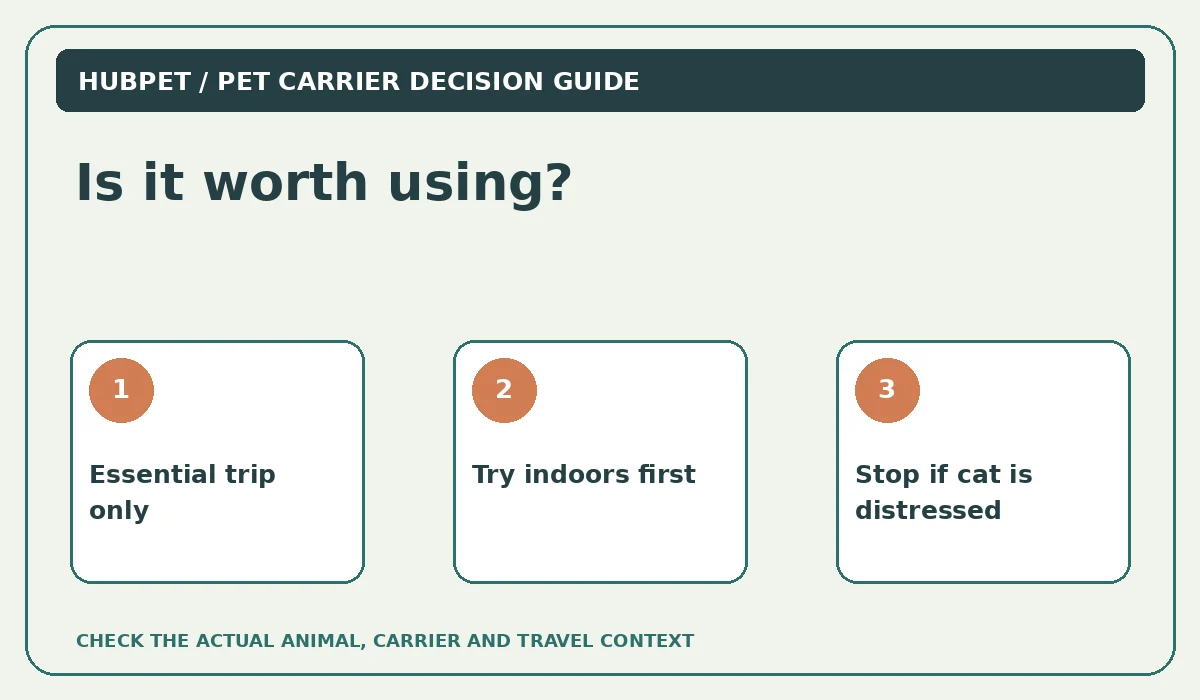
A backpack is not an enrichment toy simply because its marketing shows a relaxed cat looking through a window. Ask whether this is a necessary veterinary trip or relocation, or an optional sightseeing outing your cat may find frightening. Cats are territorial and often prefer familiar places. A sturdy carrier that stays level on a seat may be less unsettling than one moving against a person’s back. If your cat panics during ordinary travel, avoid adding longer walks or crowded destinations just to test a new accessory. Arrange transport and appointment times to minimize waiting. For some cats, a quiet trip in a traditional hard-sided carrier is a much better experience than a backpack adventure.
Compare usable interior space, not advertised weight capacity
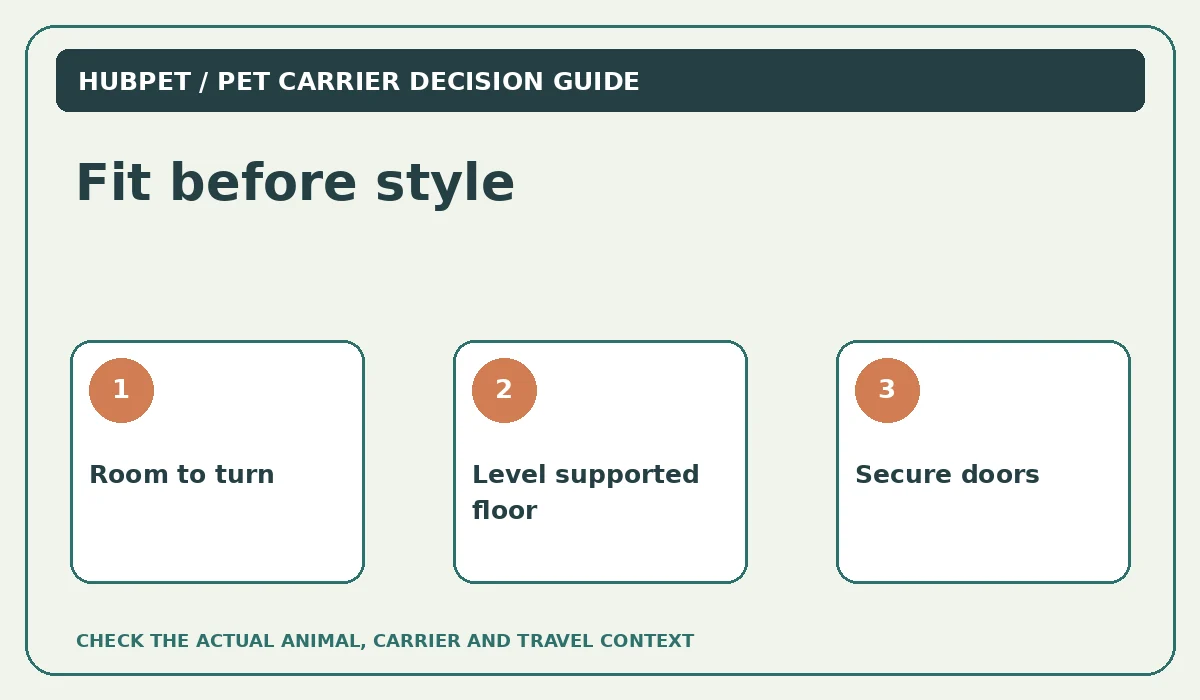
A maximum weight number tells you how strong a bag claims to be, not whether a living cat can change position. Measure your cat from nose to tail base while relaxed, along with shoulder height and body width. Then compare these measures with the actual interior after the pad and panels take up room. The cat should be able to lie normally, adjust its posture and move without crushing its whiskers against a wall. Narrow bubble shapes can technically hold the cat while preventing natural movement. If the cat must remain hunched or cannot turn around, reject the bag. A roomy carrier is not the same as a very tall, unstable one.
Check airflow from more than one direction
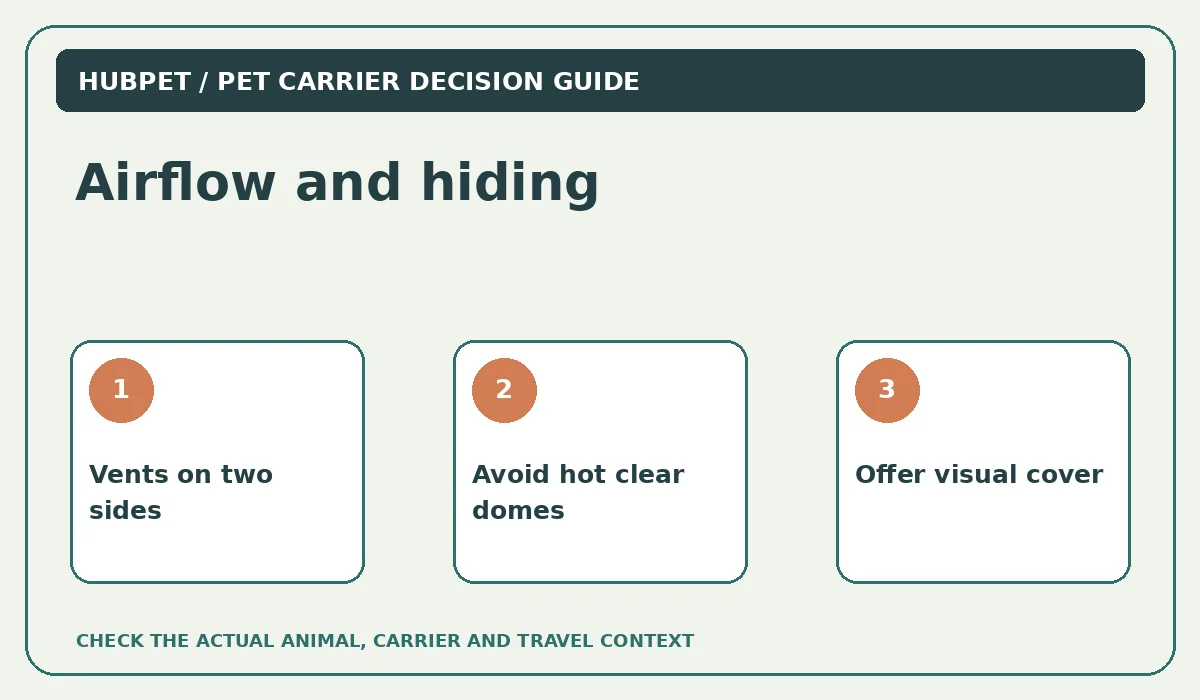
Look for open mesh or vents on different sides rather than a few holes on a decorative plastic dome. Airflow can change when the backpack rests against a coat, a seat, or the wearer’s body. Test the bag empty in the same orientation you would carry it and inspect which openings remain clear. Solid transparent panels can also expose a cat continuously to noise and people, removing the option to hide. Avoid carrying a cat in direct sun or hot, humid weather. Watch for panting, drooling, agitation or weakness, and stop promptly if distress appears. A portable carrier cannot replace a cool, ventilated indoor environment.
Favor a stable base and secure closure
Set the empty backpack on a level floor. A narrow bottom that tips easily may move sharply when the wearer turns. A more structured base supports the cat’s weight evenly and lets it rest without sliding into a seam. Inspect both shoulder-strap anchors, zippers, locking tabs and stitching under gentle hand pressure. Check that a paw cannot force open a mesh edge. Decorative hooks and dangling straps can snag inside. Do not assume that an internal tether makes a poorly enclosed backpack safe: a tether should never be clipped to a cat’s neck collar, and a cat may still twist or struggle. Proper containment comes first.
Use a quiet indoor acceptance test
Leave the new carrier on the floor with all openings secured safely open while the cat explores at its own pace. Place familiar bedding inside and reward voluntary visits with a treat or brief play. Gradually practice closing the door for seconds while staying nearby, then reopen before the cat becomes frightened. Once the cat settles, lift the carrier a small distance while keeping it level. Return to the floor if you see freezing, repeated escape attempts, growling or frantic movement. Training does not mean forcing a cat to tolerate something it consistently fears. Some cats will never accept a backpack, and that is an acceptable outcome.
Understand movement and visibility outdoors
When the bag hangs from your shoulders, every step, stair and turn can sway the cat’s floor. The wearer may also be unable to see the cat’s face and breathing. Ask a trusted person to observe during a short stationary test, but do not take the animal on a trial hike. Avoid loud crowds, cycling, running and busy sidewalks. If the bag is used for an unavoidable short journey, maintain shade, ventilation, level support and frequent calm observation. Plan where you can safely stop without opening the carrier. Never unzip it in a public area to reassure a scared cat; an escape can happen in a second.
Choose a workable alternative for vet trips
Cats Protection recommends sturdy, lightweight carriers that are secure and easy to clean. Models opening at the front and top, or with a removable upper half, give veterinarians safer access to anxious cats. If carrying weight is the problem, ask someone to help, use an appropriate stable carrier trolley, or discuss transport options with the clinic. This also protects your own back and hands. A traditional carrier can be secured during car transport without rolling or sliding around. Compare how easily you can move it from home to vehicle to examination room rather than prioritizing an attractive backpack shell.
Recheck comfort at the point of use
Inspect the bag before each necessary journey: zippers fully engage, mesh has no claw tears, fasteners are sound and bedding remains flat. Confirm your cat can settle without its chin pressed against the ceiling. Keep identification and the veterinary phone number available. If the cat overheats, vomits, pants or repeatedly throws its weight against the doors, stop the journey when it is safe and contact a veterinarian for guidance. Avoid sedation or calming drugs without veterinary instruction. Carrier equipment cannot compensate for untreated travel sickness or a cat who is terrified of movement.
Make the purchase decision using a clear stop rule
Write down the specific transport problem the backpack would solve. If a hard-sided carrier already works, you may not need the backpack at all. If mobility limitations make a backpack the only practical option for essential travel, choose room, breathable mesh, secure fasteners and a stable floor, while recognizing the limitations. Return or retire any carrier the cat cannot tolerate or physically fit. Do not accept phrases like “adventure-ready,” “ventilated bubble,” or “airline approved” as substitute measurements. Verify each practical feature yourself and revisit the choice as your cat grows or its health changes.
How We Research
We reviewed animal-welfare and veterinary guidance on containment, handling, fit, travel stress and equipment limitations, prioritizing practical owner checks over commercial claims. These sources inform the safety recommendations but do not constitute endorsements of individual products. We did not independently crash-test carriers, measure manufacturer specifications in a lab, or receive compensation for this article. Airline and transport rules may change; confirm current requirements with the provider and ask a veterinarian about a specific animal’s health. Learn more About HubPet.
Sources
Cats Protection: What type of carrier is best for my cat?. Reviewed October 27, 2026.
Cats Protection: Choosing and using a cat carrier. Reviewed October 27, 2026.
RSPCA: How can I train my pet to feel comfortable in a transport carrier?. Reviewed October 27, 2026.
VCA Animal Hospitals: Reducing the stress of veterinary visits for cats. Reviewed October 27, 2026.
Cats Protection generally discourages backpack travel for cats because space, movement and exposure can increase stress. For most cats, a sturdy carrier is preferable.
It is usually better to use a sturdy front-and-top opening carrier. If physical limitations make a backpack necessary for essential travel, assess fit and ventilation carefully.
Compare the real internal floor and height with the cat’s relaxed posture. Your cat must be able to lie naturally and change position without compression.
Not necessarily. Clear panels can leave the cat without a place to hide. Breathable mesh and visual shelter often matter more than a wide view.
Stop the trip safely, move the cat toward a cool environment without risking escape, and seek prompt veterinary advice because panting can indicate serious stress or overheating.