
A kitten’s first carrier trip should not begin with a scramble to catch a frightened animal. Choose equipment that keeps a small kitten contained and comfortable, then make that carrier familiar before the appointment. A low enough entrance, stable washable floor, secure closure and ventilation are more useful than decorative extras. Kittens can explore gaps and nibble straps that an adult cat ignores. Cats Protection recommends secure, sturdy carriers with adequate room to move; Michigan Humane values a removable top for gentle veterinary handling. These principles apply even when the kitten is tiny and will quickly grow. For travel-related health concerns, see the HubPet veterinary disclaimer.
Select a carrier that cannot open by accident
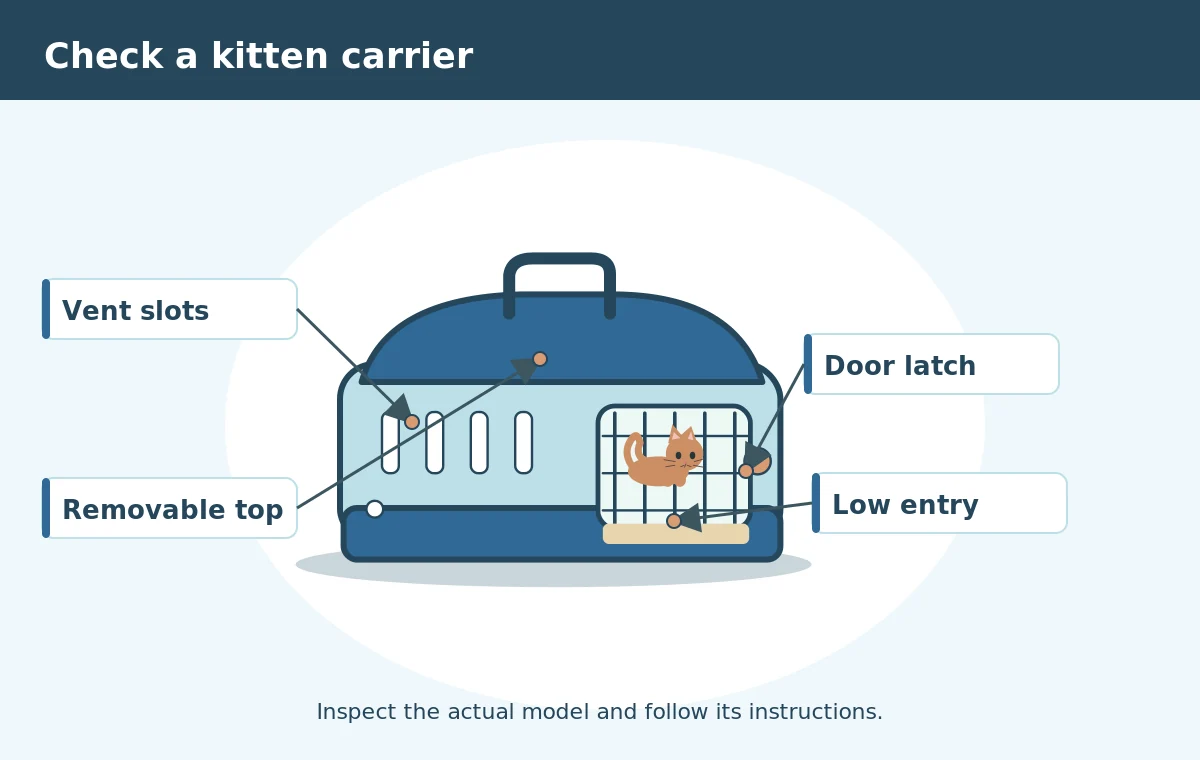
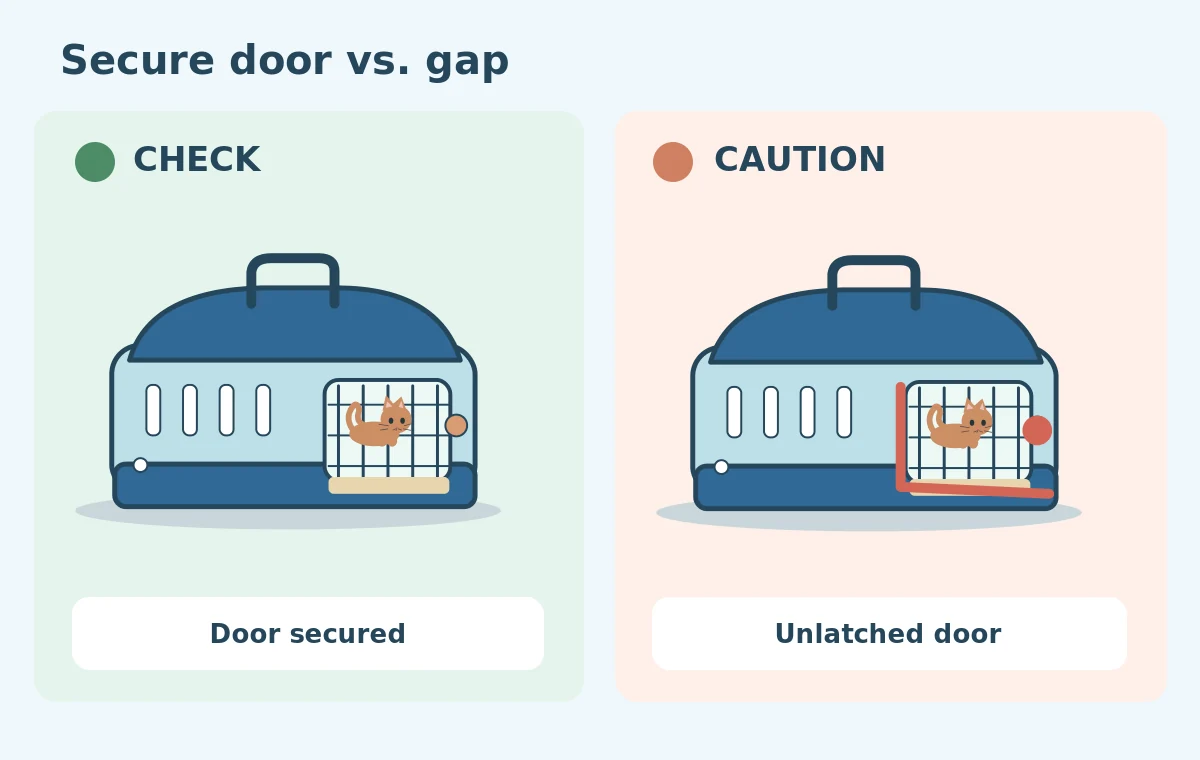
Test every latch or zipper with the carrier empty. A very young cat may nose into corners, pull at mesh or push through an opening that looks harmless. Inspect the seam between the top and bottom halves and check whether a door rod engages at both ends. Look for sharp wire points, gaps beside flexible panels and loose fasteners. A carrying handle does not prove the door is locked. Practice the same closure sequence several times so you can complete it calmly before the real appointment.
Choose a low, clear approach to the doorway
A kitten should be able to approach the opening with all paws on stable flooring. An awkward high lip can make the first step difficult when a kitten is unsure. A wide front door or removable roof gives you options for encouraging entry without forcing the animal through a narrow gap. Leave the door safely propped open during supervised at-home practice. Never let a spring-loaded lid swing toward the kitten, and do not use the opening as a place to restrain or pin the animal.
Allow kitten-sized room without losing stability
Look at the usable floor after you add a thin liner. The kitten needs space to lie down, turn around and readjust position inside the closed container. Avoid a cramped purse-like enclosure that only seems roomy with the top open. However, a giant box may make it harder to prevent sliding when carried. Follow the maker’s size and weight limits, then check the kitten’s actual posture. Choose a carrier that can remain useful as the kitten grows, provided the interior remains appropriate for its body.
Keep the base flat and padding washable
A towel or washable pad can provide familiar scent and absorb minor accidents. It should lie flat without bunching into a high ridge at the entry. Check the bottom underneath: a sturdy, wipeable floor is necessary even when the padding feels soft. A thin cardboard or sagging fabric base is not a good substitute for carrier structure. Bring a spare towel if the trip is long. After an accident, clean the carrier according to its materials and allow it to dry completely before storage.
Balance ventilation, visibility, and comfort
Find ventilation on multiple sides and make sure nothing blocks the openings. Young cats can become warm and stressed during travel, especially if a blanket completely covers the carrier. A familiar towel can shield part of a busy view, but always leave fresh airflow. Avoid direct sun while waiting outdoors and never leave a kitten in a parked vehicle. The CDC warns that cars can heat up dangerously quickly. If a kitten seems unwell or has difficulty breathing, contact a veterinarian rather than continuing a training session.
Make the carrier normal furniture before travel
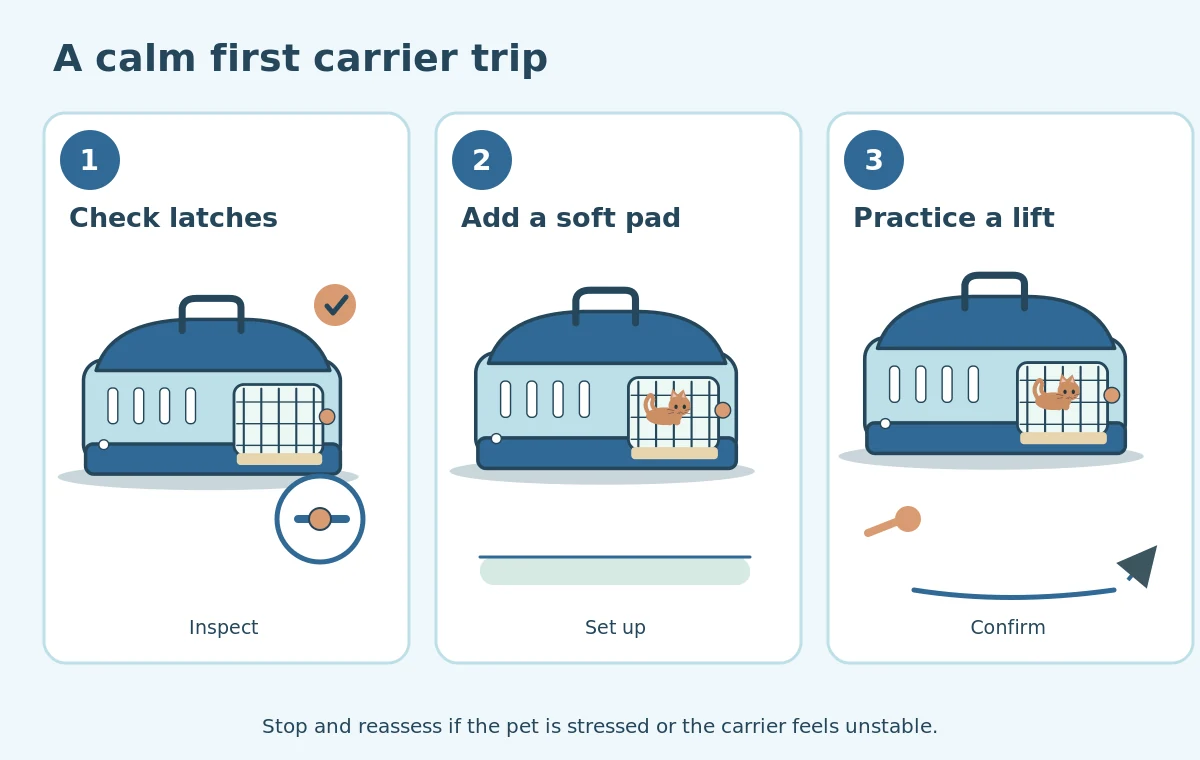
Set the carrier on the floor in a quiet room with the door safely open. Place a small familiar blanket inside and let the kitten sniff, play near and enter at its own pace. Reward curious approaches with food or a toy if appropriate. Do not slam the door or chase the kitten into the enclosure. Start with brief moments inside while the kitten can leave. Later, close the carrier for a very short period and reopen it before the kitten becomes distressed. Build positive associations over separate calm sessions.
Practice a short level lift and return
Only after the kitten tolerates a closed door, place the carrier on the floor and lift it slightly using the designated handle and a supporting hand where the maker directs. Keep the bottom level and lower it gently. Check whether the internal liner slides or the lid flexes. A wobbling carrier may alarm the kitten even if the closure remains intact. Practice a few steps indoors rather than starting with a noisy drive. Stop when the kitten struggles or panics; make the next rehearsal easier.
Plan safe car loading and the clinic arrival
Carry the kitten inside the latched carrier from home to the vehicle and into the clinic. Avoid opening it in a parking lot or waiting room where a frightened animal could escape. ASPCA recommends securing ventilated hard-sided carriers in vehicles so they cannot shift. Follow instructions for your vehicle and carrier; a carry handle is not a crash rating. Keep the carrier out of direct sunlight while parked briefly for loading, and do not leave the kitten unattended. Ask clinic staff where you can wait away from excited dogs.
Use top access for gentler veterinary handling
Some clinics can examine a kitten while it remains in the bottom tray of a carrier with a removable roof. Michigan Humane explains why a front and top opening can simplify veterinary handling. Ask the clinic whether it prefers you to open the carrier or have staff do so. Never unscrew or detach the roof on a busy counter without checking that the kitten cannot jump away. The aim is an accessible, secure container and minimal forced handling, not an improvised restraint technique.
Recheck fit and fasteners as the kitten grows
A carrier that suits a small kitten may become too low or too narrow within a few months. Repeat the standing, turning and lying-down checks before each longer trip. Look for chewing damage, bent door rods, frayed zipper tape and cracks near the handle. Wash and dry removable bedding between uses. If you cannot close the door without pressing the cat into a wall, it is time for a more appropriate carrier. Keep the old carrier available only while it remains safe and comfortable.
How We Research
We compared the practical welfare and travel-safety recommendations of Cats Protection, AVMA, ASPCA, CDC and the FAA where applicable. We separated general carrier principles from product-specific instructions and airline rules. Read our editorial and research approach. Our illustrations explain visual fit checks, not engineering certification. Inspect the actual carrier manual before travel, and consult your veterinarian when a pet has a health or mobility concern.
Sources
Cats Protection — Choosing and Using a Cat Carrier — published guidance on carrier handling, travel preparation, ventilation, comfort, or transport limits.
Michigan Humane — Getting a Cat Used to a Carrier — published guidance on carrier handling, travel preparation, ventilation, comfort, or transport limits.
AVMA — Traveling with Your Dog or Cat — published guidance on carrier handling, travel preparation, ventilation, comfort, or transport limits.
ASPCA — Traveling With Pets: Safety Guidance — published guidance on carrier handling, travel preparation, ventilation, comfort, or transport limits.
CDC — Heat and Pets — published guidance on carrier handling, travel preparation, ventilation, comfort, or transport limits.
A top opening or removable roof can make gentle access easier, but confirm that the hardware closes securely after each use.
No. A typical handbag lacks reliable containment, ventilation and a flat supported floor; choose a carrier made for animal transport.
Leave the secure carrier open at home, add familiar bedding, reward voluntary entry and build toward short closures without chasing.
Keep it securely closed unless clinic staff directs you to a controlled safe area; a startled kitten can escape quickly.
Recheck usable interior room, door clearance, closures and floor support before each trip, especially during rapid growth.