
Self-cleaning litter boxes do not all move litter in the same way. A rake sweeps a relatively flat tray, while many rotating models turn a chamber so a separator divides clean grains from clumps. Those shapes change how a cat enters, where waste goes, how much space the appliance occupies and which components need cleaning. This comparison describes common layouts, not every brand. The decision should start with a cat-friendly entry, a clear exit and a mechanism owners can maintain safely. General guidance cannot replace the exact manufacturer instructions or veterinary advice. See our veterinary disclaimer.
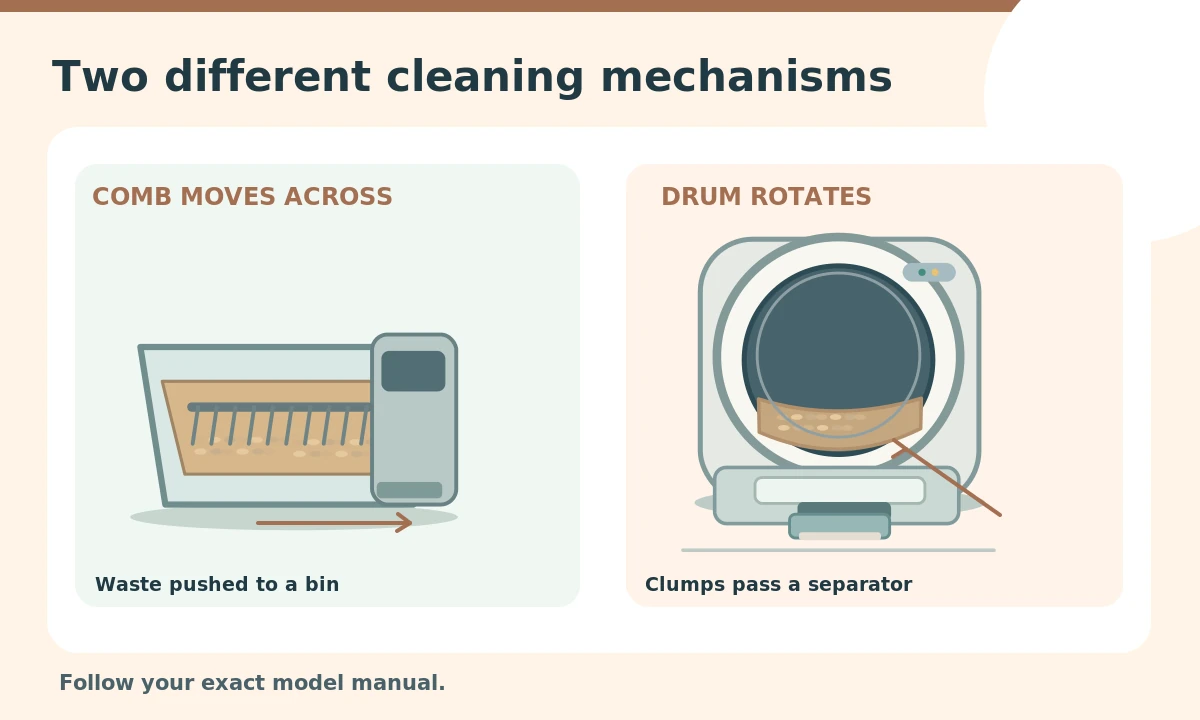
Picture the path waste takes
In a rake-style design, a comb passes across a tray and pushes solid waste toward a covered receptacle. In a rotating design, a drum or globe moves litter across a separator so clumps fall toward a drawer. Illustrations in marketing may conceal the actual waste channel. Ask where clumps collect, where sticky material contacts plastic and how you remove a blockage without reaching into powered parts. Each mechanism can have a different sequence. Never assume a device follows a typical diagram instead of its own instructions.
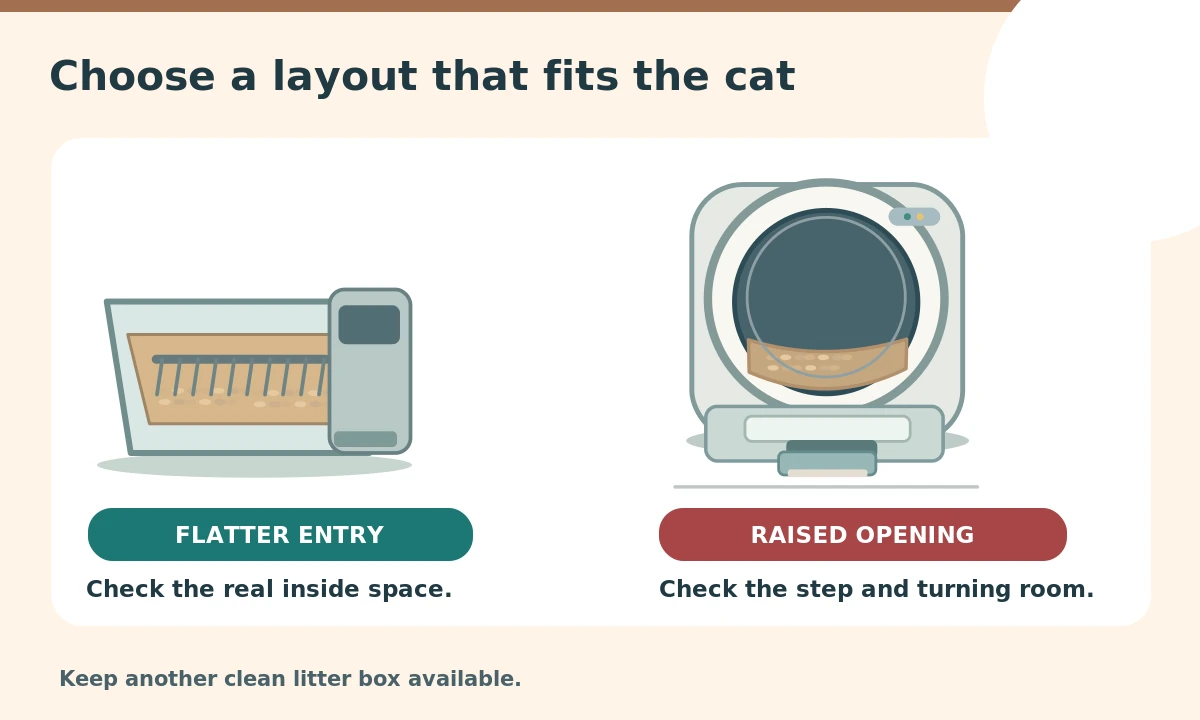
Compare usable litter surface and entry shape
Rake trays often present a flatter, more conventional digging area, but a motor and side housing may reduce usable width. Rotating drums can have an elevated opening and a curved interior. Neither design automatically fits a large or mobility-limited cat. Compare the actual litter surface, entry step, overhead room and ability to turn around. Guidance for normal litter boxes favors generous open space and easy access. If an animal struggles or refuses the mechanism’s enclosure, keep a suitable regular tray.
Understand what is moving and when
A rake moves through litter on a track; a rotating drum may shift much of the chamber. Both require a defined cycle that should happen only under the approved conditions. Look for the maker’s explanation of cat detection and interruption behavior. Never bypass covers, proximity systems, scales or other safety features. There is no safe generic way to test a moving rake or drum with a hand or animal inside. If operation seems wrong, turn the machine off and contact official support.
Check clumping, texture and waste compatibility
A rake may move differently through fine clumping litter than through coarse crystals; a rotating separator may depend on clump strength and grain size. Read the exact compatibility list before changing materials. The wrong litter can jam a mechanism or leave waste behind. Added litter above a fill line may also affect operation. Do not force a clump through a screen or comb. If a cat dislikes a required litter texture, that preference is a strong reason to choose another product, not to retrain by pressure.
Inspect the path to the waste compartment
Ask whether you can pull the waste receptacle out from the front, side or rear and how far a cleaning cover opens. Rakes can accumulate debris along teeth and tracks. Rotating models can collect residue on liners, seals and separating screens. Neither system is maintenance-free. Keep the power off and follow model-specific instructions before touching internal parts. Check that the receptacle closes fully and you can reach it without shifting the machine. A design that is hard to clean will be harder to keep pleasant for cats.
Compare sound and the cat’s experience
Rakes may scrape or click across a tray. Rotating drums may make a low motor noise and a falling-litter sound. Actual volume depends on housing, litter, floor surface and room acoustics. The cat may dislike either motion even when people regard it as quiet. Introduce any automatic unit stationary and off first, keep a clean conventional tray and show a cleaning cycle only after voluntary use. Watching the cat calmly is more useful than comparing unverified decibel numbers from advertisements.
Plan for failure, outages and repair
A jammed rake may leave clumps across the surface; a stalled drum can interrupt access depending on where it stops. Look up how the model handles loss of power, sensor faults and interrupted cycles. Maintain a separate ordinary box so cats never depend on one motorized path. Ask whether owners can clean or replace common removable parts without opening sealed electronics. Do not hand-turn parts or connect unsupported power supplies. A specific official manual should describe safe recovery.
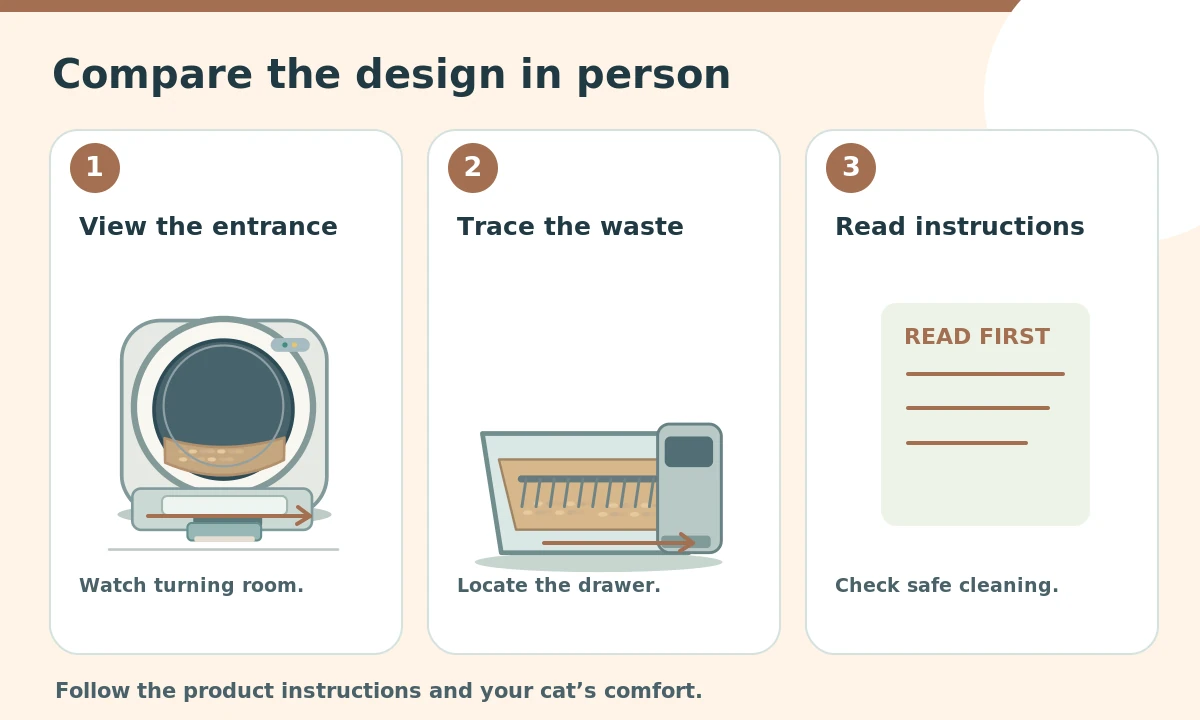
Make the choice based on cat welfare first
List the cat’s needs before appliance features: comfortable posture, accessible entry, usable litter texture, quiet placement and a choice of toilets. Then compare actual maintenance steps, consumables, warranty, replacement parts and power behavior. The best mechanism for a small agile cat may not be acceptable to an older cat with stiff joints. If you cannot verify safe operation, choose a simple clean box. Automatic cleaning only helps when the cat consistently uses the toilet without fear or discomfort.
How We Research
We consulted the Cornell Feline Health Center, the American Animal Hospital Association, and AAFP/ISFM feline litter-box and environment guidance. For model-dependent electronics, installation, behavior and software claims, we read manufacturer help and policy pages rather than assuming all devices work alike. This article compares observable design decisions and provides no commercial testing or product endorsement. Read About HubPet for our editorial approach. Cat preferences and normal elimination habits are the first priority; follow the exact manual and seek veterinary care for new urinary or stool-related concerns.
Sources
Cornell Feline Health Center — House Soiling — guidance on feline toilet access, device operation or product-specific limitations.
AAFP/ISFM — House-Soiling Guidelines — guidance on feline toilet access, device operation or product-specific limitations.
AAHA — General Litter Box Considerations — guidance on feline toilet access, device operation or product-specific limitations.
Whisker — Automatic Litter Box Setup Guide — guidance on feline toilet access, device operation or product-specific limitations.
Neither is universally better. Compare usable floor space, cleaning method, entrance height and your cat’s preferences.
Some do. Read the maker’s compatibility rules for clumping behavior, grain size and fill level.
Any moving mechanism deserves caution. Use only models with appropriate safety systems and never bypass the manufacturer’s protections.
That depends on removable tracks, screens, liners and drawers. Inspect the official maintenance steps before buying.
Turn off the machine, offer a conventional litter box and use only the manufacturer’s approved troubleshooting procedure.