
This article is general information, not veterinary advice. If your pet seems unwell, is in pain or may have eaten something harmful, contact your vet or an animal poison control line right away. Read our vet disclaimer.
How to help pets adjust to new people in the home starts with space, predictability, and the option not to interact. The AAHA behavior-management guidance from 2019 notes that fear can show through avoidance, lowered posture, lip licking, freezing, or other behavior changes. For cats, the FelineVMA environmental guidance, accessed 2026 recommends positive, predictable human interactions and gradual exposure to unfamiliar stimuli.
Do not make a shy pet greet a visitor. Dogs Trust advises introducing worried dogs to new people slowly and allowing them to move away in its fear and big-emotions guidance, accessed 2026. Start with the calm-space guide so the pet has somewhere visitors will not follow.
How to Help Pets Adjust to New People in the Home: Before the Visit
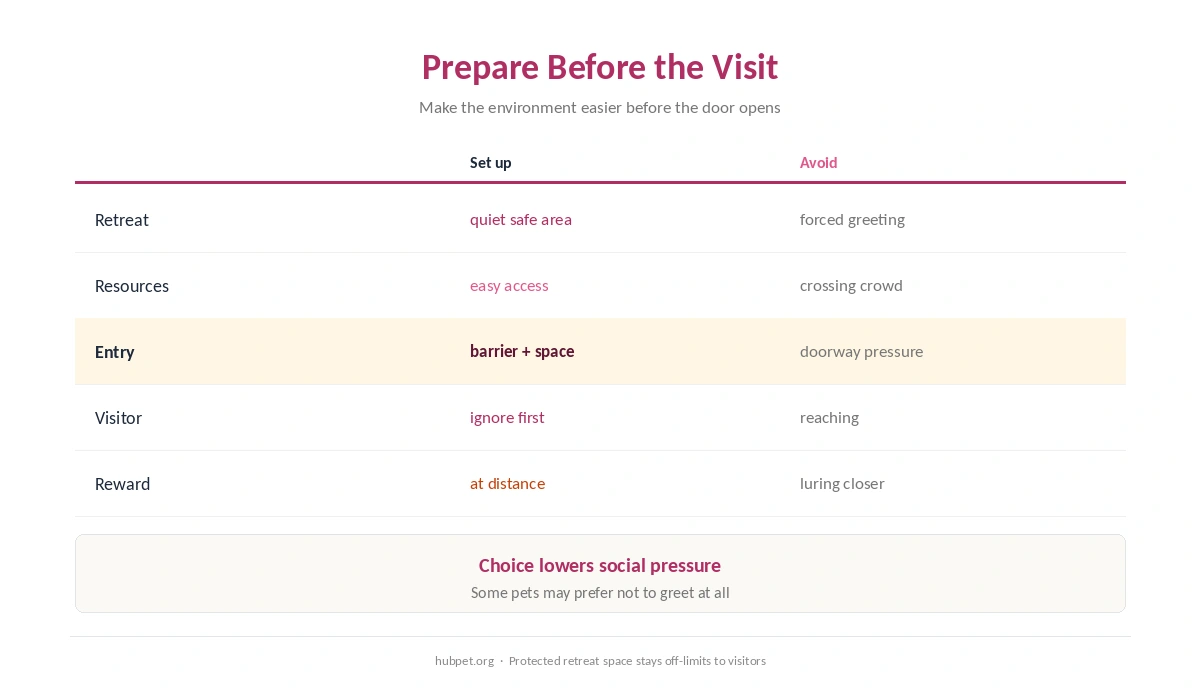
How to help pets adjust to new people in the home is easier when the environment is prepared first. Keep familiar meals, walks, litter access, rest, and sleep anchors as steady as practical. The predictable-routines guide explains why routine can reduce unnecessary surprise.
For a worried dog, plan distance from the entry before the door opens. The doorbell guide can build a separate station skill. For a shy cat, the shy-cat guide emphasizes hiding, perching, and voluntary approach.
| Before people arrive | Set up | Avoid |
|---|---|---|
| Retreat | Quiet room, bed, perch, or crate the pet already likes | Using the retreat as punishment |
| Resources | Water, litter or toilet access, bedding, familiar items | Making the pet cross the crowd for essentials |
| Entry | Barrier or distance from the door | Crowding the pet at arrival |
| Visitor plan | Ignore first, let the pet choose | Reaching, staring, or leaning over |
| Reward | Food or play the pet already enjoys | Luring the pet closer than feels safe |
How to Help Pets Adjust to New People in the Home During the Visit
Ask the visitor to begin by doing less. Side-on body position, quiet movement, and no reaching can reduce social pressure. The guest-anxiety guide gives a broader home setup for busy visits. In practice, how to help pets adjust to new people in the home means keeping the first greeting easier than the pet expects. A related HubPet health-and-comfort guide is how to Support Pets During Household Changes.
If the pet approaches, let the animal control distance. A dog can sniff and move away. A cat can observe from a perch or doorway. The dog-hugging guide is useful because even friendly pets may not welcome close restraint from a new person.
Reward calm investigation without pulling the pet toward the visitor. The positive reinforcement guide explains how rewards strengthen choices. If a dog needs a familiar resting behavior, use the mat-settle guide away from the busiest part of the room.
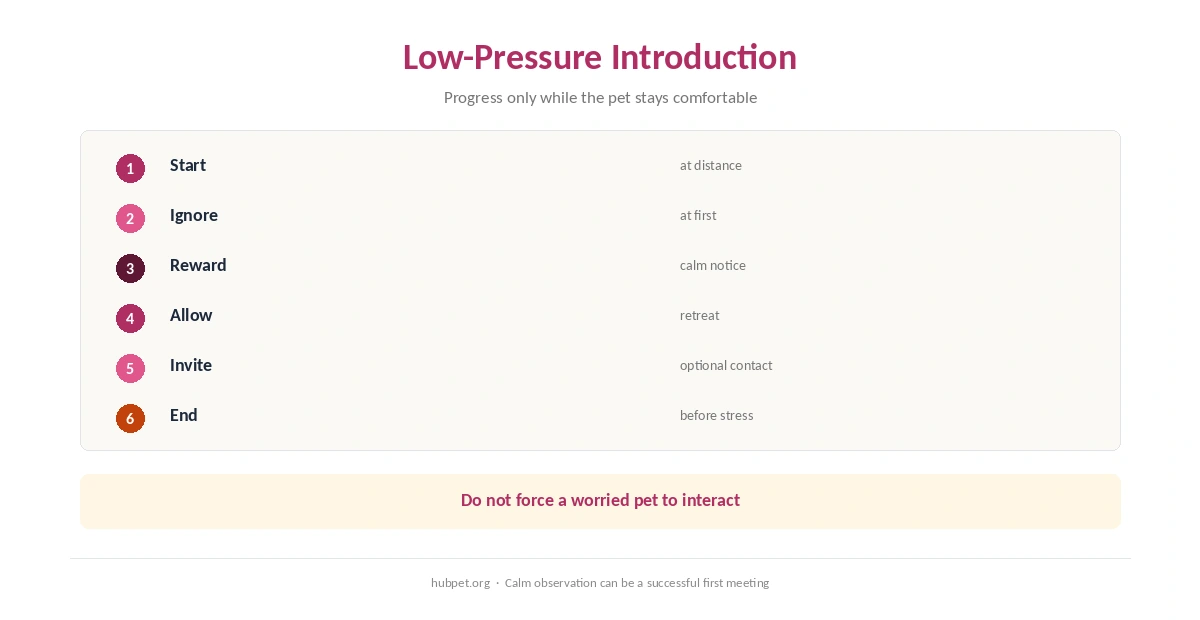
- Let the pet begin at a comfortable distance.
- Ask the visitor to ignore the pet at first.
- Reward calm looking, sniffing, or choosing to remain nearby.
- Allow the pet to retreat without anyone following.
- Keep the first interaction brief if the pet stays relaxed.
- End the exposure when tension rises instead of waiting for a bigger reaction.
Signs the Introduction Is Too Difficult
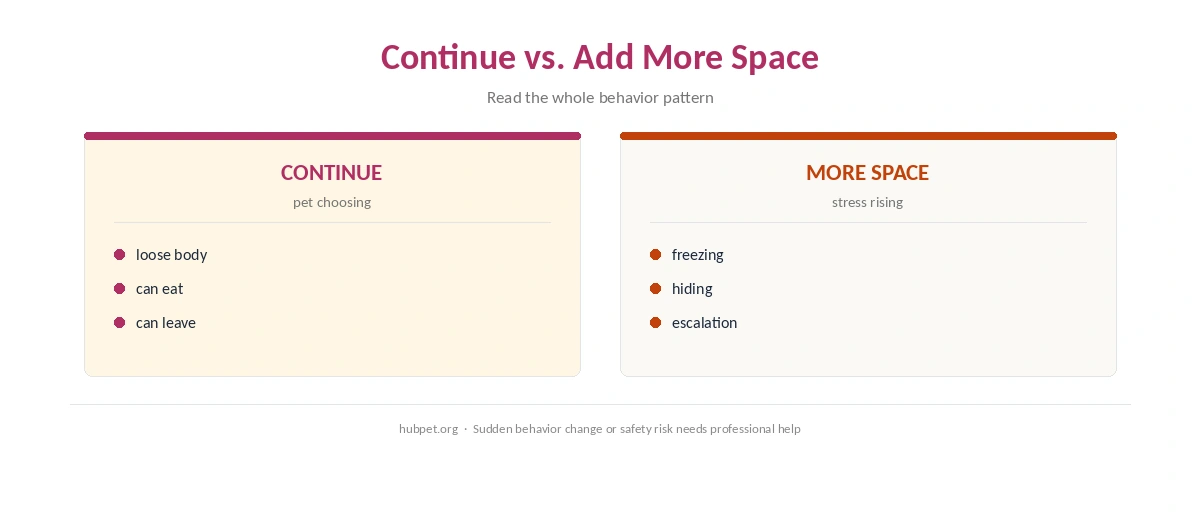
For cats, AAHA and FelineVMA guidance describe stress signs that can include hiding, freezing, crouching, escape attempts, defensive vocalization, or avoidance. The cat-stress guide can help you watch the whole pattern rather than one signal.
For dogs, signs of fear can include trying to move away, cowering, tucked posture, vigilance, or escalating barking. The fearful-dog guide focuses on giving distance instead of forcing a meeting. If barking at arriving people is the main pattern, review the delivery-driver guide.
If the pet recently changed homes, lower expectations even further. The new-home adjustment guide and new-pet introduction checklist both emphasize gradual change and protected resources.
When to Call Your Vet
Contact your veterinarian if a new fear response appears suddenly, if the pet stops eating or using normal resources, or if behavior changes come with other signs of illness. The AAHA 2019 behavior-management guidance notes that medical problems can contribute to behavior changes and recommends discussing behavior at veterinary visits.
Go now for trouble breathing, collapse, seizures, suspected poisoning, or another emergency sign. Use the pet emergency signs guide for the site-wide emergency framework. For escalating aggression or bite risk, use barriers and get qualified professional help rather than testing another greeting.
How We Research
HubPet reviewed these sources on October 11, 2026: AAHA behavior-management guidance, FelineVMA environmental guidance, and Dogs Trust visitor training guidance. Read more about our research process.
They can toss or place rewards at a comfortable distance if the pet can eat and stay relaxed. Do not use food to lure a frightened pet into close contact.
No. A dog can remain behind a barrier or in a safe area if that is the calmer and safer choice.
Hiding can be a coping strategy. Provide a safe place and let the cat decide whether to come out.
Progress at the individual pet’s pace. If tension rises, increase distance or end the session.
A sudden or unexplained change, especially with appetite, elimination, movement, or other health changes, deserves veterinary assessment.
The Bottom Line: How to Help Pets Adjust to New People in the Home
How to help pets adjust to new people in the home comes down to preparation, distance, choice, and gradual positive experiences. A successful visit does not require physical contact; calm observation or choosing to retreat can be a good outcome.